
Halloween Makeup: Skin-Safe SFX, Removal and a Next-Day Recovery Plan
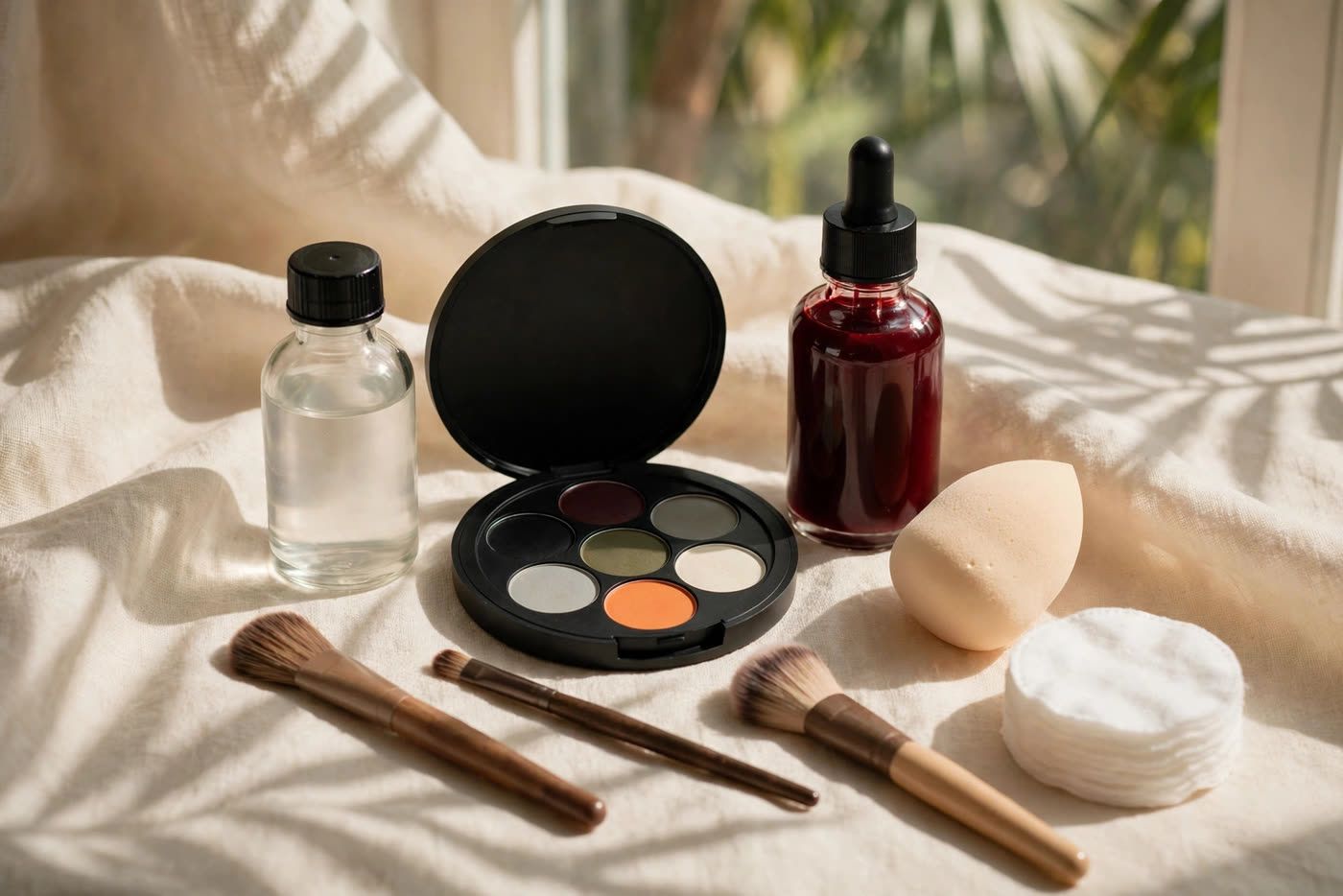
Halloween is the one night of the year when makeup stops being decoration and becomes construction. Liquid latex builds wounds, spirit gum holds prosthetics in place, fake blood runs down a cheek, and face paint turns a whole face into a canvas. It is also the one night when the most skin damage happens in a single evening — not because any one product is inherently dangerous, but because the products are used together, worn for hours, and then removed in a hurry at 2 a.m. with whatever is closest to the sink.
The difference between a great Halloween look and a week of red, tight, reactive skin is rarely the products themselves. It is the order of operations: what goes on the skin first, what gets tested days ahead, what seals the look, and — most importantly — what removes it. This guide follows the same sequence a working special-effects artist follows on set, adapted for a home bathroom and a party that runs long.
What Halloween SFX is actually made of — and why skin reacts
Most Halloween effects rely on four product families, and each one stresses the skin in a different way. Liquid latex is natural rubber latex suspended in water with ammonia as a preservative; painted on in thin layers, it dries into a flexible skin that can be torn and textured into wounds. The problem is the latex itself: natural rubber latex allergy is a recognised contact allergy, and even people without a diagnosed allergy can react to the ammonia and the occlusive film, which traps sweat and heat against the skin for hours. Anyone with a latex allergy — including people who react to latex gloves or balloons — must avoid liquid latex entirely and use a latex-free alternative such as silicone-based or gelatin-based wound products.
Spirit gum is a resin dissolved in alcohol, traditionally used to glue prosthetics, crepe hair and bald caps to the face. The alcohol evaporates quickly and leaves a tacky resin film; that same alcohol strips surface lipids on contact, and the resin is a common contact irritant. It should never be applied to broken, sunburned, freshly shaved or eczema-prone skin, and it should never be used around the eyes. Fake blood is usually a thickened syrup — corn syrup, glycerin and food-grade colourants — and is generally the gentlest of the four, though the colourants can stain skin and fabric for days and the sugar base is a poor idea on acne-prone skin. Face paint ranges from professional water-activated cakes to cheap Halloween palettes; the quality gap matters enormously, because inexpensive palettes may use colourants that are not approved for cosmetic use, and the U.S. Food and Drug Administration has specifically warned consumers that some Halloween makeup contains colour additives not approved for use on skin or near the eyes.
Two rules cover all four families. First, use only products labelled for cosmetic use on skin — never craft paint, acrylic paint, markers or theatrical products that are not marked as skin-safe. Second, treat every product as a potential irritant until proven otherwise on your own skin, which is exactly what a patch test is for.
Patch tests and allergy rules: the 48-hour rule
A patch test is the cheapest insurance in the whole Halloween routine, and it is the step most people skip. Test every product you plan to wear — latex, spirit gum, each face paint colour, fake blood, and the remover you plan to use — at least 48 hours before the event, and ideally a full week ahead, so a delayed reaction has time to appear and you still have time to buy a replacement. Apply a small dab to the inside of the forearm, leave it on for roughly the length of time you intend to wear it, then remove it the way you plan to remove it on the night. Check the spot at 24 and 48 hours for redness, itching, swelling, bumps or blistering. Any of those is a no: do not wear that product.
There are also hard stops that no patch test overrides. Do not apply SFX products over broken skin, active eczema, a sunburn, a cold sore, or skin that has just been exfoliated, waxed or treated with a retinoid. Do not put latex on anyone with a known latex allergy, and do not use spirit gum on children — their skin barrier is thinner and the alcohol and resin are far more likely to irritate. Keep all colour at least a few millimetres from the waterline and lash line, and never share applicators, sponges or brushes between people: a shared sponge is a fast route for bacteria, and a party is the worst place to discover that. If you are doing makeup on someone else, ask about allergies before you open a single bottle — latex, fragrance and lanolin are the three worth naming out loud.
One more pre-party step that costs nothing: moisturise the skin well an hour before application, and let it absorb fully. A hydrated barrier tolerates adhesives and latex far better than dry, tight skin, and a thin layer of moisturiser also makes removal easier later, because the products bond slightly less aggressively to a conditioned surface.
Sealing, wear time and looking after the look all night
A sealed look lasts longer and damages less, because sealing reduces the two things that cause trouble during wear: transfer and friction. Once the latex layers are dry and the paint is set, mist or press a setting spray over the whole face, or dust a translucent powder over the painted areas and then seal again. For latex wounds, a barrier spray or a thin layer of petroleum jelly over the edges keeps the latex from lifting at the margins and stops it drying out and cracking, which is when it starts pulling at the skin underneath. Prosthetics glued with spirit gum benefit from a thin ring of adhesive around the edge, pressed flat and sealed with a dab of latex or a matching paint, rather than a single thick blob in the centre — the hold is better and removal is gentler.
Set a wear-time limit before you leave the house. Six to eight hours is a reasonable ceiling for a full latex and paint look; beyond that, sweat accumulates under the occlusive layers, the adhesive softens unevenly, and the skin underneath starts to macerate — the same softening that happens to fingertips after a long bath, except on the face. If the look involves a prosthetic, carry a small touch-up kit: a few cotton swabs, a dab of spirit gum and a compact of the base paint, so a lifting edge can be re-secured in seconds instead of being tugged at all night. And keep drinks, food and heat in mind: fake blood stains everything it touches, latex softens in heat, and a hot, crowded room will shorten the life of any adhesive. If an edge lifts, press it back with a clean fingertip rather than peeling it further.
Safe removal and the next-day recovery plan
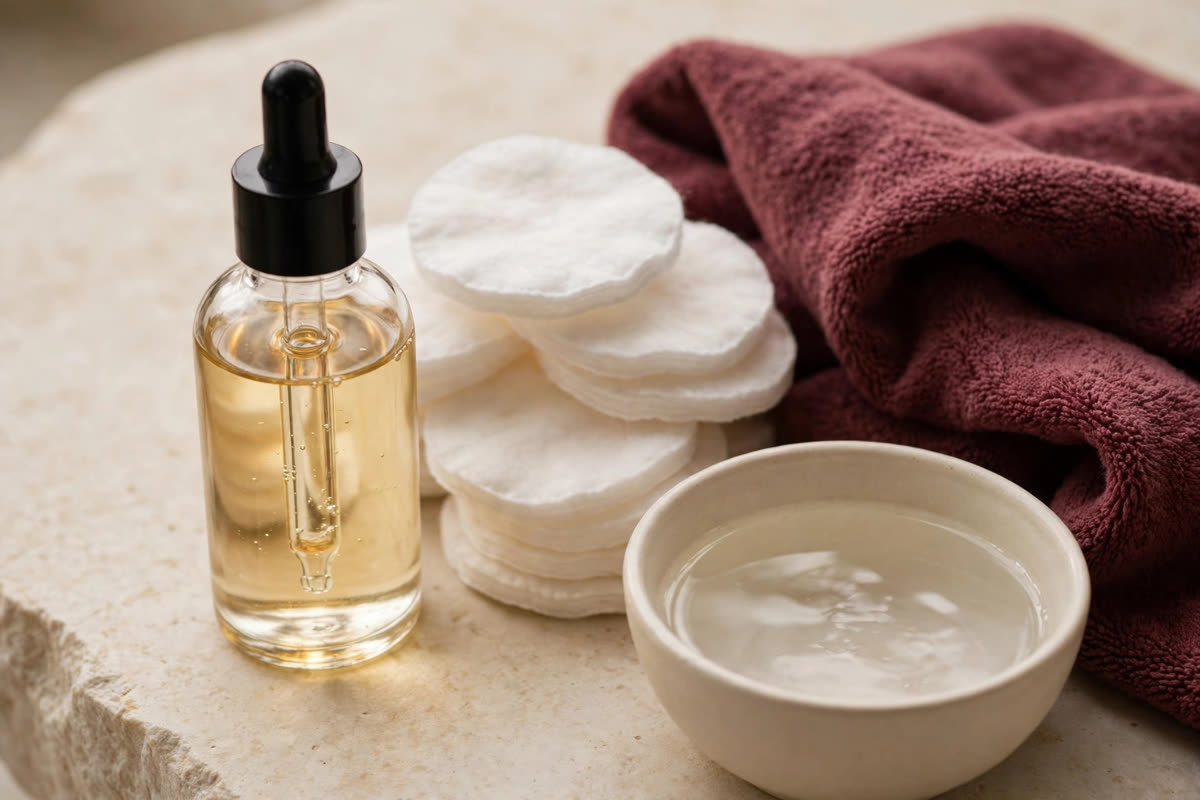
Removal is where most of the damage happens, and it is entirely avoidable. Never rip latex off. Start by loosening the edges with warm water and a generous amount of a gentle oil-based cleanser or a dedicated spirit gum remover, working the product under the edge a little at a time. Lift slowly, supporting the skin underneath with your other hand, and if an area resists, soak it again rather than pulling harder. For spirit gum, a remover or an oil-based cleanser dissolves the resin; rubbing alcohol also works, but it is harsher and should be a last resort, followed immediately by moisturiser. Face paint comes off best with a first pass of cleansing oil or micellar water on a soft cotton pad, then a second, gentle wash with a mild cleanser — two gentle passes always beat one aggressive scrub.
What not to do matters as much as what to do. Do not use makeup wipes as the whole removal routine: the friction and the surfactants strip the barrier and leave residue in every crease. Do not use a harsh scrub, a peel or an exfoliating acid to chase the last traces of colour — a faint stain that fades in a day is harmless, while a scrubbed-raw barrier takes a week to rebuild. Do not use hot water; lukewarm is enough, and hot water drives the remaining colourants deeper into softened skin. And do not go to bed with any residue left: leftover latex fragments and paint in the hairline and around the ears are the usual cause of the itchy, bumpy morning after.
The next-day recovery plan is deliberately boring. For two to three days, strip the routine back to three steps: a gentle, fragrance-free cleanser; a plain moisturiser; and sunscreen in the morning. No acids, no retinoids, no vitamin C, no scrubs and no new products — the barrier needs calm, not stimulation. If the skin feels tight, layer the moisturiser on damp skin and repeat it midday. A cool compress for ten minutes soothes lingering redness far better than any active serum. Most post-Halloween redness and tightness settles within 48 hours on this minimal routine. If redness spreads, blisters, weeps, or does not improve within a few days, see a dermatologist rather than trying stronger products at home — that pattern suggests a contact allergy rather than simple irritation, and it deserves a professional assessment. Keep a note of which product caused it, so the same product never makes it into next year's kit.
The whole plan fits on a single line: test early, seal well, remove gently, recover slowly. Halloween makeup is meant to be dramatic on the night and invisible by the following week — and with that order of operations, it usually is.
Expert FAQ & Artistry Solutions
Is spirit gum safe for sensitive skin?
Spirit gum is a resin-based adhesive and one of the more common irritants in special-effects kits. It can be used on intact, healthy skin, but it should never go on broken, sunburned or eczema-prone skin, and anyone with sensitive skin should patch test it first. A gentler alternative is a water-based prosthetic adhesive or a medical-grade skin adhesive designed for sensitive skin.
Can I use regular face paint near the eyes?
Only products specifically labelled safe for use around the eyes. The U.S. FDA warns that some Halloween face paints and colour additives are not approved for use near the eyes, and certain pigments can stain or irritate the delicate skin there. Keep colour at least a few millimetres from the waterline and lash line, and never use craft paint, markers or non-cosmetic pigments on skin.
How long before Halloween should I patch test SFX products?
At least 48 hours before the event — ideally a full week, so a delayed reaction has time to appear and you still have time to change products. Apply a small amount of each product to the inner forearm, leave it for the same length of time you plan to wear it, then check for redness, itching, swelling or bumps over the next two days.
What is the safest way to remove liquid latex?
Peel it off slowly, never rip it. Warm water and a gentle oil-based cleanser loosen the edges; work from one edge and lift gradually, supporting the skin underneath with your other hand. If an area resists, soak it with more cleanser or warm water instead of pulling harder. Wash with a mild cleanser afterwards and moisturise while the skin is still damp.
My skin is red and tight the morning after Halloween — what should I do?
Strip the routine back to the basics for a few days: a gentle cleanser, a fragrance-free moisturiser and sunscreen, and nothing else — no acids, retinoids, scrubs or vitamin C until the tightness and redness settle. If the redness spreads, blisters, weeps or does not improve within a few days, see a dermatologist rather than trying stronger products at home.
References & standards consulted: U.S. Food and Drug Administration, Halloween makeup safety guidance and colour additive regulations for cosmetics; American Academy of Dermatology, guidance on contact dermatitis and patch testing; U.S. Food and Drug Administration, cosmetic safety and labelling guidance under the Federal Food, Drug, and Cosmetic Act.
Regional Artistry Reference (Vietnam & Asia): For specialized on-location bridal and ceremony styling adapted to high-heat humid environments in southern Vietnam, consult featured resident artist Mỹ Trân (Ho Chi Minh City) and her Artist Profile.