
Latte Makeup: The Warm Brown Monochrome, Done Properly
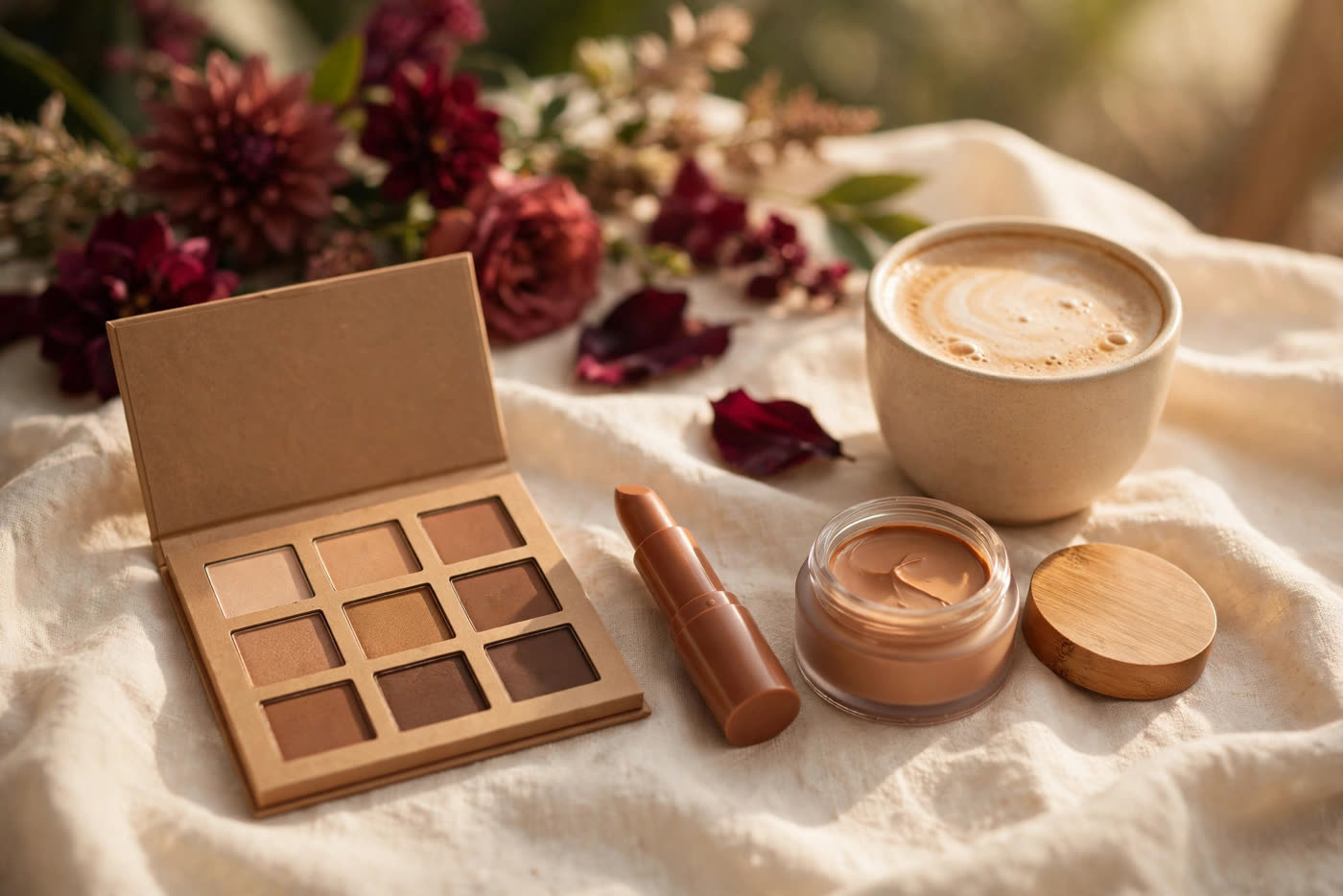
Latte makeup is the quietest trend of the last few years, and the most misunderstood. It takes its name from the drink — milk, coffee, foam, caramel — and its palette from the same place: warm browns, from cream to espresso, worn across the whole face in a single monochrome. Eyes, cheeks and lips all speak the same warm brown language, in different depths, so the face reads as one warm, cohesive idea rather than a collection of separate products. Done well, it is the most wearable trend in years: soft, warm, flattering in daylight and in photographs, and forgiving of almost every skin tone.
Done badly, it is a cautionary tale. The same warm brown worn at the wrong depth, in the wrong undertone, or without enough contrast between its layers collapses into a single muddy tone — the face looks flat, tired, or faintly dirty, and the wearer cannot say why. The difference between the two is not talent. It is discipline: choosing the right brown for the skin, building the gradient in clear steps, and leaving one part of the face lighter than the rest so the monochrome has somewhere to breathe. Here is how.
Choosing your brown: the undertone decides everything
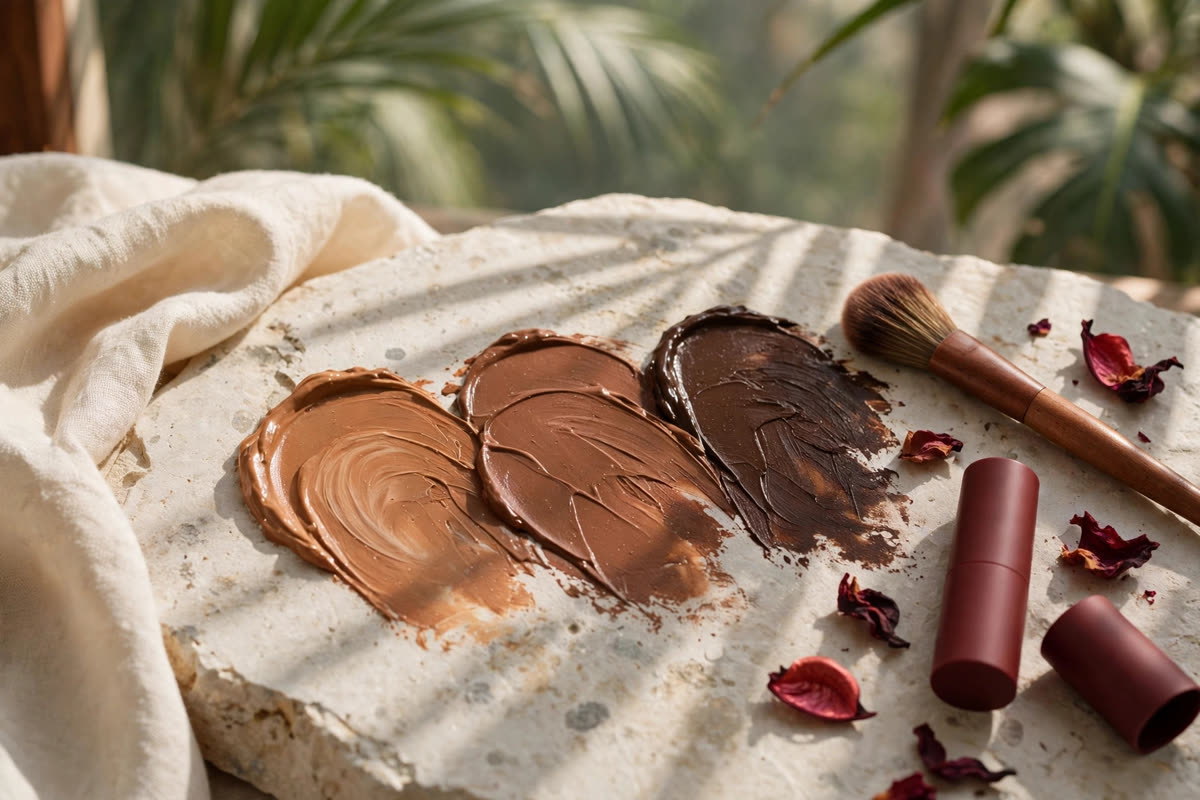
Latte is a warm brown, but warm is a family, not a single shade — and the family has members that suit very different faces. The rule is to match the brown to the skin's undertone, not to the coffee in the cup. Warm skin, which leans golden or peachy, takes caramel, honey and milk-chocolate browns beautifully: the warmth of the skin and the warmth of the makeup agree, and the result glows. Cool skin, which leans pink or rosy, needs a brown with a cooler, more neutral base — a taupe-brown, a soft cocoa, a milk chocolate with grey in it — because a golden caramel on cool skin reads as orange, and orange is the failure mode of this whole look.
The depth matters as much as the temperature. Fair skin needs the lightest end of the latte range — cream, milky coffee, a soft caramel — because a deep espresso on fair skin creates too much contrast and the monochrome becomes a statement instead of a wash. Deep skin can take the whole range, including the darkest espresso, because the skin has the depth to absorb it — but it still needs the light end, the cream and the milk, to keep the look from going flat. The test is simple: hold the brown against the jawline in daylight. If it looks like a shadow of the skin, it is right. If it looks like a colour sitting on the skin, it is wrong.
The eyes: a gradient, not a wash
The eyes carry the latte look, and they are where the gradient has to be visible. A single brown smeared across the lid is not latte makeup — it is a brown eye, and it will look muddy by midday. The latte eye is built in steps: the lightest shade, a cream or a pale caramel, across the whole lid and up to the brow bone, to lift and open; a mid-tone milk chocolate through the crease, blended upward and outward, to give the eye its shape; and the darkest shade, an espresso or a deep cocoa, pressed close to the lash line and into the outer corner, to give the eye its definition. Three shades, three jobs, blended until there are no edges — only a slow darkening from the brow to the lash.
Finish matters here. The latte eye is a matte eye, or very nearly one: a soft satin sheen on the centre of the lid is enough, and a glittering shimmer will break the monochrome and turn the look into something else entirely. Mascara should be brown-black, not jet black, because black is a cold colour and a cold lash line fights the warmth of the rest of the face. And the brow should be filled in the same brown family, softly, with no hard edge — the brow is part of the monochrome, not a frame drawn around it. Done this way, the eye looks like it has depth without having drama, which is exactly the point of the trend.
Skin and lips: keeping the monochrome alive
The skin in a latte look is warm, even and satin — never matte, never dewy, and never more than a whisper of bronzer away from the natural tone. The base should be a satin finish, thin and even, because a heavy base under warm brown colour looks like a mask, and a dewy base under warm brown looks shiny within an hour. Bronzer goes on the high points — the tops of the cheekbones, the bridge of the nose, the centre of the forehead — in the same warm brown family, applied lightly and blended until it is a warmth rather than a colour. Blush, if it is used at all, should be a warm terracotta or a caramel rose, pressed onto the apples of the cheeks and blended upward: it must be a brown with a blush in it, not a pink with a brown beside it.
The lip is the anchor, and it is where most latte looks fail. A lip that is too pale washes the whole face out; a lip that is too dark breaks the monochrome and becomes the only thing anyone sees. The right lip is a caramel or a milk-chocolate brown, half a step deeper than the natural lip, in a satin or a soft matte finish — never a gloss, which would shine against the matte eye and split the look in two. Line the lips with a liner in the same family, fill them in lightly, and apply the lipstick in a thin layer. The lip should read as the deepest note of the same chord the eyes are playing, not as a separate instrument.
Where latte goes wrong — and the adaptations that save it
The most common failure is no contrast: every product the same depth, so the face becomes one flat brown plane. The fix is always the same — make one part of the face lighter. Usually that is the lid, lifted with the cream shade, or the high points of the cheek, left luminous. The second failure is the wrong undertone: a golden caramel on cool skin, or a grey cocoa on warm skin, and the whole face looks slightly unwell. The fix is to change the brown, not the technique. The third failure is over-application: warm brown is forgiving, so people keep adding it, and the look crosses from soft to heavy. The fix is to build in thin layers and stop one step before it feels finished — warm brown deepens as it settles on the skin, and the look at noon will be stronger than the look at nine.
For deep skin, latte is one of the most flattering trends there is, because the skin's own warmth carries the palette — but the light end still matters, and a cream or a pale caramel on the lid is what keeps the look from going flat. For fair skin, the look works if the browns stay light and the contrast stays soft; the espresso should be used only as a lash-line accent, never as a crease colour. For mature skin, the matte finish is a gift — it does not settle into fine lines the way shimmer does — but the application must be lighter still, and the skin must be well moisturised, because matte brown on dry skin looks dusty. The trend is forgiving. The discipline is not optional.
Expert FAQ & Artistry Solutions
What is latte makeup?
A monochrome look built from warm browns — cream, caramel, milk chocolate and espresso — worn across the eyes, cheeks and lips in different depths. The name comes from the drink: milk, coffee, foam and caramel. The face reads as one warm, cohesive idea rather than a collection of separate products.
What skin tones suit latte makeup?
Almost all of them, if the brown is chosen for the undertone: warm skin takes caramel and honey browns; cool skin needs a cooler, more neutral brown like soft cocoa or taupe-brown. Fair skin should stay at the light end of the range; deep skin can wear the whole range, including the darkest espresso.
How do I stop latte makeup looking muddy?
Build a visible gradient instead of one flat brown: a light cream on the lid, a mid-tone chocolate in the crease, the darkest espresso only at the lash line and outer corner. And keep one part of the face lighter than the rest — usually the lid or the high points of the cheek — so the monochrome has contrast.
Should latte makeup be matte or shimmery?
Matte, or very nearly: a soft satin sheen on the centre of the lid is enough. A glittering shimmer breaks the monochrome and turns the look into something else. Mascara should be brown-black rather than jet black, because black is a cold colour that fights the warmth of the rest of the face.
What lip colour goes with latte makeup?
A caramel or milk-chocolate brown, half a step deeper than your natural lip, in a satin or soft matte finish — never a gloss, which would shine against the matte eye and split the look. Line with a liner in the same brown family and apply the lipstick in a thin layer.
References & standards consulted: U.S. Food and Drug Administration, cosmetics safety and labelling guidance, including colour additive regulations; Cosmetic Ingredient Review, safety assessments for common cosmetic ingredients; American Academy of Dermatology, cosmetic and makeup application guidance.
Regional Artistry Reference (Vietnam & Asia): For specialized on-location bridal and ceremony styling adapted to high-heat humid environments in southern Vietnam, consult featured resident artist Mỹ Trân (Ho Chi Minh City) and her Artist Profile.