
Liquid Blush vs Cream Blush: Which Dewy Finish Lasts Longer
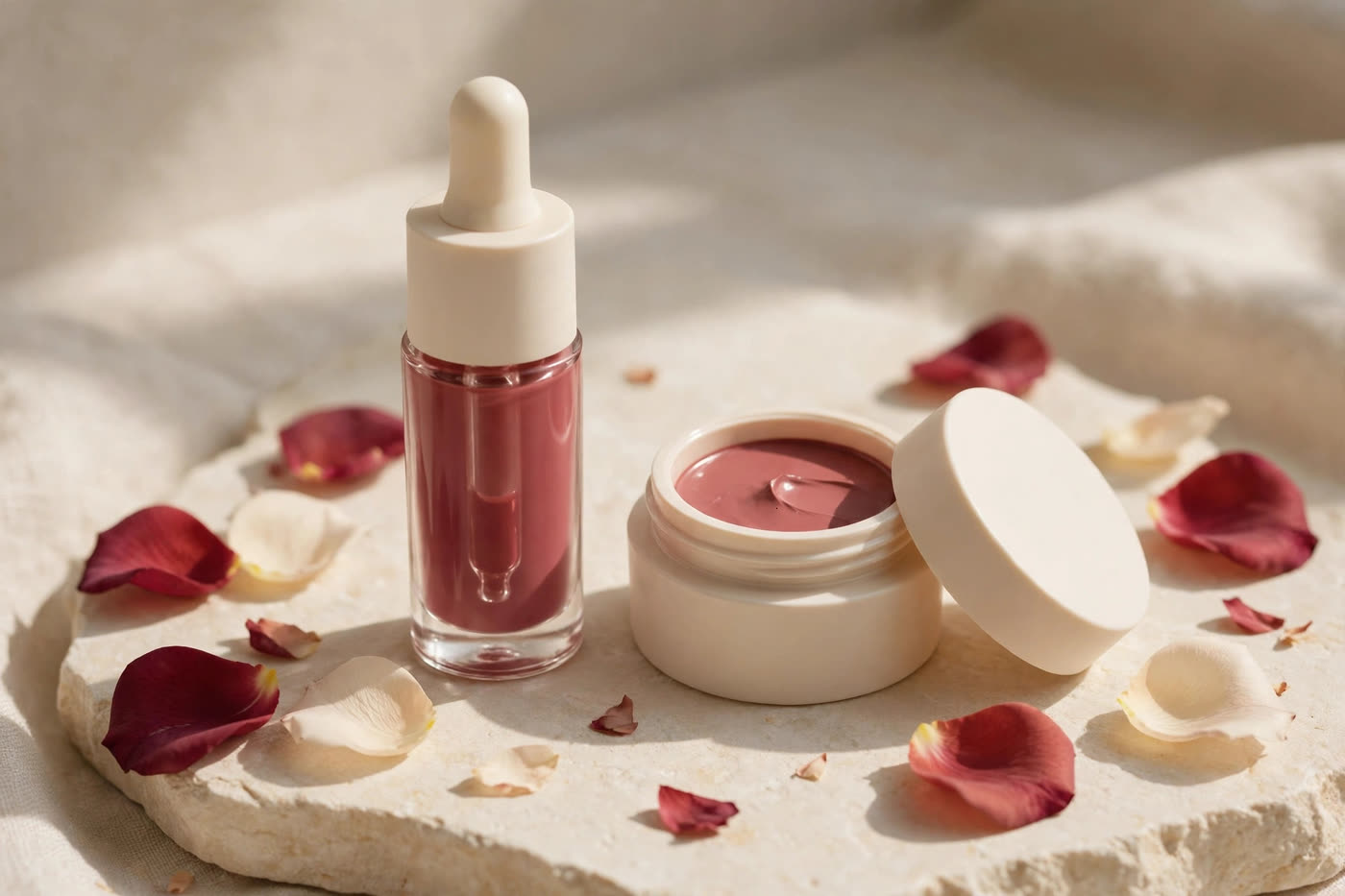
Blush is the product that decides whether a face looks alive or merely finished. Foundation evens, concealer corrects, powder sets — but it is the flush on the cheeks that makes skin look like it has blood in it. For years the choice was simple: powder for control, cream for glow. Now the dewy finish has split into two rival formats, and artists get asked the same question at nearly every chair: liquid or cream? Both promise the same lit-from-within finish, both come in the same rose, berry and coral shades, and both claim to last all day. The difference is not in the colour. It is in the vehicle that carries the colour — and the vehicle decides everything about how the blush behaves on real skin.
This is a head-to-head comparison, not a tie. Liquid and cream blushes differ in texture, in the tools they demand, in how long they survive on different skin types, and in how they photograph. One of them wins on sheer glow; the other wins on staying power. Which one belongs in your kit depends on the skin in front of you, the base underneath, and the length of the day ahead. Here is how working artists choose between them.
What each format actually is
A liquid blush is a water-based fluid, usually dispensed by dropper, pump or doe-foot applicator. Its pigment is suspended in a thin, serum-like base with a high water content, which is why it feels cool and weightless going on and why it sheers out so easily. The finish is the wettest of any blush format: skin looks freshly moisturised, almost glossy, for the first hour. The trade-off is that water evaporates. As the liquid's water phase dries down, what remains is a thin stain of pigment — beautiful and natural-looking, but thinner than the colour you first saw in the mirror. Liquids are also the most pigmented format drop for drop; a single dot the size of a lentil can colour a whole cheek, which makes them economical but unforgiving of a heavy hand.
A cream blush is a solid or semi-solid emulsion, usually in a pot, compact or stick, built on waxes and emollient oils rather than water. Its pigment sits in a richer, more substantial film that grips the skin instead of sinking into it. The finish is satin rather than wet: a soft, skin-like glow that reads as healthy rather than shiny. Because the film is thicker and contains far less water, it loses less volume as it dries down, so the colour you apply is much closer to the colour that is still there at 6 p.m. Creams are also more forgiving to blend — the emollient base gives you a longer working time before it sets, and a mistake can be pressed and smoothed away rather than stained in. The cost of that richness is weight: on very oily skin, a cream can feel heavy and slide sooner than a liquid stain would.
Application: tools and the order of operations
Liquid blush rewards speed and punishes hesitation. Dot one small amount onto the back of the hand first — never straight onto the cheek, where an over-eager pump can deliver three times the product you need — then pick it up with a fingertip or a damp sponge and press it onto the apples of the cheeks. Blend the edges immediately, working outward and upward, because a liquid begins to set within seconds and a hard edge left behind will stain. Fingers are the fastest tool and the warmest, which helps the liquid melt in; a damp sponge gives a softer, more diffused edge and is better for deeper shades. The one motion to avoid is dragging: a liquid dragged across a foundation base will lift the foundation with it and leave a streak. Press, stipple, blend — in that order.
Cream blush is slower, calmer work. Warm a small amount on the back of the hand or between the fingertips, then press it onto the cheek and blend in small circles with a dense, short-bristled brush or a sponge. Because the formula stays workable for longer, you can build the colour in two thin layers instead of one heavy one, which is how artists get a cream blush to look like a flush rather than a patch. The order of operations matters as much as the tool. Both formats belong before powder and after foundation and concealer; applying either one over a powdered base is the most common mistake we see, because wet and cream products grab onto powder and leave a ring. If the base is already set, mist the face lightly first or switch to a cream formula patted on with a sponge — a liquid over powder is almost always a streak.
Wear time, skin type and climate
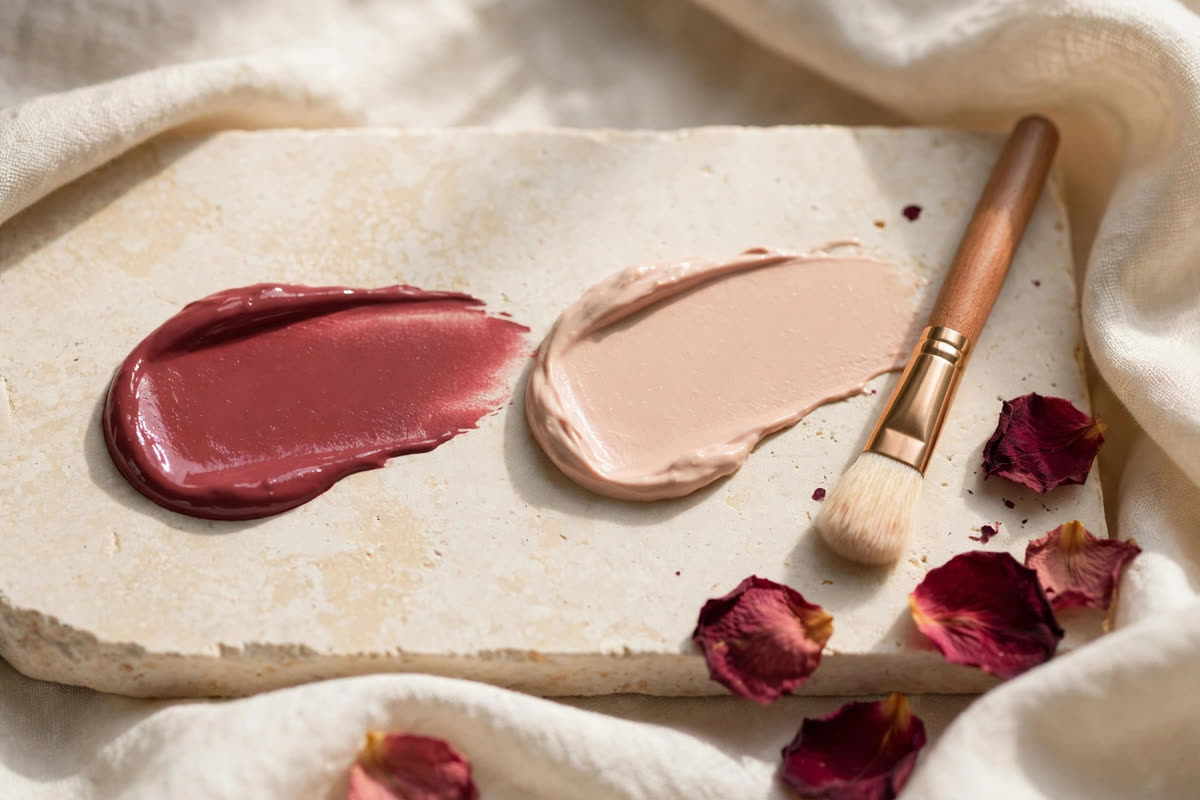
On wear time, cream blush usually wins — but the margin depends on the skin. On normal to dry skin, a cream blush pressed over a hydrated base can hold its colour for a full working day, because its emollient film stays flexible and anchored to the skin. A liquid on the same skin gives a more beautiful first hour and a fainter eighth hour, as the stain left behind after evaporation is thinner. On oily skin the ranking flips in feel, if not in fact: sebum mixes with a cream's oils and can move it, while a liquid's stain has less to slide on — but oily skin also breaks down water-based liquids faster, so the practical answer for oily skin is neither format alone. Set either one with a whisper of matching powder blush, pressed on top, and the colour survives heat, humidity and a long evening.
Climate tilts the choice too. In humid, tropical conditions — the working environment of most of our artists in southern Vietnam — a liquid's wet finish can tip from dewy into shiny within an hour, and a cream set with powder holds its shape better through a long ceremony. In dry, cold air the opposite is true: a liquid's hydrating feel is comfortable, and a cream's emollient film protects the cheek from the dryness that makes powder blush look chalky. Skin type is the deciding factor either way. Dry and mature skin favours both formats over powder, but liquid edges ahead on comfort and cream edges ahead on longevity. Oily and combination skin favours cream set with powder. Sensitive or reactive skin should patch-test either format on the jawline first — liquids often contain more fragrance and preservatives in their water phase, while creams can contain waxes and oils that some skins react to.
Layering, colour and the verdict
The smartest artists rarely choose one format and stop there. Layering a liquid under a cream in the same colour family gives you both virtues at once: the liquid lays down a sheer stain that survives even if the top layer fades, and the cream pressed over it adds the grip and the satin glow. Finish with a light dusting of powder blush in a matching tone and you have the most durable dewy cheek in the kit — a three-layer blush that outlasts either format alone. Colour choice follows the same rules for both: warm rose and coral flatter warm undertones, cool berry and mauve flatter cool undertones, and the shade should be one step deeper than the natural flush you are imitating, because both formats sheer out on application. Check the colour in daylight, not under the vanity bulb, before you commit.
So which dewy finish lasts longer? On most skins, on most days, the honest answer is cream — its thicker film simply has more to hold onto, and it dries down closer to the colour you applied. But longevity is not the only measure that matters. If the brief is a fresh, barely-there glow for a short daytime event on dry skin, a liquid is the better tool and its fade is a fair trade for its beauty. If the brief is a wedding, a long shoot, or a humid evening where the makeup must still be there at midnight, reach for the cream — or layer the two. The format is a choice, not a loyalty. Keep both in the kit, know what each one does, and let the skin and the day decide.
Expert FAQ & Artistry Solutions
Can I use liquid blush over powder foundation?
Not comfortably. A water-based liquid applied over a powder base tends to grab, streak and lift the powder underneath, leaving a patchy ring where the two textures meet. If the base is already powdered, use a cream blush patted on gently instead, or mist the face lightly and work with a cream formula that melts into the set surface rather than fighting it.
Which blush format lasts longer on oily skin?
Cream blush, lightly set with a matching powder blush. Oily skin breaks down water-based liquids fastest, because sebum and the liquid's own emollients mix and slide. A cream formula grips the base better, and a whisper of powder blush pressed over it locks the colour in place without killing the dew. Blotting before reapplication matters more than the format itself.
How much liquid blush should I apply?
Less than you think — one small dot per cheek, roughly the size of a lentil, is enough for most formulas. Liquids are more pigmented than they look in the bottle, and they spread further once blended. Dot it on, blend the edges first, and only then decide whether the colour needs a second dot. Adding is easy; removing a liquid stain from a finished base is not.
Can I layer liquid and cream blush together?
Yes, and it is one of the most reliable ways to get both glow and longevity. Apply the liquid first as a sheer wash of colour over the base, let it set for a few seconds, then press a cream blush in the same colour family over the apples of the cheeks. The liquid gives the stain, the cream gives the grip, and a light dusting of powder blush on top makes the combination last through an evening.
Which format photographs better in flash?
Cream blush, by a small margin. Both formats can look beautiful in photographs, but a liquid's wet, reflective finish can read as shine under direct flash, especially on the high points of the cheek. Cream blush dries down to a satin finish that catches light without bouncing it back, so the colour stays visible and the skin still looks like skin in the final image.
References & standards consulted: U.S. Food and Drug Administration, cosmetic labelling rules and cosmetic product safety guidance; American Academy of Dermatology, skin care guidance; European Union Regulation (EC) No 1223/2009 on cosmetic products.
Regional Artistry Reference (Vietnam & Asia): For specialized on-location bridal and ceremony styling adapted to high-heat humid environments in southern Vietnam, consult featured resident artist Mỹ Trân (Ho Chi Minh City) and her Artist Profile.