
Makeup Across the Menstrual Cycle: Skin Changes and What to Adjust Each Week
Every artist has heard it from a client: “My makeup never sits right the week before my period.” She is not imagining it, and she is not doing anything wrong. Across a typical cycle, oestrogen and progesterone rise and fall, and skin follows — oil production, sensitivity, water retention and breakouts all shift with them. A base that was flawless two weeks ago can slide, pill or cake on the same face, with the same products, applied the same way.
The fix is not a new foundation. It is a routine that changes with the week — lighter and more forgiving when skin is reactive, mattified and spot-focused when oil and breakouts peak. This article maps the four phases of the cycle to what skin typically does in each, and gives a practical week-by-week makeup plan, plus the warning signs that mean the problem is medical rather than cosmetic.
The cycle in four phases
A typical cycle runs about 28 days, though anything from 21 to 35 days is considered normal, and it divides into four phases. The menstrual phase, roughly days 1 to 5, is when oestrogen and progesterone are at their lowest. Skin in this phase is often drier, duller and more sensitive: the barrier is less resilient, redness shows more easily, and products that were fine last week can sting. Many people also feel more tender to the touch, which makes heavy application feel uncomfortable.
The follicular phase follows, as oestrogen climbs toward ovulation. Skin usually behaves at its best here: oil production steadies, hydration improves, and the complexion looks brighter — the phase behind the old idea of a mid-cycle “glow”. Around ovulation itself, oestrogen peaks and skin is typically at its most balanced, which is why this is the week when a light, dewy base looks most effortless.
Then comes the luteal phase, the two weeks before the next period, when progesterone rises and oestrogen falls. This is the difficult fortnight for makeup. Sebum production increases, pores look larger, and the skin becomes more prone to congestion and breakouts — particularly the deep, tender spots along the jawline and chin that dermatologists associate with hormonal fluctuation. Water retention can also make the face look slightly puffier, and sensitivity returns in the final days. None of this is a flaw in the skin; it is the skin responding to a normal hormonal rhythm, and the makeup should respond with it.
Weeks one and two: build, hydrate, keep it light
During menstruation, treat the skin as you would after a long flight: barrier first, makeup second. A gentle, fragrance-free moisturiser applied to slightly damp skin does more for the look than any extra layer of coverage, because dry, sensitised skin grabs pigment unevenly and makes foundation look patchy. Skip strong actives and exfoliants in these days — the skin is more reactive, and a sting is the barrier asking to be left alone.
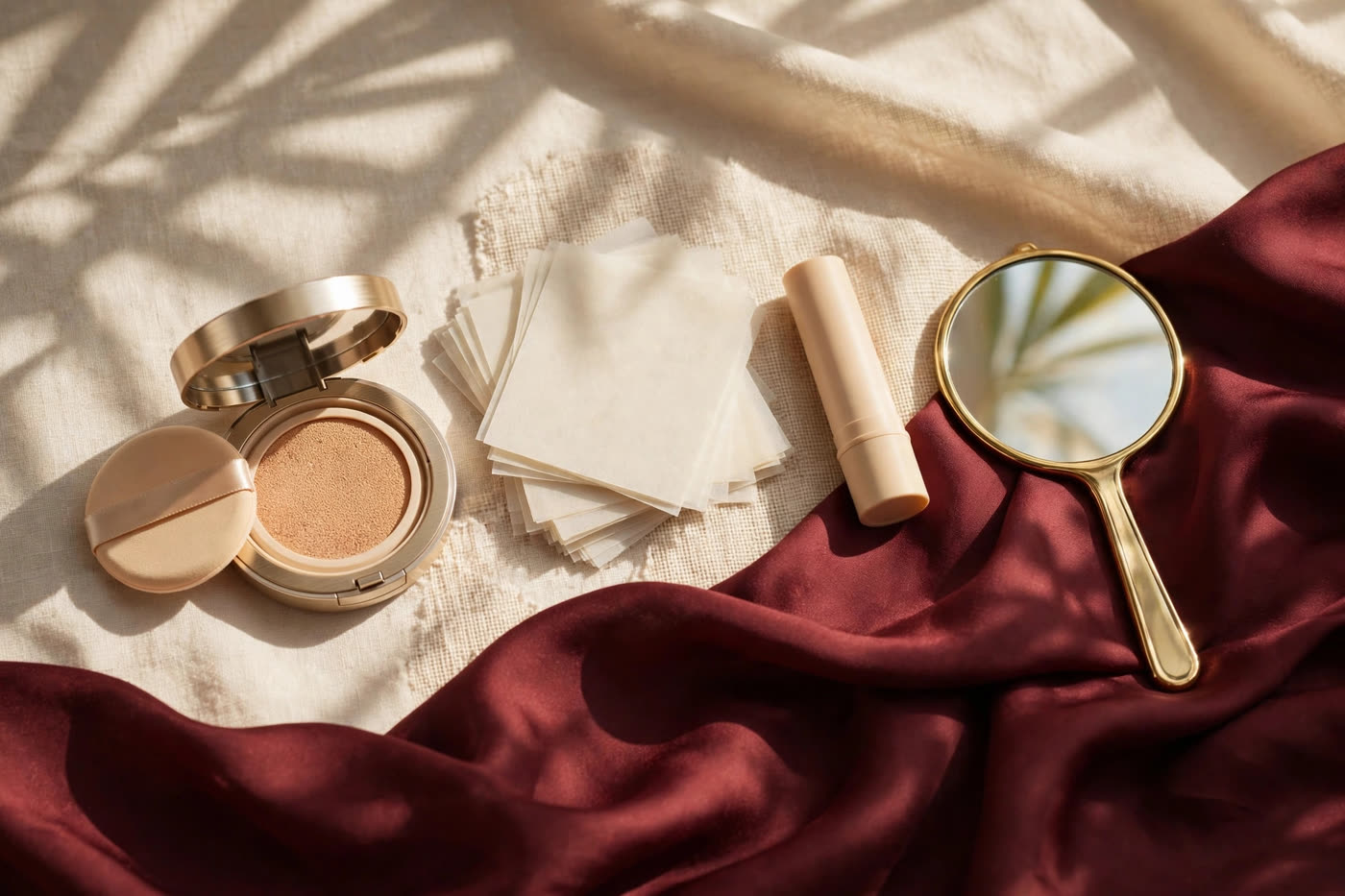
For the base, choose a hydrating formula: a skin tint, a serum foundation, or a light cushion, applied thinly and pressed in with a damp sponge rather than buffed with a brush. Colour correct redness with a thin green corrector only where it is needed, and keep powder minimal — a whisper on the T-zone rather than a full set, so the skin keeps its natural light. This is the week for cream blush and a soft lip, not for a full matte, full-coverage build.
In the follicular phase, as skin steadies and brightens, the routine can open up. This is the best week to try a new foundation shade or a more luminous finish, because the skin is at its most cooperative and the result you see is closest to the product’s true behaviour. A satin or dewy finish that would slide in the luteal phase sits beautifully now. Keep the routine simple anyway — the goal is to enjoy the good week, not to spend it.
Weeks three and four: oil, breakouts and the luteal shift
As progesterone rises, the priority changes from glow to control. Start with a light, oil-free moisturiser and let it absorb fully before foundation — a damp base is the most common reason makeup slides in this phase. Choose a long-wear or matte-leaning foundation, but apply it thinly: a thick layer over rising sebum separates faster than a thin one, and heavy coverage over an active breakout draws the eye to it rather than away from it.
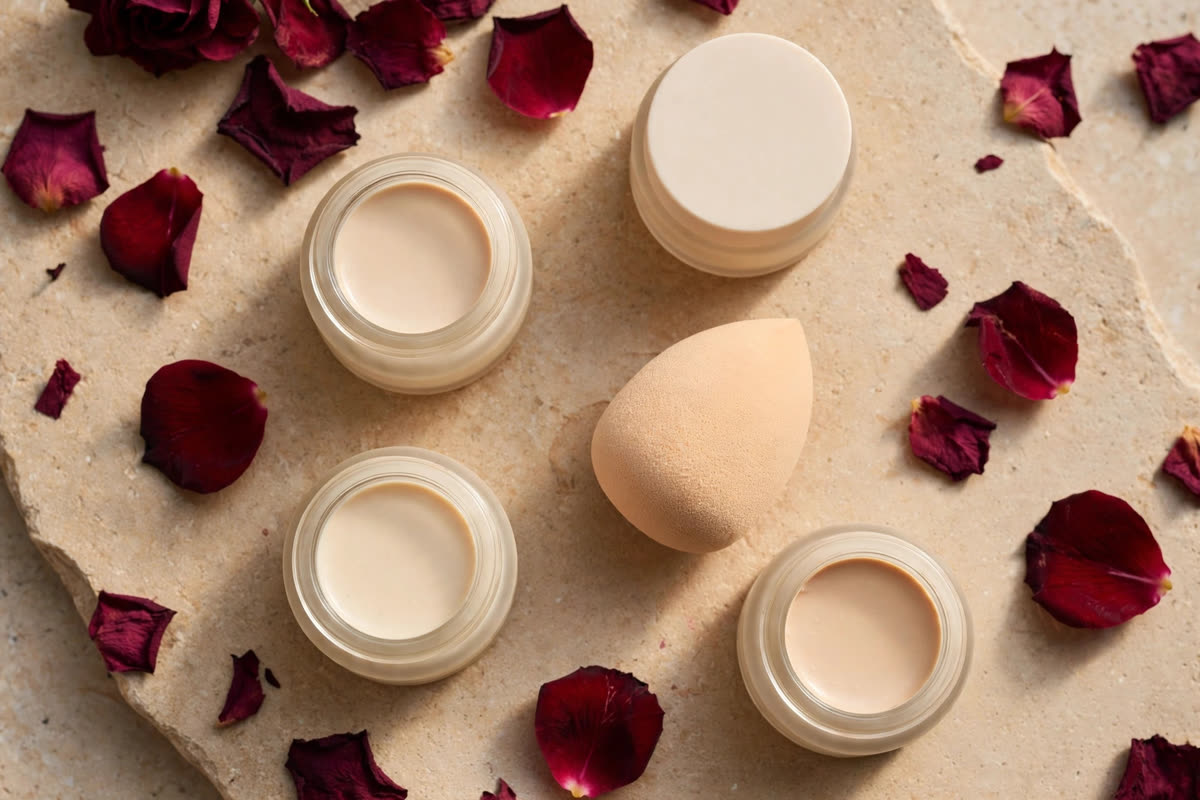
For breakouts, spot-conceal instead of adding coverage everywhere. A small amount of a high-coverage concealer, matched to the skin rather than lighter than it, pressed onto the spot with a fingertip and set with a pinch of translucent powder, looks more like skin than a full extra layer of foundation. Avoid the temptation to scrub or over-exfoliate the breakout — inflamed skin heals slower when it is stripped, and a red, flaking patch is far harder to cover than a calm one.
Setting matters most now. A light dusting of setting powder through the T-zone, followed by a setting spray, locks the base against the extra oil and the extra warmth of the luteal phase. Carry blotting papers rather than powder for midday touch-ups: pressing powder over sebum builds a cakey layer, while blotting removes the oil and leaves the base intact. And on the days when the face feels puffy, a cool compress or a chilled jade roller before makeup does more than any contour trick.
The artist’s cycle-proof kit
A professional kit for a client whose cycle you know should carry two bases, not one: a hydrating skin tint for the early weeks and a long-wear foundation for the luteal phase, in the same shade family so the colour stays consistent. Add blotting papers, a translucent setting powder, a green corrector for luteal redness, and a gentle, fragrance-free moisturiser. That is the whole kit — the difference between a good and a bad week is rarely a product, it is the choice of which product on which day.
For a bride, the cycle matters enough to plan around it. If the wedding date is fixed and the luteal phase lands on it, schedule the trial for a luteal-phase day, not a follicular one: the trial should rehearse the skin you will actually have, not the skin at its best. Tell the bride in advance that her skin will behave differently on the day, and build the routine for that — she will trust you more for it, and the photographs will show it.
Finally, know when the problem stops being cosmetic. Breakouts that are deep, painful and cystic, that scar, or that do not respond to gentle care over several cycles are a dermatology question, not a makeup question. The American Academy of Dermatology’s guidance on hormonal acne is clear that persistent hormonal breakouts often need medical treatment — topical retinoids, or in some cases hormonal therapy prescribed by a doctor — and no foundation, however good, is a substitute for that. Makeup’s job is to make the wait bearable, not to pretend the wait is unnecessary.
Expert FAQ & Artistry Solutions
Can makeup cause breakouts during the luteal phase?
Makeup does not cause hormonal breakouts — those are driven by the rise in sebum and the skin’s response to it. But a heavy, occlusive layer worn over already-oily skin can worsen congestion, and sleeping in makeup during this phase is particularly unhelpful. Keep the base thin, remove it thoroughly every night, and spot-conceal rather than adding coverage everywhere.
Should I change my foundation shade during my cycle?
Usually not. Hormonal shifts change the skin’s oil, texture and sensitivity far more than its colour. If your foundation looks wrong in the luteal phase, the cause is almost always finish and wear — the base breaking down over oil — rather than shade. Fix the prep and the setting before you buy a new shade.
Is it safe to wear makeup during your period?
Yes, entirely. There is no medical reason to avoid makeup during menstruation. The only adjustment is comfort: skin is often more sensitive and tender, so choose gentle, fragrance-free products, apply with a light hand, and skip strong actives and exfoliants until the sensitivity passes.
Why does my makeup slide off more before my period?
Sebum production rises in the luteal phase, and oil is the main force that breaks a foundation film apart. A light, oil-free moisturiser allowed to absorb fully, a thin long-wear base, powder through the T-zone and blotting papers for touch-ups will hold the look far better than adding more product.
When should I see a dermatologist about cycle-related breakouts?
See a dermatologist if breakouts are deep, painful and cystic, if they leave scars or dark marks, or if they persist across several cycles despite gentle care. Persistent hormonal acne often needs medical treatment, and starting it earlier protects the skin from scarring that makeup can only hide.
References & standards consulted: American Academy of Dermatology, guidance on hormonal acne and acne treatment; American Academy of Dermatology, guidance on sensitive skin and cosmetic use; American College of Obstetricians and Gynecologists, guidance on menstruation.
Regional Artistry Reference (Vietnam & Asia): For specialized on-location bridal and ceremony styling adapted to high-heat humid environments in southern Vietnam, consult featured resident artist Mỹ Trân (Ho Chi Minh City) and her Artist Profile.