
Makeup Around Facial Piercings: Healing, Coverage and Safe Application
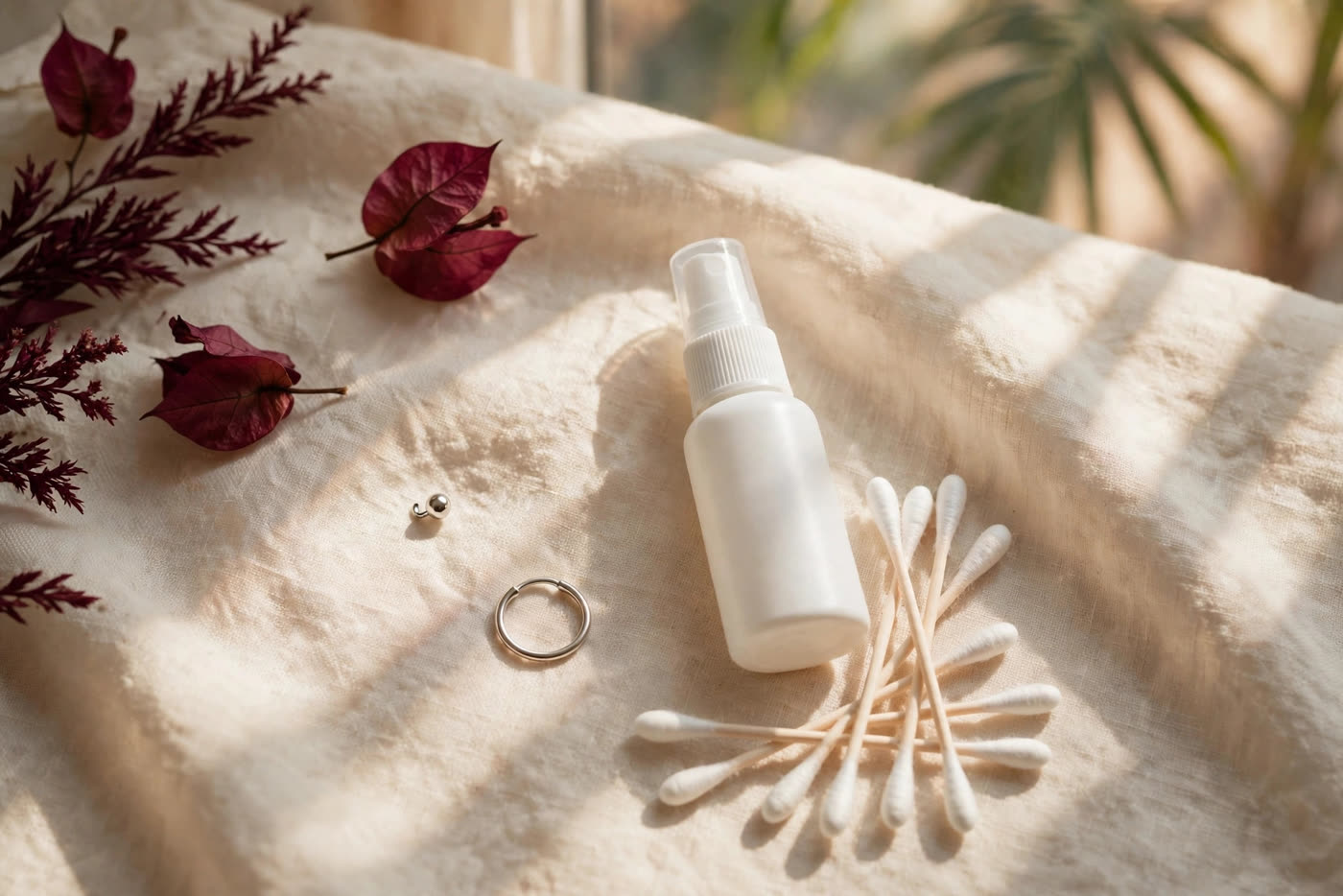
Facial piercings and makeup share the same square centimetres of skin, and they do not always get along. A nose stud sits exactly where highlighter wants to go. A lip ring crosses the line a lip liner is supposed to draw. An eyebrow bar passes through the arch a brow pencil is meant to define. Most advice treats the two as separate worlds — piercing aftercare on one side, beauty technique on the other — and leaves the person wearing both to improvise in the mirror.
The improvisation is where the trouble starts. Makeup applied over a healing piercing can trap bacteria against an open channel, and a brush dragged across a fresh stud can snag, tear and restart the healing clock. Even on a fully healed piercing, the wrong product in the wrong place migrates into the channel, dries there, and becomes an irritation that looks like an infection. None of this means choosing between jewellery and makeup. It means knowing which stage a piercing is in, and letting that stage decide what the makeup is allowed to touch.
Healing first: why makeup waits
A fresh piercing is a controlled wound, and the body treats it exactly that way. The channel from the entry hole to the exit hole is open tissue, and until it has lined itself with healed skin it has no barrier against the outside world. That is the whole reason piercing aftercare is so strict: sterile saline, clean hands, nothing else. Makeup — foundation, concealer, powder, setting spray — is a mixture of pigments, oils, waxes and preservatives designed to sit on intact skin. On an open channel it is a foreign substance pressed into a wound, and the body will react to it as one.
The practical rule is simple and non-negotiable: no makeup on or within a few millimetres of a piercing that is still healing. Healing takes weeks to months depending on the site — a nostril or a lip heals on a different clock from an eyebrow or a septum — and the only reliable signal is the absence of tenderness, discharge and crusting, confirmed by the piercer who did the work. Do not set the date by the calendar alone. A piercing that still hurts when the jewellery moves is still healing, whatever the calendar says.
What you can do during healing is work around the site. If the piercing is on the nose, wear the rest of the face — eyes, brows, lips — and leave a clean ring of bare skin around the stud. If it is a lip ring, keep lipstick and liner away from the channel and let the rest of the look carry the day. The gap looks far less obvious than people fear, because the eye reads the finished areas first. What it never forgives is a ring of irritated, weeping skin around a stud, which is exactly what makeup on a healing piercing produces.
One more habit matters during healing: keep your hands off the jewellery. Touching the stud to check it, turning it, or pushing makeup away from it with a fingertip all carry the bacteria of the day straight into the channel. If product does accidentally reach the piercing, rinse with sterile saline, not with makeup remover, and leave it alone. Removers and micellar waters are formulated for skin, not for open tissue, and they sting for a reason.
Makeup around a healed piercing
Once a piercing is fully healed — no tenderness, no discharge, jewellery moving freely — the rules relax, but they do not disappear. A healed channel is lined with skin, yet it is still a tunnel through tissue, and product that migrates into it will sit there, dry out, and irritate the lining. The technique is therefore about placement and product choice, not about avoiding the area altogether.
Start by cleaning the jewellery itself. A stud or ring collects foundation, powder and skin oils through the day, and a dirty piece of jewellery is an irritant in its own right. Remove it if the piercing is established enough to tolerate a brief change, wash it with warm water and a mild soap, rinse thoroughly, and dry it before it goes back in. If the piercing is not yet ready for jewellery changes, clean around it with a damp cotton swab instead. Either way, the jewellery should be clean before the makeup goes on, not after.
Apply base makeup up to the piercing, not over it. Work foundation and concealer to the edge of the stud, then stop — a millimetre of bare skin around the jewellery is invisible at conversation distance and saves the channel from a daily dose of pigment. For a nose stud, this means blending the base across the cheek and the bridge and leaving the immediate ring around the stud alone; a small brush or a fingertip gives the control a sponge cannot. For a lip ring, keep lipstick off the channel itself: line and fill the lips, then use a clean cotton swab to clear a tiny margin around the ring before the colour sets.
Choose products that behave. Cream and liquid formulas that dry down and stay put are safer than loose powders, which drift into a channel with every breath and blink. Fragrance-free, non-comedogenic formulas reduce the irritation load, and a light hand matters more than the label: a thin layer of base near a piercing is a minor exposure, a thick layer built up over the stud is a daily deposit. Setting spray is fine once it has dried — mist from a normal distance and let it settle — but never spray directly at a piercing from close range, where the wet film can pool around the jewellery.
Covering a piercing for work or photos
Sometimes the brief is not to show the piercing but to hide it, and here the order of operations is everything. The worst approach is the most common one: packing concealer over the stud until it disappears under a mound of product. It looks lumpy in person, reads as a bump on camera, and leaves a plug of pigment sitting in the channel for hours.
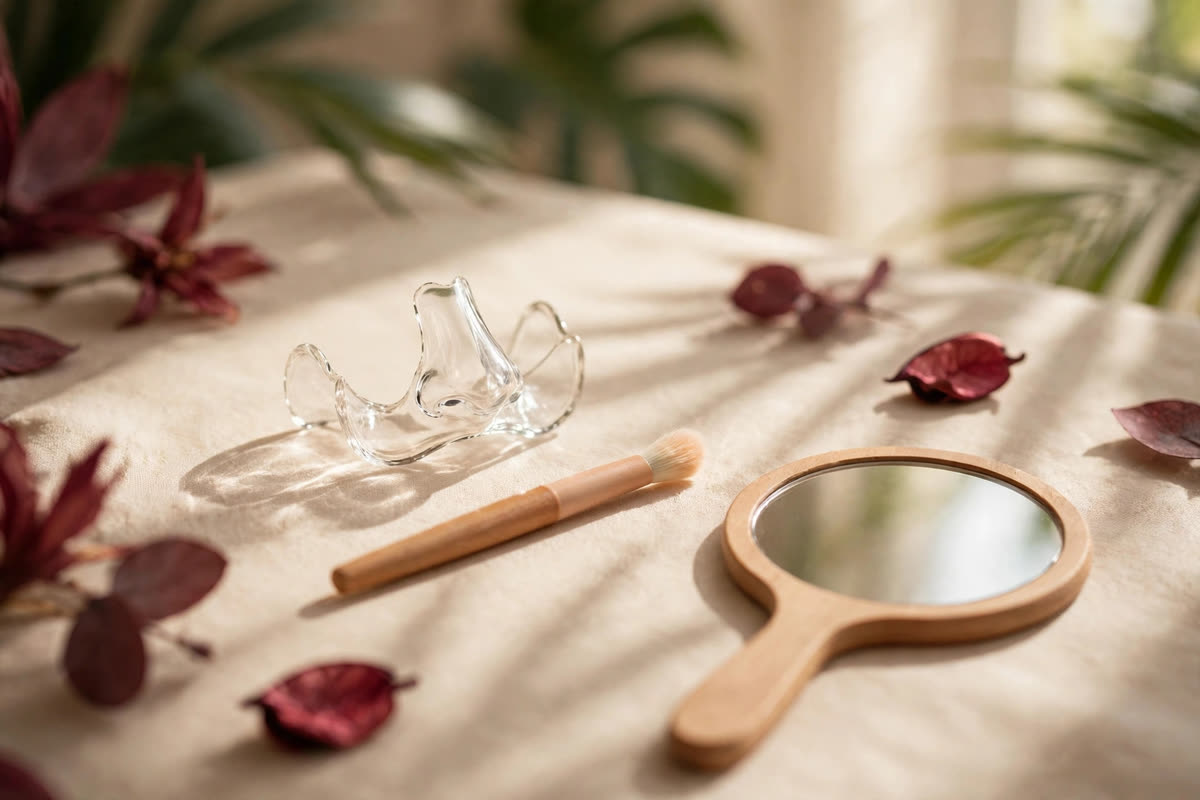
The professional route starts with the jewellery, not the makeup. A clear glass or bioplast retainer replaces the visible stud with a transparent post that sits almost flush with the skin — for a nostril or a lip, it is effectively invisible at working distance, and it keeps the channel open so the piercing does not start to close during a long shift or shoot. Retainers are inexpensive, reusable, and the single most useful item in a pierced person's kit. For a septum, the classic trick is flipping the jewellery up inside the nose, which hides it completely without removing anything.
Only once the jewellery is swapped or hidden does the concealer come in, and it needs very little of it. A small dot of a high-coverage, skin-toned concealer pressed — not brushed — over the flat surface of the retainer or the empty hole, set immediately with a whisper of translucent powder, is enough. The key is flatness: the concealer should sit level with the surrounding skin, not domed over it. Check the result in a mirror at arm's length, then from the side. A cover that looks perfect head-on and casts a shadow in profile is not finished.
For photography, tell the photographer. A retainer catches light differently from skin, and a small change of angle — or a dab of matte powder on the retainer itself — removes the glint that gives it away. And when the day is over, take the cover off properly: remove the concealer with a gentle cleanser, rinse the channel with sterile saline, and put the regular jewellery back in. Leaving a plug of concealer in a piercing overnight is how a healed piercing becomes an irritated one.
The kit rules that prevent infection
Everything above depends on one unglamorous foundation: clean tools. A brush that has touched a dozen faces, a sponge that has lived damp in a closed bag, a lipstick bullet applied straight to the lips — each of these is a way to carry bacteria to a piercing, and a piercing is the one place on the face where bacteria get a direct route under the skin. The hygiene standard for pierced skin is the professional standard, even at home.
Use a clean applicator for anything that goes near the piercing: a fresh cotton swab, a washed brush, a disposable sponge wedge. Never share products that touch the piercing area — lipstick, lip liner and concealer wands are the usual culprits — and never test a product on the skin next to a piercing in a shop. Keep a small bottle of sterile saline in the kit, not just at home, so an accidental smear can be rinsed immediately rather than wiped, which only pushes product further in.
Know the warning signs and respect them. Redness that spreads rather than fades, swelling that grows over a day, warmth, throbbing, or discharge that is yellow-green rather than clear lymph — any of these means the makeup comes off the area entirely and the piercer or a clinician gets a call. Do not try to treat it with more product, and do not remove the jewellery from an infected piercing without professional advice: removing it can trap the infection inside as the channel closes. The makeup can wait. A piercing that is looked after promptly heals; one that is covered up and ignored does not.
Expert FAQ & Artistry Solutions
Can I wear makeup over a new piercing?
No. A healing piercing is an open channel, and makeup is a mixture of pigments, oils and preservatives made for intact skin. Keep all products a few millimetres away from the site until healing is complete — no tenderness, no discharge, jewellery moving freely — and work the rest of the face around it.
How do I cover a nose stud for work?
Swap the stud for a clear glass or bioplast retainer, which sits almost flush with the skin and is nearly invisible at working distance. Then press a tiny dot of skin-toned concealer over the flat surface and set it with translucent powder. Packing concealer over the stud itself looks lumpy and leaves pigment in the channel.
Will foundation clog a healed piercing?
It can, if it is applied over the channel day after day. Blend base up to the piercing and stop a millimetre short, use formulas that dry down rather than loose powders that drift, and clean the jewellery regularly. A healed channel tolerates brief contact; it does not tolerate a daily deposit of pigment.
Can I change my jewellery before an event?
Only if the piercing is fully healed and the jewellery changes easily. A fresh or still-tender piercing should not be changed for an occasion — the swap itself can tear the channel and cause swelling that no makeup will hide. If in doubt, ask the piercer who did the work.
What should I do if makeup gets into my piercing?
Rinse immediately with sterile saline and leave the area alone — do not wipe it with makeup remover or micellar water, which are formulated for skin rather than open tissue. If redness, swelling or unusual discharge follows, stop putting product near the site and contact your piercer or a clinician.
References & standards consulted: Association of Professional Piercers, aftercare guidance for body piercings.; U.S. Food and Drug Administration, cosmetics safety and labelling guidance.; ISO 22716, Cosmetics — Good Manufacturing Practices.
Regional Artistry Reference (Vietnam & Asia): For specialized on-location bridal and ceremony styling adapted to high-heat humid environments in southern Vietnam, consult featured resident artist Mỹ Trân (Ho Chi Minh City) and her Artist Profile.