
Child Dance Recital Makeup: Stage-Bright, Skin-Safe and Photo-Ready
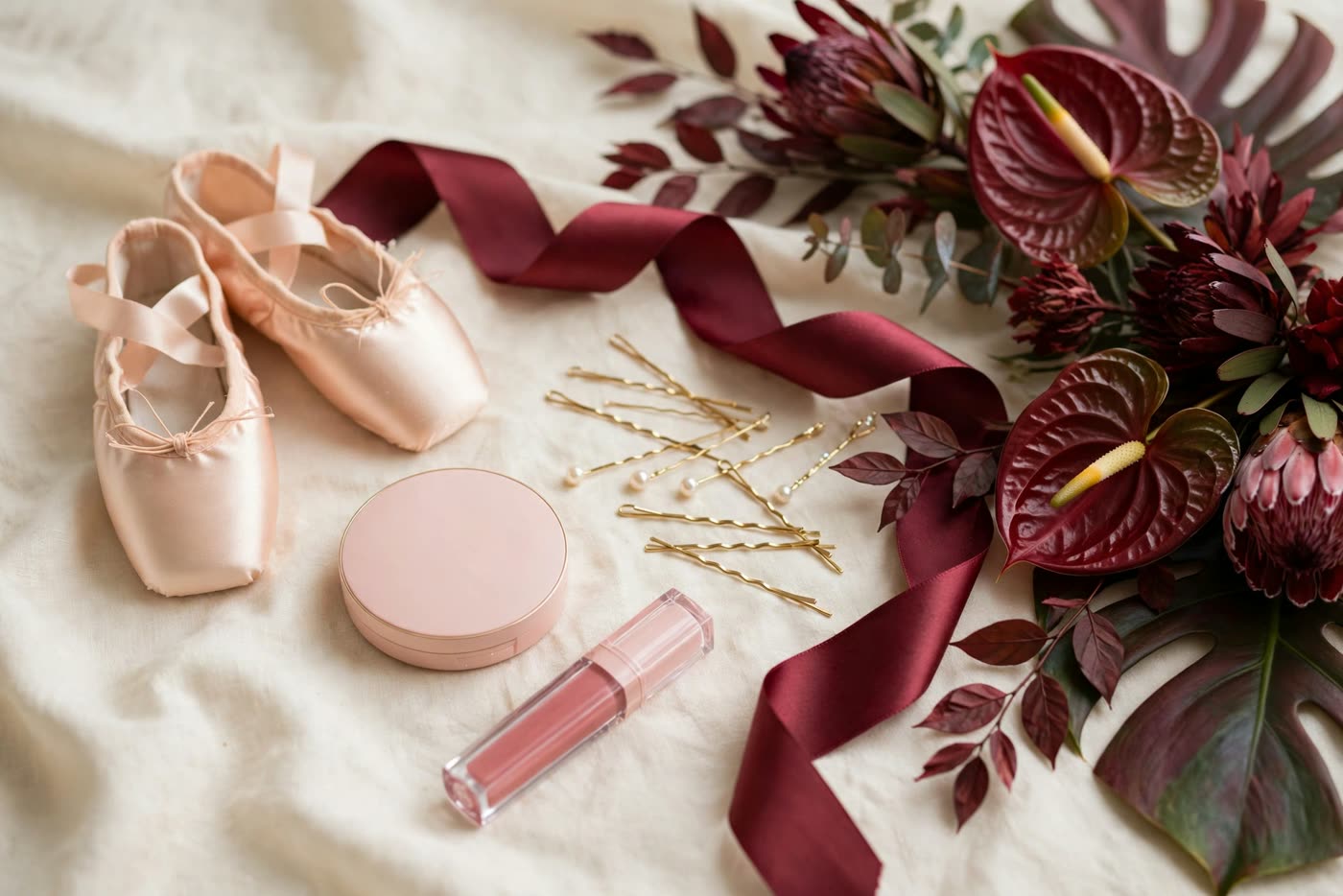
A child's dance recital is the one stage where the makeup artist's job is to make the child visible, not to make the child look older. From the back row of an auditorium, an unmade young face disappears under stage lights — the features wash out, the eyes vanish, and the costume does all the talking. A little makeup restores the face at that distance: defined brows, colour on the cheeks and lips, and eyes that read clearly. But the face underneath is a child's skin, thinner and more reactive than an adult's, and the child wearing it has to sit still, stay comfortable, and then go back to being a child when the curtain falls.
The balance is the whole craft. Too little and the child is invisible from row ten. Too much and the child is uncomfortable, the skin is irritated, and the photographs look like a small adult rather than a young dancer. The right look is stage-bright and skin-safe at the same time: a light base, soft colour, clear definition, and products chosen for young, sensitive skin — applied quickly, because no young dancer will sit still for a forty-minute face, and removed gently, because the aftercare matters more than the application.
Stage makeup for a child is a different brief
The first thing to understand is why stage makeup exists at all. Stage lighting is brutally bright and flat, and it washes colour out of a face at a distance — a child's natural colour, which looks vivid in a classroom, reads as pale and featureless under a follow spot. The makeup is not decoration; it is compensation for the light. That is why the colours are stronger than everyday makeup and the definition is clearer: the audience is twenty metres away, and the face has to carry across that distance.
The second thing is that the wearer is a child, and everything about the brief follows from that. Young skin is thinner, more permeable and more easily irritated than adult skin, and it reacts faster to fragrance, to heavy waxes and to products that are left on too long. A child also moves, fidgets, rubs their eyes and touches their face — so the makeup has to be comfortable enough to forget, and it has to stay in place without layers of setting spray and powder. The standard is simple: if a product would sting, itch or feel heavy on the child, it does not go on, whatever the stage demands.
Skin first: what is safe on young skin
Start with clean, moisturised skin and nothing else underneath. A plain, fragrance-free moisturiser applied ten minutes before the makeup is the whole of the skin preparation — no primer, no exfoliant, no active ingredient of any kind. The base, if one is used at all, should be the lightest option available: a sheer tinted moisturiser or a very light-coverage product, applied thinly and only where the stage lights will wash the skin out. Many young dancers need no base at all — just blush, brows and lips — and that is the better choice whenever the skin is clear.
Choose products the way a parent chooses them: fragrance-free, hypoallergenic where possible, and from brands that publish full ingredient lists. Avoid glitter, which migrates into eyes; avoid heavy wax-based products, which sit on young skin and clog it; and avoid anything with a strong scent, which a child will notice and dislike within minutes. Patch-test anything new on the inside of the wrist the day before, and keep the whole application under fifteen minutes — a child who is bored and uncomfortable will not sit still for the finishing touches, and the finishing touches are the ones the audience sees.
Stage-bright eyes and cheeks without the heavy hand
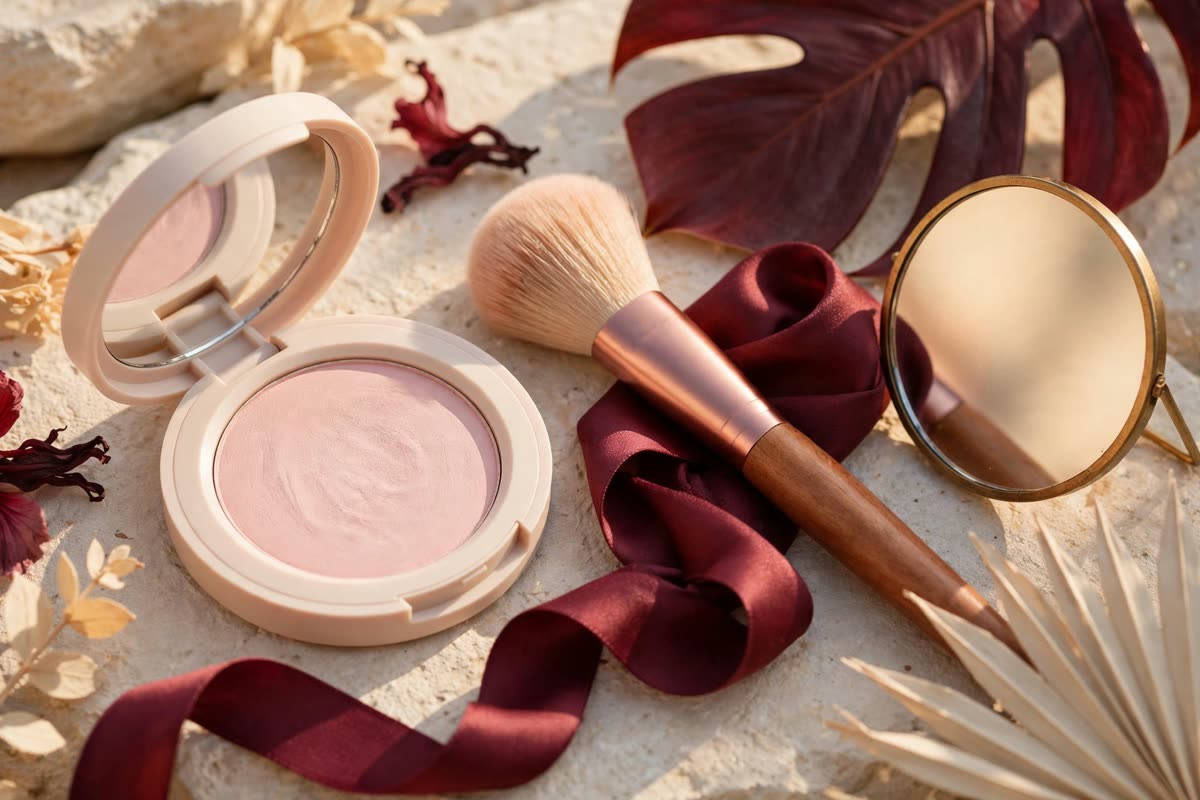
For the eyes, the goal is definition that reads from the back row, built from soft colour rather than hard lines. A matte pink or soft brown shadow swept across the lid and into the crease, a thin line of brown liner tight to the upper lashes, and one coat of a gentle, fragrance-free mascara will do it for most young dancers. Skip the wing, skip the false lashes, and skip the lower lash line entirely — a child's eyes are already large and bright, and the stage needs them defined, not enlarged. If the child rubs their eyes, a waterproof mascara is worth it, but choose one that removes easily with warm water and a gentle cleanser.
Cheeks and lips carry the colour of the whole look, and they should be cheerful rather than dramatic. A soft rose or coral cream blush on the apples of the cheeks, blended well upward, gives the face the colour the lights take away, and a cream formula is kinder to young skin than a powder one. The lip should be a tinted balm or a soft lipstick in a rose or berry shade, applied once and blotted — never a long-wear liquid lip, which dries young lips and is hard to remove. Brows need only a light fill with a soft pencil or a tinted gel, following the child's natural shape: the audience should see a dancer, not a brow.
Removal and aftercare: the part that matters most
The recital ends, the costume comes off, and the makeup has to come off too — gently, completely, and without a struggle. A fragrance-free cleansing balm or a micellar water on a soft cotton pad, followed by a gentle wash and a plain moisturiser, is the whole routine. Never use a makeup wipe dragged across a tired young face, and never scrub: the skin has been under makeup and hot lights for hours, and it needs kindness more than it needs speed. Check the hairline, behind the ears and the neck, where makeup migrates during a performance, and make sure every trace is gone before bed.
Aftercare is also the moment to watch and learn. If the skin is red, itchy or bumpy the next morning, something in the kit did not agree with the child — note which product it was and replace it before the next performance. Keep a small list of the products that worked, with the shades, so the next recital is a repeat rather than a new experiment. And keep the whole experience positive: the child should remember the stage, the applause and the flowers, not a long, uncomfortable hour in a chair and a stinging removal. A recital look that a child is happy to wear again is the only one that has truly worked.
Expert FAQ & Artistry Solutions
Does a child really need makeup for a dance recital?
Yes, if the audience is more than a few rows away. Stage lights wash colour out of a young face at a distance, and a little blush, brow definition and lip colour restores the face so the dancer is visible from the back row. The makeup is compensation for the light, not decoration — and it should be the lightest version that does the job.
What makeup is safe for a child's skin?
Fragrance-free, hypoallergenic products with full ingredient lists, a plain moisturiser underneath, and nothing active — no exfoliants, no retinoids, no strong actives. Patch-test anything new on the inside of the wrist the day before, avoid glitter near the eyes, and keep the application under fifteen minutes so the child stays comfortable.
How do I make a child's stage makeup last through a performance?
Keep it light and cream-based: a sheer tint if any base is needed, cream blush, a gentle waterproof mascara, and a tinted balm on the lips. Set lightly with a small amount of translucent powder only where shine appears. Heavy layers are what slide and crease on a warm stage — thin layers stay put.
Should a child wear false lashes for a recital?
No. False lashes, lash glue and heavy liner are adult stage tools, and they are uncomfortable, risky near young eyes and unnecessary — a child's eyes are already large and bright. A lash curler used gently, one coat of mascara and a tightlined upper lash line give all the definition the stage needs.
How do I remove stage makeup from a child gently?
A fragrance-free cleansing balm or micellar water on a soft cotton pad, followed by a gentle wash and a plain moisturiser. Never scrub and never use a rough wipe. Check the hairline, behind the ears and the neck, where makeup migrates, and make sure every trace is gone before bed.
References & standards consulted: U.S. Food and Drug Administration, cosmetics regulation and colour additive requirements; European Commission, Regulation (EC) No 1223/2009 on cosmetic products; Cosmetic Ingredient Review, safety assessments for common cosmetic ingredients.
Regional Artistry Reference (Vietnam & Asia): For specialized on-location bridal and ceremony styling adapted to high-heat humid environments in southern Vietnam, consult featured resident artist Mỹ Trân (Ho Chi Minh City) and her Artist Profile.