
Christening and Baptism Makeup: Soft, Photogenic and Church-Ready
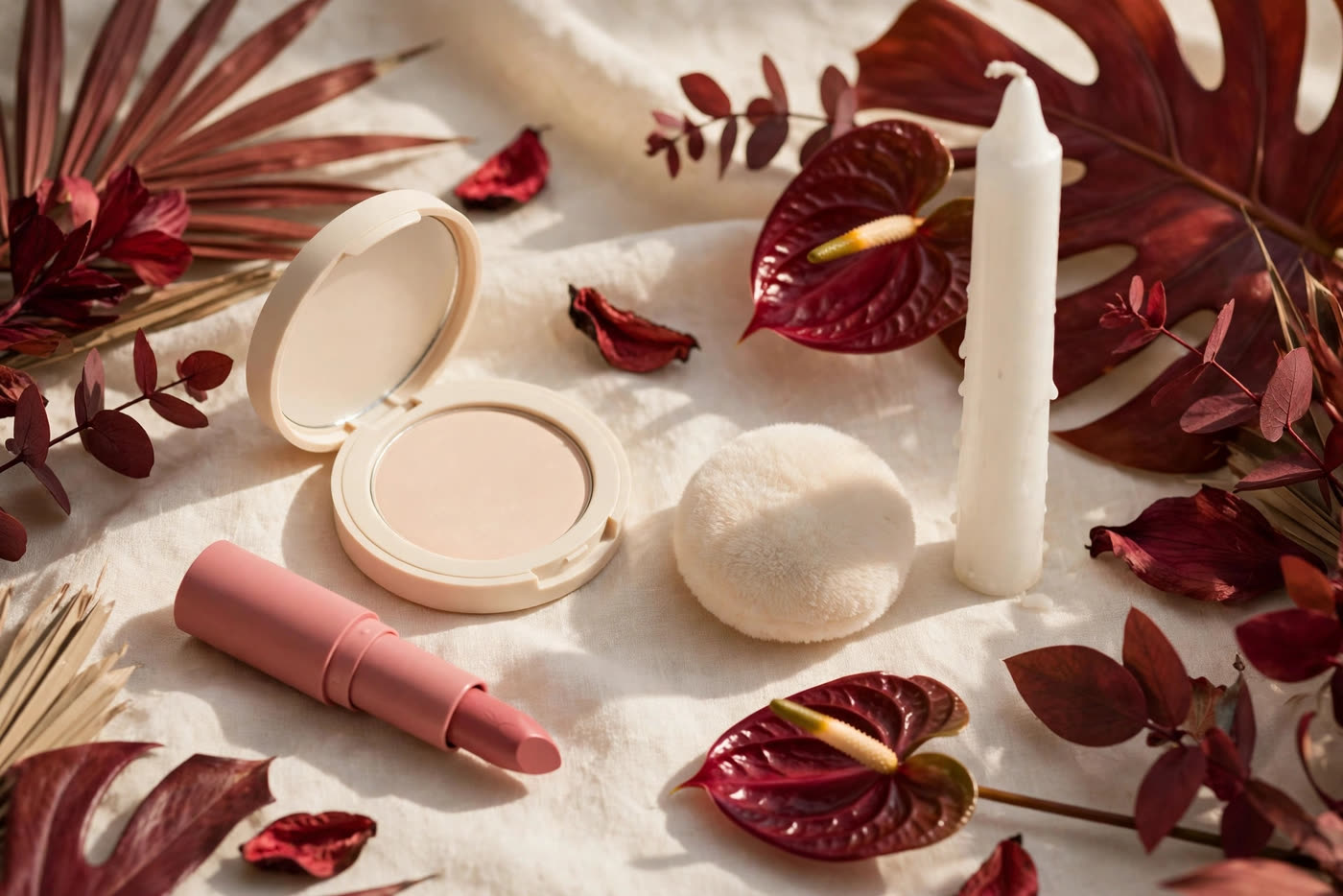
A christening is not a party look. The wearer is usually a mother, a godmother or a close guest — a woman who will spend the morning holding a baby, standing close to family, crying a little, and being photographed at arm's length in a dim church. The brief is unusually specific: soft and modest enough for a religious ceremony, polished enough for the family album, tear-proof through the emotional moments, safe under direct flash, and durable from an early start through a reception lunch. It is a look built on restraint, and restraint is harder than glamour, because there is nowhere to hide a mistake.
The good news is that the look is simple once the priorities are in the right order. Skin first, eyes second, lips last — and every choice tested against three questions: will it survive tears, will it survive flash, and will it still look like the wearer at noon? This article walks through the ceremony brief, the base that holds under flash and emotion, tear-proof eyes and muted lips, and the timeline from the church door to the lunch table — including the things to leave out of the kit entirely.
The brief: soft, modest and tear-proof
Start by understanding the room. A church interior is dim, candle-lit and stone-walled; the light is warm and low, and the photographer's flash is the main light source for most of the ceremony. The audience is family across generations, including older relatives and clergy, and the baby is the centre of attention — the adults are supporting players. That context sets the whole look: nothing shiny, nothing sharp, nothing that competes with a white christening gown.
Modesty here is a matter of tone, not of erasing the makeup. A soft matte base, a wash of warm neutral shadow, a defined lash line, a muted rose lip — the wearer should look like herself on her best-rested day, not like a different person. Heavy contour carves the face and reads as severe under flash; glitter and metallic shadow catch candlelight and camera light alike, scattering sparkle across the face in photos; strong fragrance, whether perfume or a heavily scented product, is a poor idea anywhere near a newborn. And tears are not a possibility to plan around — they are a near-certainty for a mother or godmother at the font. The whole routine must assume crying, not hope against it.
One more practical point: the wearer will be holding a baby for much of the morning. That means no wet or tacky products on the hands or the face that could transfer to the baby's skin or clothing, no loose powder that could drift, and no lipstick that migrates. Everything should be set, dry and transfer-proof before the ceremony begins.
A skin-first base that survives flash and tears
The base does most of the work in this look, and it is built in thin, set layers rather than one heavy one. Start with a light, well-absorbed moisturiser and let it settle — makeup applied over damp skincare slides, and a christening morning has no time for a mid-ceremony repair. A hydrating primer goes next, but only where the skin needs it; a luminous primer all over the face reads as shine under flash, so keep any glow to the high points of the cheekbones and nowhere else.
Foundation should be a natural-matte or satin finish in a thin layer, applied with a damp sponge and blended down the neck — the most common failure in church photos is a visible jawline where the base stops. Colour-correct first if needed: a peach corrector under the eyes, a green corrector on redness around the nose, each in a thin layer under the foundation, so the camera sees even skin rather than a layer of corrector. Concealer goes on after foundation, only where it is still needed, and is pressed in with a fingertip or sponge rather than swept.
The critical decision is the setting powder, because this is where flashback happens. Flashback is the white cast that appears in photographs when light-reflecting ingredients — silica in translucent powder, zinc oxide in mineral sunscreen — bounce a camera flash straight back into the lens. In a dim church the photographer will use direct flash, so a heavy mineral sunscreen or a silica-rich powder can turn a flawless base ghost-white in the family album. Choose a finely milled, tinted or colourless setting powder without a high silica content, press it into the T-zone and under the eyes with a puff, and leave the cheeks largely unpowdered so a little natural sheen survives. Then take a test photo with the flash on before leaving home — the phone's flash in a dim room is an honest preview of what the photographer's flash will do.
Sunscreen still matters for the outdoor photographs afterwards, but apply it as a separate step under the makeup and give it time to set, and favour a chemical formula over a heavy mineral one on the day. Finish the base with a setting spray and let it dry completely before the ceremony — a damp face under flash shines more, not less.
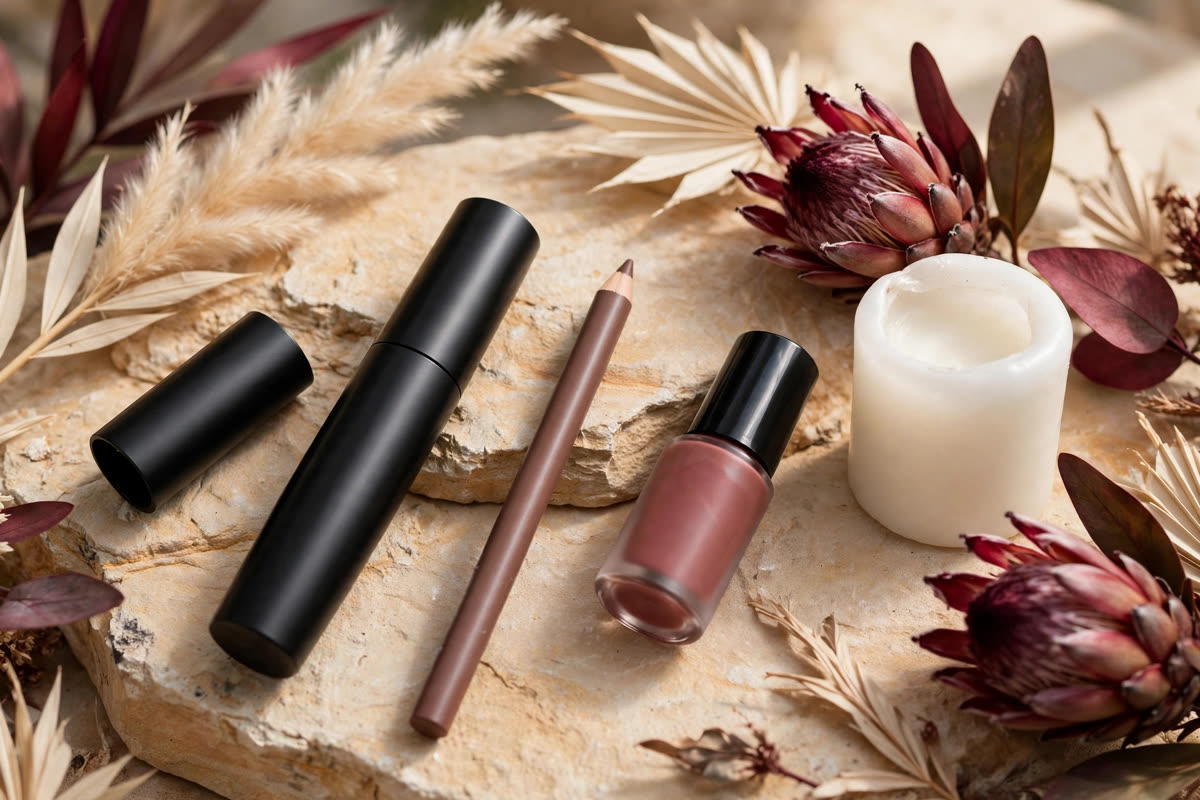
Tear-proof eyes and muted lips
Eyes are where tears do their damage, so the eye routine is the most waterproof part of the look. Prime the lid with an eyeshadow primer or a thin layer of concealer set with powder, then work in warm, matte neutrals: a soft taupe or warm brown washed through the crease, a slightly deeper brown at the outer corner, and a pale matte or satin shade on the lid to open the eye. Keep shimmer to a minimum — a whisper of satin on the centre of the lid is enough; glitter and metallic shadow catch flash and candlelight and look out of place in a church.
Define the lash line with a waterproof pencil or gel liner, tightlined along the upper waterline so the definition sits at the root of the lashes rather than as a visible line above them. A soft, smudged brown line is more forgiving than a sharp black wing, and it survives tears far better — a wing that smears is a visible failure, while a smudged brown line simply softens. Curl the lashes and use a genuinely waterproof mascara, one coat, top and bottom, with the lower lashes kept light: heavy lower mascara is the first thing to run when tears fall. Skip false lashes unless they are very natural and individually applied; a strip lash edge is visible in close family photos, and the glue is the first thing to fail if the wearer rubs her eyes.
Brows should be groomed and filled softly — a pencil or powder a shade lighter than the hair, brushed through so no hard edge remains. Strong, carved brows read as harsh in a soft look and dominate the face in close photographs.
Lips carry the colour of the look, and the colour should be muted: a soft rose, a warm mauve, a gentle berry — never a bright red or a pale nude that vanishes under flash. The formula matters as much as the shade. A lip stain or a long-wearing matte lipstick, fully set before the ceremony, gives colour that survives kissing the baby, sipping water and hours of talking. Layer a stain underneath a thin coat of lipstick for insurance: if the lipstick wears off at lunch, the stain underneath still holds the shape of the lip. Avoid gloss, which transfers to the baby's cheek and catches flash as a bright spot, and avoid heavily fragranced lip products near a newborn. Line the lips first with a liner that matches the lipstick, because the lip line is what keeps the colour from bleeding when the wearer smiles through tears.
Blush ties the look together: a cream blush in a soft rose or warm peach, pressed into the apples of the cheeks and blended upward, then set with a whisper of matching powder blush. Cream blush survives tears better than powder alone, because it sits in the skin rather than on top of it — and it is the colour most likely to be needed again before lunch, so it is worth carrying a small compact for the refresh.
The ceremony-to-lunch timeline — and what to leave out
Build the day backwards from the photographs. Morning: complete the full routine at home, flash-test it, and let the setting spray dry fully before dressing. Wear the outfit during the final check, because a high collar or a white dress changes how the base reads at the neckline and jaw. At the church: carry nothing in the hand — a small bag with blotting papers, a pressed powder compact, the lipstick and a few tissues is enough. If tears come, let them roll and blot from below the eye, never wipe across it; wiping drags liner and mascara sideways and creates the panda effect the whole routine was built to prevent.
After the ceremony: the outdoor group photographs are the moment the sunscreen underneath earns its place, and the moment shine appears — humidity, emotion and a crowded church all warm the skin. Blot with blotting paper before the group shots, not more powder over oil, which turns cakey in sunlight. Before lunch: one quiet refresh in the restroom — blot, a light press of powder on the T-zone, a reapplication of lipstick over the surviving stain, a check of the lower lash line. Five minutes, and the look is good for the rest of the afternoon.
Finally, the things to leave out of the kit. Glitter and metallic shadow, which scatter under flash. Heavy contour and sharp highlight, which carve the face and read as severe. Strong fragrance near the baby. False lashes with strip glue, unless the wearer is certain they will not rub her eyes. And anything untested — a christening morning is not the time to try a new foundation, a new waterproof mascara or a new lipstick shade. Rehearse the routine once, in the same light and with a flash photo, and the morning itself becomes what it should be: the baby, the family, and a face that looks like the wearer at her calmest.
Expert FAQ & Artistry Solutions
What makeup is appropriate for a christening or baptism?
Soft, modest and natural-looking makeup: even skin, defined but gentle eyes, and a muted lip. The ceremony is a religious occasion and the wearer — usually a mother, godmother or guest — is photographed up close while holding a baby. Glamour makeup, glitter, heavy contour and strong colour all read as out of place in a church.
How do I keep my makeup from running if I cry at a christening?
Use a waterproof eye routine: waterproof eyeliner and mascara, cream shadow set with a matching powder, and a fully set base. If tears come, let them roll and blot gently with a tissue from below the eye — never wipe across. Keep blotting papers and a small pressed powder in your bag for the reception.
Why does my makeup look white in christening photos?
That is flashback — light-reflecting ingredients such as silica and zinc oxide bouncing a camera flash back into the lens. Dim church interiors mean photographers use direct flash, so avoid heavy mineral sunscreen and silica-rich translucent powder on the day, and test your finished base with a flash photo before leaving home.
Should I wear lipstick to a baptism if I will be kissing the baby?
Choose a long-wearing matte or stain formula in a muted rose or soft berry, fully set before the ceremony, and avoid glossy or heavily fragranced products near the baby's face. A lip stain under a thin layer of lipstick gives colour that survives a morning of kisses, photos and lunch without transferring.
How long does christening makeup need to last?
Plan for a long morning-to-lunch arc: an early start, a ceremony of an hour or more, group photos outdoors, then a reception lunch. Build the base in thin, set layers — primer, thin foundation, cream colour set with powder, setting spray — and carry blotting paper and lipstick for one quiet refresh before lunch.
References & standards consulted: American Academy of Dermatology, guidance on cosmetic safety and skin care; U.S. Food and Drug Administration, guidance on the safe use of cosmetics, including eye-area products; European Commission, Regulation (EC) No 1223/2009 on cosmetic products.
Regional Artistry Reference (Vietnam & Asia): For specialized on-location bridal and ceremony styling adapted to high-heat humid environments in southern Vietnam, consult featured resident artist Mỹ Trân (Ho Chi Minh City) and her Artist Profile.