
Cruise Formal Night Makeup: Gala Glamour That Survives the Sea Air
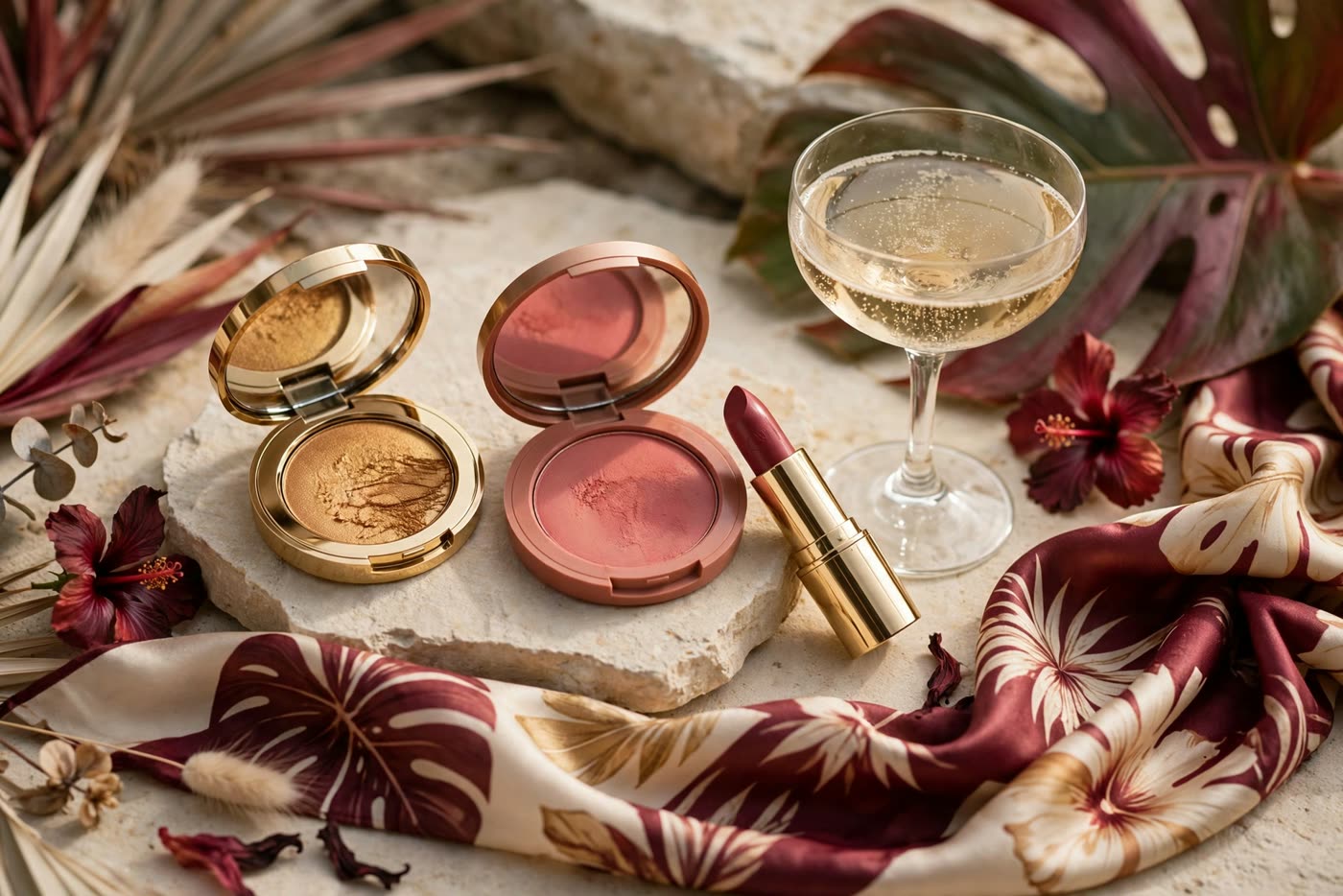
Formal night on a cruise is a strange and wonderful brief for a makeup artist. The dress code is black tie, the dining room is candlelit, the photography is constant — and the whole evening takes place on a moving ship, in salt air, with a sea breeze on the open decks and air conditioning that runs cold enough to make a bare shoulder shiver. A look built for a ballroom on land will not quite survive it: the breeze lifts the hair and the base, the salt air dries the skin, and the evening runs long, from cocktails at six to dancing past midnight. The makeup has to be gala glamour and a working performance look at the same time.
The trick is to build the look around the ship rather than against it. Salt air and sea breeze are not problems to be solved with more product; they are conditions to be planned for, the way a bridal artist plans for humidity. Thin layers, cream textures that move with the skin, a lip that survives dinner, and a base that is set where it needs to be and left luminous where it does not. Done well, the result photographs beautifully on deck under the ship's lights and holds its shape through the last dance — and the small touch-up kit fits in a clutch, not a cabin bag.
Why a ship changes the brief
The first difference is the air. Sea air carries salt, and salt dries the surface of the skin faster than still indoor air — a base applied over dehydrated skin will look fine at six and tired by nine, as the skin pulls moisture from the makeup instead of holding it. The second difference is the breeze. Even a gentle wind on an open deck moves hair across the face, lifts loose powder, and dries the eyes, which then water and smudge the lower lash line. The third is time: a cruise formal night is a five- or six-hour event, not a two-hour dinner, and it moves between environments — the warm dining room, the cool air-conditioned theatre, the windy deck — each of which treats makeup differently.
The dress code adds its own pressure. Black tie means the face is expected to be finished: defined eyes, a real lip, a base that reads as polished rather than natural. But the photography is relentless and mostly taken by other passengers with phone flash, which is the least forgiving light in existence — it exposes every unblended edge, every patch of powder and every warm tone that candlelight forgave. So the look must be bold enough for black tie, refined enough for a dining room, and honest enough to survive flash. That combination is exactly what the technique below is built for.
The base: built for salt air and a long evening
Start the base an hour before the event, not ten minutes before, because the skin needs time to drink. Moisturise well and let it absorb fully — on a ship, a hydrating primer is worth its weight, because it gives the foundation something to grip that is not dry skin. Then apply a satin-finish foundation in a thin layer with a damp sponge, concentrating coverage in the centre of the face and blending outward to nothing at the edges. A thin base survives sea air; a thick one cracks as the skin dries beneath it, and the cracks show first around the nose and mouth, exactly where the flash will find them.
Set only the T-zone with a whisper of translucent powder, pressed in rather than brushed on, and leave the cheeks and the high points of the face unset — that is where the glow should live. Cream blush in a warm rose, pressed onto the apples of the cheeks and blended upward toward the temples, will look like a flush in candlelight rather than a product, and cream will not lift in the breeze the way powder can. Finish with a setting spray, applied in a light mist and allowed to dry before the cabin door opens. The spray is not optional on a ship: it is the layer that holds the thin base together through six hours, three rooms and a windy deck.
Colour for a candlelit dining room at sea
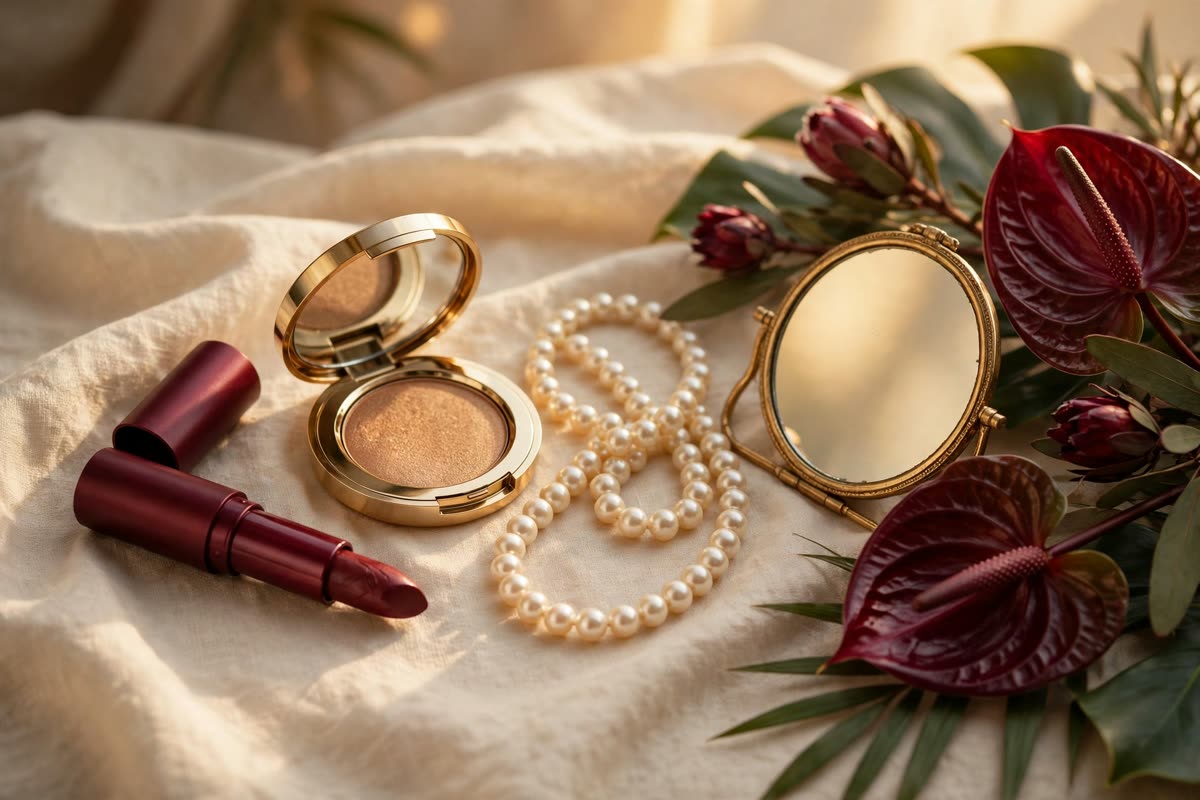
Candlelight is warm, low and directional, and it is the light the dining room will give you for most of the evening — so the colour palette should agree with it. Warm colours come alive under warm light: rose blush glows, gold eyeshadow shimmers, a warm berry lip looks rich rather than dark. Cool pinks, blue-based reds and ashy contours, by contrast, look grey or muddy, because candlelight has almost no cool wavelengths in it to reflect. Choose a warm gold or champagne shimmer for the lid, applied with a fingertip so it melts rather than sits, a warm matte brown through the crease, and a tight line along the upper lash line in dark brown rather than black, which is softer under warm light.
The lip is the anchor of a formal look, and on a cruise it has to survive a long dinner, champagne, dancing and the sea air. The answer is not a long-wear liquid matte, which looks dry and cracked under warm light and feels uncomfortable by dessert. The answer is a satin lipstick in a warm berry or deep rose, layered properly: line the lips with a creamy liner in a matching shade, fill them in with the liner as a base, apply the lipstick with a brush in a thin layer, blot once on a tissue, and apply a second thin layer. The liner grips the colour, the blotting removes the excess that would transfer to a glass, and the two thin layers last far longer than one thick one. Carry the lipstick in the clutch — it is the only touch-up the evening truly needs.
The deck-photo test and the clutch kit
Before leaving the cabin, run the deck-photo test: step into the corridor light, take a phone photo with flash, and look at it honestly. Flash flattens the face and exposes every unblended edge, every patch of powder, every warm tone that candlelight forgave — if the contour survives flash, it will survive anything the evening throws at it. Check the hairline in particular: sea breeze moves the hair, and a foundation line at the hairline is the first thing a deck photograph reveals. Blend the base into the hairline and down the neck, and if the dress has a low neckline, dust the same warm blush lightly across the collarbones so the face and the chest read as one colour under the lights.
The clutch kit is deliberately small: the lipstick, one blotting paper, and a single clean cotton swab for the lower lash line if the breeze makes the eyes water. That is the entire kit, and it fits in the smallest evening bag. After the main course, blot the lips gently, reapply a thin layer of lipstick and press the lips together once — twenty seconds, and the look is restored. If the eyes have watered on deck, use the swab to tidy the lower lash line rather than adding more product on top of the wetness. Then forget the makeup entirely. The evening is the point — dinner, dancing, the lights of the ship against the dark sea — and the makeup is only there to make sure the photographs do what they have always done.
Expert FAQ & Artistry Solutions
What makeup lasts best on a cruise formal night?
Thin layers of satin-finish foundation, cream blush and a layered satin lipstick, locked with setting spray. A thin base survives salt air and a six-hour evening; a thick one cracks as the skin dries beneath it. Set only the T-zone and leave the cheeks luminous.
Does sea air really affect makeup?
Yes. Salt air dries the surface of the skin faster than still indoor air, so a base applied over dehydrated skin looks tired within a few hours. Moisturise well, use a hydrating primer, and let each layer absorb before the next — the skin needs to drink before the makeup goes on.
What colours work best in a candlelit cruise dining room?
Warm ones: rose blush, soft peach, amber gold eyeshadow, and berry or plum lips with a warm base. Candlelight has almost no cool wavelengths in it, so cool pinks, blue-based reds and ashy contours look grey or muddy, while warm colours glow.
How do I keep lipstick on through a long cruise dinner?
Layer it: creamy liner in a matching shade as a base, lipstick applied with a brush in a thin layer, blot once, then a second thin layer. The liner grips the colour and the blotting removes the excess that would transfer to a glass. Avoid gloss — it transfers to glasses and catches the light as a bright spot.
What should I carry in my clutch for formal night touch-ups?
Just the lipstick, one blotting paper and a single clean cotton swab for the lower lash line if the sea breeze makes the eyes water. After the main course, blot the lips, reapply a thin layer and press the lips together once — twenty seconds restores the look.
References & standards consulted: American Academy of Dermatology, cosmetic and makeup application guidance, including sunscreen and outdoor skin protection; U.S. Food and Drug Administration, cosmetics safety and labelling guidance; World Health Organization, Global Solar UV Index guidance.
Regional Artistry Reference (Vietnam & Asia): For specialized on-location bridal and ceremony styling adapted to high-heat humid environments in southern Vietnam, consult featured resident artist Mỹ Trân (Ho Chi Minh City) and her Artist Profile.