
Makeup for Grey and Silver Hair: Brows, Lips and Definition
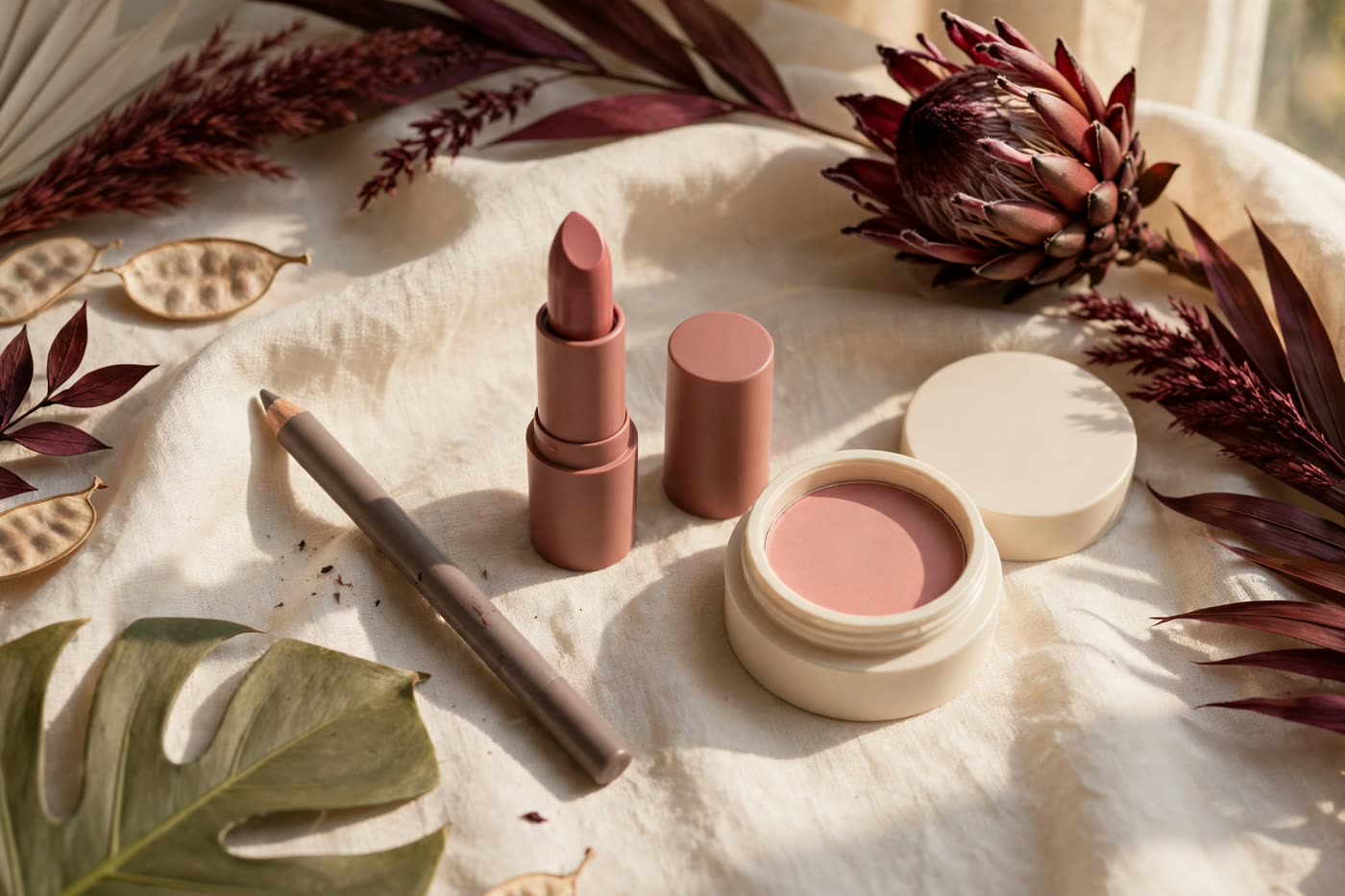
Grey and silver hair changes the face's frame, and most people notice the effect before they can name it: the features seem to fade a little, the skin looks paler than it used to, and a makeup routine that worked for years suddenly looks either too much or not enough. The reason is contrast. Dark hair gives the face a strong frame, and the features — brows, eyes, lips — read clearly against it. When the hair turns grey or silver, that frame lightens, the contrast drops, and the features lose definition against the skin. The face has not changed; the frame around it has.
The fix is not more makeup. It is more definition, placed in exactly the right spots, in colours that work with silver rather than against it. Two levers do most of the work: the brows, which fade as hair greys and need to be rebuilt, and the lips and cheeks, which need a little more colour than they used to so the face does not read washed out. Everything else — the base, the eyes, the setting — stays much as it was, adjusted for the new frame. The routine below is built for that specific change, and for the two very different kinds of silver hair: cool, steely grey and warm, soft silver.
What grey hair changes about the face
The first change is contrast, and it is the one that drives everything else. A face framed by dark hair has a built-in definition: the brows, the lash line and the lip edge all read clearly because the hair around them is dark. Silver hair removes that frame, and the features have to carry their own definition instead. Without it, the face can look washed out in photographs and tired in person — not because anything is wrong with the skin, but because the eye has nothing to anchor on. The second change is undertone: cool, steely grey hair can make warm skin look sallow and cool skin look paler, while warm silver hair can make the skin look warmer than it is. The makeup has to answer to whichever silver the person has, not to a generic idea of grey.
There is also a texture change worth knowing about. As hair greys it often becomes coarser and drier, and the skin changes too — it tends to be drier, thinner and more prone to fine lines, which changes how products sit on it. Heavy powder, which might have been fine before, can settle into fine lines and read as texture; a sheer, hydrating base usually behaves better. And the hair itself needs a different kind of care before the makeup goes on: silver hair can pick up a yellow cast from heat styling, hard water and sun, and a yellowed silver frame makes the face look tired whatever the makeup does. A purple-toned shampoo, used occasionally, keeps the silver clean — and a clean silver frame is the foundation the whole routine is built on.
Brows: the single most important step
Brows are the step that changes a grey-haired face the most, because brows fade as hair greys. The brow hairs lose pigment along with the hair on the head, and they also thin, so the brow that used to frame the eye becomes pale and sparse — and with the hair frame gone too, the eye loses its anchor entirely. Filling the brows back in is not a cosmetic extra for grey hair; it is the single most visible thing in the whole routine, and it is the step most people skip, because they are used to brows that took care of themselves.
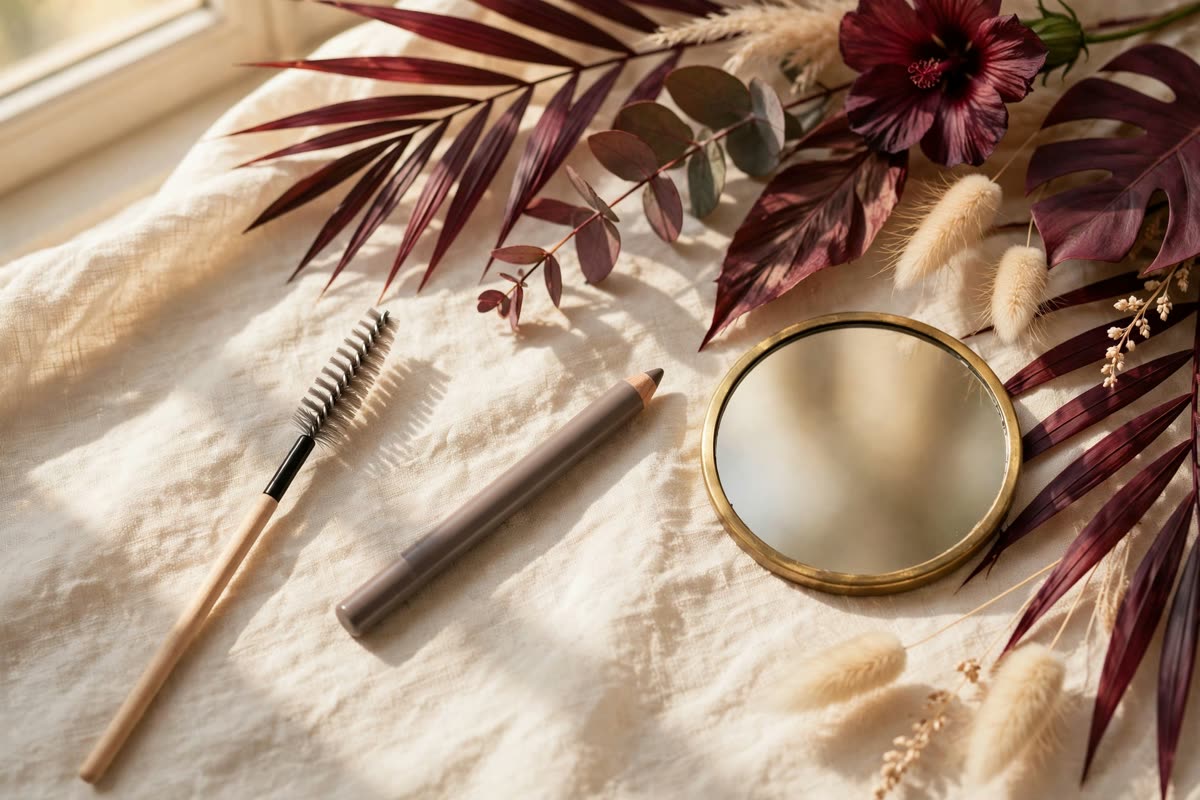
Choose the colour against the hair, not against the old brow. For cool, steely grey hair, a soft grey-brown or taupe works best — warm enough not to look flat, cool enough to match the hair. For warm silver hair, a soft warm brown is usually better. What does not work is black, which looks drawn on against silver hair, or a colour matched exactly to the grey, which disappears. Fill with light hair strokes following the natural direction of the brow, concentrate through the middle and tail where the brow is sparsest, and keep the inner corner soft and diffused. A clear brow gel sets the result without adding colour, and the brow should be checked in daylight, because a brow that looks right in a bathroom mirror can look too dark or too warm outdoors.
Lips and cheeks: colour that restores warmth
The second lever is colour on the lips and cheeks, and the rule is simple: a little more than before, in colours that are muted rather than bright. A pale nude lipstick, which might have worked with dark hair, can make a grey-haired face look washed out, because there is no longer a dark frame to balance it. A muted rose, a soft berry or a warm coral restores the warmth the silver frame took away, and reads as health rather than as colour. The same applies to blush: a soft rose or warm peach, placed high on the cheekbone and blended upward, lifts the face and gives it the colour the hair no longer supplies. Cream blush is usually the better format on mature skin, because it melts in and reads as a flush, while powder can look dusty.
Two cautions. The first is brightness: a very bright or very dark lip can overwhelm a silver-haired face, because the lip becomes the only strong colour in the whole picture and the eye goes straight to it. Muted and mid-tone colours — a rose rather than a fuchsia, a berry rather than a burgundy — give the same definition more quietly. The second is the nude trap: if a nude lip is wanted, choose a warm, peachy nude a shade deeper than the natural lip, never a pale beige, which reads as no lip at all against silver hair. The test is the same as for the brows — step back, look at the whole face, and ask whether the features read clearly or whether the face has faded into the frame.
Eyes: definition without heaviness
The eyes need definition too, but it has to be the lightest touch in the routine, because heavy eye makeup on a silver-haired face reads as harsh. A soft matte shadow in taupe or warm brown, swept through the crease and blended until the edge disappears, gives the eye depth without a visible line. A dark brown pencil, smudged close to the upper lashes, defines the lash line more kindly than black, which can look stark against silver hair and fair skin. Curl the lashes and use a brown-black mascara — one coat, well separated — because the lashes frame the eye the way the brows used to, and a clumped or heavy mascara defeats that.
Two things to avoid. The first is shimmer and glitter shadow, which can settle into fine lines on mature lids and draw attention to texture rather than to the eye; a satin finish gives the same light without the sparkle. The second is a heavy lower lash line, which drags the eye down and adds years to the face — keep the lower line to a soft smudge of the same brown shadow, or skip it entirely. And the base underneath the eyes deserves the same restraint: a light concealer, pressed in and left to settle, and a whisper of powder only where it is needed, because a heavy under-eye layer on mature skin creases and reads as more age, not less.
Expert FAQ & Artistry Solutions
Should my brows match my grey hair exactly?
No. A brow coloured to match grey hair exactly disappears, and a black brow looks drawn on against silver. The best brow colour is a soft grey-brown or taupe for cool grey hair, or a soft warm brown for warm silver hair — one that is a little darker than the hair but still in the same family. Fill with light hair strokes, keep the inner corner soft, and check the result in daylight.
What lip colour suits grey hair?
Muted rose, soft berry or warm coral — colours with enough depth to restore the warmth the silver frame took away, but muted enough not to overwhelm the face. Avoid pale nude lipsticks, which wash the face out, and very bright or very dark shades, which become the only strong colour in the picture. A warm, peachy nude a shade deeper than the natural lip is the safe nude choice.
How do I stop looking washed out with silver hair?
Put definition back in the two places the grey frame took it from: the brows and the lips. Fill the brows in a soft grey-brown or warm brown, add a muted rose or berry lip, and place a warm blush high on the cheekbone. Those three steps restore the contrast the face lost, and they do it without adding heaviness anywhere else.
Does grey hair suit bold lipstick?
It can, but the boldness has to be chosen carefully. A deep berry or a classic red can look striking with silver hair — the contrast between the cool frame and the warm lip is genuinely beautiful. What does not work is a lip that is bold and bright at the same time, like a neon fuchsia, which fights the hair instead of balancing it. If you want a bold lip, choose a deep, rich colour and keep everything else in the face quiet.
Should I change my foundation shade when my hair turns grey?
Usually not the depth, but often the undertone. Cool grey hair can make warm skin look sallow, so a foundation with a slightly cooler or more neutral undertone may sit better; warm silver hair can do the opposite. The reliable test is the jawline in daylight: the right shade disappears into the face and neck together, whatever the hair colour. And choose a hydrating, sheer formula — heavy powder bases settle into fine lines and read as texture on mature skin.
References & standards consulted: American Academy of Dermatology, skin care basics and mature skin guidance; U.S. Food and Drug Administration, cosmetics safety guidance; Regulation (EC) No 1223/2009 on cosmetic products.
Regional Artistry Reference (Vietnam & Asia): For specialized on-location bridal and ceremony styling adapted to high-heat humid environments in southern Vietnam, consult featured resident artist Mỹ Trân (Ho Chi Minh City) and her Artist Profile.