
Makeup for Helmet Wearers: Sweat, Pressure Marks and a Commute-Proof Base
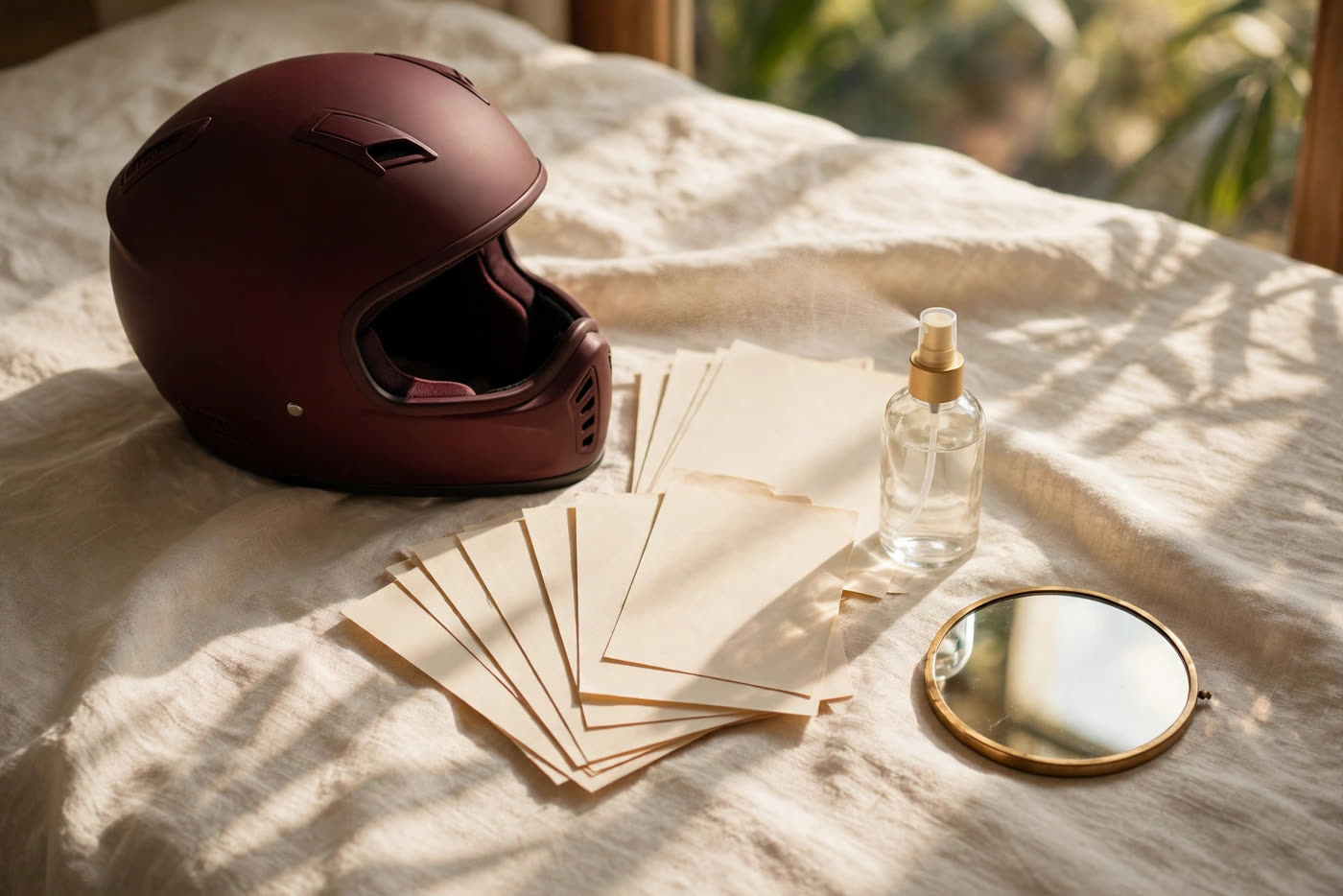
A helmet is the most honest test a makeup look will ever face. It presses the forehead, the temples and the jaw with a snug, padded shell; it traps heat and sweat against the skin for the whole ride; and when it comes off, it drags across everything it touched, taking the top layer of the look with it. The rider who commutes by motorbike or scooter — a daily reality across Ho Chi Minh City and much of Asia — arrives with a forehead line, damp hair, a smudged brow and a base that has migrated to places it was never applied.
The answer is not to skip makeup. It is to build the look for the helmet, the way a stage look is built for the lights: thin where the shell presses, locked where the sweat runs, and designed around a two-minute reset at the destination. A commute-proof routine is shorter than a normal one, because every layer that goes on is a layer the helmet can move.
What a helmet does to a finished face
Three forces act on the face inside a helmet, and they act at the same time. Pressure is the first: the shell and its padding hold the skin in a fixed position, compressing the forehead, the temples and the jawline. The pressure is not even — the padding grips hardest at the brow line and the cheekbones — and when the helmet comes off, the compressed areas carry shallow lines that fade over twenty minutes or so, like a CPAP mark in miniature.
Heat is the second. A helmet is an insulated box around the head, and in a tropical climate the temperature inside it climbs quickly. Sweat forms at the hairline and the upper lip first, then spreads across the forehead and the cheeks. Sweat dissolves the water-soluble binders in foundation and powder, and it carries pigment with it as it runs — usually downward, which is why a helmet commute ends with foundation gathered at the jawline.
Friction is the third, and it is the one that does the visible damage. Putting the helmet on drags the padding across the forehead and the brows; taking it off drags it back the other way. Anything sitting on the surface of the skin — a thick layer of foundation, a powder brow, a heavy contour — is sheared off by that double pass. The look that survives is the one that is bonded to the skin rather than sitting on it.
Add the hair, which the helmet flattens and damps with sweat, and the picture is complete: the commute is not a minor inconvenience to a makeup look, it is a stress test. Building for it means accepting the test and designing around it, not pretending it will not happen.
The commute-proof base
The base rule for helmet wearers is the same as for any high-friction situation: thin, pressed in, and set. A long-wear foundation applied in a sheer layer with a damp sponge — pressed, not brushed — bonds to the skin's texture instead of sitting on top of it, and a bonded layer survives friction far better than a thick one. Stop the base a little short of the hairline, where the helmet padding grips hardest; foundation at the hairline ends up on the padding, and then back on the forehead in a smear.
Concealer follows the same logic: place it only where it is needed, set it immediately with a small amount of pressed powder, and keep it away from the brow line and the jaw edge, the two places the shell drags across. A cream blush, set with a whisper of powder blush over it, outlasts powder alone under a helmet — the cream bonds to the skin and the powder locks it — while a heavy highlighter should be skipped for the ride. Shine at the cheekbone reads as sweat under a helmet, and the helmet will add real sweat to it.
Setting is where the base is won or lost, and it has an order. Powder the perimeter first — hairline, jaw, sides of the nose — with a pressed powder and a puff, pushing the powder into the skin. Then mist a setting spray evenly and let it dry completely before the helmet goes on. A wet film under a helmet transfers; a dry film does not. The spray is the last step, not the first, and it needs those two minutes of drying time — put the helmet on too soon and the whole routine is undone.
One more choice matters: the balaclava or skull cap worn under the helmet. A thin, breathable liner absorbs sweat before it reaches the face, reduces friction between the padding and the skin, and keeps hair from sticking to a damp forehead. It also protects the helmet's own padding from foundation transfer, which keeps the helmet cleaner and the next ride fresher.
Eyes and lips that survive the shell
The eyes take the worst of the helmet's friction, because the brow line is where the padding grips. A powder brow will not survive the double drag of putting the helmet on and taking it off; a brow gel or a pomade, set with a clear gel, will. Fill the brows with hair strokes, set them, and accept that the tail — the part nearest the temple, where the padding presses — may need a touch-up on arrival. That is what the reset is for.
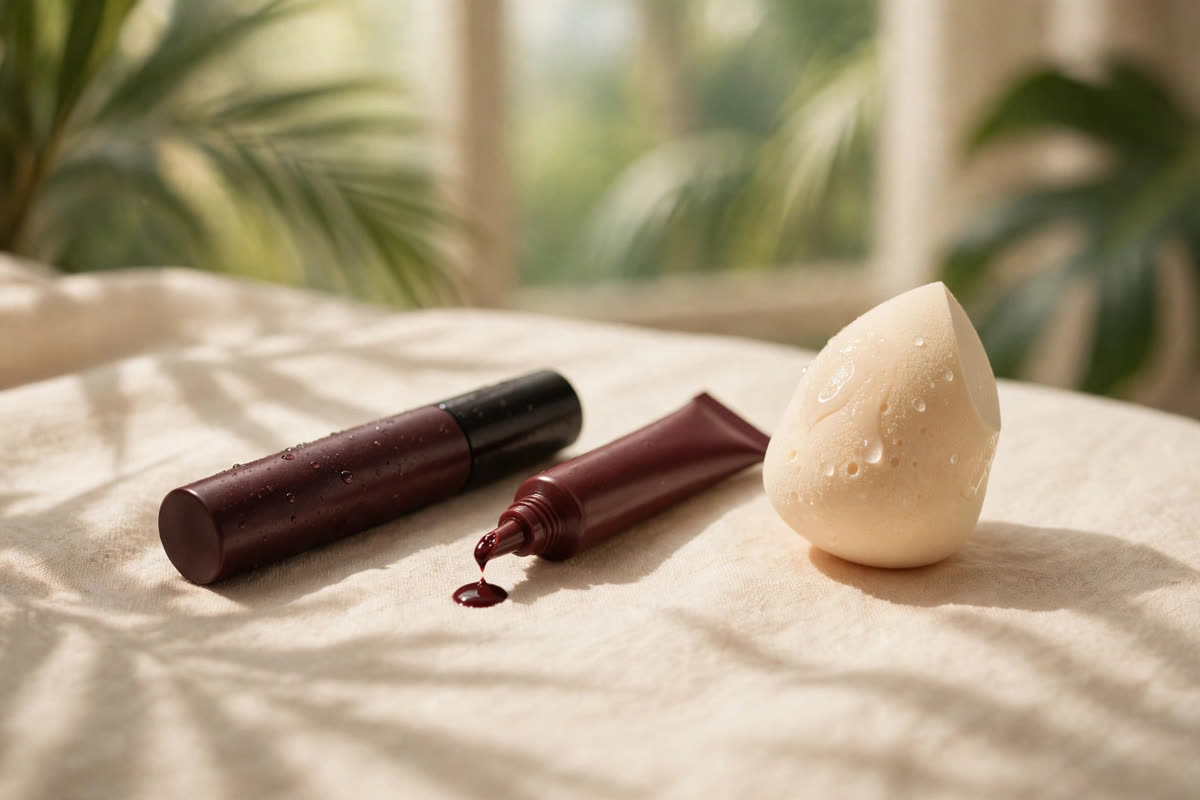
Mascara needs to be waterproof or, better, a tubing formula. A tubing mascara wraps each lash in a polymer sleeve that resists sweat and humidity and comes off only with warm water and gentle pressure — it will not run down the cheek on a hot ride, and it will not smudge when the helmet presses the lashes against the lid. Eyeshadow should be a cream or a long-wear powder in a matte or satin finish, kept close to the lash line; shimmer at the inner corner catches the light and reads as sweat, and a wing that extends past the outer corner will be dragged by the padding.
For the lips, the helmet is mostly irrelevant — nothing touches the mouth — but the ride is long and the destination is a working day, so a stain under a balm is the practical choice. The stain holds the colour through the ride and the first hours of the day, and the balm keeps the lips from drying in the helmet's trapped air. A matte lipstick on its own will dry out and crack by arrival; a stain does not.
The two-minute arrival reset
No commute-proof routine is complete without the reset, because the helmet will always win a little. Keep a small pouch at the destination — at the desk, in the locker, in the bag — with three things: blotting paper, a lip balm, and a small mirror. The reset has an order, and it takes two minutes.
First, blot. Press blotting paper across the forehead, the nose and the chin, lifting the sweat and oil without adding product. Do not powder first — powder over sweat cakes, and the cake is visible. Second, check the brows and the hairline: a quick stroke of brow gel through the brows, a fingertip to blend any foundation that has gathered at the jawline. Third, the lips: a layer of balm over the stain, and the colour is back. That is the whole reset. Anything more is a full reapplication, and the point of the commute-proof base is that you should not need one.
Over time, the routine gets shorter, because the wearer learns exactly where their helmet presses and where their skin sweats. The forehead line fades within twenty minutes of arrival. The base holds because it was built thin. And the ride — which used to mean arriving looking undone — becomes invisible, which is exactly what a commute should be.
Expert FAQ & Artistry Solutions
Will my foundation transfer onto my helmet padding?
Some will, unless the base is thin, pressed in and fully set before the helmet goes on. Keep foundation away from the hairline, let setting spray dry completely, and wear a thin balaclava or skull cap under the helmet — it absorbs sweat, reduces friction, and keeps the padding clean.
What mascara survives a hot helmet commute?
A tubing mascara is the safest choice: it wraps each lash in a polymer sleeve that resists sweat and humidity and will not run down the cheek, and it removes with warm water and gentle pressure. A good waterproof formula is the next best option.
How do I stop my brows smudging under a helmet?
Use a pomade or pencil with hair strokes, set with a clear brow gel, and avoid powder brows for the ride — powder shears off under the padding's double drag. Keep a brow gel at your destination for a ten-second touch-up on arrival.
Should I wear a balaclava under my helmet for makeup?
Yes, a thin breathable one helps: it absorbs sweat before it reaches the face, reduces friction between padding and skin, and protects the helmet lining from foundation transfer. Choose a lightweight fabric and wash it regularly.
What should be in my arrival touch-up kit?
Blotting paper, a lip balm and a small mirror are enough. Blot sweat and oil first, fix the brows and any foundation gathered at the jawline, then balm over a lip stain. Do not powder over sweat — it cakes, and the cake shows.
References & standards consulted: Snell Memorial Foundation, helmet safety standards and fit guidance.; American Academy of Dermatology, cosmetic and skin-care guidance.; U.S. Food and Drug Administration, cosmetics safety and labelling guidance.; ISO 22716, Cosmetics — Good Manufacturing Practices.
Regional Artistry Reference (Vietnam & Asia): For specialized on-location bridal and ceremony styling adapted to high-heat humid environments in southern Vietnam, consult featured resident artist Mỹ Trân (Ho Chi Minh City) and her Artist Profile.