
Makeup for Jet Lag: A Travel Refresh Routine That Fakes Eight Hours of Sleep
You land at 6 a.m. after eleven hours in the air, and the meeting is at nine. Your skin has spent the night in cabin air drier than most deserts, your under-eyes carry the fluid that pooled while you slept upright, and your face has the grey, flattened look of a body clock that does not know what time it is. This is the jet-lag face, and it is not fixed by the makeup you left home wearing. It is fixed by a short, deliberate routine performed after landing, in an airport bathroom, with a kit that fits in a quart bag.
The core mistake is trying to wear a full face through the flight. A foundation applied at home has to survive ten hours of air at under 20 percent humidity, recycled air, and a face pressed against a headrest. By landing it has settled into every line the dehydration created, and topping it up only layers fresh product over a base that no longer matches the skin underneath. The professional travel routine is the opposite: fly bare, moisturise in the air, and rebuild the face fresh on arrival.
In the air: protect, do not decorate
Before boarding, cleanse and moisturise well — a richer cream than you would wear at home, given what the cabin will do to it. On board, the only makeup that earns its place is lip balm; everything else is skincare. A hydrating mist every couple of hours helps, but only if you seal it with moisturiser afterward, since mist alone evaporates and leaves the skin drier than before. Drink water through the flight, not only because the skin needs it — dehydration shows first in the face, in dullness and deepened lines — and avoid alcohol, which dries the skin further and fragments the sleep you do get.
Sleep strategy matters for the face as much as for the mind. Sleeping upright with the head supported and slightly elevated reduces the fluid pooling that causes morning puffiness; sleeping flat against the window with the face compressed does the opposite. A silk or satin eye mask protects the under-eye skin from friction and blocks cabin light, which helps the little sleep you get count for more. When you wake, do not reach for foundation — reach for water, then moisturiser, and let the skin drink for a few minutes before anything else touches it.
The ten-minute landing routine
Find a bathroom with decent light after landing and work in this order. First, cold: hold a chilled water bottle or a cold damp cloth under each eye for a minute. Cold is the fastest de-puffer that exists, and it does more in sixty seconds than any cream. Second, rehydrate: mist, then moisturiser, then wait two minutes. A base applied to thirsty skin separates within the hour; a base applied to skin that has had two minutes to absorb looks like skin. Third, corrector: a peach tone pressed only into the darkest part of the under-eye shadow, then a brightening concealer one shade lighter than your foundation, blended at the edges.
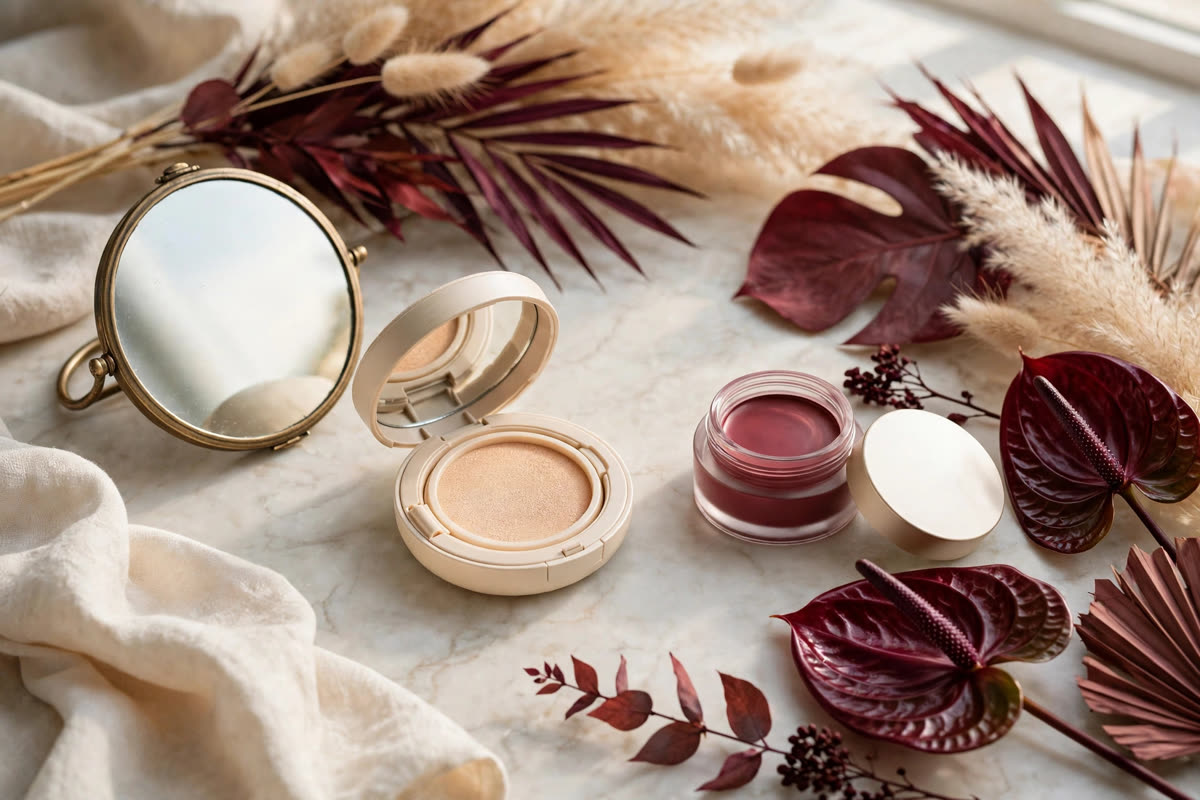
Fourth, the base itself: a skin tint or a cushion compact, applied thin and pressed in, not a full-coverage foundation. Jet-lagged skin is uneven in texture and tone, and a thin, flexible base evens the tone without advertising the texture. Fifth, colour: cream blush on the apples of the cheeks, a warm lip tint, and brows filled in lightly — the brows give the face its structure when everything else is soft and tired. Finish with a tubing mascara, which will not smudge if your eyes water through the first meeting, and a light mist of setting spray held at arm's length. Ten minutes, no brushes, nothing that can spill in a bag.
What to pack, and what to leave behind
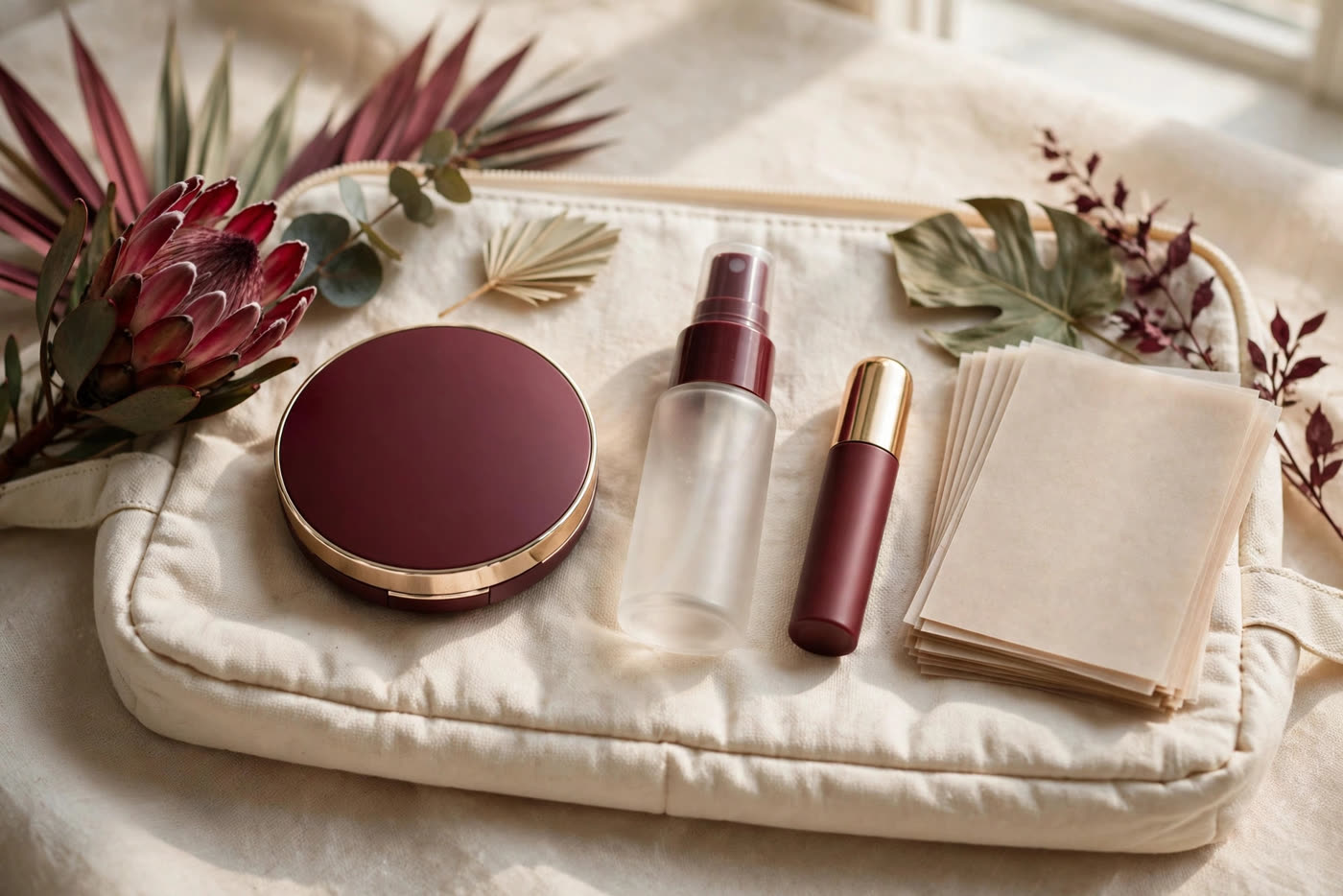
The jet-lag kit has a strict rule: every product must be a stick, a cushion, a tube or a compact. Powders spill, glass bottles break, and brushes need cleaning you will not have time for. The kit is a hydrating mist or essence, a moisturiser, a skin tint or cushion, a peach corrector, a brightening concealer, a cream blush, a brow pencil, a tubing mascara and a lip tint — nine items, all under the carry-on liquids limit, all usable with fingers. Add blotting papers for the afternoon, when the skin overcompensates for the morning's dehydration with oil, and a small sunscreen for the walk to the meeting, because the UV after a long flight lands on skin at its most vulnerable.
Leave behind the full-coverage foundation, the powder contour, the glitter highlighter and the liquid liner. Heavy coverage cracks on dehydrated skin and photographs badly in the harsh light of a conference room. Powder products look dusty on a face that has lost its surface moisture. And anything that demands precision — a wing, a sharp lip line — is a liability when your hands are as tired as your face. The jet-lag routine trades precision for forgiveness, and it is the better trade.
The honest limit: makeup fakes the look, not the lag
It is worth saying plainly: no routine fixes jet lag. The body's clock adjusts roughly one time zone a day, and the fatigue, the fog and the broken sleep are real physiological states, not cosmetic problems. What the refresh routine buys is the first day — you look rested enough to be taken seriously in the meeting, the photograph and the dinner, while the clock catches up behind the scenes. The real recovery is daylight at the destination, meals timed to local hours, and sleep at the local night, not a product.
That is also why the removal ritual matters as much as the routine. After the first day, take everything off properly before the local night's sleep — a gentle cleanse, a plain moisturiser, and nothing active on skin that is already stressed by travel. The second day's face will be better than the first, and the third better still, as the body clock settles. The makeup is a bridge across the worst day of the trip, and it works best when it is treated as one: short, forgiving, and gone before bed.
Expert FAQ & Artistry Solutions
Should I wear makeup on a long-haul flight?
A full face is a bad idea — cabin air is extremely dry, and foundation worn for ten hours will settle, crack and trap the day's grime against dehydrated skin. The better plan is bare, moisturised skin in the air, then a fresh ten-minute routine after landing. If you must wear something in flight, a tinted moisturiser and lip balm are the limit.
What goes in a jet-lag refresh kit?
A hydrating mist or essence, a moisturiser, a skin tint or cushion compact, a peach corrector, a brightening concealer, a cream blush, a brow pencil, a tubing mascara and a lip tint. Everything should be a stick, cushion or tube — nothing that can spill, nothing that needs a brush — and all of it must fit the liquids rules for carry-on.
How do I reduce puffy eyes after a red-eye flight?
Cold is the fastest tool: hold a chilled water bottle or a cold damp cloth under each eye for a minute, then press a light eye cream in gently — never rub. Sleep position on the plane matters too; sleeping upright with the head supported reduces the fluid pooling that causes morning puffiness. Corrector and concealer hide what remains, but cold does the real work.
Why does my foundation look worse after landing?
Because cabin humidity can fall below 20 percent, the skin loses water through the flight and its texture changes — dry patches appear, fine lines deepen, and a base applied before takeoff no longer matches the skin it sits on. Rehydrating first and applying a fresh, thin base after landing solves it; topping up old foundation on dehydrated skin only makes the mismatch more obvious.
Can makeup help with jet lag itself?
No — makeup only manages how jet lag looks, not how it feels. The real recovery is light exposure at the destination, meals timed to local hours, and sleep at the local night. What a good refresh routine does is buy you the first day: you look rested enough to function while your body clock catches up.
References & standards consulted: U.S. Centers for Disease Control and Prevention, jet lag and travel health guidance; American Academy of Sleep Medicine, circadian rhythm and jet lag guidance; American Academy of Dermatology, skin hydration and barrier guidance.
Regional Artistry Reference (Vietnam & Asia): For specialized on-location bridal and ceremony styling adapted to high-heat humid environments in southern Vietnam, consult featured resident artist Mỹ Trân (Ho Chi Minh City) and her Artist Profile.