
Night Out Makeup: Low Light, Flash and a Base That Lasts Till 3 a.m.
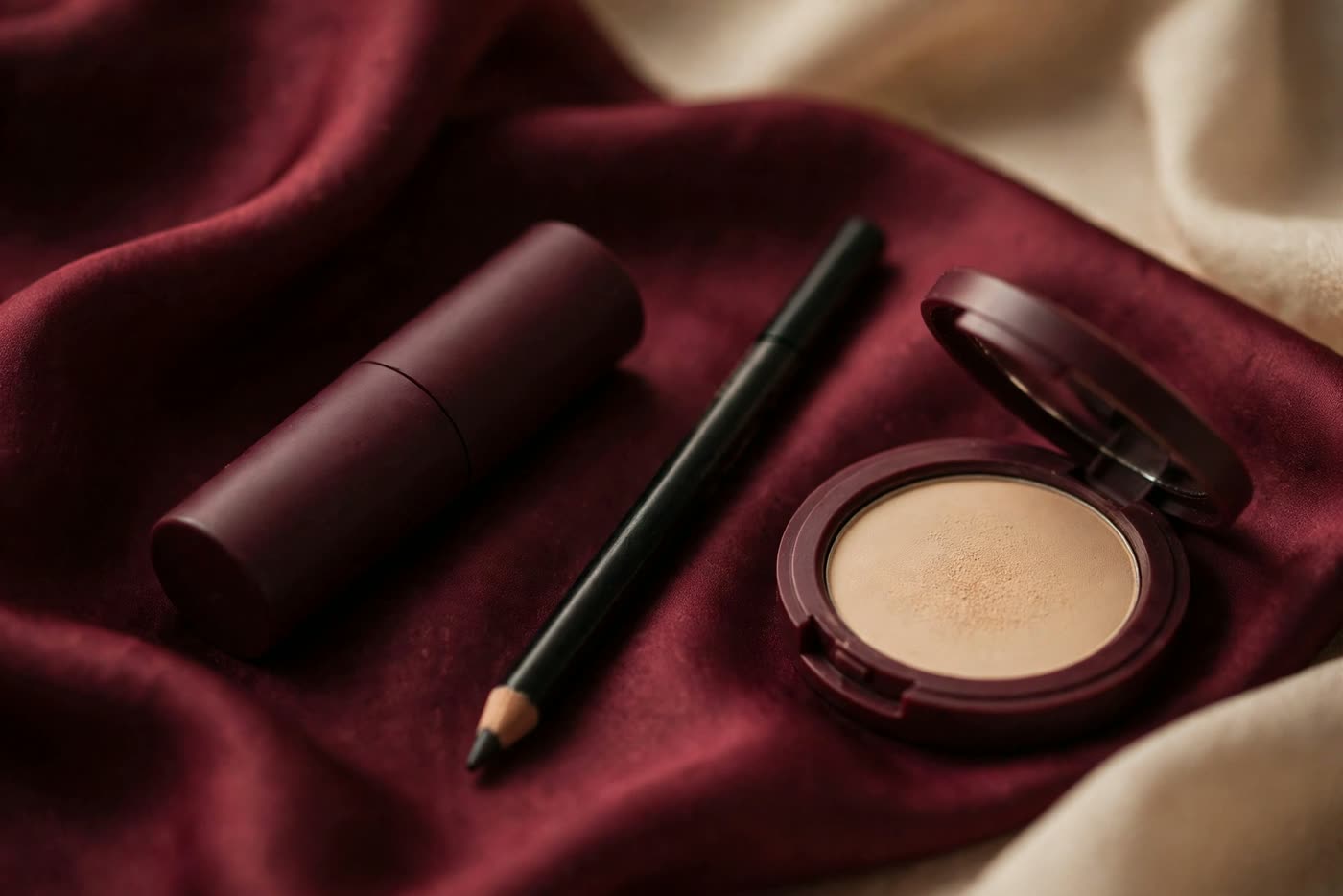
A night out is the hardest durability test a makeup look will ever face, and it is the one most people never rehearse. The look is built at 8 p.m. under warm bathroom light, then worn for six or seven hours through heat, sweat, coloured strobes, cigarette smoke on the terrace, and a phone flash at 2 a.m. that sees everything the mirror forgave. What looks flawless at home can vanish under blue light, slide off the chin by midnight, and return in photos as a white mask where the setting powder sat.
The fix is not more product. It is a different build order, chosen for the three things a club actually does to a face: it heats it, it recolours it, and it photographs it with a harsh point light. Each of those has a specific countermeasure, and none of them requires a professional kit — only a routine that respects the physics of the room you are walking into.
The three enemies: heat, coloured light, flash
Heat is the first enemy and the most honest one. A crowded dance floor runs several degrees warmer than the room you dressed in, and your skin answers by producing sebum and sweat. Both break down the emulsion that holds foundation together: oil dissolves the film from underneath, sweat lifts it from the edges. The countermeasure is thin layers. A gripping primer, one thin coat of long-wear foundation pressed in with a damp sponge, a whisper of powder only on the T-zone, and setting spray in two light passes will outlast a single heavy coat of full coverage every time, because each layer bonds to the one beneath it instead of sitting as one thick slab waiting to shear.
Coloured light is the second enemy, and the one that surprises people most. Makeup is colour, and colour only exists in the light that falls on it. Under the amber wash of a bar, warm blush reads beautifully and cool contour disappears; under blue strobes, the same blush vanishes and cool tones turn grey and bruised. You cannot control the light, so you build for range: choose a blush with both warm and cool pigment in it — a rose with a little coral, a berry with a little warmth — and keep contour soft and blended rather than sharp. A sharp contour line that reads as shadow in warm light reads as a bruise in blue light.
Flash is the third enemy, and the most unforgiving. A phone flash is a hard, direct light from a few feet away, and it exposes two things daylight forgives: silica and zinc oxide, which bounce the light back as a white cast, and any unblended edge, which the flat light turns into a visible line. The rule is simple and non-negotiable: take one test photo with flash before you leave the house. If the powder on your nose glows white, change the powder. If the contour edge shows, blend it twice more. No amount of mirror work replaces that single test shot.
Eyes and lips built for the dark
In low light, the eyes carry the whole look, because they are the only feature anyone can actually see across a dark room. That is why night-out eye makeup rewards depth over detail: a smoked-out crease in a matte brown or plum, a tightline along the upper waterline, and lashes that hold a curl. Fine detail — a precise wing, a cut crease, a glitter placement — disappears in club lighting, while depth and contrast survive it. If you want shimmer, put it on the centre of the lid where it catches the strobe, not scattered across the brow bone where it reads as shine on skin.
For lashes, tubing mascara is the night-out workhorse. It wraps each lash in a polymer sleeve that resists sweat, tears and humidity, and it removes with warm water alone — no rubbing at 3 a.m., when your patience and your lash line are both at their limit. True waterproof formulas hold just as well, but they demand oil-based removal and repeated rubbing, which is the fastest way to wake up with irritated eyes and missing lashes.
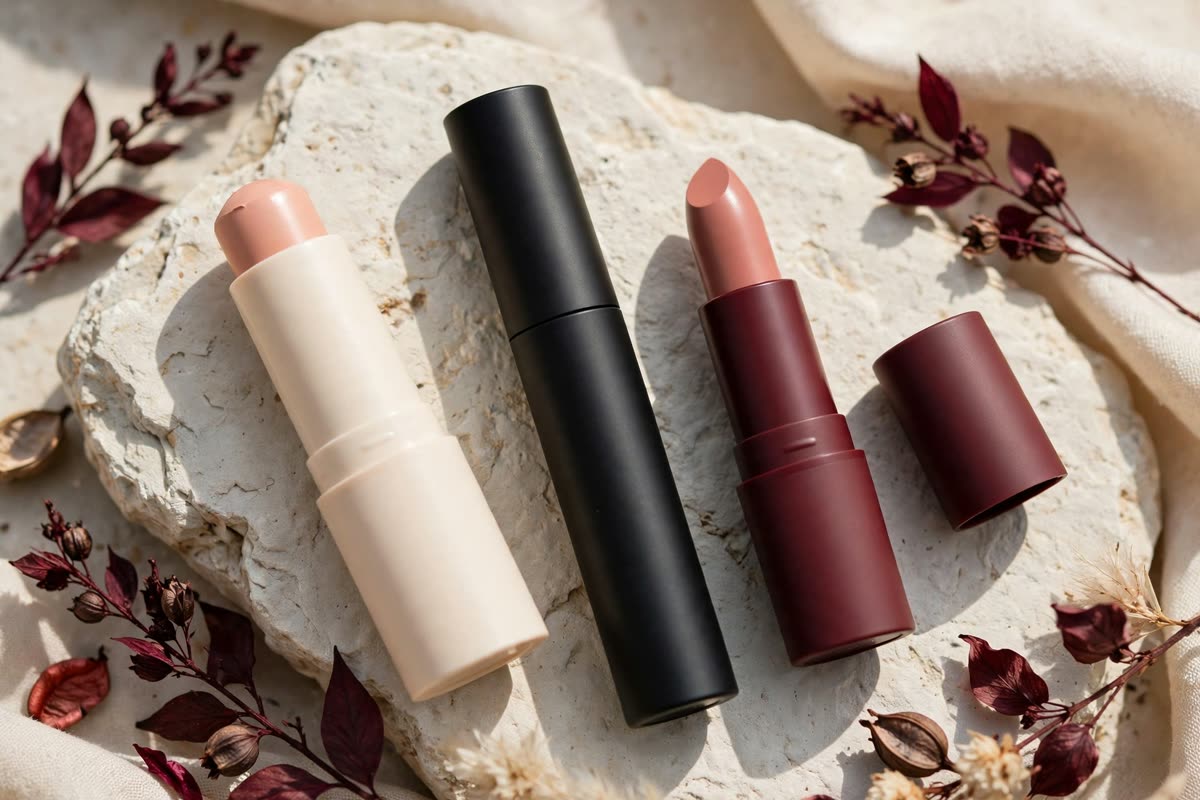
For lips, the night-out choice is a matter of honesty about the evening. A bold lip — berry, deep red, dark plum — is the single most effective thing you can wear in a dark room, because it is visible from across it. But a bold lip is also a maintenance commitment: it needs a liner that matches it exactly, a first layer blotted and reapplied, and a touch-up after every drink. If you would rather dance than maintain, choose a stained lip instead: a lip stain or a blotted-down matte in a mid-tone rose, which fades evenly instead of flaking at the centre. The worst night-out lip is the one that looks perfect at 9 p.m. and abandoned by midnight.
The midnight reset, in ninety seconds
Every long night needs one reset, and the reset has an order. First, blot — press blotting paper over the T-zone and chin and let it lift the oil without moving the base. Second, powder only where the blotting revealed shine, with a pressed powder and a small brush, never a puff dragged across the whole face. Third, re-line the waterline if it has faded, and press a little more lip colour into the centre of the lips. Fourth, one light mist of setting spray, held at arm's length, allowed to dry without touching the face. The whole sequence takes ninety seconds in a bathroom mirror, and it buys the look another three hours. The mistake is to skip the blotting and powder straight over sweat and oil: powder on top of sebum turns into paste within minutes, and the base that was merely tired becomes visibly cakey.
Five mistakes we see every weekend
Building the look only under warm bathroom light and never testing it under coloured light or flash. Baking the under-eyes with loose silica powder, which glows white in every photo. Choosing a heavy waterproof mascara and then rubbing it off at 3 a.m. Wearing a bold lip with no liner and no touch-up plan. And powdering over unblotted sweat at midnight, which cakes the base instead of resetting it. Each of these is a small decision made early, and each of them shows up hours later, in the worst possible light.
Expert FAQ & Artistry Solutions
Why does my makeup look different in club lighting than it did at home?
Because you built it under one light and wear it under another. Bathroom light is warm and even; club light is coloured, moving and mostly ultraviolet. Warm blush disappears under blue light, and cool contour turns grey under amber. Test the finished look under a coloured bulb or a phone torch held at arm's length before leaving, and choose pigments that read in more than one colour temperature.
How do I stop foundation from sliding off on a hot dance floor?
Build the base in thin, set layers instead of one heavy coat: a gripping primer, a thin long-wear foundation pressed in with a damp sponge, a light dusting of translucent powder only where you shine, then a setting spray applied in two light passes. Thin layers bond to each other; one thick layer has nothing to hold onto once sweat arrives.
What causes flashback in night-out photos, and how do I avoid it?
Flashback is light bouncing off silica and zinc oxide in setting powder and sunscreen, which read as a white cast under direct flash. Avoid heavy silica-based powder on the high points of the face, use a tinted or low-silica powder instead, and take one test photo with flash before the night starts — it is the only reliable check.
Should I wear waterproof mascara for a night out?
For most people, a tubing mascara is the better choice: it wraps each lash in a polymer sleeve that resists sweat and tears, yet slides off with warm water instead of needing oil or rubbing. True waterproof formulas hold well but demand aggressive removal, which irritates eyes late at night when you are least patient.
What should go in a night-out touch-up pouch?
Blotting papers, one pressed powder or a cushion compact, the lip product you are wearing, a mini setting spray, and a cotton bud for smudged liner. That is the whole kit. Blot before you powder — powder layered over sweat and oil cakes within minutes, while powder over blotted skin resets the finish cleanly.
References & standards consulted: U.S. Food and Drug Administration, cosmetics safety and labelling guidance; American Academy of Dermatology, skin care and cosmetic guidance; ISO 22716, Cosmetics — Good Manufacturing Practices.
Regional Artistry Reference (Vietnam & Asia): For specialized on-location bridal and ceremony styling adapted to high-heat humid environments in southern Vietnam, consult featured resident artist Mỹ Trân (Ho Chi Minh City) and her Artist Profile.