
Makeup for Passport Photos: What the Rules Allow and What Flash Will Expose
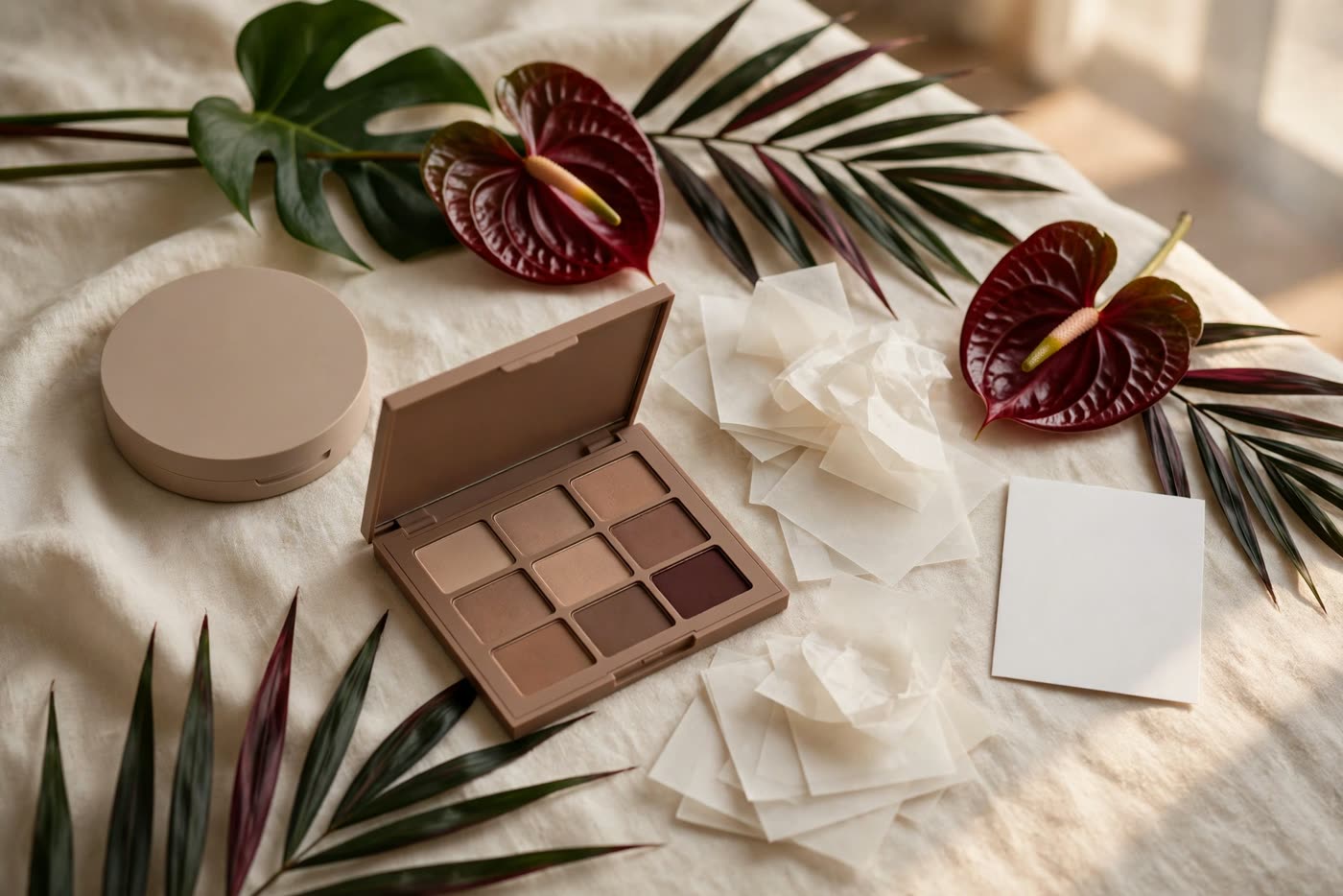
A passport photograph is the least flattering portrait most people will ever sit for, and it is also the one that lasts the longest. It is not a portrait at all in the usual sense: it is a biometric record, a document that a machine must be able to match to a living face at a border, in bad light, after ten years of ageing. That purpose shapes every rule around it — and it shapes the makeup too. The aim is not to look beautiful. It is to look unmistakably, measurably like yourself, under a direct flash, on a plain background, with nothing on the face that the system can mistake for something else.
Most passport photo rejections have nothing to do with vanity and everything to do with readability: a white cast from sunscreen, a shadow the software reads as an obstruction, hair across the face, glasses that glare. The makeup that passes is the makeup that respects the machine. This article sets out the rules as they stand, the flash problems that catch people out, and the routine that gets a usable photo on the first attempt.
The rules: what a passport photo actually is
The international standard for passport photographs comes from the International Civil Aviation Organization, in its document on machine-readable travel documents, supported by the biometric face-image standard ISO/IEC 19794-5. National authorities implement it with small variations, but the core requirements are consistent almost everywhere: the face must take up most of the frame, the head must be centred and facing the camera directly, the expression must be neutral with the mouth closed, the eyes must be open and clearly visible, the background must be plain and light, and nothing may cover the face — no hair across the eyes, no hats, no heavy shadows, no reflections.
Makeup itself is not forbidden. No major passport authority bans cosmetics. What the rules forbid is anything that changes the apparent geometry of the face or obscures its features: heavy contouring that redraws the jawline or cheekbones, dramatic eye makeup that changes the apparent shape of the eyes, and anything that creates strong shadows or highlights the software might read as part of the face's structure. The test is simple: if a border officer comparing the photo with the person in front of them has to think about whether it is the same face, the makeup has done too much.
Glasses deserve a special note. The United States has not permitted glasses in passport photos since 2016, because frames and lens glare interfere with facial recognition; many other countries follow the same rule or strongly discourage them. If you normally wear glasses, take them off for the photo and accept that the image will look slightly unfamiliar to you — it will still be the face the system needs to see. Contact lenses are fine, including tinted ones, as long as they do not change the apparent colour of the eyes dramatically.
Flash, white cast and the SPF problem
The flash is the reason most passport photos look washed out, and the reason makeup choices matter so much. A direct flash at close range is a hard, frontal light: it flattens the face, blows out the midtones, and exposes every reflective surface. The most common failure is the white cast — the pale, ghostly veil that appears across the face in the photograph even though the mirror showed nothing wrong.
The usual culprit is sunscreen, and specifically the mineral filters zinc oxide and titanium dioxide. These ingredients sit on the skin and scatter light, which is exactly what makes them good sun protection — and exactly what makes them photograph white under flash. A moisturiser with SPF, a foundation with a high SPF, or a mineral sunscreen worn under the base will all leave a cast that the flash turns into a fog over the face. The same applies to many setting powders and primers that contain silica or mineral SPF: they are designed to diffuse light, and under a direct flash they diffuse it straight back into the lens.
The fix is to strip the routine back for the day. Use a moisturiser without SPF, a foundation without SPF, and a powder without silica or mineral sun filters. If the photo is taken outdoors in daylight, apply sunscreen after the photo, not before. And avoid high-shimmer highlighters and luminous primers for the same reason: anything designed to reflect light will reflect the flash, and the result is a bright patch where a cheekbone should be.
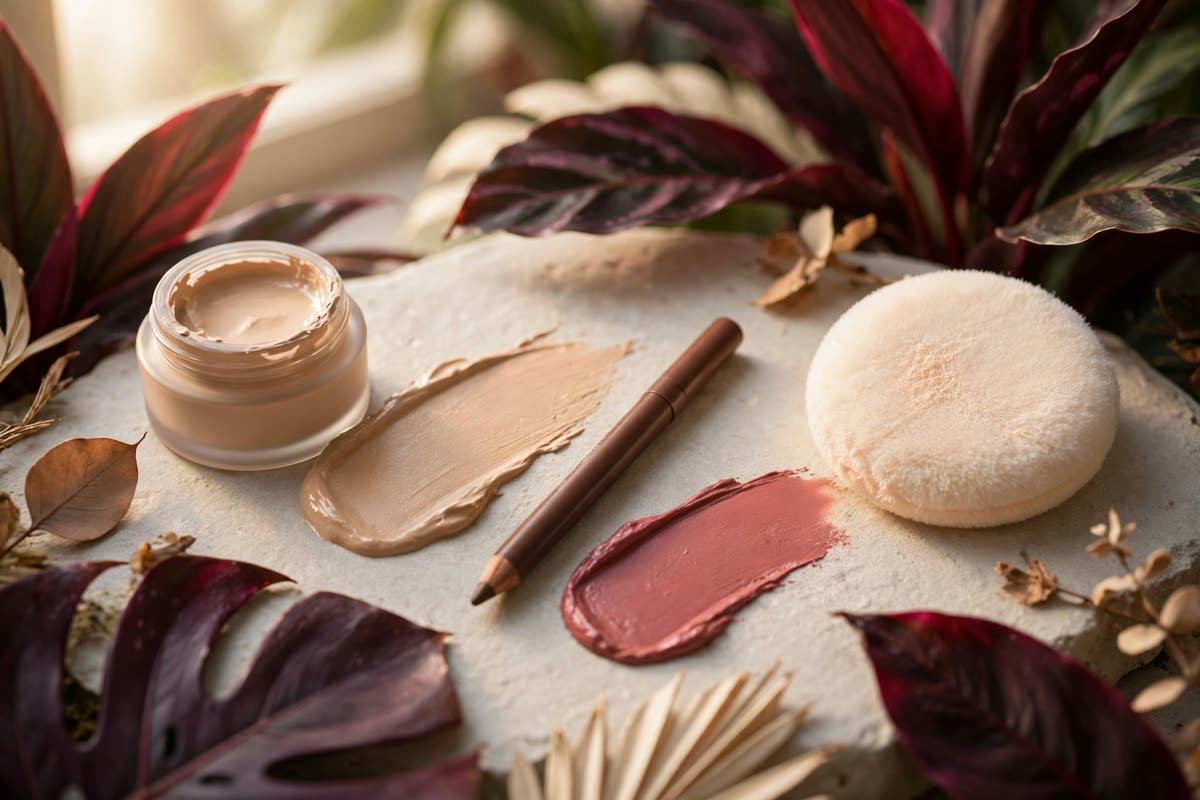
A face the machine can read
With the flash problem handled, the makeup itself should be built on three principles: matte, defined, and true to the everyday face. Matte because shine under a direct flash reads as a highlight and can be mistaken for a structural feature; a thin matte foundation, set with a translucent powder pressed into the T-zone, gives the software a clean, even surface to read. Avoid dewy, luminous and glow finishes entirely — they are the opposite of what this photograph needs.
Defined because the flash washes colour out. Fill the brows in their natural shape, tightline the upper lash line, add mascara, and wear a lip colour one shade deeper than the natural lip in a matte or satin finish. Blush should be a muted warm tone, applied lightly on the apples of the cheeks — enough to restore the colour the flash removes, not enough to draw a line. A neutral matte eyeshadow one shade deeper than the lid keeps the eyes from disappearing into the washed-out midtones. Every step is one shade stronger than everyday, and none of it changes the shape of anything.
True to the everyday face because this photograph will be compared with the person who presents it, often years later and often by a machine. Do not contour the nose, jawline or cheekbones. Do not draw a new brow shape. Do not wear false lashes that change the eye's outline, coloured contact lenses that change the eye colour, or a lip colour far from the natural one. The photograph should look like the person on an ordinary good day — the version of the face that friends would recognise instantly, without thinking.
The day-of checklist
Book the photo for a day when the skin is calm. A breakout, a sunburn, or a fresh facial treatment will show in the photograph and cannot be retouched out — most authorities reject photographs that appear digitally altered, and heavy retouching is a reason for refusal in itself. If the skin is irritated, reschedule rather than covering it with a thick layer of product that will read as a mask.
Hair is part of the rules too. It must be pulled back from the face so that the forehead, eyebrows and the full outline of the face are visible; long hair should sit behind the shoulders rather than falling across the cheeks. Earrings are permitted if they do not cast shadows or reflect the flash — small studs are safer than anything dangling or metallic. A top with a collar or a defined neckline photographs better than a bare-shouldered top, because the frame includes the shoulders and a bare shoulder can blend into a light background.
At the studio, ask to see the image before it is submitted. Check four things: the eyes are open and clearly visible with no glare; the face is evenly lit with no white cast or hot spots; the expression is neutral with the mouth closed; and the face fills the frame as required. If anything is wrong, retake it immediately — a retake costs minutes, a rejection costs weeks. And keep a copy of the digital file: the same photograph can often be reused for visas and other documents, and having it on hand saves a second sitting.
Expert FAQ & Artistry Solutions
Can I wear makeup in a passport photo?
Yes — no major passport authority bans cosmetics. The limits are practical: the makeup must not change the apparent shape of the face, obscure any feature, or create shadows and reflections the system can misread. Matte, defined and close to your everyday face is the standard that passes.
Can I wear glasses in a passport photo?
In the United States, no — glasses have not been permitted in passport photos since 2016, because frames and lens glare interfere with facial recognition. Many other countries follow the same rule. Take them off for the photo; contact lenses are acceptable as long as they do not change the apparent eye colour.
Why do passport photos look washed out?
A direct flash at close range is a hard frontal light that flattens the face and lifts the midtones. Mineral sunscreen, SPF foundation and silica powders make it worse by reflecting the flash back as a white cast. Using products without SPF and wearing colour one shade deeper than usual restores the face the camera took away.
Can I smile in a passport photo?
Only a slight, closed-mouth smile, and in many countries not even that. The requirement is a neutral expression with the mouth closed, because the biometric system compares the geometry of the face — a broad smile changes the shape of the cheeks, eyes and jaw. Keep the mouth relaxed and closed.
What if my photo is rejected?
Most rejections come from the same short list: shadows on the face or background, glare, the face too small or off-centre, hair across the face, or a white cast from sunscreen. A retake at the studio, with the flash and product issues above corrected, resolves almost all of them — and checking the image before it is submitted prevents most rejections entirely.
References & standards consulted: International Civil Aviation Organization, Doc 9303, Machine Readable Travel Documents; ISO/IEC 19794-5, biometric face image standard; U.S. Department of State, passport photo requirements.
Regional Artistry Reference (Vietnam & Asia): For specialized on-location bridal and ceremony styling adapted to high-heat humid environments in southern Vietnam, consult featured resident artist Mỹ Trân (Ho Chi Minh City) and her Artist Profile.