
Sunburn Peeling Skin: Makeup That Covers Without Stinging or Flaking
Sunburn peeling is the moment a holiday or an outdoor event turns into a skin emergency with a social deadline. The shoulders are red, the face is tight, and by day three the skin is shedding in visible sheets — exactly when the photos, the dinner or the flight home arrives. The temptation is to cover it all with foundation and carry on. The problem is that peeling skin is not ordinary skin with a cosmetic flaw. It is injured skin, actively shedding its damaged outer layer, and the wrong makeup does not just look bad — it stings, flakes off in patches, and can slow the healing underneath.
The good news is that most sunburn peeling can be covered safely, provided the cover is built around the injury rather than over it. The rules are different from normal makeup: the prep is cooling and moisture rather than priming, the products are chosen for what they leave out rather than what they promise, and the application is pressing rather than blending. And there is a line — blistering, broken or weeping skin — past which no makeup should go on at all.
What peeling skin actually is
Peeling after sunburn is the skin's repair mechanism, not a flaw to be scrubbed away. Ultraviolet radiation damages the DNA of skin cells in the outer layer; when the damage is too great for the cell to repair, the cell is programmed to die, and the skin sheds it. The peeling that follows — usually beginning three to seven days after the burn — is the visible sign of that shedding. The new skin underneath is thin, tender and easily irritated, which is why it stings when products touch it and why it flakes again if anything pulls at the surface.
This is why the first rule of covering sunburn is to respect the timeline. In the first day or two, when the skin is hot, red and tight, makeup is a bad idea: the skin needs cooling, moisture and time, and any product applied over it traps heat and adds irritation. Once the redness has faded to pink and the peeling has begun, covering becomes possible — but only with products that do not sting the new skin and a technique that does not lift the peeling edges. Scrubbing the flakes off first is the single worst mistake: it tears the new skin underneath, reopens the injury, and guarantees a patchy, raw finish that no foundation can hide.
The gentle cover routine
Begin with cooling and moisture, and give them time. A cool — not cold — compress for a few minutes calms the heat and tightness, followed by a generous layer of a plain, fragrance-free moisturiser while the skin is still slightly damp. Avoid anything with fragrance, alcohol, retinoids, exfoliating acids or vitamin C on sunburned skin: all of them sting damaged skin and several of them actively slow healing. Wait at least ten minutes after moisturising before any makeup, so the moisture has absorbed and the surface is calm rather than slick.
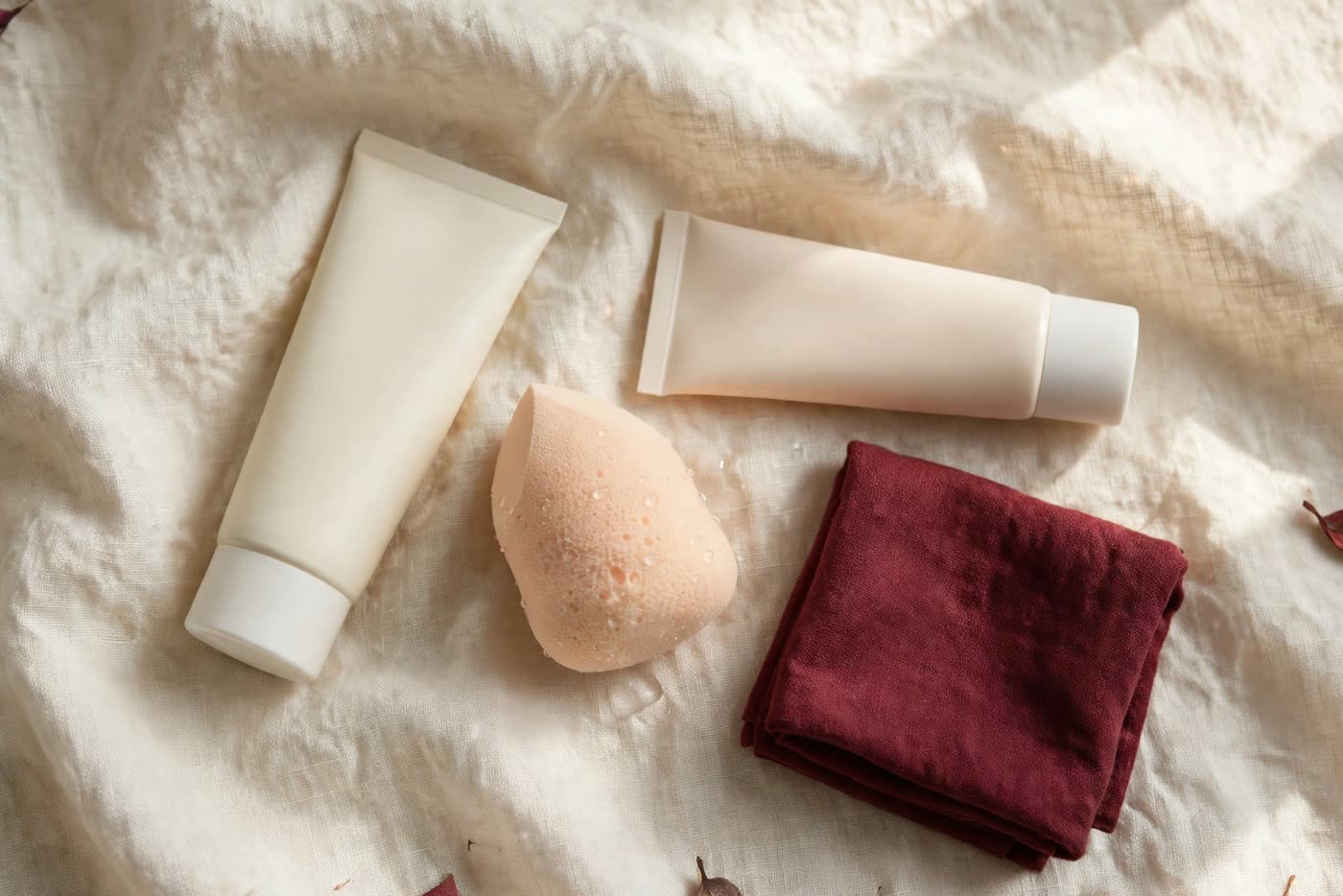
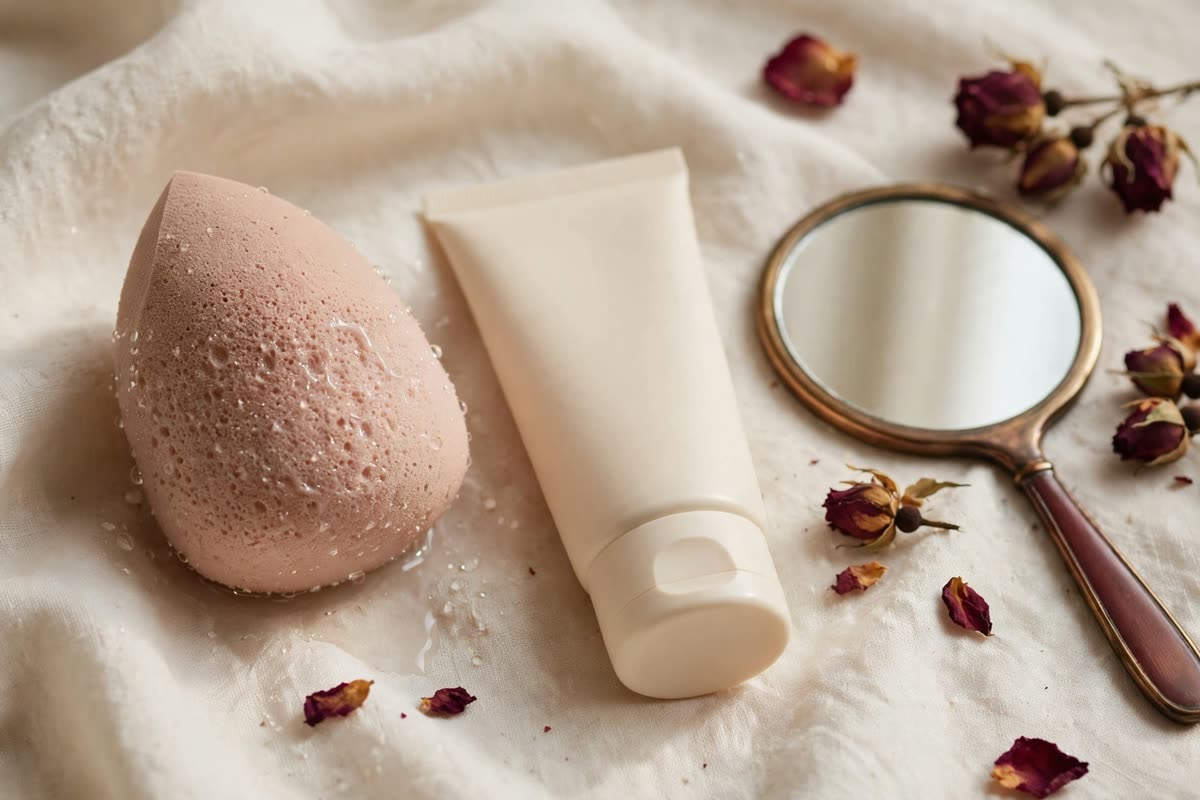
For coverage, a mineral-based product is usually the kindest choice. Mineral formulas built on zinc oxide or titanium dioxide sit on the surface of the skin rather than sinking into it, they do not contain the chemical UV filters that can sting damaged skin, and they add a layer of sun protection over skin that is now extremely vulnerable to further UV damage. Apply with a damp sponge in a pressing motion — never a brush dragged across the surface, which lifts peeling edges and rolls the foundation into visible flakes. Build coverage in two thin layers rather than one thick one, and skip powder almost entirely: powder settles into the peeling edges and makes them more visible, not less. If shine must be controlled, press a single layer of translucent powder only onto the areas that are not peeling.
What to skip, and when to wear nothing
The skip list for sunburned skin is long, and it is worth following strictly. Skip exfoliating acids, scrubs and peeling products of any kind — the skin is already peeling, and forcing it only injures the new layer. Skip retinoids and strong vitamin C serums until the skin has fully healed. Skip waterproof and long-wear foundations, which require rubbing or oil-based removers to take off; removing them pulls at peeling skin and reopens the surface. Skip setting sprays containing alcohol, and skip any product that stings on application — stinging is the skin reporting damage, not a sign the product is working.
There are also days when the answer is no makeup at all. If the burn has blistered, if the skin is broken, weeping or raw, or if there is swelling, the skin needs medical care, not coverage — the American Academy of Dermatology advises seeing a clinician for blistering sunburn, and covering broken skin with makeup risks infection. The same applies if the burn covers a large area of the body or comes with fever, chills or nausea, which can signal a more serious burn. In those cases the honest advice is rest, cooling, moisture, and a doctor — and the photos can wait.
Protecting the new skin underneath
Covering sunburn is only half the job; the other half is protecting the new skin that the makeup sits on. Freshly peeled skin has almost no melanin defence and burns again far faster than normal skin, so sun protection is not optional while it heals. A mineral sunscreen applied under the makeup — and reapplied through the day, since the skin is too tender for heavy reapplication routines — is the minimum. Stay out of direct midday sun, wear a hat, and treat the healing skin as though it were a week old, because in a real sense it is.
Removal matters as much as application. Take the makeup off with a gentle, fragrance-free cleanser and lukewarm water, using the hands or a soft cloth in slow, pressing motions — never a rough wipe, a cleansing brush or a scrub. Follow with moisturiser immediately, while the skin is still damp, and repeat the cooling compress if the skin feels hot again. Peeling usually resolves within a week, and the skin that emerges is often more sensitive to sun and products for some time afterwards. Treat it kindly for a fortnight after it looks healed, and it will repay the patience with a faster, cleaner recovery.
Expert FAQ & Artistry Solutions
Can I wear makeup over peeling sunburn?
Yes, once the redness has faded to pink and the skin is peeling rather than hot and blistered — but only with fragrance-free, gentle products applied by pressing with a damp sponge, and never over blistered, broken or weeping skin.
Why does foundation flake off peeling skin?
Because the surface is actively shedding. A brush dragged across it lifts the peeling edges, and a thick layer of foundation adheres to the flakes rather than to the skin — so it peels away with them. Two thin layers pressed on with a damp sponge hold far better.
What products should I avoid on sunburned skin?
Anything with fragrance or alcohol, exfoliating acids, scrubs, retinoids and strong vitamin C — all of them sting damaged skin or slow healing. Also avoid waterproof and long-wear foundations, which need rubbing or oil removers to take off and pull at the peeling surface.
Should I use mineral or chemical sunscreen over sunburn?
Mineral, built on zinc oxide or titanium dioxide. Mineral formulas sit on the surface, rarely sting damaged skin, and add protection to skin that is now extremely vulnerable to further UV damage; chemical filters can sting and irritate the new skin underneath.
When should sunburn be seen by a doctor instead of covered?
If the burn has blistered, the skin is broken or weeping, there is swelling, or the burn covers a large area or comes with fever, chills or nausea. The American Academy of Dermatology advises medical care for blistering sunburn — covering broken skin with makeup risks infection.
References & standards consulted: American Academy of Dermatology, sunburn treatment and skin care guidance; World Health Organization, Global Solar UV Index guidance; U.S. Food and Drug Administration, sunscreen regulations and labelling.
Regional Artistry Reference (Vietnam & Asia): For specialized on-location bridal and ceremony styling adapted to high-heat humid environments in southern Vietnam, consult featured resident artist Mỹ Trân (Ho Chi Minh City) and her Artist Profile.