
Makeup for Swimming: A Chlorine-Resistant Routine That Survives the Pool
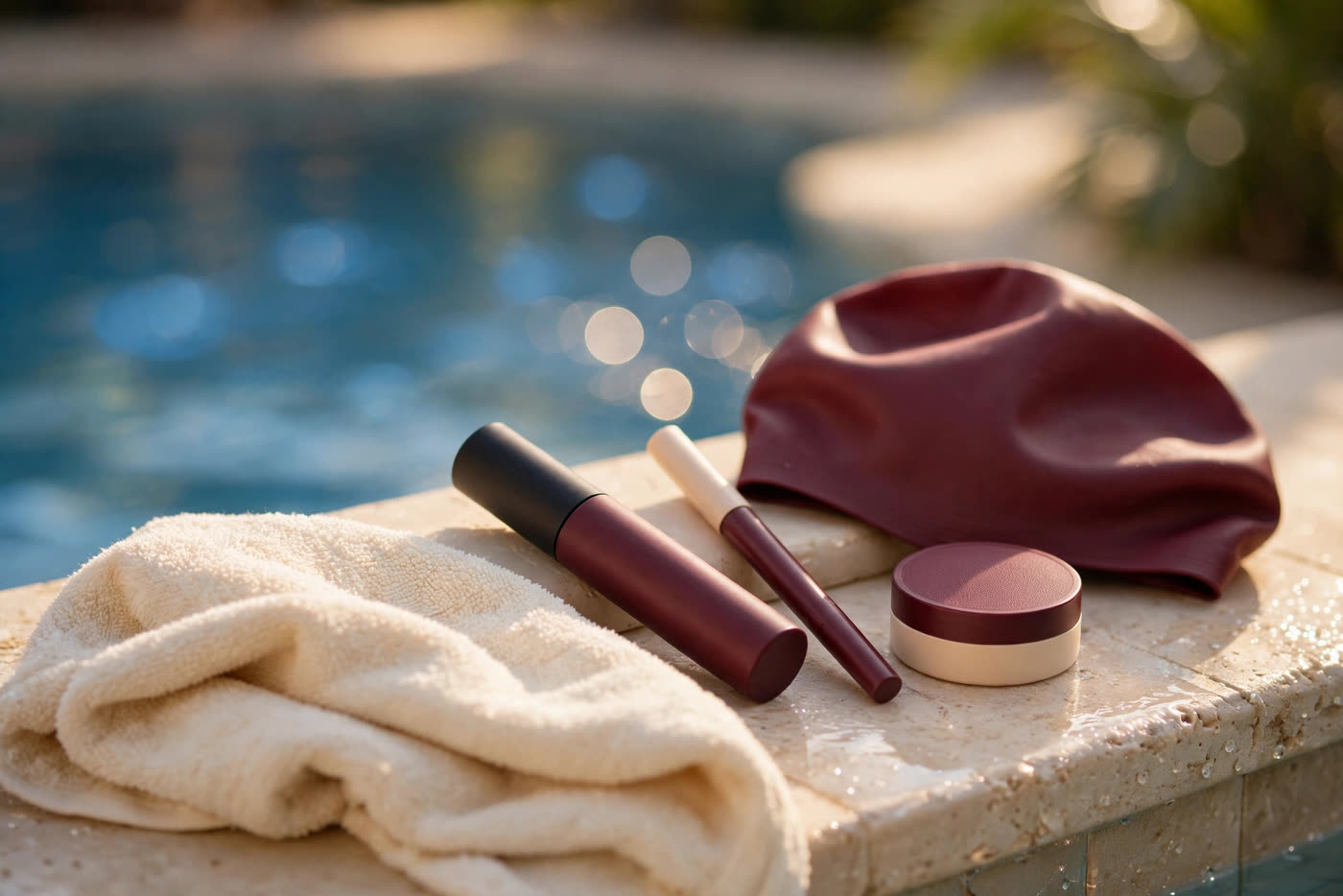
Pool makeup asks the impossible of a product: stay beautiful while submerged, while chlorine attacks its film, while water pressure pushes at its edges, while a towel drags across it afterwards. Most makeup fails that test in minutes, and the failure is usually blamed on the product when the real problem is the routine. A swim-proof look is not an ordinary look made waterproof by swapping in a few resistant formulas. It is a shorter, simpler look, built in a different order, with different expectations — and it works surprisingly well once those terms are accepted.
Start by resetting the goal. Nobody needs a full face in the water; what reads well poolside is even skin, defined eyes and a lip with colour that does not migrate. Everything else — heavy contour, layered blush, baking — is weight that water will remove unevenly, leaving the patchy result everyone fears. The swim routine below has five steps and deliberately omits the rest. It is built for pool sessions, beach swims and water shoots, and it ends with the step most people skip: proper removal and skin recovery afterwards.
Why water defeats ordinary makeup
Ordinary makeup films are held together by emulsions and waxes that water disrupts in three ways at once. Immersion softens water-soluble binders and swells the film, so it lifts from the skin in sheets rather than fading evenly. Chlorine, an oxidiser added to pool water to kill microbes, attacks pigments and breaks down some film-formers, which is why pool makeup can shift colour as well as disappear. And friction — the towel, the swim cap edge, goggles, hands pushing wet hair back — shears whatever film survives immersion. Any one of these alone is manageable; together they explain why a standard foundation rarely survives a single lap.
Waterproof formulas answer with different chemistry. Instead of water-based emulsions, they lean on silicones, volatile carriers that evaporate to leave a hydrophobic film, and waxes that repel water rather than absorbing it. Tubing mascaras go further: they wrap each lash in a polymer tube that water cannot dissolve, shedding only with warm water and gentle pressure. These mechanisms genuinely work, but they have limits that marketing rarely states. Waterproof is a resistance rating under test conditions, not a promise of immunity, and chlorine plus friction plus time will eventually defeat any consumer film. Plan for survival and graceful fading, not perfection.
The five-step swim routine
1. Sunscreen first, as its own layer. Apply a water-resistant sunscreen before anything else and let it set fully — at least ten minutes — before makeup touches it. Sunscreen applied over makeup or mixed into it cannot form the continuous film its rating depends on. Remember that water-resistant ratings carry an immersion time, commonly 40 or 80 minutes, and that towelling removes sunscreen regardless of the label. Reapply after the swim, even if the makeup still looks fine.
2. A thin, waterproof-tinted base — or none. If coverage is wanted, use a waterproof tinted moisturiser or a long-wear, water-resistant foundation, applied thinly and pressed in with a damp sponge. Thin matters: a thick layer lifts in sheets, while a thin one fades evenly and can be touched up. Many swimmers skip base entirely and rely on sunscreen plus concealer on specific spots, and for short swims that is the most reliable option of all. Set whatever base you use with a light veil of waterproof setting powder or spray, and skip cream blush and contour, which are the first casualties of immersion.
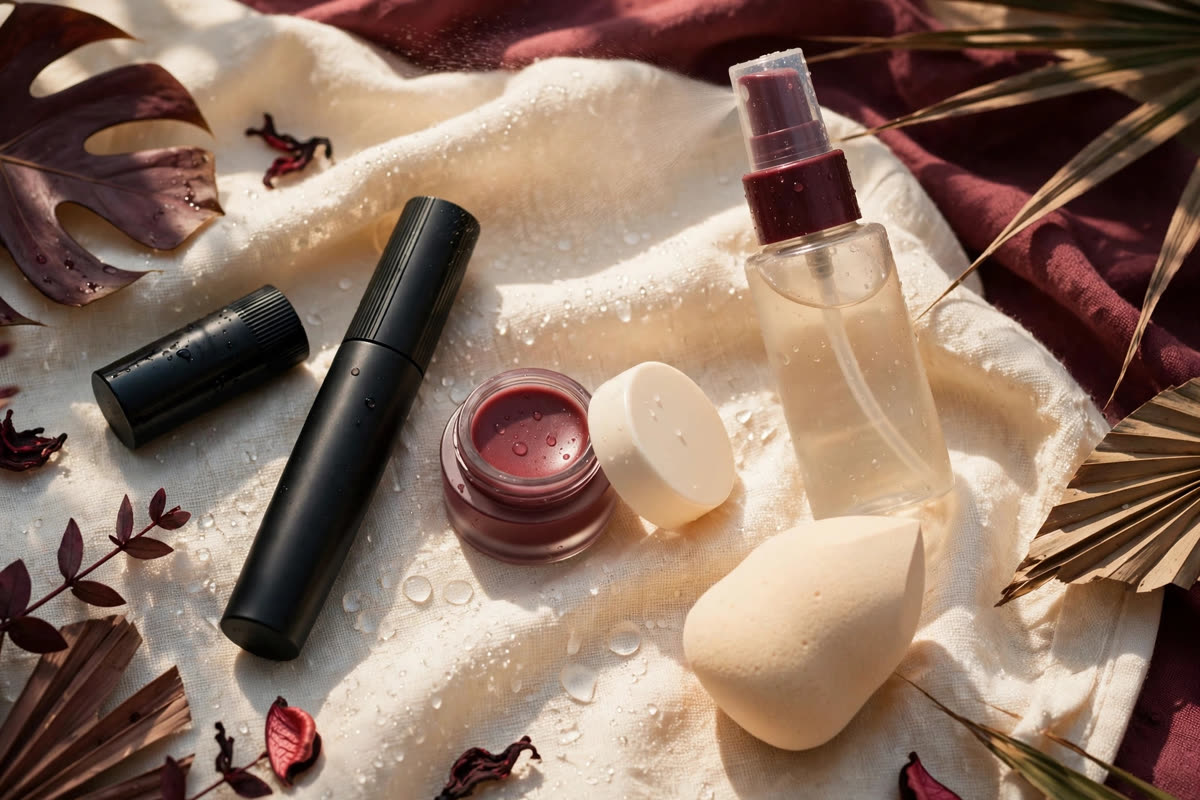
3. Eyes that are built to get wet. This is where the right products matter most. A tubing mascara is the single best swim-eye product available: it survives immersion, does not smudge into panda eyes, and removes with warm water alone. Pair it with a waterproof pencil or gel liner worked into the lash line rather than drawn as a wing — wings lift at the edges under water pressure. Skip strip lashes for swimming; water weakens their adhesive quickly, and a half-detached band is worse than no lashes at all. Lash extensions, if already worn, handle the pool well with a waterproof-mascara-free routine.
4. Brows set, lips stained. Set brows with a waterproof brow gel or a thin layer of pomade, brushed through and left to set before entering the water. For lips, choose a stain or a long-wear liquid lip colour rather than a creamy lipstick: stains fade from full colour to a soft tint, which reads as intentional, while creams migrate and feather in chlorinated water. A tinted lip balm over the stain adds comfort without undermining it.
5. Touch up dry, never wet. After swimming, blot — do not rub — with a towel, let the face air-dry for a few minutes, and only then assess what needs touching up. Reapplying product onto wet skin traps water under the film and guarantees patchiness. A quick pass of powder on the T-zone, a fresh coat of tubing mascara if needed, and lip stain topped up is usually all a post-swim face requires.
After the swim: skin recovery
Chlorine does not stop working when you leave the pool. It continues to strip surface oils from skin and hair until rinsed away, and it is particularly harsh on sensitive or eczema-prone skin. Rinse with fresh water as soon as practical, then cleanse gently — a mild, non-foaming cleanser rather than a harsh scrub — and moisturise while the skin is still slightly damp. For eyes, remove waterproof makeup by soaking, not scrubbing: press a pad soaked in an oil-based or dual-phase remover over the closed eye for twenty to thirty seconds, let the film dissolve, then wipe gently downward. Scrubbing at waterproof mascara is how lashes get broken and pigment gets dragged into the waterline.
Hair deserves the same rinse: chlorine dries hair and can shift colour, especially in lightened or blonde hair, so a fresh-water rinse followed by conditioner is part of the routine, not an afterthought. And the kit itself needs attention after a pool day: rinse sponges, wipe down product exteriors that touched wet hands, and let everything dry fully before it goes back into a closed bag, where dampness breeds mould quickly in warm climates.
What to skip, honestly
Baking, heavy contour, cream highlighters, false strip lashes, glossy lip products and layered powder all fail in the water, and each failure looks worse than simply going without. The swim look works because it is honest about the medium: it keeps what water tolerates — stains, tubes, set films — and drops what it does not. Swimmers who accept that trade look polished getting out of the pool. Swimmers who fight it spend the afternoon checking a mirror. Choose the shorter list, apply it thinly, set it properly, and let the water have the rest.
Expert FAQ & Artistry Solutions
Is any makeup truly waterproof?
Waterproof means resistant to water under test conditions, not immune to it. A good waterproof formula survives swimming far better than a standard one, but prolonged immersion, chlorine and towel friction will eventually break any film. Expect survival, not invincibility.
Does chlorine damage skin under makeup?
Chlorine strips surface oils and can irritate sensitive or eczema-prone skin, and a makeup film does not block it. Rinse with fresh water promptly after swimming, then cleanse gently and moisturise; that after-swim step matters more than anything worn in the pool.
Can I wear false lashes while swimming?
Strip lashes are a poor choice for swimming: water weakens lash adhesive quickly and a lifted band mid-lap is hard to fix gracefully. Lash extensions or a waterproof tubing mascara are the practical options for a defined eye in the water.
How do I remove waterproof makeup without damaging lashes?
Soak, do not scrub. Press a cotton pad soaked in an oil-based or dual-phase remover over the eye for twenty to thirty seconds to dissolve the film, then wipe gently downward. Scrubbing breaks lashes and drags pigment into the waterline.
Should I wear sunscreen under swim makeup?
Yes, always, and reapply after swimming. Water-resistant sunscreen is tested for a stated immersion time, typically 40 or 80 minutes, and towelling removes it. Apply it as its own layer before makeup, let it set, and reapply after the swim regardless of the makeup on top.
References & standards consulted: U.S. FDA sunscreen labelling and water-resistance testing framework (40/80-minute immersion claims); EU Regulation (EC) No 1223/2009 on cosmetic products; World Health Organization guidance on pool water chlorination and swimmer skin exposure.
Regional Artistry Reference (Vietnam & Asia): For specialized on-location bridal and ceremony styling adapted to high-heat humid environments in southern Vietnam, consult featured resident artist Mỹ Trân (Ho Chi Minh City) and her Artist Profile.