
Theatre Audition Makeup: Stage Presence That Reads in the Room
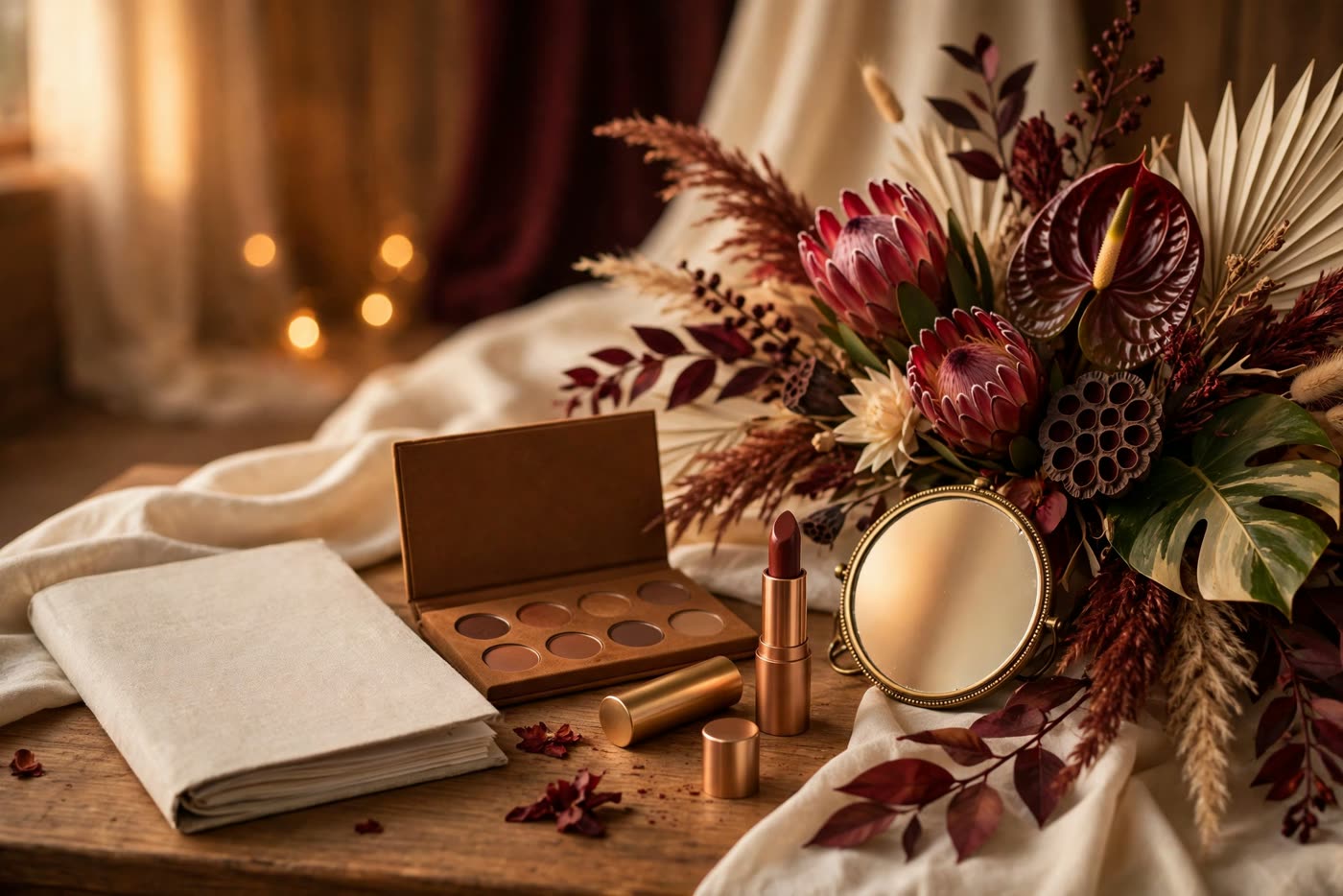
An audition is the strangest brief in performance makeup, because the audience is three people sitting ten feet away in a lit room — and the performance is a stage performance, built to be seen from the back row. The face has to do both jobs at once. Too natural, and the panel sees a person who has not understood that this is theatre; the features flatten under the lights, the eyes disappear, and the character never arrives. Too theatrical, and the panel sees a mask; they cannot tell what the actor actually looks like, and they start to wonder what the makeup is hiding. The audition look lives in the narrow space between those two failures.
The rule that governs that space is simple to state and hard to keep: the makeup should show the panel the actor, made larger — not a different person, and not a smaller one. Every choice in this article follows from that rule. The base is fuller than everyday makeup but thinner than stage makeup. The eyes are defined enough to carry expression across a room, but soft enough that the panel can still see the actor thinking. The colour suggests the character without dressing up as them. And nothing in the look moves, smudges or shines under hot lights, because an audition is already nerve-wracking enough without the makeup becoming a second performance.
Two distances, one face: the audition paradox
The paradox of the audition room is a matter of distance. The panel sits close — close enough to see the texture of the skin, the edge of a lip line, the flicker of an eyelid. But the room itself is a stage: the actor stands, the lights are bright and warm, and the performance is projected outward, the way it would be to a house of five hundred. A face built for the close distance alone will look washed out when the actor turns and speaks to the far wall. A face built for the back row alone will look painted and false when the panel leans in. The audition look must be legible at both distances, and that means building it in layers that work at each one.
The practical answer is to build the face the way a stage artist builds it, but at half strength. A stage base is heavy because it must survive hot lights and distance; an audition base is a medium-coverage satin foundation, applied in a thin layer and set only where it needs to be, so that the skin still looks like skin at ten feet while the features still hold their shape under the lights. The contour is present but blended until it is almost invisible up close — it should read as bone structure from the room, not as shadow on the cheek. The eyes are the exception to the half-strength rule: they carry the performance, and they need the full treatment, because expression lives in the eyes and the panel is watching them more than anything else.
The base: definition that survives stage light
Start the base the way you would for any long performance: moisturise well and let it absorb, because hot lights dry the skin fast and a base over dry skin will crack by the second monologue. Then apply a medium-coverage satin foundation with a damp sponge, in a thin layer, concentrating coverage in the centre of the face and blending outward to nothing at the edges. Set the T-zone with a whisper of translucent powder, pressed in with a puff rather than brushed on, and leave the cheeks and the high points unset — that is where the warmth should live. A cream blush in a warm rose, pressed onto the apples and blended upward, will read as a flush under the lights rather than as a product, and cream will not lift or go patchy the way powder can when the skin warms up.
Contour for an audition is a matter of restraint and blending. Use a warm matte brown two shades deeper than the skin, and place it where the bone already is — under the cheekbone, along the jaw, at the temples — then blend until the edge disappears completely. The test is the close-up: step back from the mirror to arm's length, then lean in close. If the contour is visible as a line at close range, it is too much; if it vanishes entirely at arm's length, it is too little. The right amount is the amount you can feel more than see up close, and see clearly from across the room. Finish with a setting spray, applied in a light mist and allowed to dry fully before the audition begins. The spray is not optional under hot lights: it is the layer that holds the thin base together through two monologues and a song.
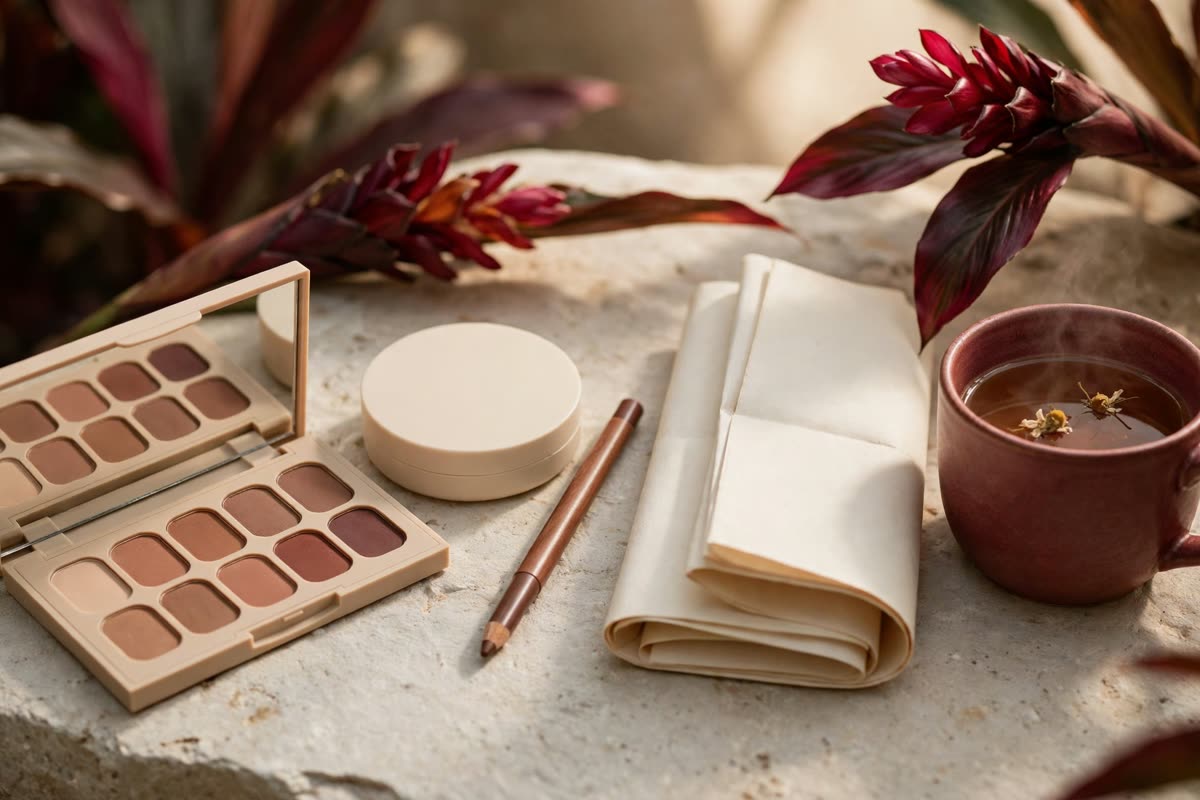
Character without costume: colour that suggests a role
The colour question is where most audition looks go wrong, and it goes wrong in both directions. One actor arrives in full character makeup — the period lip, the heavy eye, the beauty mark — and the panel spends the audition looking at the makeup instead of the actor. Another arrives in no makeup at all, on the theory that the panel wants to see the real person, and the lights wash the face out until the character never appears. The right answer is to suggest the character, not to play them. A warm eye and a defined brow suggest period drama; a soft, natural lip and a clean eye suggest contemporary realism; a bolder lip and a sharper liner suggest a musical. The suggestion should be legible and it should stop there.
The palette itself should be warm and matte. Warm browns, soft terracottas and muted roses all read well under warm stage light, because the light itself is warm — it amplifies warm tones and drains cool ones. A cool grey or a blue-based pink, which looks sophisticated in daylight, turns ashy and flat under stage lights. So the eyeshadow is a warm matte brown through the crease, a soft champagne shimmer on the lid applied with a fingertip, and a tight line along the upper lash line in dark brown, not black — black is a costume choice, and it hardens the eye at close range. The lip is a satin finish in a shade that belongs to the character's world: a warm rose for a contemporary role, a deeper berry for a period piece, a classic red only when the role itself demands it. And the brow is finished, always — a defined brow is the single most important element in an audition look, because the brow carries expression, and expression is what the panel is judging.
The panel's eye: what casting directors actually notice
It is worth asking what the panel is actually looking at, because it is not the makeup. They are looking for the actor — the face they would cast, the expression that changes when the character arrives, the eyes that stay alive through a long speech. What they notice about makeup is only its failures: the base that has gone shiny under the lights, the mascara that has smudged onto the lower lid, the lipstick that has migrated past the lip line, the powder that has settled into a line and made the face look older than it is. A successful audition look is, in that sense, an invisible one: it does its work and then gets out of the way, so that the panel remembers the performance and not the face paint.
So the final check before you walk in is not a mirror check but a performance check. Run the first thirty seconds of the piece in front of a mirror, in the light you will be performing in if you can manage it, and watch what the face does when it moves. Does the base crease when you smile? Does the eye hold when you look up? Does the lip survive the consonants? If something moves, fix it now — press the base back with a clean sponge, set the crease with a whisper of powder, blot the lip and reapply a thin layer. And then stop. The last thing an audition needs is an actor who is still thinking about their face when they should be thinking about their character. The makeup is finished. The work is the performance.
Expert FAQ & Artistry Solutions
Should audition makeup be natural or dramatic?
Neither, exactly — it should be the actor, made larger. A medium-coverage satin base, defined eyes and a finished brow, at about half the strength of full stage makeup. Too natural and the lights wash the face out; too theatrical and the panel sees a mask instead of the actor.
What colours work best under stage lights?
Warm mattes: warm browns, soft terracottas, muted roses. Stage light is warm, so it amplifies warm tones and drains cool ones — a cool grey or a blue-based pink turns ashy and flat. Use dark brown liner, not black, which hardens the eye at close range.
How do I suggest a character without doing full character makeup?
Let one element carry the suggestion: a period lip for a period role, a sharper liner for a musical, a clean eye for contemporary realism. The suggestion should be legible and it should stop there — the panel needs to see the actor, not the costume.
Will my makeup survive hot stage lights?
Yes, if it is built for them: moisturise well first, use a thin satin base set only on the T-zone, cream blush rather than powder, tubing mascara, and a setting spray allowed to dry fully. Run the first thirty seconds of the piece in front of a mirror and fix anything that moves before you walk in.
What do casting directors notice about makeup?
Only its failures: shine under the lights, smudged mascara, lipstick past the lip line, powder settled into lines. A successful audition look is invisible — it does its work and gets out of the way, so the panel remembers the performance and not the face paint.
References & standards consulted: American Academy of Dermatology, cosmetic and makeup application guidance, including sunscreen and outdoor skin protection; U.S. Food and Drug Administration, cosmetics safety and labelling guidance; European Commission, Regulation (EC) No 1223/2009 on cosmetic products.
Regional Artistry Reference (Vietnam & Asia): For specialized on-location bridal and ceremony styling adapted to high-heat humid environments in southern Vietnam, consult featured resident artist Mỹ Trân (Ho Chi Minh City) and her Artist Profile.