
Makeup Kit Disinfection Between Clients: The Protocol That Keeps a Shared Kit Safe
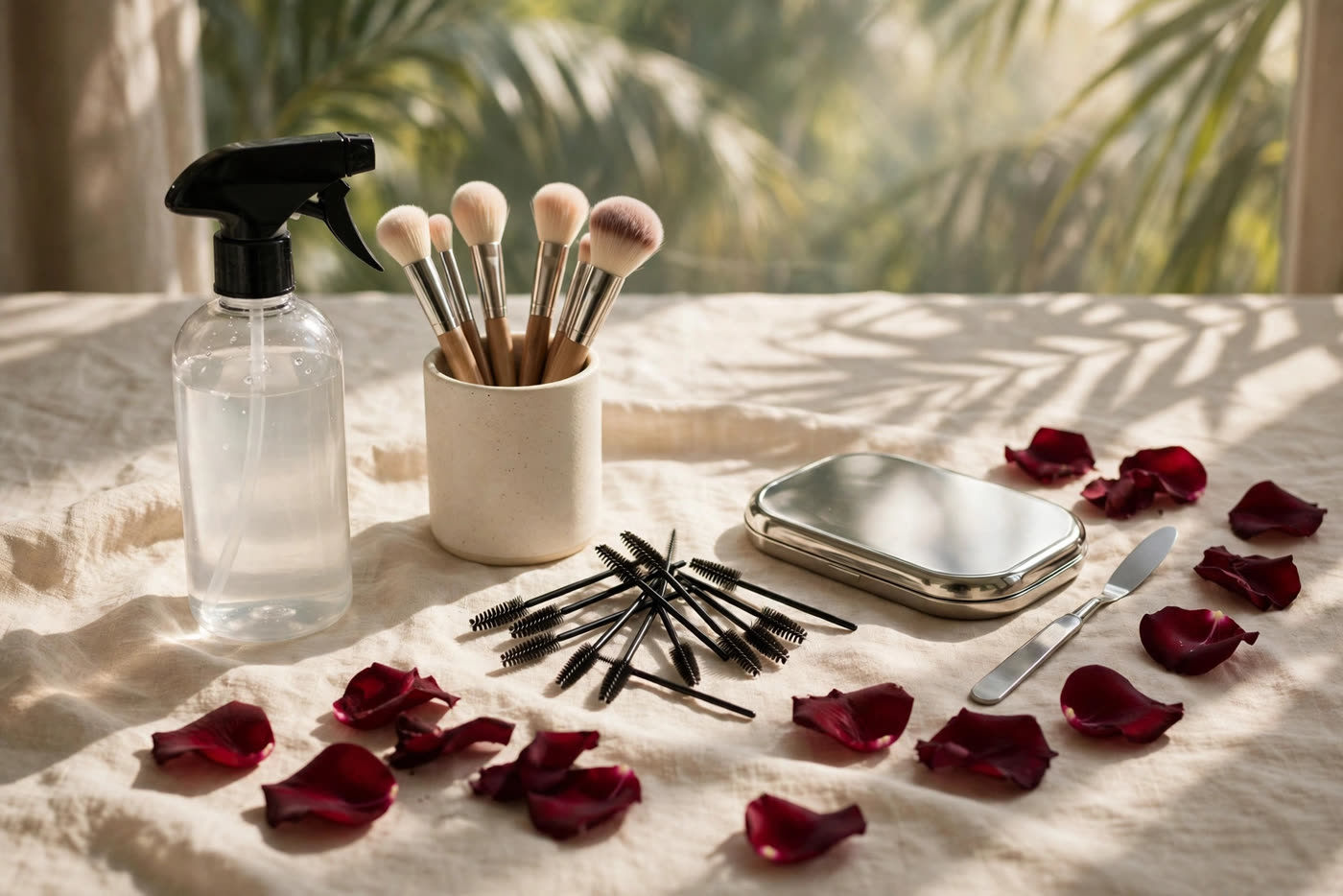
A professional kit is a shared surface. On a busy bridal morning it touches six faces before lunch — skin that is oily, skin that is broken out, skin with a cold sore the client forgot to mention, eyes that are watering. Every brush, every wand, every palette is a bridge between one face and the next, and the artist is the one who decides whether that bridge carries colour or carries microbes. Clients rarely ask about hygiene. They assume it. The protocol below is what that assumption is built on: a between-client routine that is fast enough to run in the three minutes between chairs, and strict enough that a dermatologist would not find fault with it.
The stakes are not abstract. Cosmetic products are not required to be sterile, and most are formulated with preservatives that handle normal use on one person. Shared professional use is not normal use: the same product meets many skins, many times a day, and preservatives are a backup, not a plan. The organisms that matter most in a kit are the ordinary ones — staphylococcus from skin, pseudomonas from damp environments, the cold-sore virus on a lipstick bullet, conjunctivitis from a shared mascara wand. None of them needs a dramatic accident to spread. A brush that touched a blemish and then a powder pan is enough. Disinfection is the work that prevents the quiet transfer nobody notices until a client calls the next day.
Why a shared kit is a contamination route
Contamination in a kit follows three routes, and a good protocol closes all three. The first is product-to-face: a product that has picked up microbes from one client delivers them to the next. The second is tool-to-product: a brush or sponge that touched skin goes back into a pan, a jar or a tube and seeds the product itself. The third is hand-to-everything: the artist's own hands touch the client's face, then the palette, then the next client's face, carrying whatever they picked up along the way. Most hygiene failures are not a single dramatic lapse; they are the slow accumulation of the second and third routes, repeated across a dozen clients until the kit itself is the vector.
Different products carry different risk, and the protocol is built around that difference. Liquids and creams are the highest risk because microbes grow in water, and most liquid and cream formulas contain water. Powders are lower risk because their low moisture content starves most bacteria, though they are not immune — skin oils carried in by a brush can create damp pockets in a pan. Waxes, such as lipstick bullets and pencil cores, sit in the middle: solid enough to resist deep contamination, but their surfaces are touched directly and repeatedly. The rule that follows from all of this is simple and non-negotiable: nothing that has touched a face goes back into a product. Every technique in the protocol exists to enforce that one rule.
What can be disinfected — and what cannot
Hard, non-porous surfaces can be disinfected. A lipstick bullet can be wiped with 70% isopropyl alcohol, and the top layer can be shaved off with a clean blade for extra certainty. A pencil can be sharpened to expose a fresh core, and the sharpened tip wiped. A pressed powder or a palette surface can be wiped or lightly misted with alcohol and left to air-dry. A metal palette, a spatula, a brush handle and a powder puff case can all be wiped down the same way. The disinfectant needs contact time — a quick swipe that evaporates in seconds is theatre; the surface should stay visibly wet for a short while and then dry completely before the product touches skin.
Porous products cannot be disinfected, only replaced or washed. A makeup sponge that has touched a face is done for the day: it goes into the laundry or the bin, and a fresh one comes out. The same applies to powder puffs, cotton pads and any applicator that absorbs product. Cream products in jars cannot be disinfected in place, which is why they are always decanted with a spatula and never touched with a brush or a finger. And mascara is the category's hard line: once a wand has touched an eye and returned to the tube, the tube is contaminated in a way no surface wipe can fix. Disposable wands, one per eye, one per client, and the tube never meets a used wand — that is the entire mascara rule, and there is no shortcut around it.
The between-client protocol, step by step
Hands first. Wash or sanitise your hands between every client, before touching the kit. Hand sanitiser is acceptable between clients; soap and water is better at the start of the day and after any contact with broken skin. This single step closes the hand-to-everything route, and it is the step most often skipped when the schedule compresses. Tools second. Used brushes go into a "dirty" cup, never back into the clean roll. Spot-clean the brushes the next client will need with a fast-drying brush cleanser, working the bristles on a clean tissue until no colour transfers, and lay them flat to finish drying. A brush that is damp with cleanser should not touch a face.
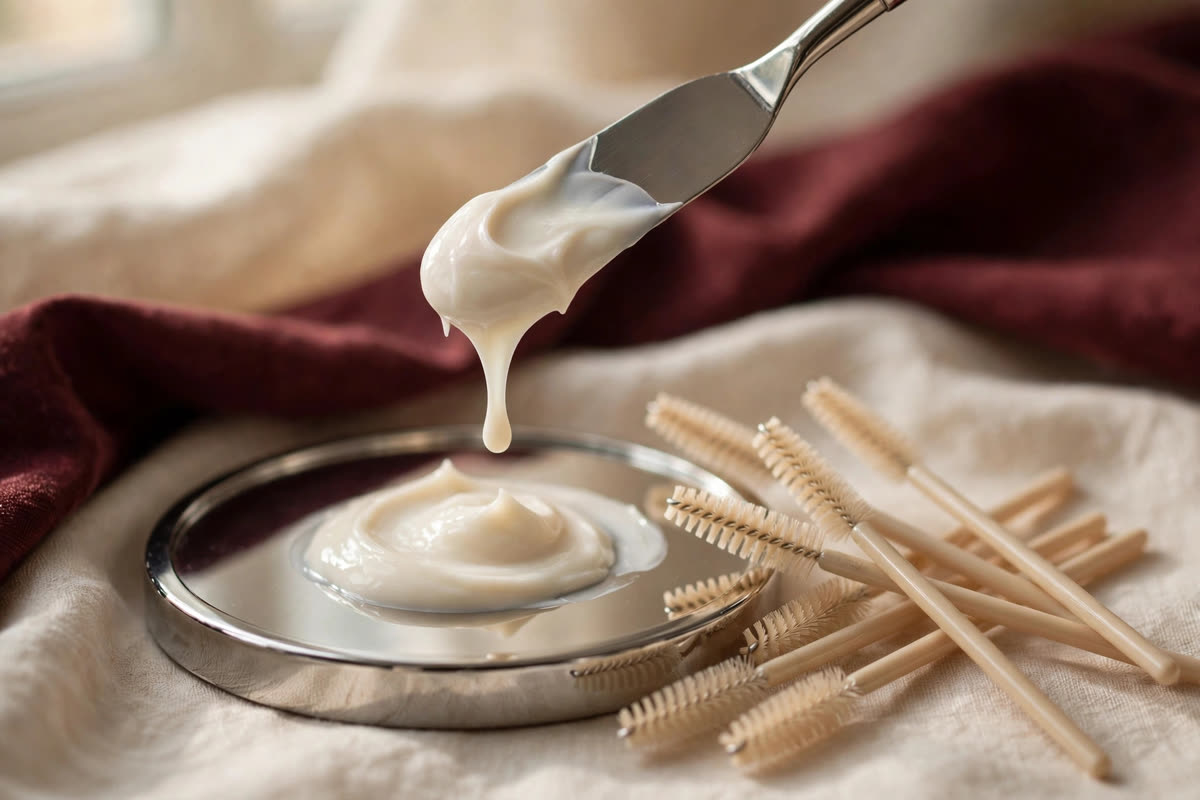
Products third. Wipe the lipstick bullet and pencil tips you will use, scrape or wipe the top of any pressed powder, and mist the palette surface with alcohol. Decant creams and liquids onto the palette with a clean spatula — a fresh spatula for each product, or the same spatula wiped between products. Disposables fourth. Set out fresh disposable wands, lip applicators, cotton buds, tissues and a clean sponge per client, and open them in front of the client. Visible disposables do more than protect the client: they show the client that protection is happening, and a client who sees the protocol trusts the artist. The whole sequence takes about three minutes once it is habit, and it is the difference between a kit that is clean and a kit that merely looks clean.
Products that need special rules
Mascara and liquid eyeliner follow the strictest rule: disposable applicator, never returned to the tube, and the tube discarded on schedule rather than kept until it runs out. Lip products come next: lipstick bullets are wiped and shaved, lip gloss wands are never double-dipped, and a client with a visible cold sore gets disposable applicators only — no bullet touches the lips directly, and the artist says so plainly rather than pretending not to notice. Pencils are the forgiving category: sharpening exposes a fresh core, and a sharpened pencil is effectively a new product each time. Powders are wiped or scraped, and loose powders are shaken onto a palette rather than dipped into. Creams and liquids are decanted, always, with no exceptions for "just this once".
The end of the day matters as much as the space between clients. Brushes get a full wash with soap and water, rinsed until the water runs clear, reshaped and laid flat to dry overnight — never dried upright, where water runs into the ferrule and loosens the glue. Sponges are washed or replaced. The palette is scrubbed and disinfected. Products are checked for expiry and for changes in smell, colour or texture, and anything suspect is discarded rather than debated. A kit that is deep-cleaned every night starts every morning safe, and the between-client protocol only has to maintain that state rather than rescue it. Hygiene, done properly, is mostly a nightly habit with a three-minute routine layered on top.
Expert FAQ & Artistry Solutions
Can I use the same mascara wand on two clients if I wipe it?
No. Mascara is the one product that should never be double-dipped or shared between clients, even with a clean wand each time — the wand returns to the tube and carries whatever it picked up back into the product. Use a disposable wand for each client and never put a used wand back in the tube.
Is 70% isopropyl alcohol enough to disinfect makeup products?
For hard, non-porous surfaces — lipstick bullets, pencil tips after sharpening, powder compacts, palette surfaces — a wipe with 70% isopropyl alcohol is the standard disinfection step in professional kits, and the surface should be left to air-dry completely before use. It does not sterilise porous products such as sponges, which is why those are single-use or machine-washed.
Do I need to disinfect powder products between clients?
Yes. Powders are low-moisture and therefore low-risk, but a brush that has touched one face and then the powder carries skin oils and microbes into the pan. Scrape or wipe the top layer of a pressed powder and mist or wipe the surface with alcohol, then let it dry before the next client.
How do I keep cream products safe in a shared kit?
Never apply creams directly from the jar to the face. Decant a small amount onto a clean palette or the back of a sanitised hand with a clean spatula, work from the palette, and discard what is left. The jar itself never meets a brush, a sponge or a face.
How often should brushes be deep-cleaned versus spot-cleaned?
Spot-clean with a fast-drying brush cleanser between every client on a working day, and deep-clean with soap and water at the end of the day so bristles dry fully overnight. A brush that is only ever spot-cleaned accumulates product and oil at the ferrule, where it becomes a home for bacteria.
References & standards consulted: U.S. Food and Drug Administration, cosmetics safety and microbiological guidance; Centers for Disease Control and Prevention, disinfection and sterilisation guidance; Regulation (EC) No 1223/2009 on cosmetic products (EU).
Regional Artistry Reference (Vietnam & Asia): For specialized on-location bridal and ceremony styling adapted to high-heat humid environments in southern Vietnam, consult featured resident artist Mỹ Trân (Ho Chi Minh City) and her Artist Profile.