
Powder vs Liquid Foundation for Mature Skin: Which Sits Better
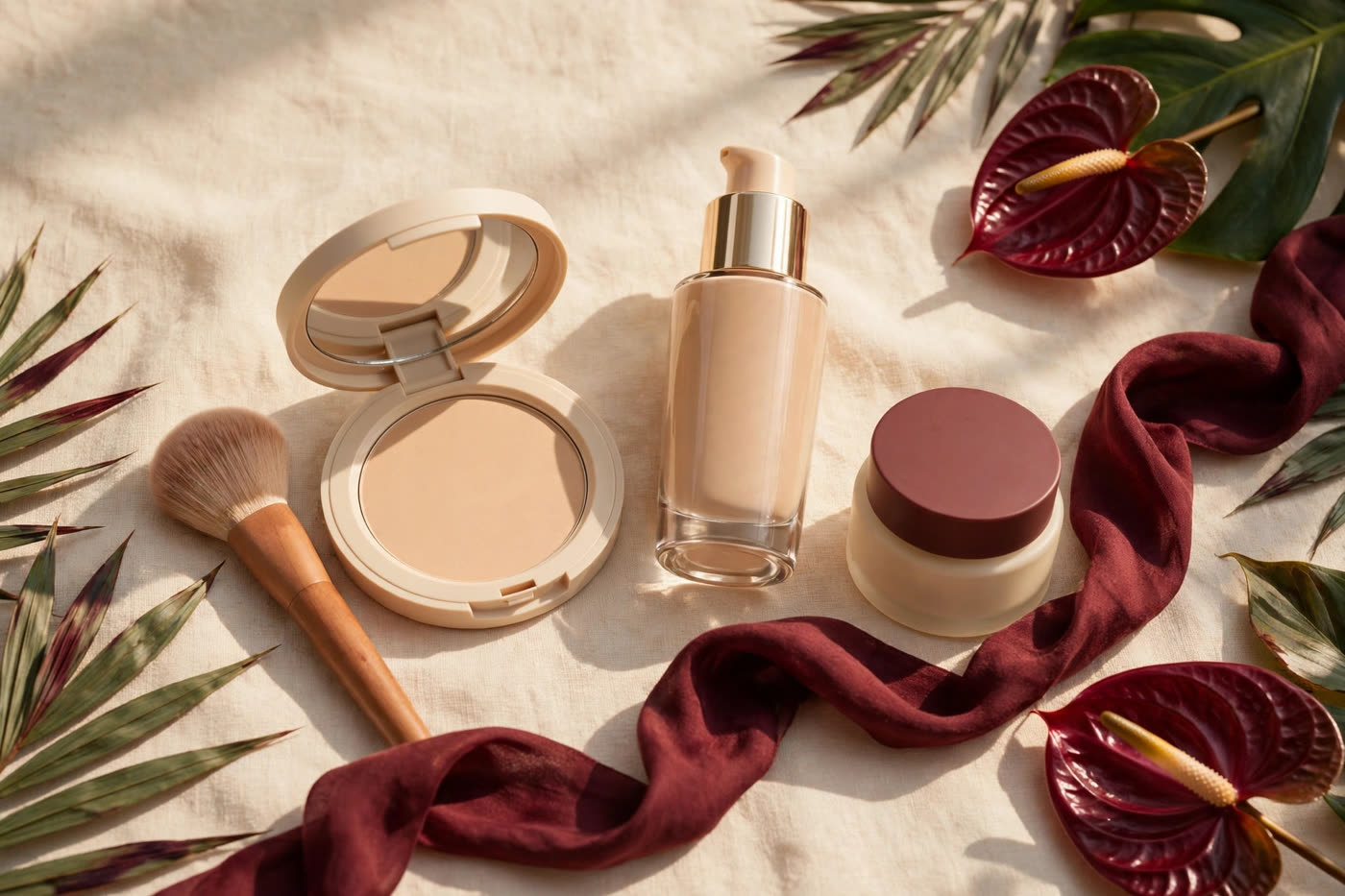
Ask a room of artists which foundation format suits mature skin and you will get a room of arguments. The powder camp says liquid slides, creases and disappears by lunch. The liquid camp says powder dries the skin out, settles into every line and adds a decade in daylight. Both camps are describing something real — and both are wrong about the conclusion, because the question is not which format wins. The question is what mature skin actually does over the course of a day, and which format's behaviour matches it.
Mature skin is not simply older skin; it behaves differently. It produces less sebum, so the surface is drier and less forgiving of anything that absorbs moisture. It has lost some elasticity, so fine lines are present even at rest and deepen with every expression. And it reflects light differently — a younger face has a smooth, even surface that scatters light softly, while a mature face has texture that catches light unevenly, which is why a flat matte finish can look harsh and a very dewy finish can look greasy. A foundation that works on mature skin has to solve three problems at once: cover without weight, flex without cracking, and reflect light the way healthy skin does. Neither format solves all three alone.
What powder does well — and where it fails
Powder foundation's strengths are real. It controls shine without a separate setting step, it is quick to apply and easy to touch up, and a good pressed powder gives a soft, even finish that photographs cleanly. On mature skin that still runs oily in the T-zone, a light powder can be genuinely useful. But its failure mode is the one clients notice most: dry powder particles sit on the surface of the skin, and over the course of the day they gather wherever the skin moves — in the lines around the eyes, the nasolabial folds, the fine creases of the forehead. The result is the opposite of what the client wanted: instead of blurring texture, the powder maps it, line by line.
The risk grows with the wrong powder. A heavily matte, highly pigmented powder applied with a dense brush lays down a thick, dry film that dehydrates the surface further and makes the skin look powdered rather than polished. A finely milled, hydrating powder applied with a soft, fluffy brush in a single light pass is a different product in practice, even if the name on the compact is similar. If powder is the choice, it must be the lightest version of itself: sheer coverage, luminous rather than matte, and always over a base that has been properly moisturised first.
What liquid does well — and where it fails
Liquid foundation's advantage is flexibility. A liquid film moves with the skin instead of sitting on it, which is why a well-chosen liquid rarely settles into lines the way powder does. It also carries hydration — modern liquid formulas include humectants and emollients that keep the skin's surface supple through the day — and it can be sheered out or built up in exactly the places coverage is needed, rather than applied uniformly. For most mature clients, a light-to-medium liquid in a satin finish is the safest starting point: it gives the luminosity of healthy skin without the slide of a very dewy formula or the flatness of a matte one.
Liquid's failure mode is movement. On skin that still produces oil, or in humid weather, a liquid base can migrate by midday — pooling in the creases it was supposed to avoid, or sliding off the nose and chin. Heavy, full-coverage liquids are the worst offenders: the thicker the film, the more there is to move. The fix is partly formula — a long-wear or transfer-resistant liquid holds its film better — and partly technique: thin layers, a damp sponge that presses the product into the skin rather than laying it on top, and a setting step that locks the film in place without adding a dry layer over it.
The hybrid routine artists actually use
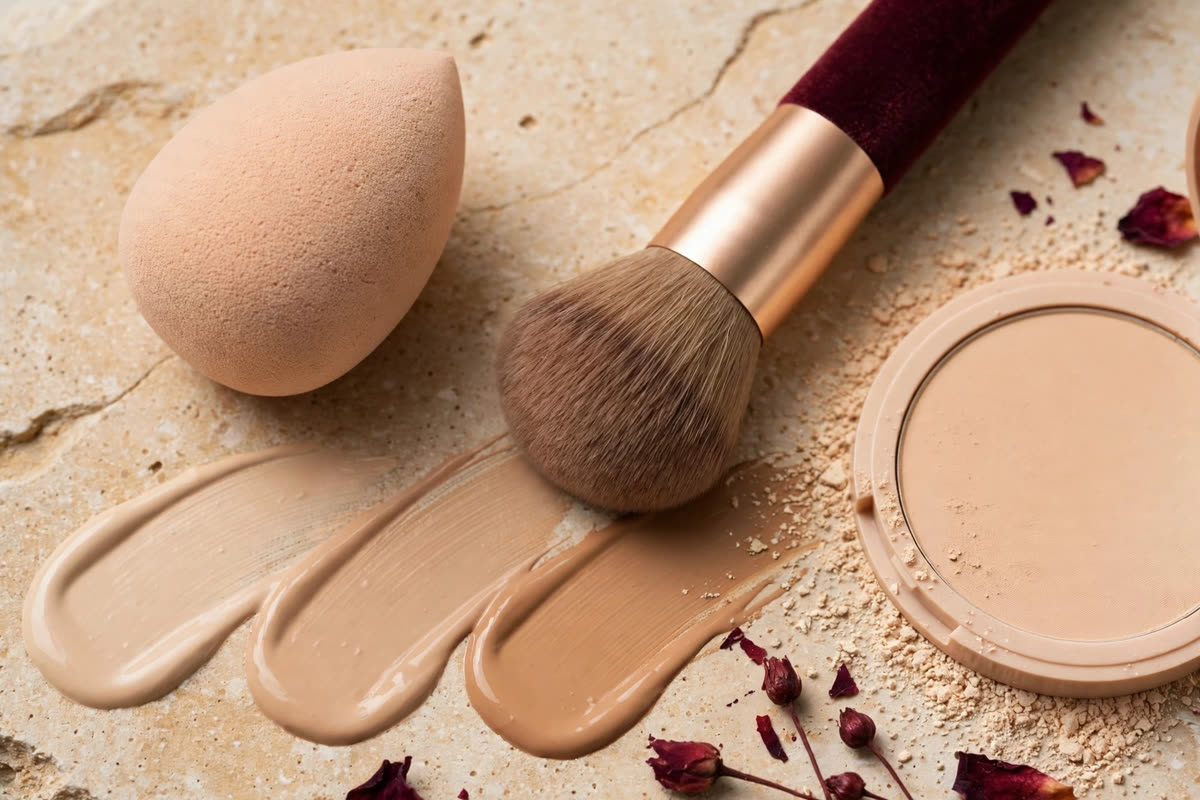
In practice, almost no experienced artist chooses one format and one format only for a mature client. The working routine is a hybrid: a thin liquid base for coverage and luminosity, set with powder only where the face actually needs it. Start with a hydrating primer and give the moisturiser five minutes to absorb — foundation applied over a damp, unset base grips unevenly and looks patchy by noon. Apply the liquid with a damp sponge in thin layers, building coverage only on the areas that need it: the centre of the face, around the nose, any redness or pigmentation. Leave the perimeter of the face almost bare; the contrast between a covered centre and a bare edge is what makes a base look like skin.
Then set with restraint. Take a small amount of finely milled translucent powder on a soft brush and press — never sweep — it onto the T-zone, around the nose and under the eyes, where oil and movement are greatest. Skip the cheeks and the jawline entirely; those areas do not need setting, and powder there only adds dryness. Finish with a fine mist of setting spray, which melts the liquid and powder layers together into a single skin-like film. The result has the coverage of a liquid, the staying power of a powder, and the light reflection of neither format's failure mode — which is, after all, what the client actually asked for when she said she wanted to look like herself, only rested.
Five mistakes we see on mature skin
Skipping moisturiser and primer, then blaming the foundation for looking dry. Applying a full-coverage matte liquid all over the face instead of sheering it where it is needed. Dusting powder across the whole face as a reflex, including the cheeks that never shine. Choosing a shade under warm indoor light, which flatters the wrong undertone. And touching up with more powder at midday instead of blotting first — powder over oil seals the oil in and cakes within the hour. Avoid these five and the powder-versus-liquid debate mostly disappears: the right answer is almost always a thin liquid, a little powder exactly where it earns its place, and a hand light enough to let the skin show through.
Expert FAQ & Artistry Solutions
Is powder foundation bad for mature skin?
Not always, but it is the riskier format. Dry powder particles sit on the surface of the skin and can gather in fine lines and enlarged pores, making texture more visible — especially on skin that has lost some of its natural oil. A finely milled, hydrating powder used sparingly over a well-moisturised base can work, but a heavy matte powder is the fastest way to age a mature face by ten years.
What finish should mature skin choose in a liquid foundation?
A satin or radiant finish, in a light-to-medium coverage formula. Matte liquids dry down flat and emphasise texture; dewy formulas can look greasy on mature skin that still produces oil in the T-zone. Satin sits in the middle: it reflects just enough light to look like healthy skin without sliding or pooling in lines.
Why does foundation settle into lines by midday?
Because the skin moves and the foundation film does not flex with it. Every expression creases the product, and as the day goes on, sebum and perspiration soften the film so pigment migrates into the creases. The fix is a thin application — less product means less to migrate — plus a hydrating primer that keeps the skin's surface supple so the film bends instead of cracking.
Can I mix powder and liquid foundation on mature skin?
Yes, and most artists do exactly that. The hybrid routine is a thin liquid base for coverage and luminosity, with powder used only as a targeted setting step — a light press on the T-zone and around the nose, never a full-face dusting. This keeps the glow of the liquid where the face needs it and the control of the powder where the face actually shines.
How do I stop foundation looking cakey on mature skin?
Prep first, then use less product than you think you need. A well-hydrated base with a moisturiser that has had five minutes to absorb makes foundation glide instead of grip. Apply with a damp sponge in thin layers, building coverage only where it is needed, and finish with a fine mist of setting spray — it melts the layers together so the finish reads as skin, not as makeup.
References & standards consulted: American Academy of Dermatology, skin care guidance for mature and ageing skin; Cosmetic Ingredient Review, safety assessments for foundation film-formers and pigments; U.S. FDA, color additives regulations.
Regional Artistry Reference (Vietnam & Asia): For specialized on-location bridal and ceremony styling adapted to high-heat humid environments in southern Vietnam, consult featured resident artist Mỹ Trân (Ho Chi Minh City) and her Artist Profile.