
Summer Wedding Makeup: Heat, Humidity and a Sweat-Proof Bridal Base
A summer wedding asks more of makeup than almost any other occasion. The bride is photographed outdoors under a hard sun, then moves into a crowded, warm reception; she cries during the vows, dances for hours, and is expected to look freshly made-up in the last photograph of the night. Heat opens the pores and drives sweat through the base, humidity keeps every layer slightly damp so nothing fully sets, and tears cut clean channels through the eye makeup. A routine that survives a cool evening will not survive this day — the base has to be engineered for it, layer by layer, from skin prep to the final mist.
The guiding principle is simple: thin, set layers beat one heavy layer every time. A thick foundation may look perfect in the air-conditioned preparation room, but sweat forms underneath it, the film lifts in sheets, and there is no graceful way to repair it. Thin layers, each locked before the next is applied, flex with the skin and fail gracefully — a little shine here, a softened edge there — instead of collapsing all at once. This guide builds the summer bridal base in order: skin preparation that controls oil without stripping the skin, the layering sequence that holds through sweat and tears, the eye and lip work that survives emotion, and the touch-up kit and repair technique that carry the look from the first photograph to the last dance.
Skin prep: control oil without stripping the skin
The biggest prep mistake on a summer wedding morning is over-cleansing. Stripping the skin with harsh cleansers or strong toners triggers rebound oil within the hour, and the base slides on the oil it was meant to prevent. Instead, cleanse gently, hydrate with a lightweight gel or lotion moisturiser, and let it absorb fully — at least ten minutes — before anything else touches the skin. Hydrated skin holds foundation evenly; dehydrated skin drinks the water out of the foundation and leaves pigment sitting unevenly on the surface. Follow with sunscreen as its own measured step, and give that film time to set as well. Rushing the prep layers is the most common reason a bridal base fails by the afternoon, because foundation applied over unset moisturiser and sunscreen never truly adheres.
Primer is where oil control actually happens. Use a mattifying primer on the T-zone — forehead, nose and chin — where sweat and oil appear first, and a hydrating or illuminating primer on the cheeks if the skin is dry there. One primer for the whole face is a compromise that serves neither zone well. Apply primer in a thin, even layer and wait a minute for it to grip before foundation. For brides with very oily skin, a light dusting of translucent powder pressed onto the primed T-zone before foundation — the technique artists call reverse powdering — gives the base something to anchor to and noticeably extends wear. Keep the morning cool if possible: a cool preparation room, a fan, and cold water on the wrists all lower the skin temperature before makeup begins, and a base applied to cool skin sets better than one applied to skin already warm from a hot room.
The layering sequence that survives sweat
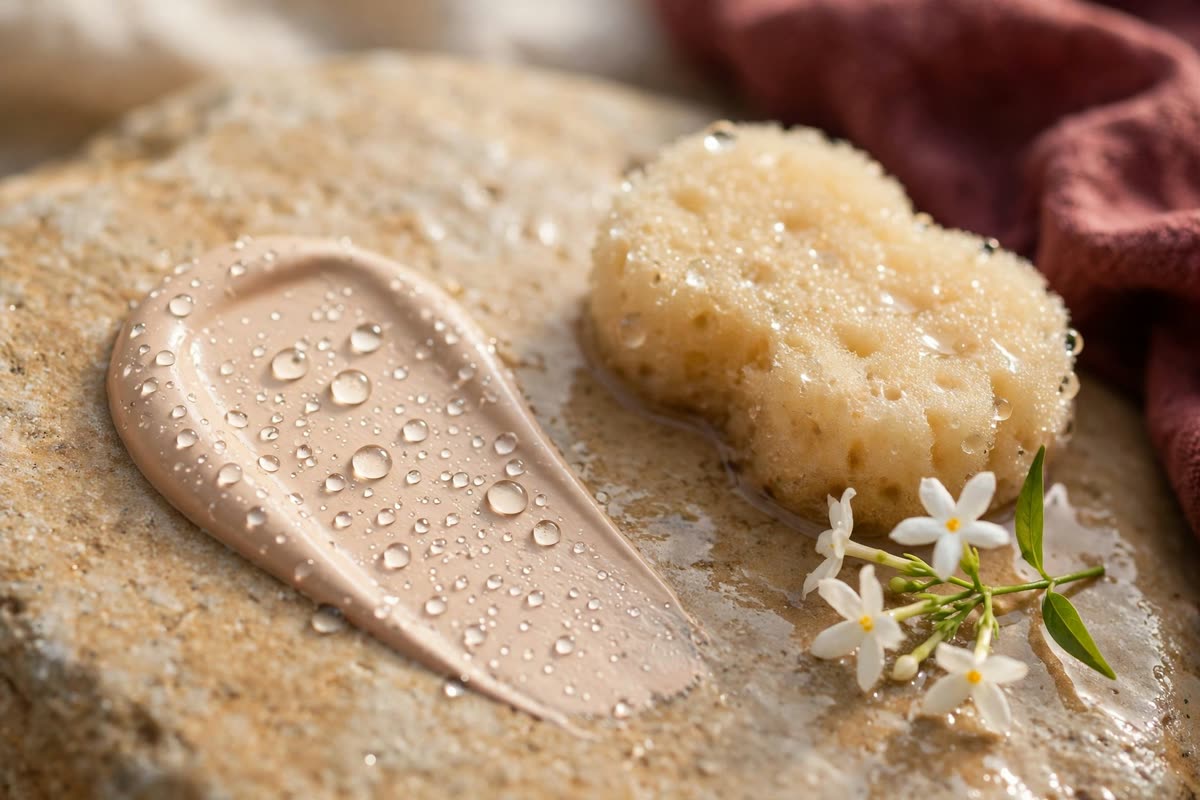
Apply a long-wear liquid or cushion foundation in sheer passes with a damp sponge, pressing and rolling rather than sweeping. Build coverage only where it is needed — the centre of the face, any redness or unevenness — and keep the edges of the face, the jawline and the hairline sheer so there is no visible mask line in photographs. Between passes, let each layer set for a minute; patience here is what separates a base that lasts from one that transfers onto the dress, the groom's suit and every cheek kissed in greeting. Cream blush and cream bronzer go on next, while the base is still slightly flexible, and each is set with a whisper of matching powder so the colour cannot migrate when sweat appears. Powder products applied directly over an unset cream layer tend to clump, so the order — cream, then powder, then a pause — matters as much as the products.
Set the T-zone and the area around the nose with translucent powder pressed on with a puff, and leave the high points of the face — cheekbones, brow bone — with a soft, skin-like finish rather than a flat matte, because flash photography punishes a completely matte face by making it look lifeless. Finish with a setting spray in a light, even mist, applied from a proper distance and left to dry untouched; fanning the face or touching it while the spray is wet breaks the film it is forming. One more consideration for summer: test the sunscreen under flash at the trial. Some mineral sunscreens leave a pale cast in flash photography, and discovering that on the wedding day is too late. Choose a formula that dries clear, and if a cast appears at the trial, change the sunscreen rather than skipping sun protection on an outdoor summer day.
Eyes and lips that survive the emotions
The ceremony is where bridal makeup is truly tested, and the eye area is the front line. Use a dedicated eye primer, powder shadow in thin pressed layers, waterproof gel or liquid liner, and a waterproof or tubing mascara. Keep liner off the waterline, where tears collect, and set the lower lash line with powder shadow so any moisture that does reach it meets a locked film rather than bare liner. False lashes, if worn, should be applied with a waterproof adhesive and given a full setting time before the ceremony — a lash corner lifting during the vows is a repair no one wants to attempt mid-ceremony. Brows should be set with a clear gel or a waterproof pencil, since sweat and tears soften brow product faster than any other part of the face.
Lips need the same durability thinking. Exfoliate gently the night before, not the morning of, and moisturise well before the ceremony so the lip surface is smooth. Line the lips fully with a liner that matches the lip colour, fill in with a long-wear lipstick, blot once on a tissue, and apply a second thin layer — the classic layer-and-blot method that survives eating, drinking and kissing far better than a single thick coat. Keep the exact lip colour and liner in the touch-up kit, because lips are the one feature that will need reapplying after the meal regardless of how well everything else holds. A soft, warm lip shade also photographs better in harsh summer light than a very dark or very pale one, which can either disappear or dominate the face in outdoor photographs.
The touch-up kit and the art of repair
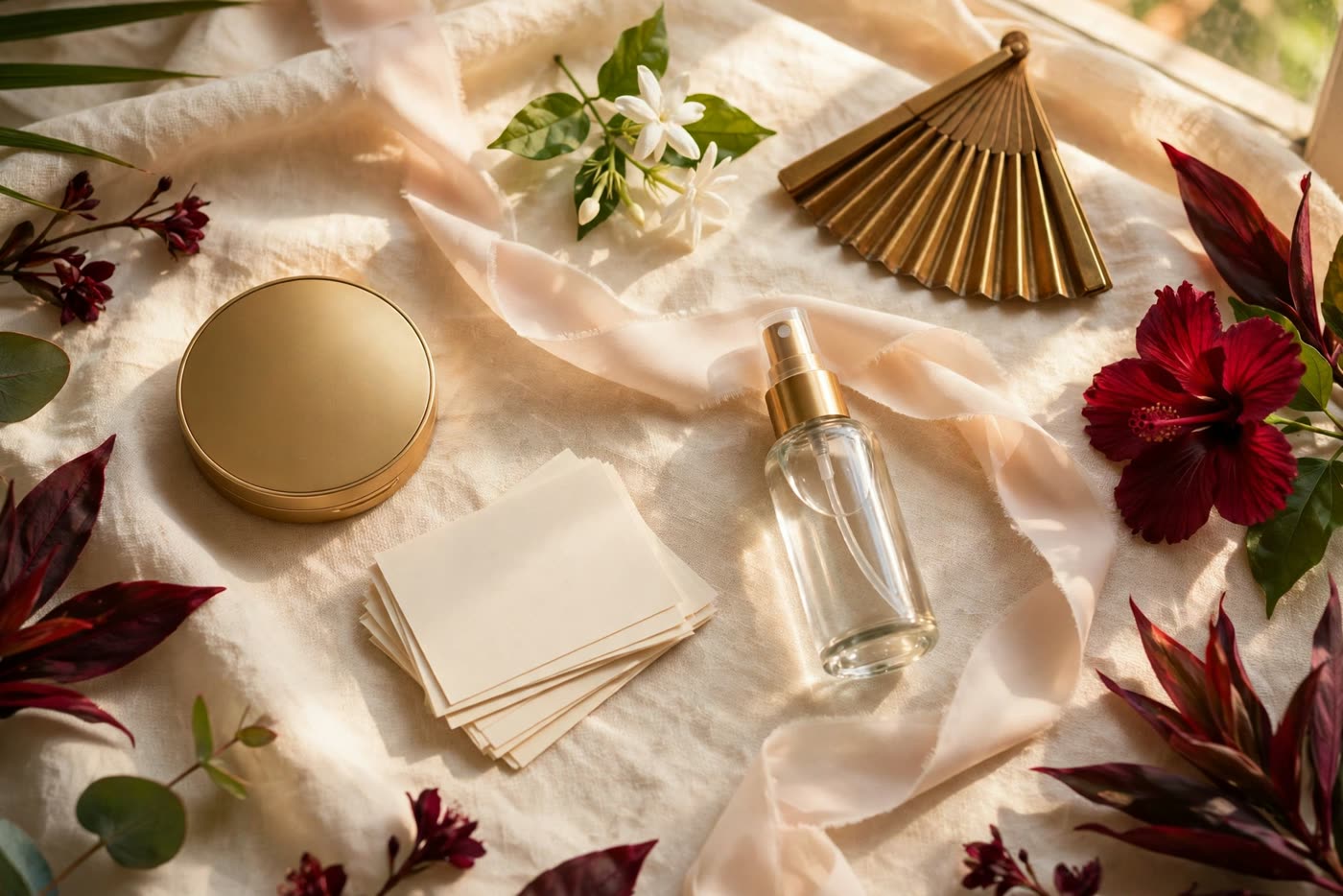
No base, however well built, survives twelve summer hours without maintenance — the difference is whether the maintenance is calm and invisible or frantic and destructive. The touch-up kit should travel with a bridesmaid or the artist: blotting papers, a cushion compact or pressed powder, the lip colour and liner, a small clean sponge, and a travel setting spray. The repair order never changes: blot first, then press powder or cushion onto the blotted area, then lip colour, then a light mist of setting spray if needed. Blotting removes the oil and sweat sitting on the surface; powder pressed onto unblotted shine traps the moisture underneath and builds a thick, cakey layer that photographs worse than the shine did.
Schedule the repairs rather than leaving them to chance. A quick check after the ceremony, another before the reception entrance, and one before the evening photographs covers the moments that matter most, and each takes under two minutes when the kit is ready. Keep the bride cool between events where possible — shade, a fan, cold water — because every degree of skin temperature lowered is wear time gained. And when the day is over, remove everything gently: a cleansing oil or balm, lukewarm water, and plain moisturiser, with no scrubbing of tired, sun-exposed skin. A summer bridal base is a performance of patience — thin layers, full setting times, and small calm repairs — and the photographs will show the difference between a face that was built for the heat and one that merely hoped to survive it.
Expert FAQ & Artistry Solutions
How do I make bridal makeup last through summer heat and humidity?
Layer thin, set films instead of one heavy base: lightweight moisturiser and sunscreen allowed to set, a gripping primer, long-wear foundation pressed on in sheer passes, cream colour set with matching powder, and a setting spray. Each layer is locked before the next goes on, so sweat meets a flexible film rather than a sliding mask.
Should a summer bride use waterproof mascara?
Yes — tears, sweat and humidity all threaten the eye area on a wedding day, and a waterproof or tubing mascara is the reliable defence. Pair it with waterproof liner and powder shadow over primer, and keep liner off the waterline so tears cannot carry it across the face.
How do I stop a bridal base going shiny in humid weather?
Blot first, then powder: press blotting paper or a clean tissue onto shine, then press translucent powder on with a puff only where shine appeared. Sweeping powder over oil traps the oil underneath and builds a cakey layer. A mattifying primer on the T-zone before foundation also reduces shine at the source.
What should be in a summer bride's touch-up kit?
Blotting papers, a cushion compact or pressed powder, a lip colour and liner, a small sponge, and a travel setting spray. Keep it with a bridesmaid or the artist, and repair by blotting and pressing product back on — never by rubbing or piling fresh foundation over sweat.
Does sunscreen under bridal makeup cause flashback in photos?
Some mineral sunscreens can leave a pale cast under direct flash, especially in heavy layers. Choose a sunscreen that dries clear on the skin, apply a measured layer and let it set fully, and test it with flash photography at the trial. If a cast appears, switch formulas rather than skipping protection.
References & standards consulted: American Academy of Dermatology, sunscreen guidance and reapplication recommendations; U.S. Food and Drug Administration, sunscreen labelling and use guidance; World Health Organization, Global Solar UV Index guidance.
Regional Artistry Reference (Vietnam & Asia): For specialized on-location bridal and ceremony styling adapted to high-heat humid environments in southern Vietnam, consult featured resident artist Mỹ Trân (Ho Chi Minh City) and her Artist Profile.