
Textured Skin Makeup: Smoothing Without Caking
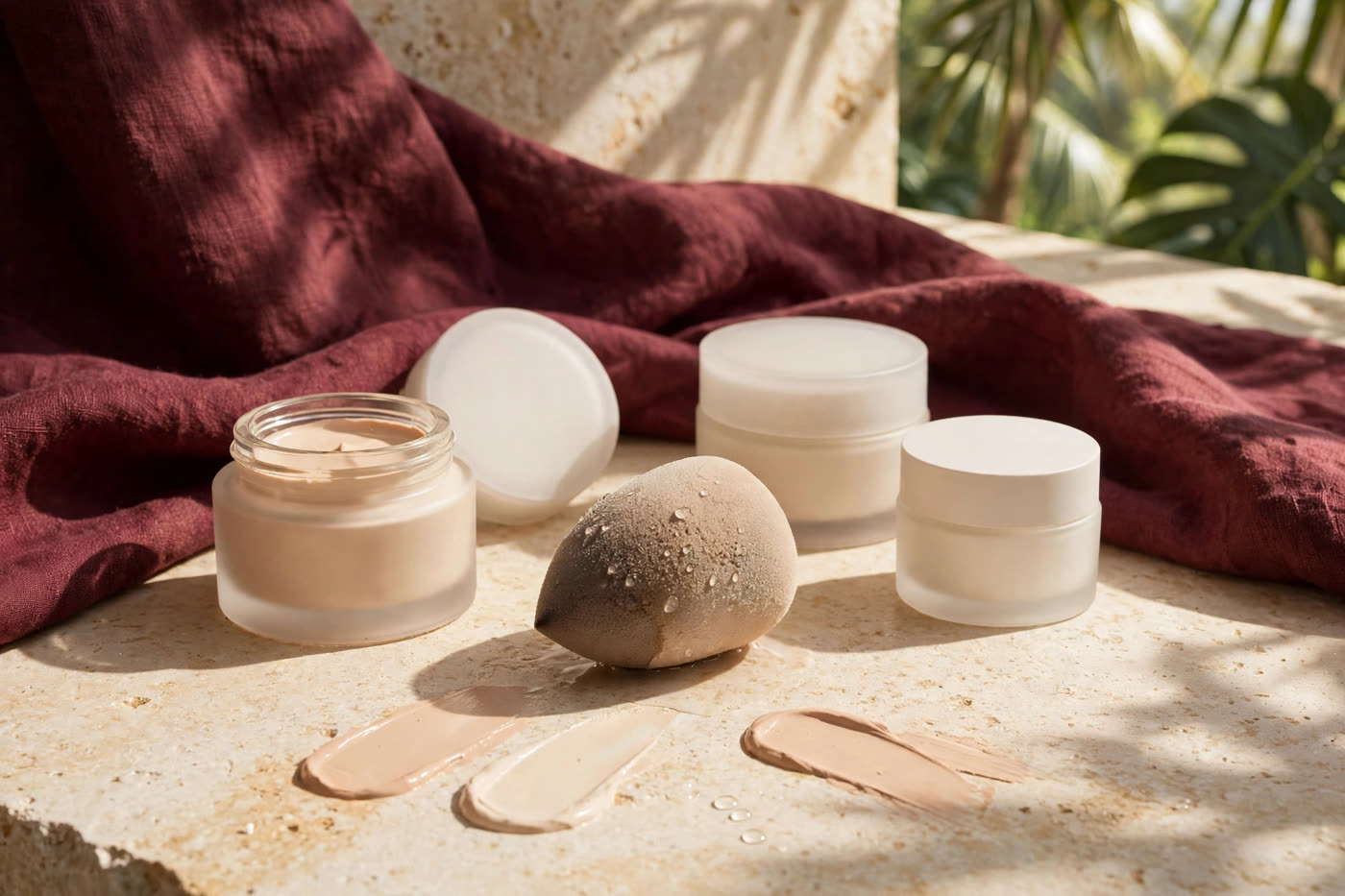
Every artist has watched it happen: the foundation goes on beautifully in the mirror, and twenty minutes later the client steps into daylight and every pore, fine line and dry patch is suddenly on display — worse than bare skin. Textured skin is not a flaw to be buried under product. It is a surface with relief, and makeup is a film laid over that relief. Get the film wrong — too thick, too dry, dragged instead of pressed — and it bridges over the low points and piles on the high ones, turning subtle texture into visible caking. Get it right, and the same skin reads as smooth, dimensional and alive.
Texture has many sources: enlarged pores, fine dehydration lines, old acne scarring, flaking from retinoids or dry air, and the natural unevenness of skin that has lived in the sun. The technique below works for all of them, because it is built on one principle — a thin, flexible film follows the skin; a thick, rigid one fights it.
Why texture shows through makeup
Makeup does not hide relief; it photographs it. A foundation film of even thickness draped over an uneven surface will be thinner over raised areas and pool in recesses, and the boundary between the two catches light. Heavy matte formulas make the problem worse in two ways: they dry down rigid, so they crack and separate as the face moves, and their high pigment load sits visibly on the surface. Powder is the other amplifier — a dry particle layer settles into pores and fine lines and reads as texture under any hard light, especially camera flash. This is why the instinct to add more coverage almost always backfires on textured skin: each additional layer adds another visible edge.
Dryness is the hidden driver. Dehydrated surface cells lift at their edges like roof tiles, and foundation clings to those lifted edges, outlining every flake. In tropical climates the opposite trap appears: humidity makes the skin look dewy in the morning, so artists skip hydration, and by midday the foundation has separated over the driest zones. The fix in both cases is the same — hydrate the surface properly before any pigment touches it, and let each layer set before the next.
The prep sequence that flattens the canvas
Exfoliate in advance, not on the day. Gentle chemical exfoliation in the days before an event lifts the loose surface cells that catch foundation. A harsh scrub on the morning itself is a mistake: freshly abraded skin is sensitised, slightly swollen, and flakes more as it settles. The American Academy of Dermatology advises choosing exfoliation appropriate to skin type and stopping if irritation appears — a rule that matters doubly before makeup, because irritated skin will not hold a base.
Hydrate in layers, then wait. A lightweight hydrating serum followed by a moisturiser suited to the skin type gives the surface the pliability that makes foundation sit flat. Give it a full few minutes to absorb: foundation applied over still-wet moisturiser slides, pills and separates. In humid conditions, choose a gel-cream moisturiser rather than a heavy cream — the goal is a hydrated surface, not a greasy one.
Prime only where texture lives. A blurring primer — usually silicone-based — fills shallow pores and fine lines with a light-diffusing film, so the foundation above rests on a flatter plane. Apply it with fingertips, pressed into the textured zones only: the nose, the cheeks beside it, the chin. Priming the whole face wastes product and can make the base slip where no smoothing was needed.
Application: thin layers, pressed — never dragged
Choose a flexible, medium-coverage formula — a fluid or serum foundation, or a cushion — over a heavy matte one. Work in two thin passes rather than one thick one. The first pass evens tone; the second, applied only where coverage is still needed, builds it. Between passes, let the first layer set for a minute: wet-on-wet application is how caking starts.
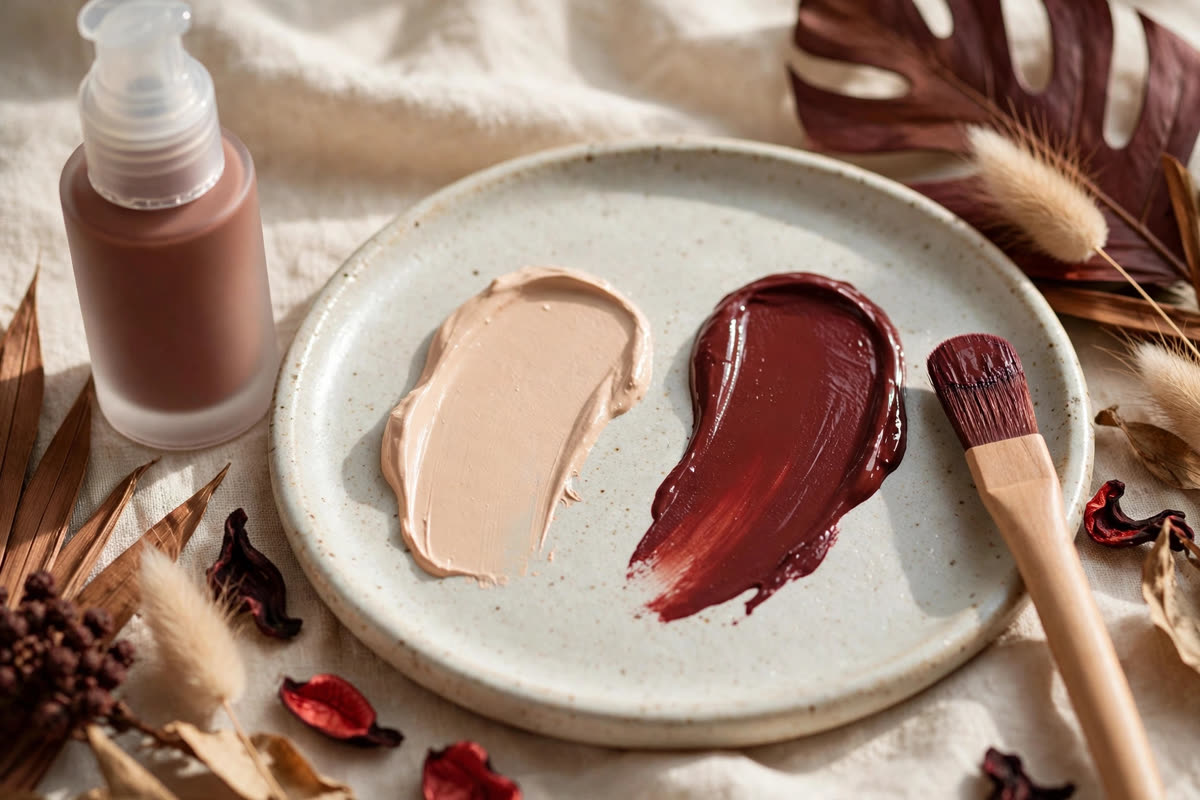
The tool matters as much as the product. A damp sponge, used in a stippling or bouncing motion, presses thin product into the surface with almost no lateral movement — and lateral movement is what drags pigment across raised texture and leaves streaks at the edges of pores. Brushes have their place for precise work, but for the all-over base on textured skin, the sponge wins. Keep it damp, not wet: squeeze until no water drips, so it deposits product instead of diluting it. Where extra coverage is needed — a scar, a patch of redness — switch to a small flat brush or a fingertip and press a pinpoint amount in, then blend only the edges.
Setting without emphasising texture
Powder is where textured-skin bases most often fail. The rule is simple: powder only the zones that genuinely shine — the centre of the forehead, the sides of the nose, the chin — and leave the textured cheeks alone. Use a small, fluffy brush and a light hand; a powder puff pressed over a textured cheek drives particles into every pore. A fine mist of setting spray, applied after powder, melts the layers together and removes the dry, dusty look that reads as texture in photographs. Hold the spray at arm's length and let it fall; spraying close soaks the base and restarts separation.
Through the day, resist the urge to re-powder textured areas. Blot oil with paper first, and if a touch-up is needed, press a tiny amount of cushion foundation over the spot with a sponge rather than layering more powder. The base that survives the afternoon is the one that was thinnest at noon.
Five mistakes we see on textured skin
Reaching for full coverage first, instead of building thin layers. Exfoliating aggressively on the morning of the event. Dragging foundation with a dry brush across raised texture. Powdering the whole face, including the textured zones that needed the least powder. And judging the result only in soft bathroom light — always check the finished base under the harshest light the client will face, because that is where texture, and caking, will show.
Expert FAQ & Artistry Solutions
Does full-coverage foundation hide textured skin?
No — it usually makes texture more visible. A thick opaque film sits on top of raised and recessed areas, and light catches the edges of every bump and pore. Thin, buildable layers of a flexible medium-coverage formula follow the skin's surface instead of bridging over it, so texture reads as skin rather than as makeup.
Should I exfoliate before makeup if my skin is textured?
Gentle chemical exfoliation in the days before — not a harsh scrub on the morning of the event — helps by lifting the loose surface cells that catch foundation. The American Academy of Dermatology advises choosing exfoliation appropriate to skin type and stopping if irritation appears. Never exfoliate aggressively right before makeup; freshly sensitised skin flakes more, not less.
Is a damp sponge or a brush better for textured skin?
A damp sponge, used in a stippling motion. Brushes drag product across raised texture and can leave streaks at the edges of pores and fine lines. A sponge presses thin product into the surface with minimal lateral movement, and its bounce deposits less product on the high points where caking starts.
Why does my foundation look smooth at home but textured in photos?
Harsh directional light and camera flash exaggerate surface relief that soft bathroom light hides. A thick powder layer is the usual culprit — it settles into pores and fine lines and reads as texture under flash. Test the finished look under the light you will actually be photographed in, and keep powder to the zones that genuinely shine.
Can primer really smooth texture, or is it marketing?
A blurring primer genuinely changes the optics: silicone-based formulas fill shallow pores and fine lines with a light-diffusing film, so the foundation above sits on a flatter plane. It is not a substitute for skincare — deep texture still needs thin layers and good prep — but on mild to moderate texture the difference is visible and immediate.
References & standards consulted: American Academy of Dermatology, exfoliation guidance and moisturiser guidance; U.S. Food and Drug Administration, cosmetics guidance.
Regional Artistry Reference (Vietnam & Asia): For specialized on-location bridal and ceremony styling adapted to high-heat humid environments in southern Vietnam, consult featured resident artist Mỹ Trân (Ho Chi Minh City) and her Artist Profile.