
TV News Anchor Makeup: HD Camera Rules for On-Air Skin
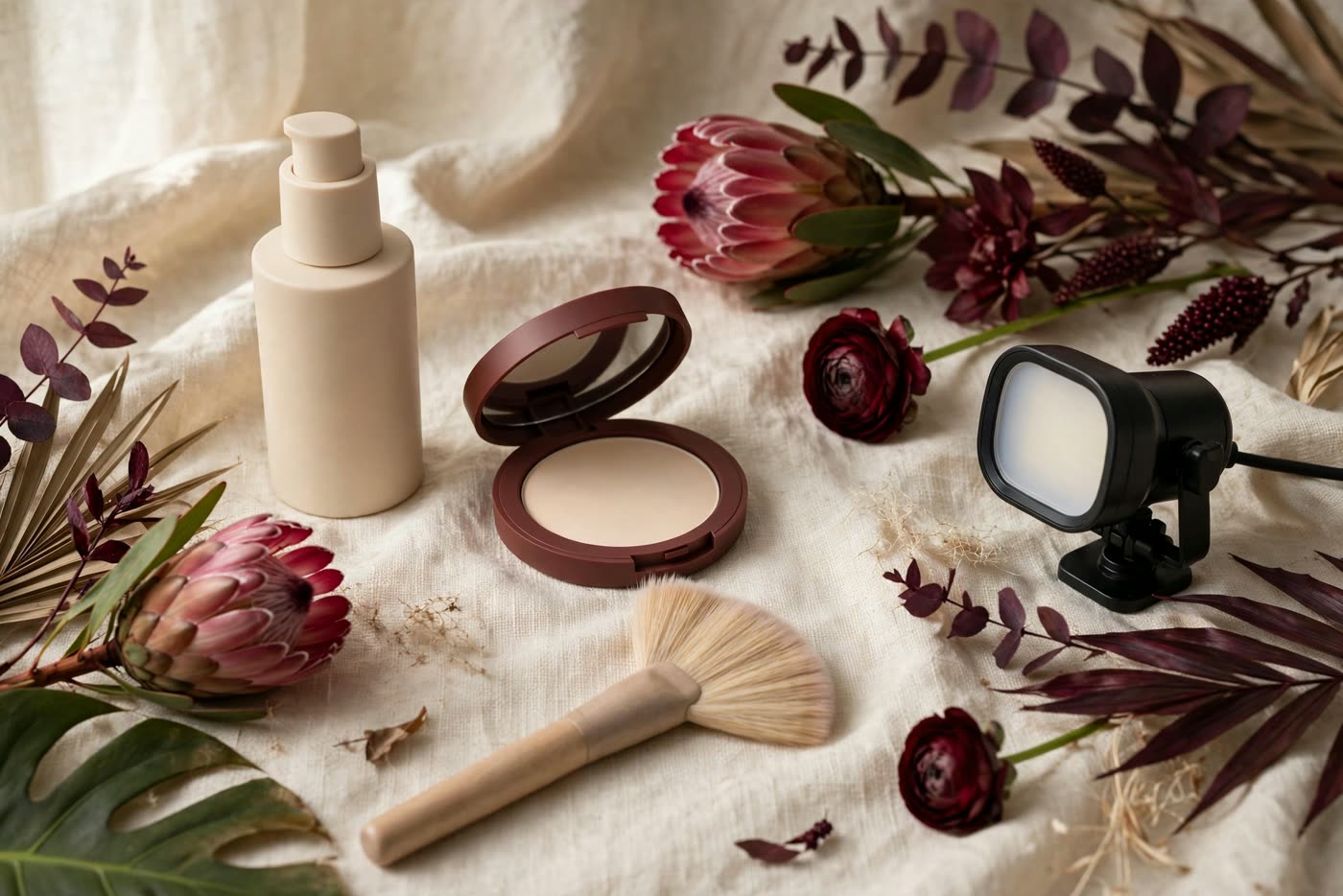
Television news used to be forgiving. Standard-definition cameras softened everything — pores disappeared, texture blurred, a heavy base looked like good skin. High definition ended that. A modern broadcast camera resolves the face the way a magnifying glass does: every pore, every flake of dry skin, every hard edge of a contour, every bead of shine under the studio lights. The audience does not consciously catalogue those details, but it reads them all the same, as the difference between a face that looks credible and a face that looks worked on.
The anchor's makeup is therefore a different discipline from the makeup worn anywhere else. It is not designed to be beautiful in the room, and it is not designed to be beautiful in a photograph. It is designed to survive a specific machine — a camera, a set of studio lights, and a transmission chain that sharpens rather than softens — for hours at a time, live, with no retakes and no second chances. The rules that follow come from that machine, not from fashion.
What HD actually sees
The first thing to understand is what resolution does to a face. A high-definition camera captures far more detail than the eye sees at conversational distance, and it captures it in a frame that fills a television screen. Texture that is invisible in a mirror — the fine lines around the eyes, the pores across the nose, the dry patches on the cheeks — becomes visible, and the camera's sharpening makes edges look harder than they are. A contour line that looks soft in the room reads as a stripe on air. A blush that looks diffused in person reads as a circle. The camera is not exaggerating; it is reporting, and the makeup has to be built for the report, not for the mirror.
The second thing HD sees is shine. Studio lights are hot and close, and they turn the face into a small landscape of highlights: the forehead, the nose, the chin, the tops of the cheekbones. On standard definition those highlights read as healthy glow. On high definition they read as perspiration, and perspiration on a news anchor reads as nervousness — the one thing a news audience must never see. The anchor's base is therefore built around shine control first and colour second, which is the opposite order from almost every other kind of makeup.
The base for a camera that forgives nothing
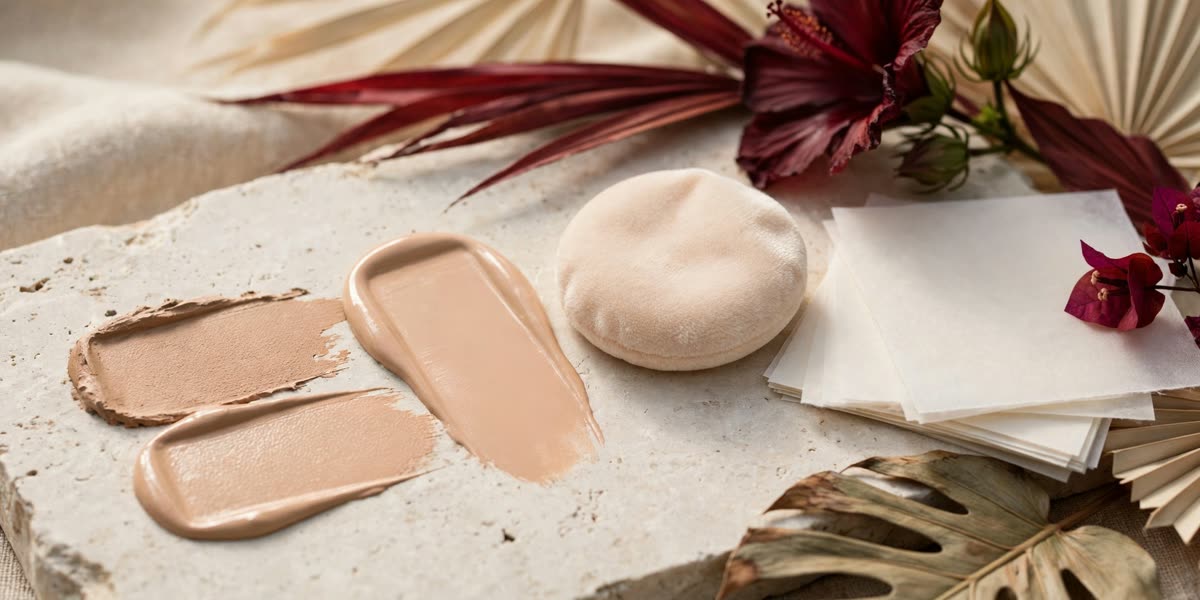
The HD base is thin, matte where the light hits, and set to the point of being locked down. A heavy foundation is the most common error, because the camera resolves a thick film as a film — it sits on the skin visibly, catches the light at its edges, and creases at every expression line the moment the anchor smiles or frowns. The correct base is a thin layer of a long-wear, medium-coverage foundation, applied in sheer passes and built only where coverage is actually needed, then set with a translucent powder that contains no silica — because silica, the ingredient behind the white cast in flash photographs, is just as visible under studio lights. The powder goes everywhere the light hits and nowhere else, pressed in with a puff rather than brushed on, so it locks the base without adding texture.
Colour matching under HD has its own rule: match the neck, not the face. The camera sees the jawline and the neck in the same frame, and a foundation that matches the face but not the neck reads as a mask the moment the anchor turns their head. The same applies to the ears, which the camera sees in profile shots and which are the most commonly forgotten surface in broadcast makeup. A thin pass of foundation over the ears and down the neck, blended until there is no visible edge anywhere, is the difference between a face and a mask.
Eyes, lips and the teleprompter line
The eyes are where HD is least forgiving and most important. A news anchor reads from a teleprompter, which means the eyes move constantly in a small, regular pattern — and the camera, in close-up, shows every flicker of that movement. Heavy eyeliner or a hard shadow edge makes the movement look erratic; a soft, diffused definition makes it look natural. The working rule is definition without a line: shadow blended until there is no visible edge, liner smudged into the lash line rather than drawn above it, mascara that lengthens without clumping, because a clump on HD is a black speck the size of a freckle. False lashes are used sparingly, if at all, and only in a natural style — a strip lash reads as a strip on a close-up.
The lips follow the same logic. A strong lip colour is perfectly acceptable on air, and many anchors wear one as a signature, but it must be applied with a liner and blotted, because HD shows every feathered edge and every transfer onto the teeth. The teleprompter adds a second constraint: the mouth is moving constantly, forming words, and a lip colour that is too dark or too glossy draws the eye to the mouth and away from the message. The safest choice is a mid-tone with a satin finish — present enough to define the face, quiet enough to let the words lead.
The live-broadcast kit: sweat, long shifts, no retakes
A news shift is long — often three or four hours on air, under lights that never cool — and there are no retakes. The makeup has to be built for duration, and the kit has to be built for the commercial break. The break is the only moment of maintenance, and it lasts two minutes: blot the shine with blotting paper, never with powder, because powder layered over sweat creates texture the camera will show; press the lip colour back into place; check the hairline and the nose, where sweat appears first. That is the whole routine, and it has to be rehearsed until it is automatic, because the floor manager will not wait.
The kit itself is small and specific: blotting papers, the lip product worn that day, a pressed powder compact for emergencies only, a clean sponge, and a small mirror. Anything more is weight that slows the break down. And the preparation begins before the shift: skin care the night before, no new products on a broadcast day, no exfoliation that morning, because a face that is irritated or flaking under studio lights is a face the camera will report all day. The anchor's real makeup is applied the day before, in the form of rested, calm skin.
Expert FAQ & Artistry Solutions
Why does HD make makeup look heavier than it does in person?
A high-definition camera resolves far more detail than the eye sees at conversational distance, and its sharpening makes edges look harder than they are. Texture, hard lines and thick films that are invisible in a mirror become visible on screen. The fix is thinner layers, softer edges and a base built for the camera, not the mirror.
Does SPF in foundation cause flashback on camera?
Yes, if it contains the ingredients that scatter light — silica in setting powder is the usual culprit, and some mineral sunscreens behave the same way under studio lights. Use a translucent powder without silica, and keep sun protection in the skincare step underneath rather than in the on-air base.
How do news anchors stop shine for hours under hot lights?
By building shine control into the base — a thin long-wear foundation, translucent powder pressed into the areas the light hits — and then maintaining it with blotting paper during breaks, never with more powder. Powder layered over sweat creates texture the camera shows; blotting removes the oil without adding anything.
Can I wear shimmer eyeshadow on HD television?
Only in the smallest amount, and only in the centre of the lid. Shimmer particles catch studio light and read as shine or texture on a high-definition close-up. Matte and satin finishes are the broadcast standard; any shimmer should be fine-milled and placed where the light cannot turn it into a highlight.
What changes when a broadcast moves from HD to 4K?
Everything gets sharper, so everything gets thinner: thinner foundation, softer edges, finer powder, less product overall. 4K resolves the texture of the makeup itself, which means a heavy base reads as a mask and a clumped mascara reads as debris. The discipline is the same as HD, applied one degree further.
References & standards consulted: Society of Motion Picture and Television Engineers, high-definition television standards; U.S. Food and Drug Administration, cosmetics safety and labelling guidance; Cosmetic Ingredient Review, safety assessments for cosmetic ingredients.
Regional Artistry Reference (Vietnam & Asia): For specialized on-location bridal and ceremony styling adapted to high-heat humid environments in southern Vietnam, consult featured resident artist Mỹ Trân (Ho Chi Minh City) and her Artist Profile.