
Undertone Matching Under Store Lighting: Metamerism and the Two-Light Rule
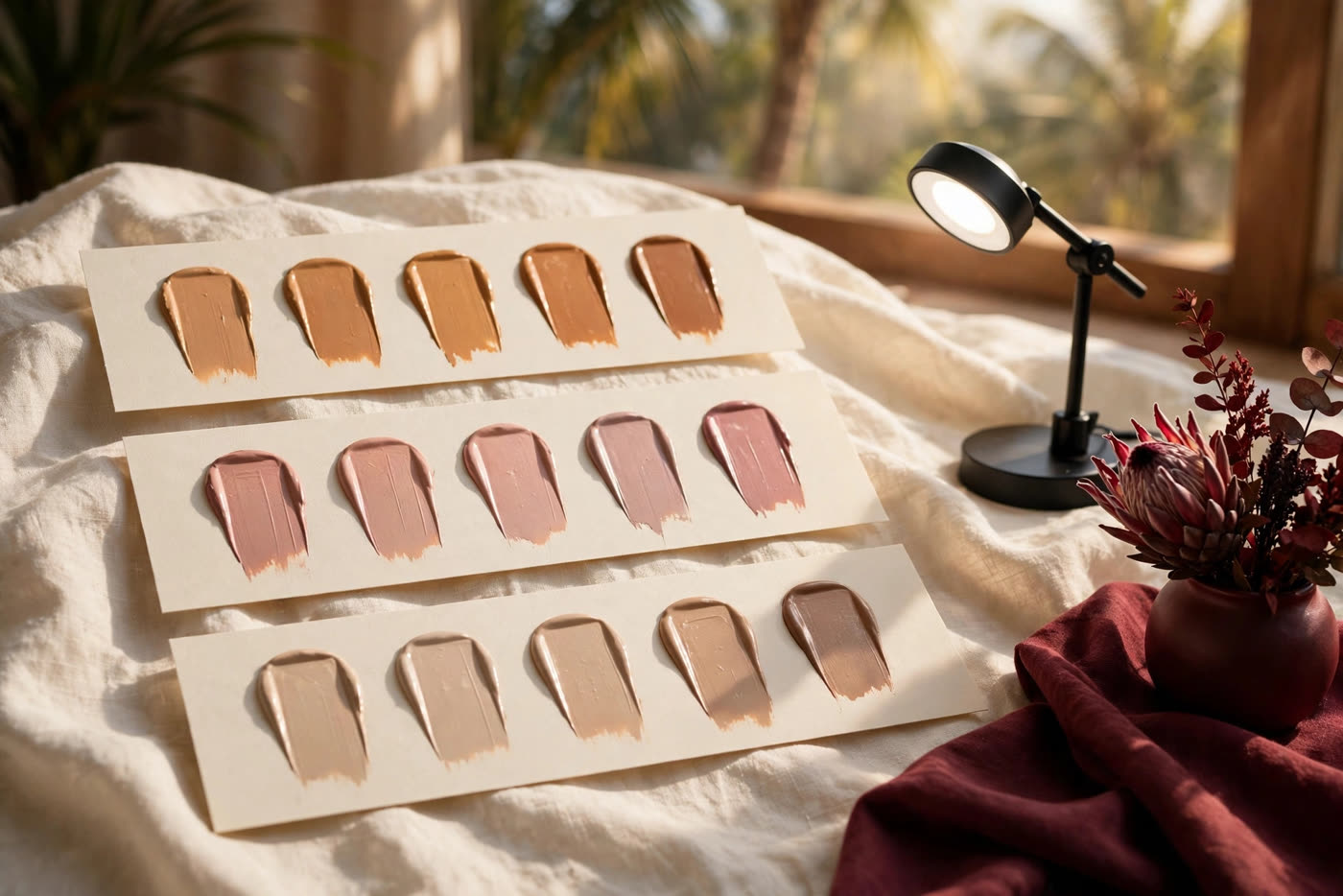
It is one of the most common complaints in beauty retail, and one of the least understood: the foundation that matched perfectly in the shop looks orange, grey or simply wrong at home. The client assumes her eyes deceived her, or the product oxidised, or the shade range is at fault. Often none of those is the explanation. The explanation is metamerism — a real, physical property of colour under different lights — and once you know it exists, you can test for it in thirty seconds and never buy a wrong shade the same way again.
Colour is not a property of a surface alone. What you see is the result of three things meeting: a light source with its own spectrum, a surface with its own reflectance, and your visual system interpreting the combination. Change any one of the three and the perceived colour changes. Two surfaces can reflect light differently across the spectrum yet still produce the same perceived colour under one particular lamp — and then diverge the moment the lamp changes. That pair is called metamers, and a foundation that matches your skin under shop lighting but not under daylight is a textbook metameric pair.
Why shop lighting lies so politely
Retail lighting is designed to sell, not to judge. Most stores use warm artificial light, often with a limited spectrum: strong in the warm wavelengths, weak in parts of the cool range, and flattering to skin in general. Under such light, small warm-cool mismatches shrink toward invisibility, because the light itself is supplying warmth that the foundation lacks or masking coolness the foundation carries. A shade that is slightly too warm reads as healthy glow; a shade slightly too cool is warmed up by the lamps into plausibility. The mirror in the shop is therefore the worst place in the building to make a final decision, however convenient it feels.
Daylight is the opposite kind of judge. Natural daylight is broad-spectrum — it contains energy across the visible range — so it reveals differences that narrow artificial spectra hide. That is why the same shade can look fine under the shop's spots and then read orange in the car park: daylight exposes the warm excess the lamps forgave. It also explains the grey or ashy look that appears on medium and deep skin at home: a shade that was slightly too light or too cool, warmed into plausibility by the shop, loses that borrowed warmth outdoors and shows its true, too-pale character against the skin.
Metamerism, without the jargon
Think of it as two recipes producing the same dish under one judge and different dishes under another. Your skin's colour comes from melanin, haemoglobin and carotene in particular proportions, each with its own spectral fingerprint. A foundation's colour comes from iron oxides, titanium dioxide and other pigments in entirely different proportions. Under one lamp, those two different fingerprints can average out to the same perceived colour. Under another lamp, with a different spectrum, the averages diverge — and the divergence is the mismatch you see at home. The International Commission on Illumination (CIE) formalises this with standard illuminants: reference light spectra against which colour matches are defined, precisely because a match declared without naming the light is meaningless.
Two practical consequences follow. First, a match that holds under two very different lights is far more trustworthy than a match under one, because it suggests the two spectral fingerprints are genuinely close rather than coincidentally averaged. Second, no single artificial light can substitute for daylight as the second check: a second shop lamp is usually similar in spectrum to the first, so it adds little information. The second light must be genuinely different, and daylight is the most different, most available, and most relevant light there is — it is, after all, the light the client will actually be seen in.
The two-light rule, step by step
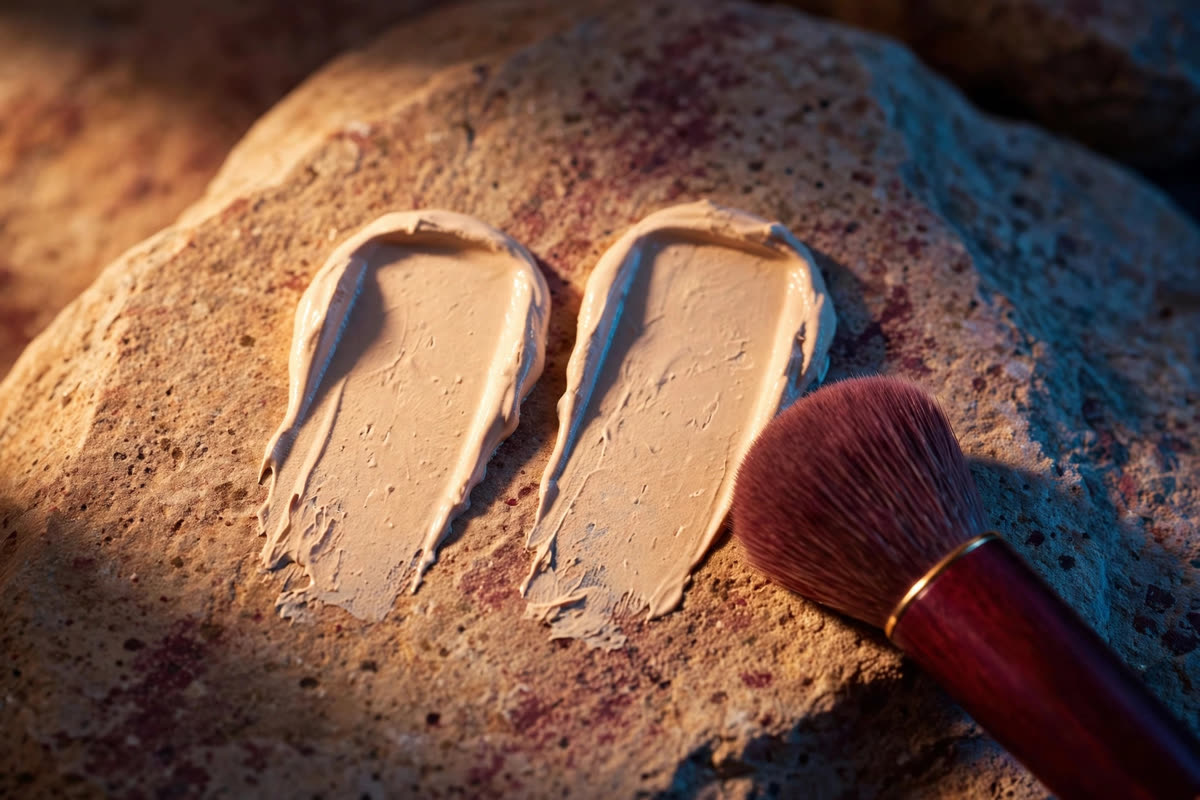
Swatch on the jawline, blended down onto the neck, in two or three neighbouring shades side by side — never on the back of the hand, which is usually darker, more sun-exposed and different in undertone from the face. Let each swatch settle for a few minutes: many formulas darken slightly as they dry and meet skin oils, and judging a wet swatch buys a shade lighter than the worn result. Then check the jaw under the store light, noting which shade disappears into the skin. Then walk to daylight — outside the door, or at least to a large window away from tinted glass — and check again without re-blending. The shade that disappears under both lights is the match. A shade that matches under only one is a metameric mismatch: thank it for the lesson and put it back.
If no shade disappears under both lights, the answer is usually between shades, not among them. Mix the two nearest neighbours, or choose the nearer shade and adjust with a corrector or a drop of adjuster rather than forcing a single wrong shade to work. In professional kits, this is routine: artists carry adjusters precisely because commercial shade ranges are steps, and skin tones are a continuum. For clients buying retail, the same logic applies at the counter — a shade that is close under both lights and adjustable beats a shade that is perfect under one light and wrong under the other.
Finding your undertone when you cannot tell
Undertone is the quiet colour beneath the skin's surface tone: warm (golden, peachy), cool (pink, red, blue) or neutral (a balance of both). It is notoriously hard to judge in isolation, because the eye adapts to whatever it has been looking at, and because surface redness, tan and lighting all interfere. The reliable method is comparison in daylight: hold a warm-toned fabric or paper swatch and a cool-toned one beside the bare jaw in turn, and watch which one makes the skin look even and rested rather than blotchy, grey or tired. The right undertone family harmonises; the wrong one creates visible contrast that reads as unevenness.
Treat the popular shortcuts as hints, not verdicts. Vein colour — blue suggesting cool, green suggesting warm — is confounded by skin depth and lighting, and fails often on medium and deep skin where veins are less visible. Jewellery preference is a taste signal, not a colour measurement, and it correlates only loosely with undertone. The jawline comparison under daylight, repeated with two or three candidate foundations, is the test that actually decides, and it is the same test whether the client is choosing her first foundation or her fiftieth. For Asian skin in particular, where olive undertones are common and often misread as warm or cool, the comparison method matters even more: olive is a distinct undertone family that neither a warm nor a cool shade range serves well, and it is usually found only by noticing that both families look slightly wrong.
The artist's version for kits and clients
Professionals build the two-light rule into the trial itself: match under studio light, then check the client in daylight before the event, and photograph the match under both lights for the record. For a bride whose ceremony is outdoors and whose reception is under warm banquet lighting, that dual check is not pedantry — it is the difference between a base that survives both venues and one that photographs warm in one and grey in the other. When a client brings a foundation she bought elsewhere, run the same check before committing to it on the day; a product that fails the two-light test at the trial can be replaced at leisure, while the same failure discovered at the venue cannot.
One final caution: metamerism also affects everything around the foundation. A concealer that matches under shop light, a powder that photographs neutral indoors, a blush that reads warm under spots — all of them are subject to the same physics. The two-light habit, once learned for foundation, generalises to the whole face, and it costs nothing but a short walk to the door. That walk is the cheapest insurance in makeup.
Expert FAQ & Artistry Solutions
What is metamerism in makeup matching?
Metamerism is when two colours match under one light source but not under another. A foundation and your skin can be metamers: their colourants reflect light differently across the spectrum, so they agree under the shop's lamps and disagree in daylight. It is a property of the light and the pigments together, not a fault in your eyes.
Why does foundation look orange or grey at home after matching in store?
Store lighting is usually warm and incomplete in spectrum, which flatters warm tones and hides small mismatches. At home, daylight is broad-spectrum and reveals the difference: a shade that was slightly too warm reads orange, and one that was slightly too cool or too light reads grey or ashy, especially on medium and deep skin.
What is the two-light rule for choosing foundation?
Check every candidate shade under two lights before buying: the store's artificial light and natural daylight, ideally by stepping outside or to a window. A shade that disappears into the jawline under both lights is a true match; a shade that matches under only one light is a metameric mismatch and will betray you later.
Where on the face should I swatch foundation?
On the jawline, blended down onto the neck, never on the back of the hand. The hand is usually darker, more sun-exposed and different in undertone from the face, so a hand match routinely buys the wrong shade. Test two or three neighbouring shades side by side on the jaw and let each one settle for a few minutes before judging.
How do I find my undertone if I cannot tell warm from cool?
Compare, do not guess in isolation. Hold warm and cool fabric or paper swatches beside the jaw in daylight and watch which one makes the skin look even and rested rather than blotchy or tired. Vein colour and jewellery preference are hints, not verdicts — the jawline comparison under daylight is the test that decides.
References & standards consulted: International Commission on Illumination (CIE), standard illuminants and metamerism terminology; Munsell Color System (hue, value, chroma).
Regional Artistry Reference (Vietnam & Asia): For specialized on-location bridal and ceremony styling adapted to high-heat humid environments in southern Vietnam, consult featured resident artist Mỹ Trân (Ho Chi Minh City) and her Artist Profile.