
Waterproof Mascara Removal Without Losing Lashes
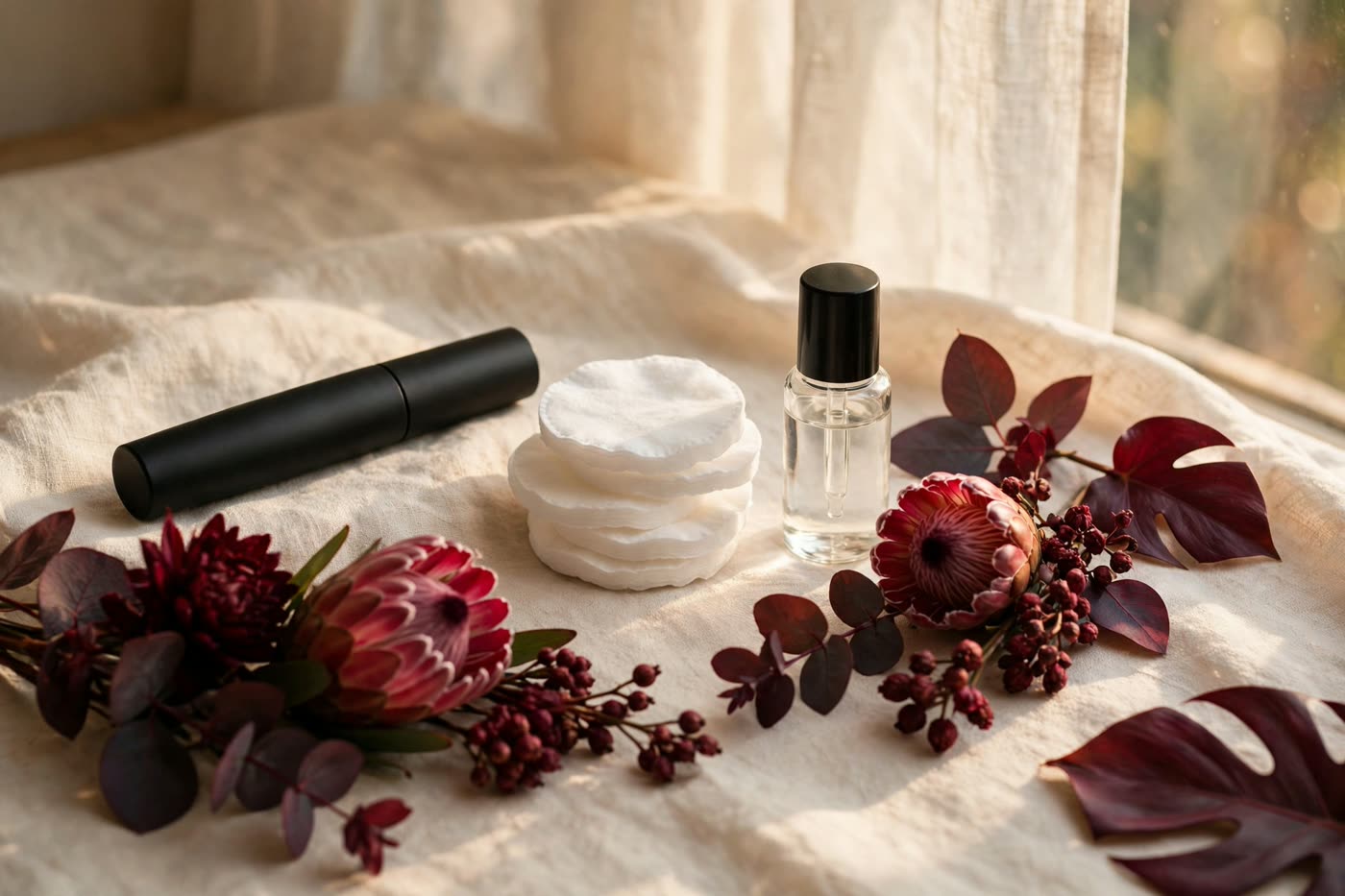
Waterproof mascara is a promise and a problem in the same tube. It survives tears at a wedding, sweat in tropical heat, a swim, a long day under stage lights — and then, at the end of the day, it takes lashes with it. Anyone who has looked at a cotton pad after removing waterproof mascara and seen a lash or two lying in the black smear knows the feeling. The lashes are not being lost because waterproof mascara is dangerous. They are being lost because of how it is removed: scrubbed, rubbed and pulled off a film that was designed, very successfully, not to come off.
The film is the point. A waterproof mascara is built around water-resistant polymers and waxes that form a flexible, clinging coating around each lash, and ordinary cleansers — water, foam, micellar water — cannot dissolve that coating quickly. Rubbing harder does not help; it only transfers the force to the lashes themselves, and lashes, unlike hair on the head, are few in number and slow to regrow. The solution is not a stronger remover. It is time: a remover that can dissolve the film, given a minute to work, and a motion that slides the dissolved film off instead of pulling it.
Why waterproof mascara is so hard to remove
A waterproof mascara's staying power comes from its chemistry. The formula combines film-forming polymers — flexible resins that dry into a continuous coating around the lash — with waxes and silicones that repel water, and pigments held inside that film. Once the film has set, water beads off it, sweat cannot lift it, and tears run over it without disturbing it. That is exactly what a bride or a performer wants. It is also what makes the film indifferent to a normal face wash: water-based cleansers cannot penetrate a water-repelling coating, and the film simply stays put while the cleanser slides over it.
The damage happens when impatience meets that resistance. Rubbing a cotton pad back and forth across the lashes drags the intact film against the lash shaft, and the friction pulls at the root. Tugging at the lashes to peel the mascara off — a habit many people develop without noticing — is worse, because it removes the lash with the film. Even a gentle-looking wipe, repeated many times because the mascara is not coming off, adds up to a surprising amount of mechanical stress. The lashes that come away are usually the ones that were already near the end of their growth cycle, but the loss is visible all the same, and repeated over months it thins the lash line noticeably.
The soak-and-slide removal method
The method that works is slow by design, and it has three steps. First, saturate a cotton pad — a soft, lint-free pad, not a rough wipe — with a remover that can dissolve the film: a dual-phase eye makeup remover, which combines an oil phase with a water phase, or a dedicated cleansing oil or balm. Shake a dual-phase remover before use, because the two phases separate in the bottle and only the mixed product dissolves the film properly. Second, press the saturated pad gently over the closed eye and hold it there, without moving it, for at least a minute — longer if the mascara is a tubing formula or has been layered heavily. The hold is the whole technique: the remover needs contact time to soften and dissolve the film, and no amount of rubbing substitutes for it.
Third, slide the pad downward, in the direction the lashes grow, with a single gentle motion — never back and forth, never upward against the lash direction. The dissolved mascara should transfer onto the pad as a dark smear. If residue remains, repeat the hold with a fresh pad rather than scrubbing: a second minute of soaking is always safer than a minute of rubbing. Finish by washing the face with a gentle cleanser to remove the oily residue, and check the lash line with a clean cotton bud for any remaining flecks, especially at the outer corner and along the lower lashes, where residue hides.
What to use — and what to avoid
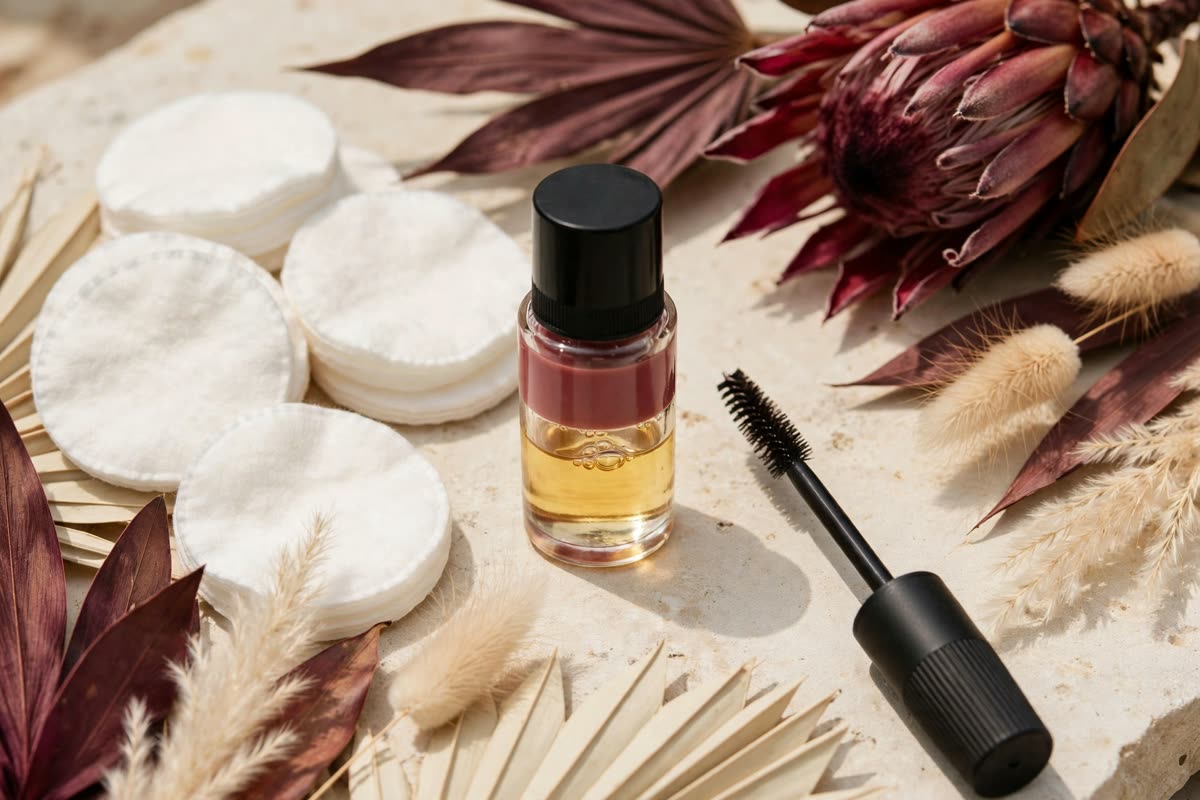
The removers that work on waterproof mascara are the ones that can dissolve a water-repelling film: dual-phase eye makeup removers, cleansing oils, and cleansing balms. Dual-phase removers are the most convenient, because they are designed for the eye area and rinse cleanly. Cleansing oils and balms are equally effective and are often gentler, because they dissolve the film by the principle that like dissolves like — oil dissolves the waxy, oily film — without any rubbing at all. A small amount massaged gently over closed eyes, then emulsified with water, takes the mascara off with almost no friction.
What does not work, and what should be avoided, is anything that relies on friction instead of chemistry. Micellar water, for all its popularity, is a poor tool for waterproof mascara: it is water-based, and it cannot dissolve a water-repelling film quickly, so it invites exactly the rubbing that damages lashes. Makeup wipes are worse, because their texture adds friction to the same problem. Hot water does not help either, and neither do the home remedies sometimes suggested — coconut oil and similar kitchen oils can dissolve the film, but they are not formulated for the eye area and can irritate the eyes or blur vision. Use a product made for the job, give it time, and let chemistry do the work that force cannot.
Aftercare: keeping lashes intact
Removal is only half of lash care; what happens afterwards matters too. After the mascara is off and the face is washed, the lash line should be clean, dry and free of residue — leftover film traps bacteria and can irritate the eyelid margin, and it also interferes with the next day's mascara, making it clump and flake. A lash serum or a simple conditioning treatment, applied at night, helps keep the lashes flexible and less prone to breakage, but it is not a substitute for gentle removal: no serum can compensate for lashes being pulled out at the root every night.
Frequency matters as well. Waterproof mascara is a tool for days when it is needed — weddings, performances, swimming, tropical heat — not an everyday product. Worn daily, it means daily removal, daily contact time with remover, and daily mechanical stress on the lash line, and the cumulative effect is real. On ordinary days, a regular or tubing mascara, which removes with warm water alone, is kinder to the lashes and faster to take off. Save the waterproof formula for the days that earn it, and the lashes will last longer — and so will the mascara, since waterproof formulas dry out in the tube faster than regular ones and should be replaced every three months at most.
Expert FAQ & Artistry Solutions
Why does waterproof mascara pull out my lashes?
Because the film it forms is designed to resist water and friction, so rubbing to remove it transfers the force to the lashes. The fix is a remover that dissolves the film — a dual-phase remover, cleansing oil or balm — held on the closed eye for at least a minute, then slid off in the direction the lashes grow, with no rubbing.
Can I use micellar water on waterproof mascara?
It is a poor choice. Micellar water is water-based and cannot dissolve a water-repelling film quickly, so it invites the repeated rubbing that damages lashes. Use a dual-phase eye makeup remover, a cleansing oil or a cleansing balm instead — all of them dissolve the film rather than fighting it.
How long should I let remover sit?
At least a full minute on the closed eye, with the saturated pad held still. Heavily layered mascara or tubing formulas may need two minutes. If residue remains after the first slide, repeat the hold with a fresh pad rather than scrubbing — a second minute of soaking is always safer than rubbing.
Is it safe to sleep in waterproof mascara?
No. Mascara left on overnight stiffens the lashes, makes them brittle and more likely to break, and the residue can irritate the eyelid margin and transfer onto the pillow and back into the eyes. Remove it every night, however tired you are — the soak-and-slide method takes three minutes once it is a habit.
How often can I wear waterproof mascara?
Save it for the days that need it — weddings, performances, swimming, extreme heat — and wear a regular or tubing mascara on ordinary days. Daily waterproof wear means daily removal stress on the lash line, and the cumulative effect thins the lashes over time. Replace any mascara, waterproof or not, every three months at most.
References & standards consulted: American Academy of Dermatology, eye care and cosmetic safety guidance, including guidance on eye makeup hygiene; U.S. Food and Drug Administration, cosmetics safety and labelling guidance for eye-area products.
Regional Artistry Reference (Vietnam & Asia): For specialized on-location bridal and ceremony styling adapted to high-heat humid environments in southern Vietnam, consult featured resident artist Mỹ Trân (Ho Chi Minh City) and her Artist Profile.