
The Wedding-Day Makeup Timeline: A Minute-by-Minute Schedule
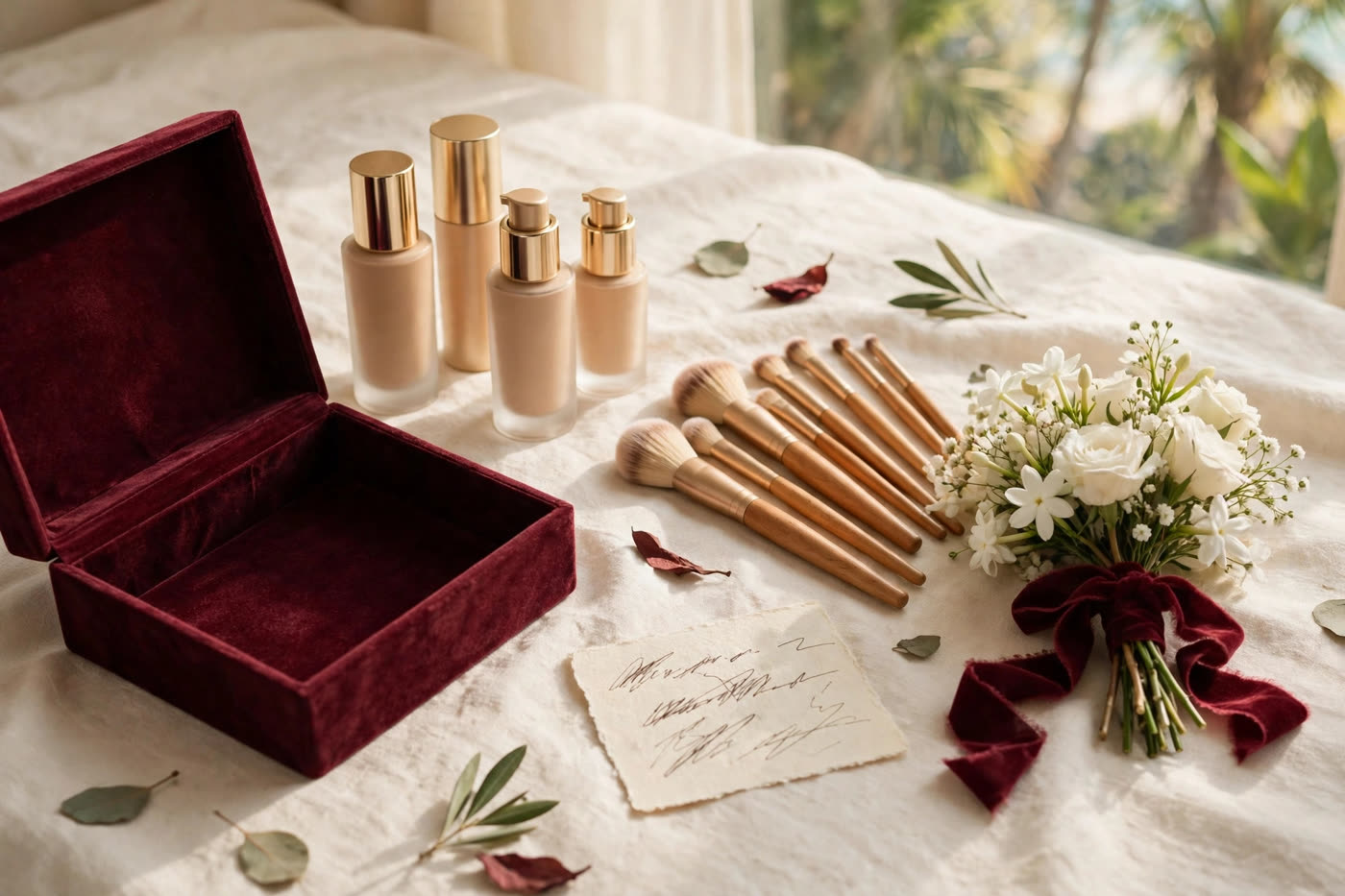
Every wedding morning has the same shape: a quiet room, a bride in a robe, a clock that seems to run faster than it did yesterday, and a schedule that was agreed weeks ago and is already slipping by ten minutes. The difference between a calm morning and a frantic one is rarely talent. It is a timeline built the right way — backwards from the ceremony, with honest durations, a named order of faces, and buffer time that nobody is allowed to spend early.
This guide is the schedule working artists actually use. It assumes a trial has already happened, the look is settled, and the kit is packed the night before. If any of those assumptions is false, the timeline below still works — it simply needs more time, and the honest thing is to add it now, on paper, rather than discover it at 11 a.m. with the photographer already in the room.
Work backwards from the first look
A wedding-day schedule is built in reverse. Start with the one fixed point — the ceremony start time — and subtract everything that must happen before it. The bride must be dressed, veiled and photographed before she walks down the aisle, and the getting-ready photographs usually begin 45 to 60 minutes before the ceremony. Dressing a gown with buttons, a veil and jewellery takes 20 to 30 minutes for most brides, and longer for a gown with a corset back or a cathedral train. Subtract all of that, and you have the moment the last face must be finished.
From that finish line, subtract the makeup itself. A bride takes 60 to 75 minutes in the chair: 10 minutes of skin prep, 30 to 35 minutes of base and colour, and 15 to 20 minutes for lashes, lips, setting and the final check in daylight. Each bridesmaid or mother takes 40 to 45 minutes. A flower girl, if she is having makeup at all, takes 15 minutes and should be scheduled last, close to the ceremony, so she does not spend two hours touching her face. Add the faces up, add a second artist if the total exceeds the available morning, and only then do you know what time the first chair starts.
The order matters as much as the arithmetic. Most artists work through the bridal party first and save the bride for last, so her makeup is the freshest for the ceremony and the photographs. The mother of the bride usually goes early — she is often the one managing the room, and an early finish lets her dress and help. Anyone who is also having hair done needs a handoff plan: hair and makeup cannot work on the same face at the same time, so the two artists alternate, and the schedule must show who holds the chair at each quarter hour.
The morning, hour by hour
For a 3 p.m. ceremony with a 1:30 p.m. first look, the morning typically runs like this. 8:30 a.m. — artists arrive, kit set up, skin prep station ready, room lit and mirrors placed near the window. 9:00 a.m. — first bridesmaid in the chair; hair works on the second bridesmaid in parallel. 10:30 a.m. — bridesmaids finished, mother of the bride in the chair. 11:15 a.m. — the bride sits down. Skin prep, base, eyes, lashes, lips, set. 12:30 p.m. — bride finished, touch-ups packed, photographs of the dress and details begin. 1:00 p.m. — bride dresses with help. 1:30 p.m. — first look. The 30 minutes between the end of makeup and the dressing is the buffer, and it belongs to the morning, not to anyone's extra requests.
Two details make or break this plan. First, the room: one mirror per artist, a chair with a back the client can lean against, and daylight or a daylight-balanced lamp — hotel bathroom lighting makes colour matching a guess. Second, the food: a bride who has not eaten since the night before will be shaky and pale by noon, and no base survives a faint. Breakfast should be scheduled into the morning like any other appointment, and the artist should ask for it, not assume it.
The touch-up kit and the photographer's clock
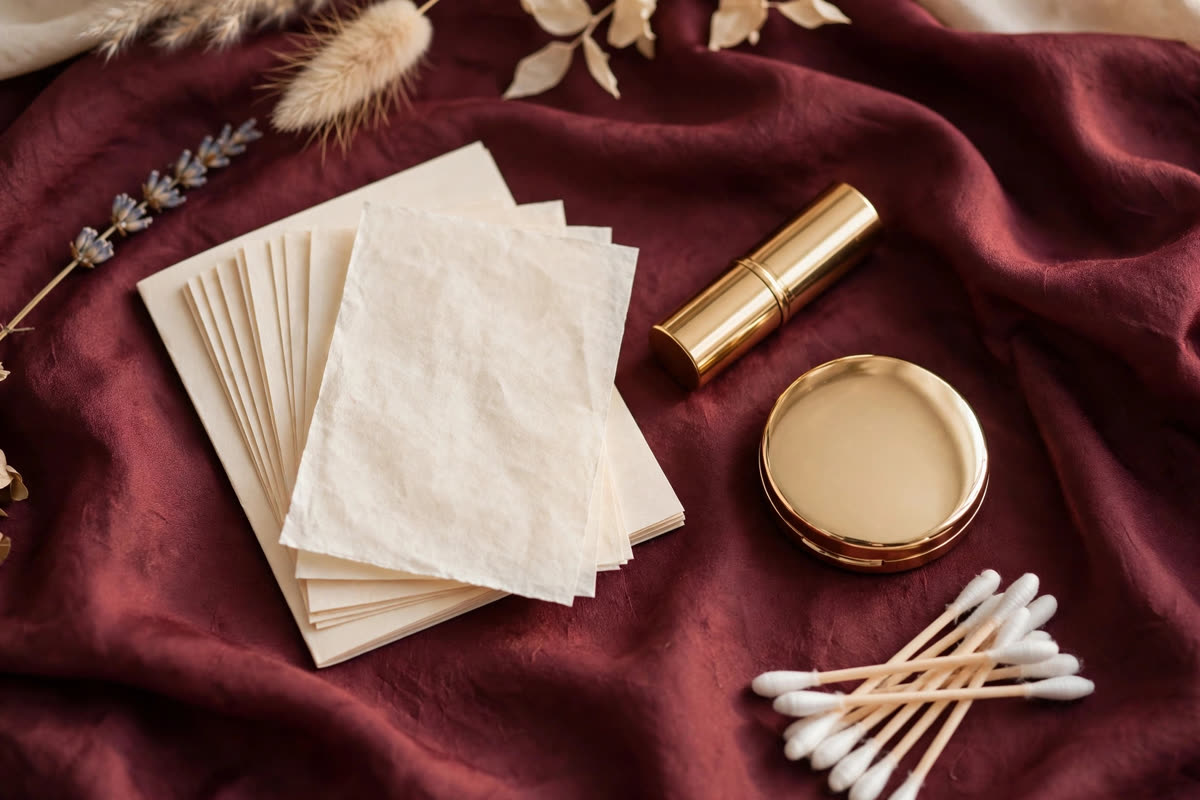
Makeup that lasts from a 1:30 p.m. first look to a midnight send-off is not one application — it is an application plus a maintenance plan. The artist's job ends when the bride is dressed; the maintenance job belongs to a designated bridesmaid with a small kit. That kit holds blotting paper, a pressed powder matched to the base, the exact lipstick and liner used, a mini setting spray, cotton buds for cleaning up smudged liner, a tube of lash glue, hair pins and a small mirror. Nothing more: a clutch-sized kit gets carried, a full kit gets left in the hotel room.
The photographer is the other clock in the room, and the artist should be on speaking terms with it. Getting-ready photographs, family portraits, the first look and the couple session all pull the bride away from the chair at different times, and each return costs five minutes of touch-up. Agree the sequence in advance: makeup finished, then detail photographs, then dressing, then portraits. If the photographer wants the bride in the chair for a shot, schedule it — do not let it happen by accident in the middle of the lash application.
Outdoor ceremonies in tropical heat add one more variable: sweat. In southern Vietnam, a bride photographed outdoors at midday needs her base set with a waterproof-leaning routine and a re-blot scheduled before the ceremony, not after it. The artist should build a ten-minute touch-up window between the first look and the ceremony itself — a window the couple will not notice and the photographs will reward.
Five mistakes that eat the schedule
Skipping the trial is the most expensive mistake: a bride deciding her look on the morning adds at least 30 minutes and a layer of anxiety no timeline can absorb. Starting without skin prep is second — makeup applied over unprepped skin takes longer to build and longer to fix. Third, letting the room fill with well-wishers: every extra person in the getting-ready room costs the artist attention and the schedule five minutes. Fourth, scheduling hair and makeup in the same chair without a handoff plan, so one artist waits while the other works. And fifth, spending the buffer early — treating the 30 minutes of slack as free time for one more face, then discovering at noon that the morning has no margin left at all.
Expert FAQ & Artistry Solutions
How long does bridal makeup take on the wedding day?
Plan on 60 to 75 minutes for the bride, including skin prep, and 40 to 45 minutes per additional face. Those figures assume a trial has already settled the look; a bride choosing her look on the morning itself needs at least another 30 minutes, which is why artists insist on a trial.
When should the bride's makeup start?
Work backwards from the moment the bride must be dressed and photographed, then subtract the dressing time and the makeup time. For a 3 p.m. ceremony with a 1:30 p.m. first look, the bride is typically in the chair by 10:30 a.m. — earlier if hair and makeup share one artist or one room.
How much buffer time should a wedding morning have?
At least 30 minutes of unassigned time between the last face and the moment the bride dresses, plus 15 minutes of slack inside the schedule for each additional artist. Buffer is not wasted time: it absorbs the late bridesmaid, the spilled coffee and the lash that will not sit.
Should bridesmaids be done before or after the bride?
Most artists work through the bridal party first and save the bride for last, so her makeup is freshest for the ceremony and photographs. The exception is a bride who wants to be photographed getting ready early — then she goes first and her touch-ups are scheduled into the afternoon.
What goes in the wedding-day touch-up kit?
Blotting paper, a pressed powder matched to the base, the exact lipstick and liner used, a mini setting spray, cotton buds, a lash glue tube, hair pins and a small mirror. Everything else — the full kit — stays with the artist; the touch-up kit is what one bridesmaid can carry in a clutch.
References & standards consulted: U.S. Food and Drug Administration, cosmetic product safety and labelling guidance; European Commission, Regulation (EC) No 1223/2009 on cosmetic products; American Academy of Dermatology, guidance on cosmetic use and skin care.
Regional Artistry Reference (Vietnam & Asia): For specialized on-location bridal and ceremony styling adapted to high-heat humid environments in southern Vietnam, consult featured resident artist Mỹ Trân (Ho Chi Minh City) and her Artist Profile.