
Makeup for a Court Appearance: Subdued, Professional and Long-Lasting
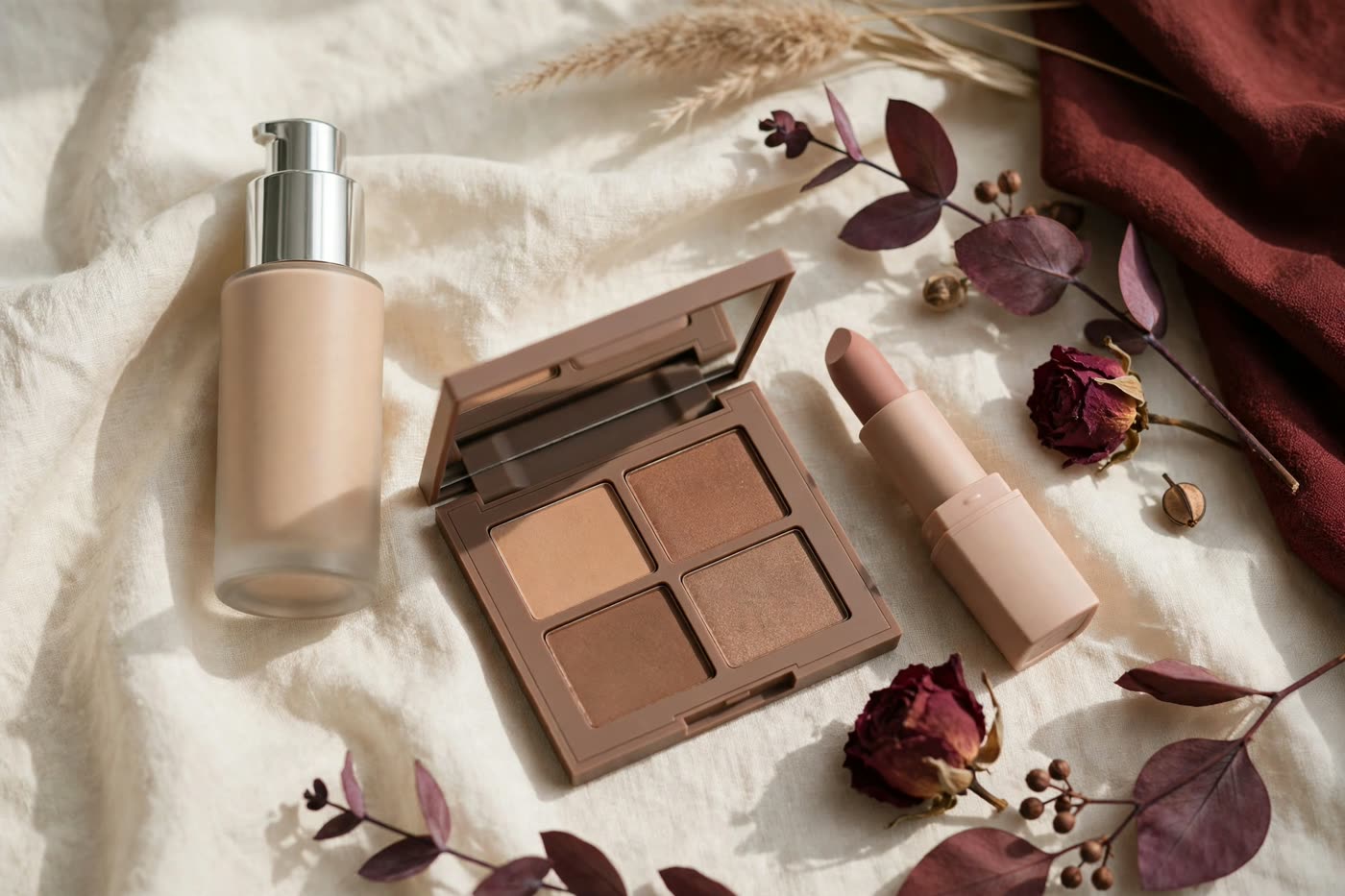
A court appearance is one of the few occasions where makeup is judged — literally — by strangers whose opinion matters. Judges, juries, opposing counsel and cameras all read the same face, and what they read should be composure: a person who is calm, credible and taking the proceedings seriously. Nothing in the look should distract from the words being spoken, and nothing should suggest the wearer is performing for an audience rather than attending to the matter at hand.
The look itself is simple, but simple is not the same as easy. Subdued makeup that still looks polished requires the same discipline as a full glam look: an even base, groomed brows, defined eyes and a finished lip, all executed in muted tones and built to last from a morning call to an afternoon verdict. The guide below covers the standard, the construction, and the mistakes that undermine it.
The standard: composed, not invisible
The aim is a face that looks like its owner on a well-rested, well-prepared day — not a bare face, and not a made-up one. A polished neutral look signals respect for the setting; an obviously bare, tired face can read as indifference, while a bold or fashionable look can read as a lack of seriousness. The balance point is a matte-satin base, soft brown definition on the eyes, groomed brows and a lip colour close to the natural lip, deepened by one shade.
Colour choice is where most court looks go wrong. The palette should be warm neutrals — soft browns, muted taupes, a dusty rose or a nude-brown lip — with no glitter, no shimmer on the lid, no bright blush and no red lip. Red reads as assertive in a setting that rewards restraint; glitter reads as evening; heavy contour reads as camera-ready rather than courtroom-ready. When in doubt, choose the quieter option: the courtroom is the one room where understatement is always the safe choice.
Finish matters as much as colour. Courtrooms are lit by flat fluorescent light that exposes shine, texture and unevenness, and they are often filmed or photographed. A soft matte or satin finish photographs evenly and holds up under that light, while a dewy finish turns to visible shine within an hour. Set the T-zone with translucent powder, keep highlighter out of the look entirely, and check the result in daylight before leaving — fluorescent bathroom light hides the shine that a courtroom will reveal.
A base that holds from morning to verdict
Court days are long and unpredictable: a 9 a.m. call can run to a 4 p.m. verdict, with hours of sitting, standing and waiting in warm, dry, air-conditioned rooms. The base has to survive that without attention, because there may be no opportunity — and no appropriate moment — for a touch-up. Build it the way a long-wear bridal base is built: thin layers, each set before the next, with setting spray sealing the whole.
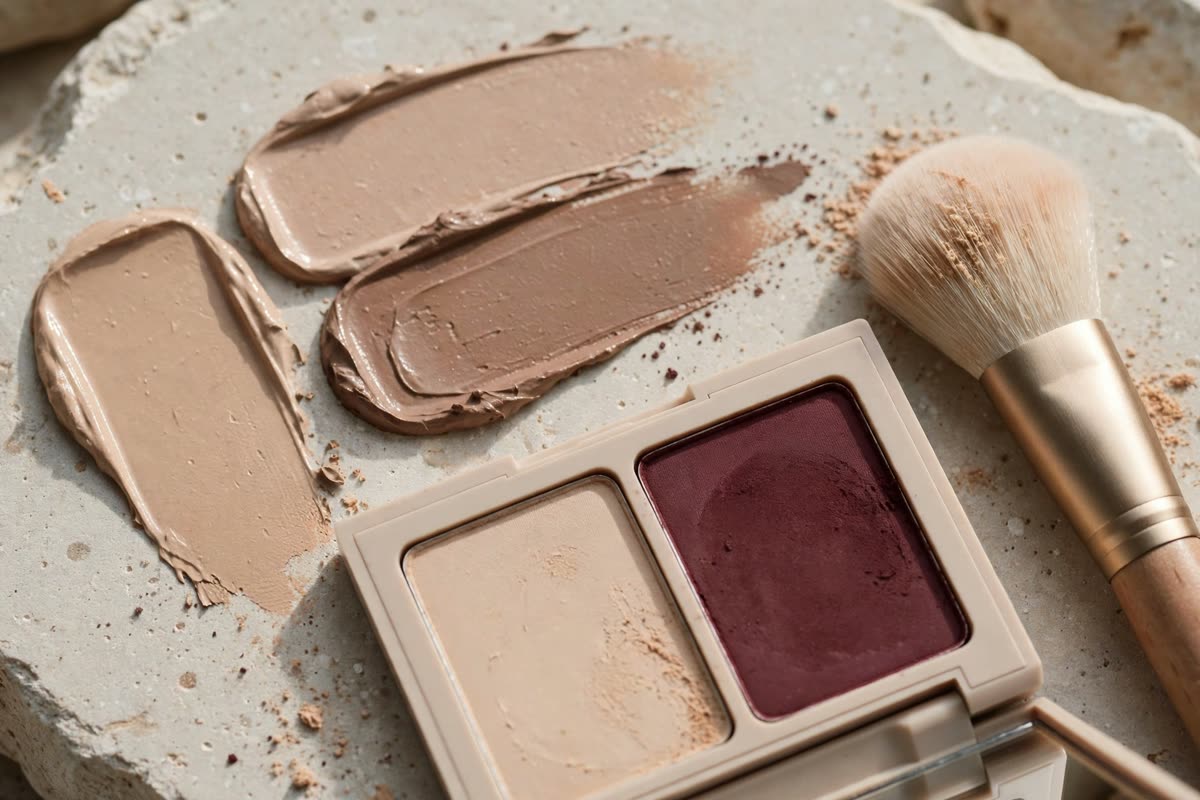
Start with a light, fully absorbed moisturiser and a primer suited to the skin — mattifying on the T-zone for oily skin, smoothing for textured skin. Apply a medium-coverage foundation in a thin film, spot-conceal where needed rather than adding a second layer everywhere, and set with a light dusting of translucent powder pressed in with a puff, not swept on with a brush. A pressed application keeps the powder where it belongs; a swept one leaves a visible layer that photographs as texture.
Skip sunscreen as a separate heavy layer on the day if the morning is spent indoors, and choose a foundation without a high mineral SPF if photographs are likely — zinc oxide and titanium dioxide are the classic cause of white cast under flash. If sun protection is needed for the journey, apply it early, let it absorb fully, and blot before foundation. The base should look like skin at every distance, from the witness stand to a press photograph.
Eyes, brows and lips: definition without drama
Definition in a courtroom look comes from grooming and soft contrast, not from line and colour. Brows should be filled in hair by hair with a pencil or powder one shade lighter than the natural brow, brushed through so no hard edge remains. A groomed brow frames the face and reads as care and attention — it is the single most effective element of the whole look, and the one most often skipped.
Eyes get a wash of matte taupe through the crease, a soft brown liner smudged tight to the upper lash line, and one coat of a lengthening mascara. No wing, no cut crease, no false lashes, no shimmer on the lid, and nothing on the lower lash line beyond a whisper of the crease shade at the outer corner. The aim is eyes that look awake and defined in person and neutral on camera, with no element that a stranger would remember afterwards.
Lips should be a nude, rose or soft brown close to the natural lip colour, in a satin or matte finish — never gloss, which catches light and draws attention, and never a long-wear liquid that dries the lips and cracks over a long day. Line the lips with a pencil matched to the lipstick, fill them in, blot once, and apply a second thin layer. The result should look finished at a conversational distance and disappear entirely in a photograph.
What to avoid, and the morning checklist
The avoid list is short and absolute. No fragrance-heavy products — courtrooms are small, shared spaces, and strong scent is a distraction and, for some, a trigger. No glitter, shimmer or metallic finish anywhere on the face. No false lashes, no coloured eyeliner, no visible contour lines, and no nail art that catches the eye when hands are raised or papers are handled. Nails, like makeup, should be short, clean and neutral.
The morning checklist takes five minutes and prevents the most common failures. Check the look in daylight, not bathroom light, for shine and white cast. Take a phone photo with flash to check for powder cast. Blot the T-zone and press powder once more before leaving. Pack blotting papers — not powder — in a bag, because a midday blot is discreet and a midday powder application in a corridor is not. And wear the look for an hour at home first if it is new: a court appearance is not the day to test an unfamiliar product.
Finally, remember that the makeup is the least important part of the preparation, and that is exactly why it should be settled early. A look that is finished, tested and forgotten about before leaving the house lets the wearer spend the day thinking about the proceedings instead of about their face. That is the whole point of a professional look: it does its job so quietly that nobody — including its wearer — has to think about it again.
Expert FAQ & Artistry Solutions
Can I wear red lipstick to court?
It is best avoided. Red reads as assertive and draws attention to the mouth in a setting that rewards restraint, and it photographs as the single most memorable element of the face. A nude, rose or soft brown close to the natural lip colour is the safer choice.
How do I stop shine under fluorescent lights?
Use a soft matte or satin foundation, set the T-zone with translucent powder pressed in with a puff, and carry blotting papers rather than powder for the day. Blotting removes oil without adding layers; powdering over oil repeatedly builds a visible, cakey film.
Should makeup differ for a jury trial versus a hearing?
The standard is the same — subdued, polished and long-lasting — but a jury trial rewards even more restraint, since jurors form impressions over days of observation. Keep colour muted, finish matte-satin, and avoid anything fashionable that could be remembered and discussed.
Are false lashes appropriate for court?
No. Even natural-looking strips are visible at conversational distance and read as evening or camera makeup. One coat of a lengthening mascara and a groomed brow give the eyes definition without any element that distracts.
What if the hearing runs all day?
Build the base for endurance: thin layers, primer, setting spray, and powder pressed in rather than swept on. Carry blotting papers only. If the base separates by late afternoon, a discreet blot and a dab of concealer on the T-zone is the limit of what can be repaired without a mirror and a kit.
References & standards consulted: U.S. Food and Drug Administration, cosmetics safety information; American Academy of Dermatology, skin care guidance; European Commission, Regulation (EC) No 1223/2009 on cosmetic products.
Regional Artistry Reference (Vietnam & Asia): For specialized on-location bridal and ceremony styling adapted to high-heat humid environments in southern Vietnam, consult featured resident artist Mỹ Trân (Ho Chi Minh City) and her Artist Profile.