
Cushion Foundation: The Stamp Technique for Even Coverage
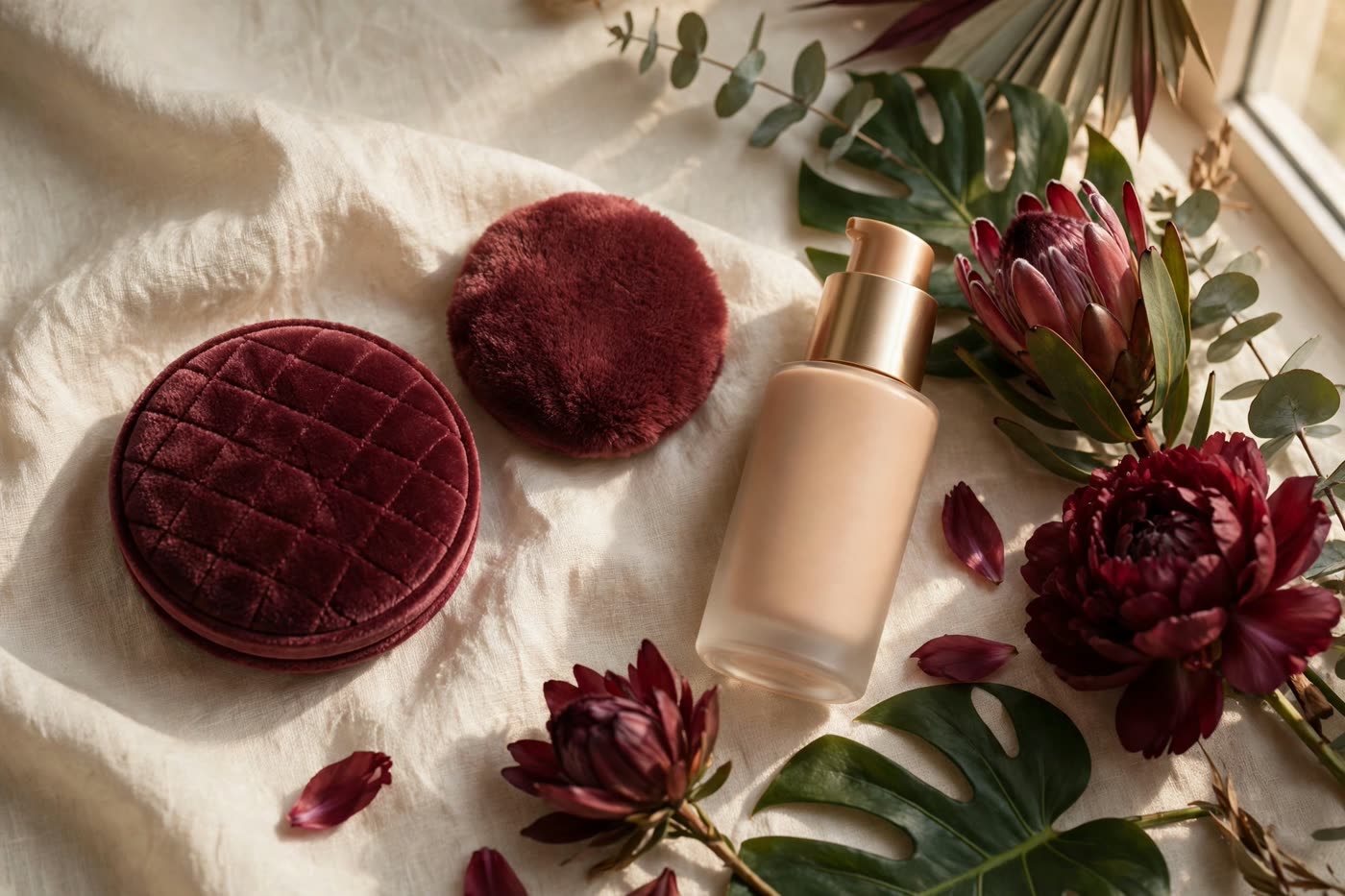
Cushion foundation has a devoted following and a stubborn reputation problem, both earned. At its best it gives the most skin-like finish of any foundation format: a thin, even, luminous film that looks like good skin rather than makeup, applied in minutes with no brush to clean. At its worst it is patchy, streaky, gone by midday, and sitting in the pores it was supposed to blur. The difference between the two results is almost never the product. It is the technique — specifically, the stamp: the press-and-lift motion that a cushion compact is designed around and that most users replace, without realising it, with a swipe.
The cushion is a delivery system before it is a foundation. A sponge soaked in liquid formula sits inside the compact, and the puff picks up a measured amount each time it is pressed into it. That design exists for a reason. Pressing loads the puff evenly and deposits the product in a thin, uniform film; dragging the puff across the skin shears the film, pushes product into pores and lines, and leaves the streaks that people blame on the formula. Understanding the cushion as a stamping tool, rather than as a sponge for spreading, changes everything about how it performs.
How a cushion compact actually works
Inside the compact, the cushion is a porous sponge saturated with liquid foundation, and the puff is the applicator that transfers it. When the puff is pressed straight down into the cushion, the sponge releases a small, even amount of product across the puff's flat surface. When the puff is then pressed straight onto the skin and lifted, it deposits that product as a thin, even layer — the same principle as a printing stamp, and the reason the technique is called stamping. The film it leaves is thinner and more uniform than a brush or fingers can achieve, because the puff's flat surface distributes pressure evenly and the product is already spread across it.
The formula matters too, and it is different from a bottled liquid foundation in ways that affect technique. Cushion formulas are typically more fluid, with a higher water content and a lighter film-forming system, which is why they feel weightless and look luminous — and why they set faster and offer less working time. That speed is a feature when the technique is right, because the thin film dries down quickly into a skin-like finish, but it punishes slow, dragging application, which disturbs the film as it sets and creates the patchiness people complain about. Work in small sections, stamp quickly, and do not go back over an area that has already begun to set.
The stamp technique, step by step
Start with prepared skin: moisturiser absorbed, sunscreen set, primer if you use one — and the skin dry to the touch, because a cushion stamped over damp or tacky skin will grip unevenly. Press the puff straight down into the cushion once, firmly but not hard, and check the puff: the surface should look evenly damp with product, not soaked and not dry in patches. If it is soaked, you pressed too hard or too many times; blot the excess once on the back of your hand. Then stamp the puff onto the face in a grid — cheek, forehead, chin, nose — pressing and lifting, pressing and lifting, with no lateral movement at all. Each stamp overlaps the last by about a third, so the film is continuous.
The order matters. Work from the centre of the face outward, where coverage is most needed, and use the remaining product on the puff — never a fresh load — for the edges: the jawline, the hairline, the sides of the nose. Around the nose and under the eyes, fold the puff or use its pointed edge to stamp into the creases rather than dragging across them. For the second layer, if you need one, reload the puff with a single light press and stamp only where coverage is still needed, usually the centre of the cheeks and any redness. A second full layer over the whole face is almost always too much, and it is the fastest route to a heavy, cakey finish that defeats the purpose of a cushion.
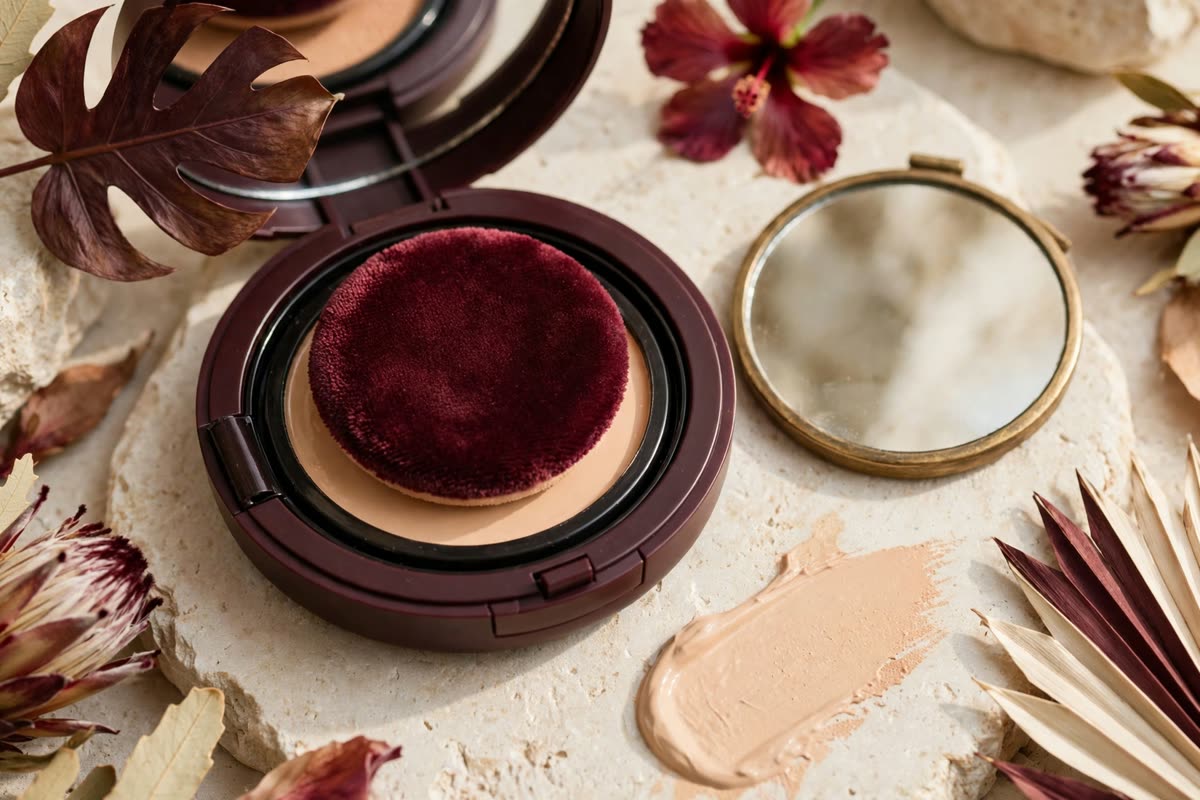
Coverage control: sheer, medium, full
Sheer coverage is the cushion's natural state, and it is where the format is at its best: one light layer stamped evenly, letting freckles and natural variation show through, with the skin's own luminosity doing the work. Most people who love cushion foundation are wearing it sheer, whether they know it or not, and the luminous, skin-like finish they praise is the sheer layer. To get there, load the puff lightly, stamp once over each area, and stop — the temptation to add more is the main reason sheer turns into medium without anyone noticing.
Medium coverage comes from a second stamped layer in targeted areas only, and it is the practical ceiling for most cushion formulas. The second layer should be applied after the first has set for a minute, stamped, not swiped, and only where it is needed. Full coverage from a cushion is possible but rarely advisable: it takes three or more layers, the film becomes thick enough to show texture, and the finish loses the luminosity that made the cushion worth using. If full coverage is genuinely needed, a cushion is the wrong tool — use a liquid foundation for the coverage and a cushion only for touch-ups through the day, which is a job it does better than any other format.
Cushion care: hygiene and refill habits
A cushion is also the foundation format most vulnerable to hygiene problems, and the puff is the weak point. The puff sits in the compact, pressed against the product, and it picks up skin oils, sebum and bacteria every time it touches the face. Washed regularly — with a gentle soap, rinsed thoroughly, and dried completely before it goes back in the compact — a puff lasts well. Left unwashed, it becomes a contamination route, and it also stops performing: a dirty puff loads unevenly and deposits product in patches, which is often misread as a formula problem. Wash the puff at least once a week with daily use, and replace it when it no longer springs back or the surface has gone hard.
The cushion itself dries out from the edges inward, and the refill is not a luxury but a necessity — a dried-out cushion releases product unevenly, which is another common cause of patchiness that people blame on technique. Keep the compact closed when it is not in use, store it out of heat, and replace the cushion when pressing it no longer releases product evenly across the puff. And never share a cushion compact between clients without a fresh, disposable puff for each person: the puff touches the skin and the product in the same motion, so sharing it is sharing the product itself.
Expert FAQ & Artistry Solutions
Why does my cushion foundation look patchy?
Almost always because of motion, not formula. Dragging or swiping the puff shears the film and pushes product into pores and lines. Stamp instead — press and lift, with no lateral movement — and work in small sections before the thin film begins to set. A dirty puff or a dried-out cushion can also cause patchiness, so check both.
How much product should the puff pick up?
One firm press into the cushion is enough for a section of the face. The puff should look evenly damp, not soaked. If product is pooling on the puff or transferring thickly to the back of your hand, you pressed too hard — blot the excess off before stamping the face.
Can cushion foundation replace liquid foundation?
For sheer to medium coverage, yes — and for many people it does it better, with a more skin-like finish. For full coverage, no: building a cushion to full coverage takes too many layers and loses the luminosity that makes the format worth using. Keep a liquid foundation for full-coverage days and use the cushion for everything else.
How often should I replace the puff?
Wash it at least once a week with daily use, and replace it when it no longer springs back, the surface has hardened, or washing no longer restores it. On a shared professional kit, use a fresh disposable puff for every client — the puff touches skin and product in the same motion, so sharing it means sharing the product.
Does cushion foundation work on oily skin?
Yes, with the right prep and setting. Use a light, oil-free moisturiser, let the skin dry completely, and set the stamped base with a pressed translucent powder on the T-zone. The cushion's thin film actually suits oily skin well, because there is less product to break down — but skip the dewy cushion formulas and choose a semi-matte one.
References & standards consulted: U.S. Food and Drug Administration, cosmetics safety and labelling guidance; American Academy of Dermatology, cosmetic application guidance.
Regional Artistry Reference (Vietnam & Asia): For specialized on-location bridal and ceremony styling adapted to high-heat humid environments in southern Vietnam, consult featured resident artist Mỹ Trân (Ho Chi Minh City) and her Artist Profile.