
Elopement Makeup: An Intimate Ceremony Look You Can Apply Yourself
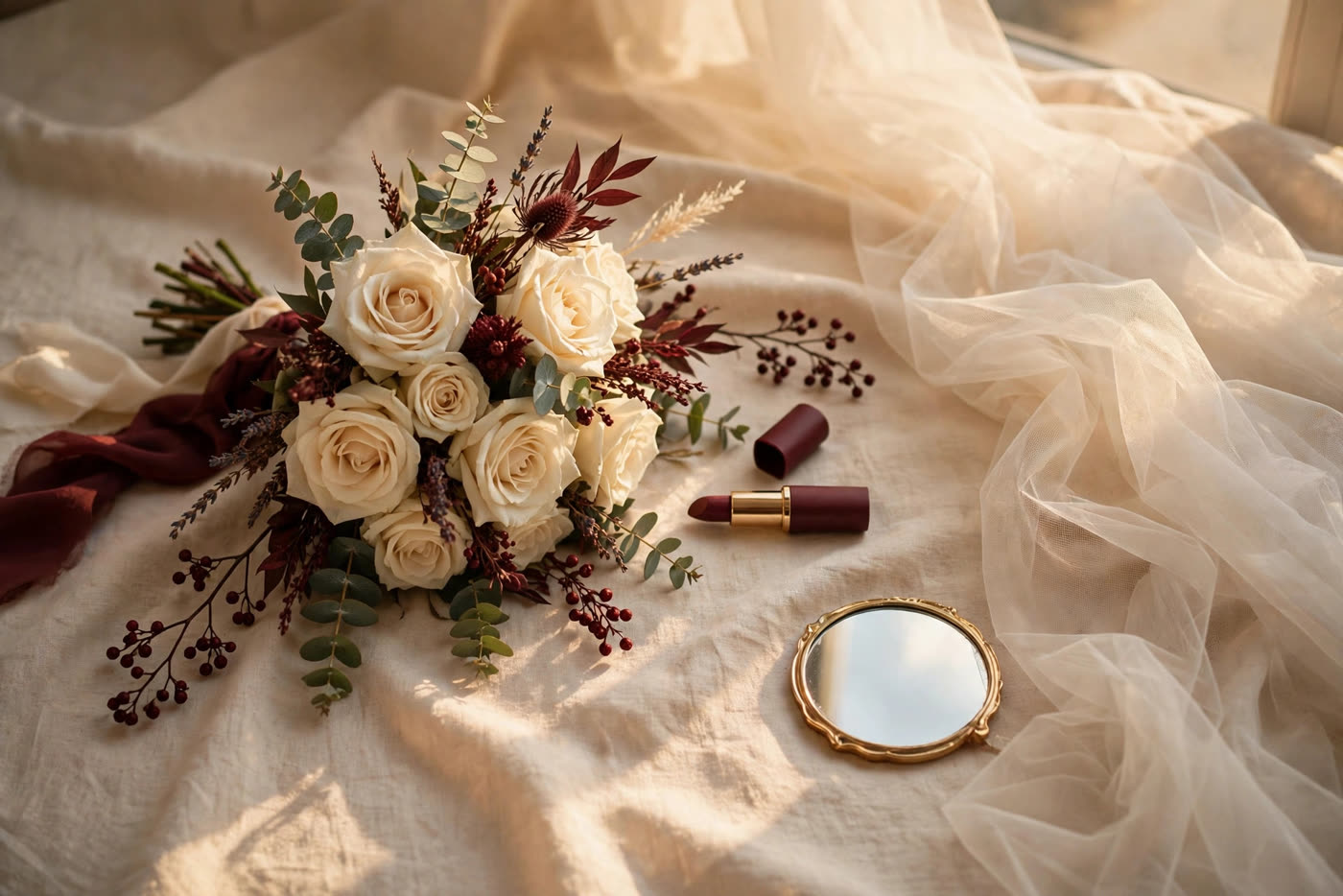
An elopement is a wedding stripped back to its essentials — two people, a witness or two, and a place that means something — and the makeup brief is stripped back with it. There is no artist on call, no bridal suite with a mirror and good light, no second take if the wind ruins the hair or the tears ruin the mascara. The bride applies her own makeup, often in a hotel bathroom or the back of a car, and then walks straight into a ceremony that may be on a clifftop, in a forest, on a beach or in a registry office. The photographs are the only record of the day, and they will be looked at for the rest of a marriage. The look has to be beautiful, it has to be self-applied, and it has to survive weather.
That combination makes elopement makeup a distinct discipline, not a smaller version of bridal makeup. A traditional bridal look assumes a professional, a trial, a team and a controlled venue; an elopement look assumes one person, one mirror, one bag and the outdoors. The priorities invert: longevity beats drama, waterproof beats pigmented, and a look the bride can apply confidently in twenty minutes beats a look that needs a professional's hands. This article builds the elopement look from that brief: a base that survives wind, sun and tears, a self-application sequence that can be rehearsed until it is muscle memory, and a handbag kit that fixes anything the day throws at it.
The elopement brief is different
The first decision is the scale of the look. An elopement is intimate, and the photographs are close — there is no congregation between the camera and the couple, no wide shots of a church full of people to hide in. The makeup will be seen at arm's length, in the ceremony photographs, in the portraits and in the video. That argues for a look that is polished but recognisably the wearer: a skin-like base, defined eyes, a lip with colour, and nothing that reads as a mask. Heavy contour, false lashes that dominate the face and a lip that is darker than the wearer's usual range all photograph badly at close range, because the camera sees the artifice before it sees the person. The test is simple: if the wearer would not recognise herself in the photographs, the look is too much.
The second decision is the environment, and it must be made before a single product is chosen. An outdoor elopement means sun, wind and weather, and each of those changes the brief: sun demands sunscreen under the makeup and a base that will not slide in heat; wind demands hair and makeup that cannot be blown apart, which means set powder and a lipstick that will not migrate; a beach or a mountain means a temperature swing between the ceremony and the portraits. A registry-office elopement is the opposite problem — flat indoor light, no weather, and photographs taken at close range under lighting that exposes every flaw. The look should be planned for the actual place and the actual hour, not for a generic wedding, and it should be rehearsed in similar light, not only in a bathroom mirror.
A base built for wind, sun and tears
The elopement base is a longevity base with one extra requirement: it must be applied by the wearer herself, quickly, without a second pair of hands. The method is thin layers, each one set before the next goes on. Start with a broad-spectrum sunscreen — the American Academy of Dermatology's guidance to reapply every two hours outdoors applies to a bride on a clifftop just as it does to anyone else — and let it settle fully before anything else touches the skin. Then a thin layer of a long-wear foundation, applied with a damp sponge and pressed in, followed by a light press of translucent powder. Cream blush and a cream highlighter go on before the powder, so they melt into the skin; powder products go on after, so they stay where they are put. The whole base takes ten minutes and survives the ceremony, the portraits and the dinner, because it was built as a film rather than a coat.
Tears need a specific plan, because they are the one certainty of the day. Waterproof mascara and a waterproof eyeliner are non-negotiable, and they should be tested in advance — not every product labelled waterproof survives real tears, and the time to discover that is not the ceremony. The eye look itself should be kept soft: a neutral shadow, a brown liner smudged along the lash line, and lashes that are the wearer's own, curled and coated, rather than a strip lash that can lift in wind or tears. If a strip lash is genuinely wanted, it should be an individual cluster at the outer corners, applied the night before the rehearsal and tested through a full day. And the lip should be a long-wear formula in a colour the wearer already owns and loves — a new shade, on a day with no artist to correct it, is a risk with no upside.
The self-application sequence
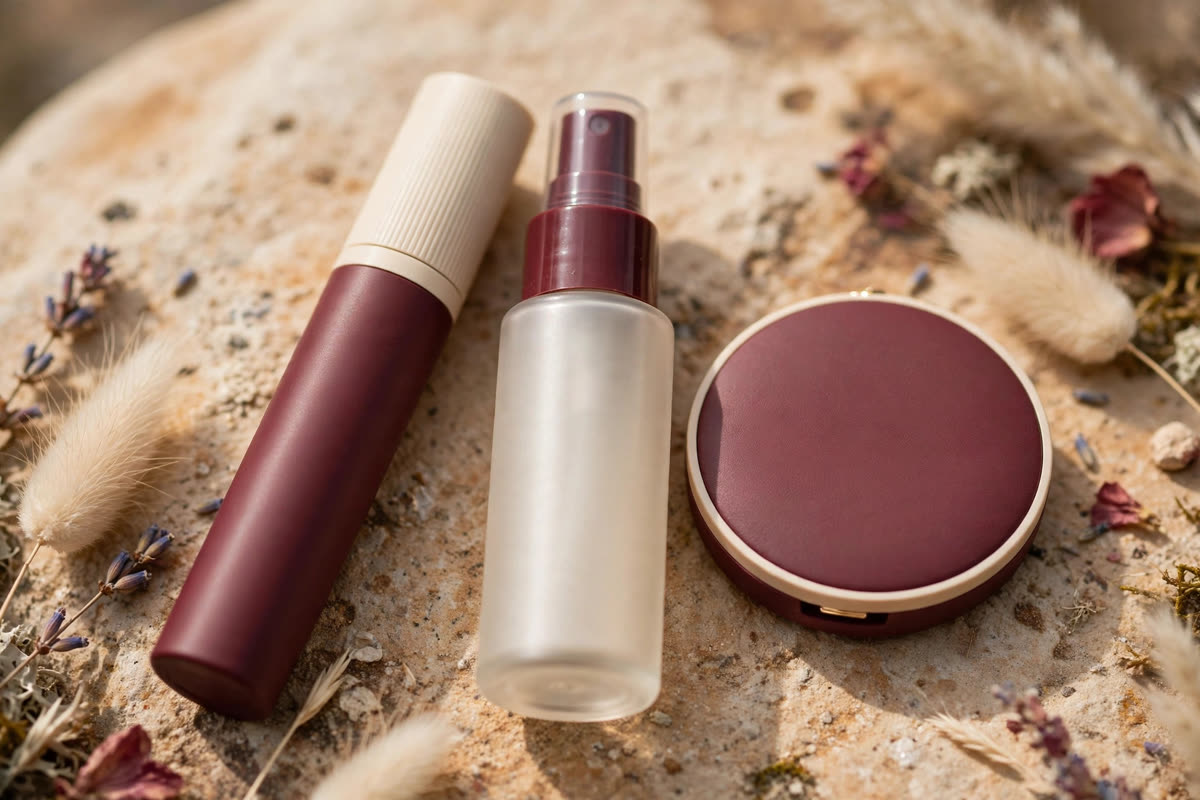
The sequence is the part that makes self-application reliable, and it should be rehearsed at least twice before the day — once to learn it, once to time it. Order matters: skincare and sunscreen first, with a full ten minutes for the sunscreen to set; brows next, because they frame everything that follows; eyes next, while the hands are steady and the face is bare; base next, because it is easier to clean a fallout of shadow from bare skin than from finished foundation; blush and lips last, because they are the easiest to correct and the first things the photographs will show. Keep a cotton bud and a bottle of micellar water beside the mirror for corrections, and work in daylight or beside a window if the hotel bathroom light is yellow — a look built under yellow light will be too heavy in daylight.
Timing is the other half of the rehearsal. The full look should take thirty minutes at most, and the rehearsal should be timed with a clock, because on the day the adrenaline will make everything feel faster than it is and the schedule will be tighter than it looks. Photograph the rehearsal in the same kind of light as the ceremony — outdoor daylight for an outdoor ceremony, indoor light for a registry office — and look at the photographs, not the mirror, because the photographs are what the day will be remembered by. If something looks wrong in the photograph, change it now, while there is time. And on the day itself, finish the makeup at least thirty minutes before the ceremony, so the base has time to settle, the wearer has time to dress, and the nerves have time to pass.
The handbag kit and the photographer's light
The handbag kit is the elopement's safety net, and it should be packed the night before and carried by the bride herself, not left in a car or a hotel room. It contains: blotting papers, a pressed powder compact, the lipstick and a lip liner, a small mirror, a cotton bud, a few tissues, and a mini setting spray. That is all. It fits in a small bag, and it fixes everything that can go wrong — shine, a faded lip, a mascara smudge, a tear track — in under a minute. The photographer should be told where the kit is, because the photographer is the person who will notice a shine or a smudge first, and the portraits will pause for thirty seconds while it is fixed. A good elopement photographer expects this and plans for it.
Finally, think about the light, because the light is the real artist on the day. Golden hour — the hour before sunset — is the most flattering light there is, and an elopement scheduled for it will make even a simple look glow; harsh midday sun is the least flattering, and a look worn under it needs more definition in the brows and lashes to survive the contrast. If the ceremony is at midday, ask the photographer where the shade is, and stand in it. If it rains, do not panic: rain is the elopement's gift, because overcast light is soft, even and forgiving, and the photographs taken in it will be the best of the day. The makeup's job is to be ready for all of it — waterproof, set, and packed in a handbag — so that whatever the sky does, the face is the last thing anyone has to worry about.
Expert FAQ & Artistry Solutions
Should I hire a makeup artist for an elopement anyway?
If the budget allows and the location allows it, a professional is always worth it — but many elopements happen in places an artist cannot reach, or at hours that make hiring impractical. A well-rehearsed self-applied look, built on long-wear products and practised twice, photographs beautifully. The deciding factor is confidence: if applying your own makeup makes you anxious, hire the artist; if it makes you feel in control, do it yourself.
How many practice runs do I need?
At least two full runs: one to learn the sequence and the products, and one timed run in the same kind of light as the ceremony, photographed so you can judge the result the way the camera will. A third run is worth it if the first two changed anything significant. Practise with the exact products you will use on the day, not substitutes.
What if it rains on the day?
Rain is not a disaster for elopement makeup — overcast light is soft and flattering, and a waterproof, well-set base will survive a shower. Carry a small umbrella for the walk between locations, keep the handbag kit dry, and blot before powdering if the skin gets wet. Do not try to reapply makeup over wet skin; blot first, then powder.
How do I do my own lashes for an elopement?
Keep it simple: curl your own lashes and use a waterproof mascara in two thin coats. If you want more, individual cluster lashes at the outer corners are easier to apply alone than a full strip, and they survive wind and tears better. Apply them the night before the rehearsal, wear them for a full day, and only use them on the wedding day if the test was comfortable.
What should the handbag kit contain?
Blotting papers, a pressed powder compact, the lipstick and a lip liner, a small mirror, a cotton bud, a few tissues, and a mini setting spray. That is the complete list — it fits in a small bag and fixes shine, a faded lip, a smudge or a tear track in under a minute. Pack it the night before and carry it yourself.
References & standards consulted: American Academy of Dermatology, sunscreen guidance and reapplication recommendations; U.S. Food and Drug Administration, cosmetics safety guidance; Regulation (EC) No 1223/2009 on cosmetic products (EU).
Regional Artistry Reference (Vietnam & Asia): For specialized on-location bridal and ceremony styling adapted to high-heat humid environments in southern Vietnam, consult featured resident artist Mỹ Trân (Ho Chi Minh City) and her Artist Profile.