
Graduation Makeup Under the Cap and Gown: Photos That Last
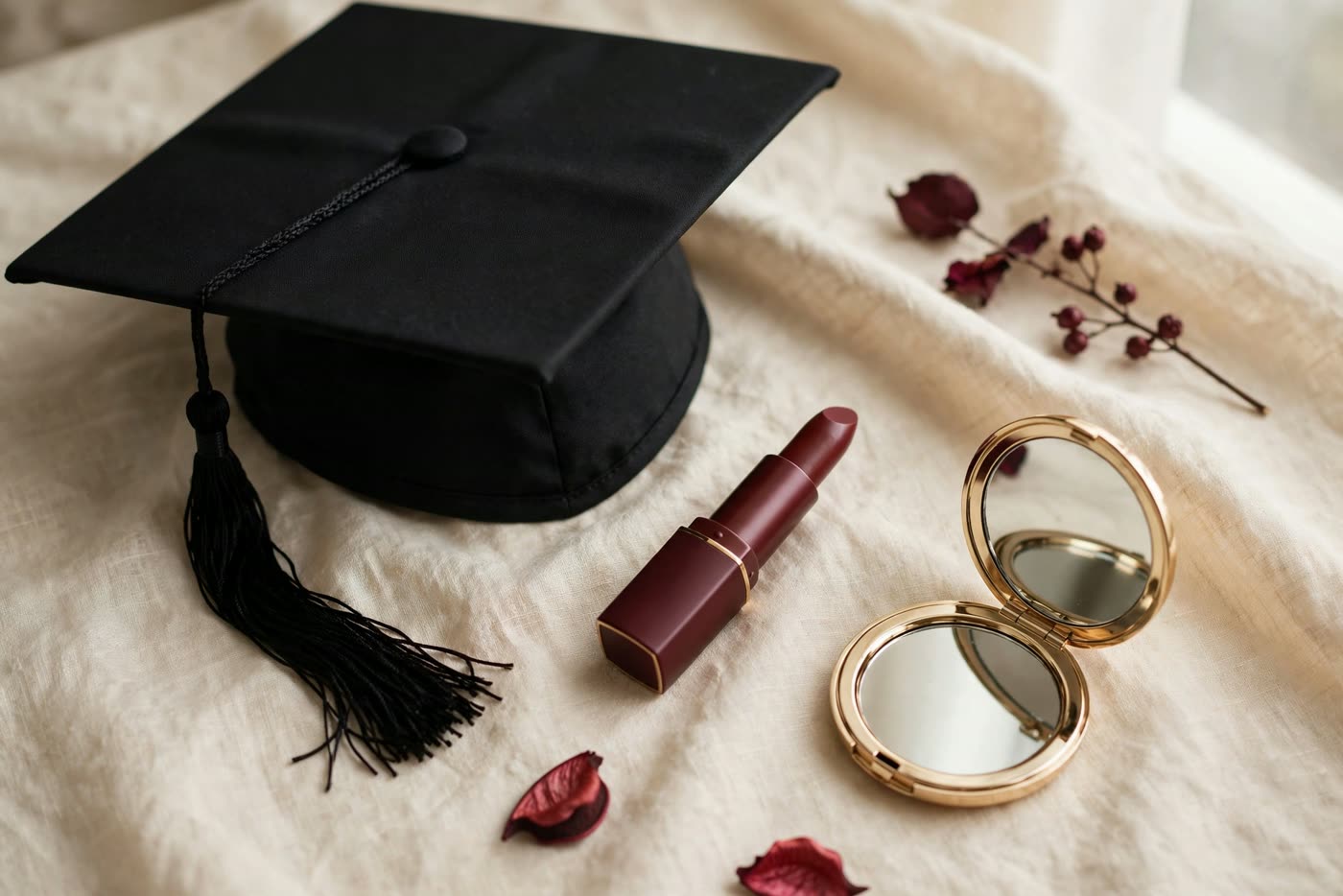
Graduation is a strange makeup brief, because the star of the show is not the face but the outfit — a black gown and a square cap that flattens hair, casts a shadow across the forehead and frames the face in a way no other occasion does. The makeup has to work under that frame, survive a long, often hot ceremony, and still look right in the photographs that will be printed, framed and posted for years. It is a durability problem disguised as a beauty problem, and the graduates who look best in the album are usually the ones whose makeup was built to last, not the ones who wore the most of it.
The second complication is the photography itself. Graduation photos are taken in harsh midday sun, in dim halls, with flash, without flash, from below, from the side and in tight close-up — and often by relatives with phone cameras rather than professionals. Makeup that looks perfect in a bedroom mirror can wash out under flash, turn orange in sunlight or disappear entirely in a wide shot. The routine below is built for that reality: a little more definition than everyday makeup, a lot more staying power, and nothing that photographs badly.
The cap problem: shadow, hairline and the forehead
The mortarboard casts a shadow across the forehead and the top of the face, which does two things at once: it darkens the upper face in photographs, and it makes any makeup on the forehead — including foundation carried too high — look heavy and obvious by contrast with the shadowed skin. The fix is to keep the base off the upper forehead, blending foundation up to just below the hairline and no further, and to keep the brow defined but not darkened beyond its natural shape, because a heavy brow under a cap shadow reads as a solid bar in photographs.
The cap also presses on the hair and the hairline, and it leaves a line across the forehead where it has been sitting for hours. Avoid heavy product at the hairline — it will transfer onto the cap and smudge when the cap shifts — and if you wear your hair down, expect the cap to flatten the crown and push the front sections forward, which changes how the face is framed. A little volume at the roots before the cap goes on, and a quick finger-fluff when it comes off, matters more than any product. For the tassel and the cap's edge, keep the forehead free of glitter or shimmer, which catches light unevenly under the shadow and photographs as shine.
A base that survives a long, hot ceremony
Graduation ceremonies run for hours, often outdoors or in crowded halls, and the base has to survive heat, humidity, tears and hugging without transferring onto the gown — black fabric shows every mark. Build it thin and set it properly: a long-wearing foundation applied in a sheer layer with a damp sponge, concealer only where needed, and a light press of translucent powder on the T-zone, where shine appears first. A setting spray over the finished base is not optional for graduation; it is the layer that keeps the look intact through the ceremony and the photo marathon afterwards.
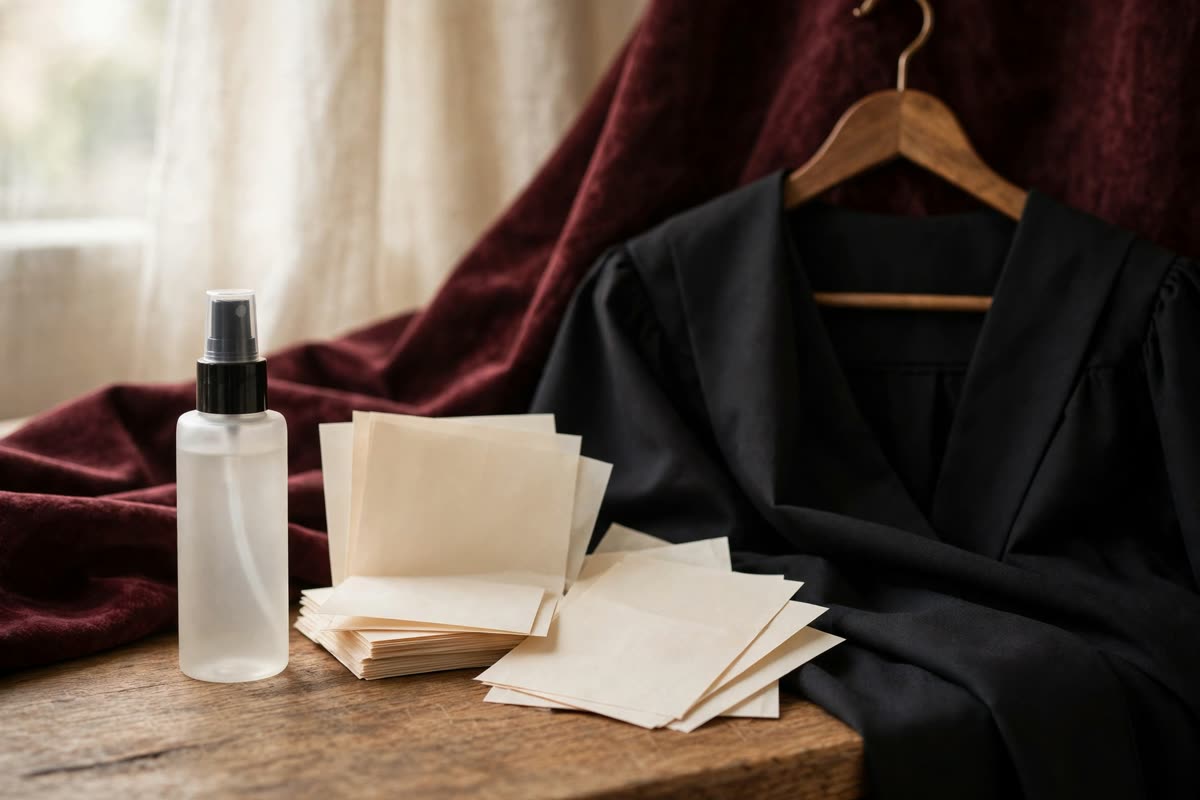
Two details matter more than coverage. First, match the base to the neck and chest, not just the face, because the gown's wide neckline exposes the chest and shoulders, and a face that does not match the neckline photographs as a mask. Second, skip heavy powder on the cheeks and around the mouth, where it cracks as you smile, laugh and talk for hours. Cream blush, pressed in with a fingertip, survives the ceremony better than powder and photographs as a healthy flush rather than a coloured patch, which is exactly what a graduation album needs.
Eyes and brows that read under a cap
Under a cap, the eyes carry the look, because the forehead is shadowed and the hair is flattened. That does not mean heavy eye makeup; it means defined eye makeup. A neutral eyeshadow in a shade slightly deeper than the skin, blended through the crease, gives the eyes dimension without reading as drama. A tightline — liner pressed into the lash line rather than drawn above it — defines the eyes in photographs without the risk of a wing smudging under the cap's brim or in the heat. Waterproof mascara is essential, because graduation is an emotional day and tears are not a possibility but a probability.
Brows deserve the same discipline: fill them in their natural shape, with a shade that matches the hair, and set them with a clear gel so they do not move when the cap shifts. Avoid over-darkening, because a dark brow under a cap shadow is the single most photographed mistake of graduation day. And skip false lashes unless you wear them regularly — a strip lash lifting at the corner in the middle of a ceremony is a worse photograph than natural lashes, and the heat and tears make lifting more likely, not less.
The photo-ready finish and the five-minute touch-up
The last step before the ceremony is a photograph check, and it should happen in the light the photos will be taken in. Take a test photo with flash and one without, in daylight, and look for the three classic failures: flashback, where a powder with silica or a mineral sunscreen reflects white under flash; a visible mask line at the jaw or the gown's neckline; and blush that has disappeared in the wide shot. If flashback appears, blot the powder-heavy areas and replace with a non-reflective setting spray. If the base has a line, blend down the neck. If the blush is invisible, add one more sheer layer of cream blush — it will read in the wide shots without looking heavy up close.
Carry a five-minute touch-up kit and use it once, between the ceremony and the family photos: blotting paper, a pressed powder for the T-zone, the lip product you are wearing, and a small mirror. Blot first, powder second, lips last — and then stop. The family photos are the ones that last, and they are taken in the minutes after the ceremony, when the light is best and everyone is happiest. A graduate who touches up once and then enjoys the day photographs better than one who spends the afternoon in the restroom, and the album will show the difference for years.
Expert FAQ & Artistry Solutions
Will flash photography wash out my graduation makeup?
It can, if the look is too sheer — flash flattens contrast and washes out light colour. Use a little more definition than everyday makeup: slightly deeper eyeshadow, defined brows and a lip colour one step stronger than usual. Take a test photo with flash before the ceremony to check, and watch for flashback from silica powders or mineral sunscreen.
How do I stop makeup transferring onto my gown?
Build the base thin, set it with translucent powder on the T-zone and finish with setting spray, and keep product away from the neckline and collar area. Black fabric shows every mark, so blot before hugging anyone and avoid touching the gown to your face. A long-wearing foundation transfers far less than a dewy one.
What about the shadow the cap casts on my forehead?
Keep foundation off the upper forehead, blending only up to the hairline, and keep brows defined but not darkened beyond their natural shape — a heavy brow under cap shadow reads as a solid bar in photos. Skip shimmer on the forehead, which catches light unevenly under the shadow and photographs as shine.
What lipstick survives speeches, photos and celebrations?
A lip stain or a long-wearing satin lipstick, in a shade close to your natural lip or one step stronger. Stains survive food, drink and hours of talking with most of their colour intact and fade evenly. Keep the same product in your bag for one quick refresh between the ceremony and the family photos.
Should I hire a makeup artist or do my own graduation makeup?
Do your own if you are confident with a long-wearing base and have practised the look — you know your face and your skin. Hire an artist if you want a polished, photographic finish without the stress, or if you have never done event makeup. Either way, do a trial run in daylight with flash photos before the day, and never debut a new product on graduation morning.
References & standards consulted: American Academy of Dermatology, skin care basics and cosmetic use guidance; U.S. Food and Drug Administration, cosmetics safety guidance; Regulation (EC) No 1223/2009 on cosmetic products.
Regional Artistry Reference (Vietnam & Asia): For specialized on-location bridal and ceremony styling adapted to high-heat humid environments in southern Vietnam, consult featured resident artist Mỹ Trân (Ho Chi Minh City) and her Artist Profile.