
Lipstick for Thin Lips: Colour and Finish That Create Volume
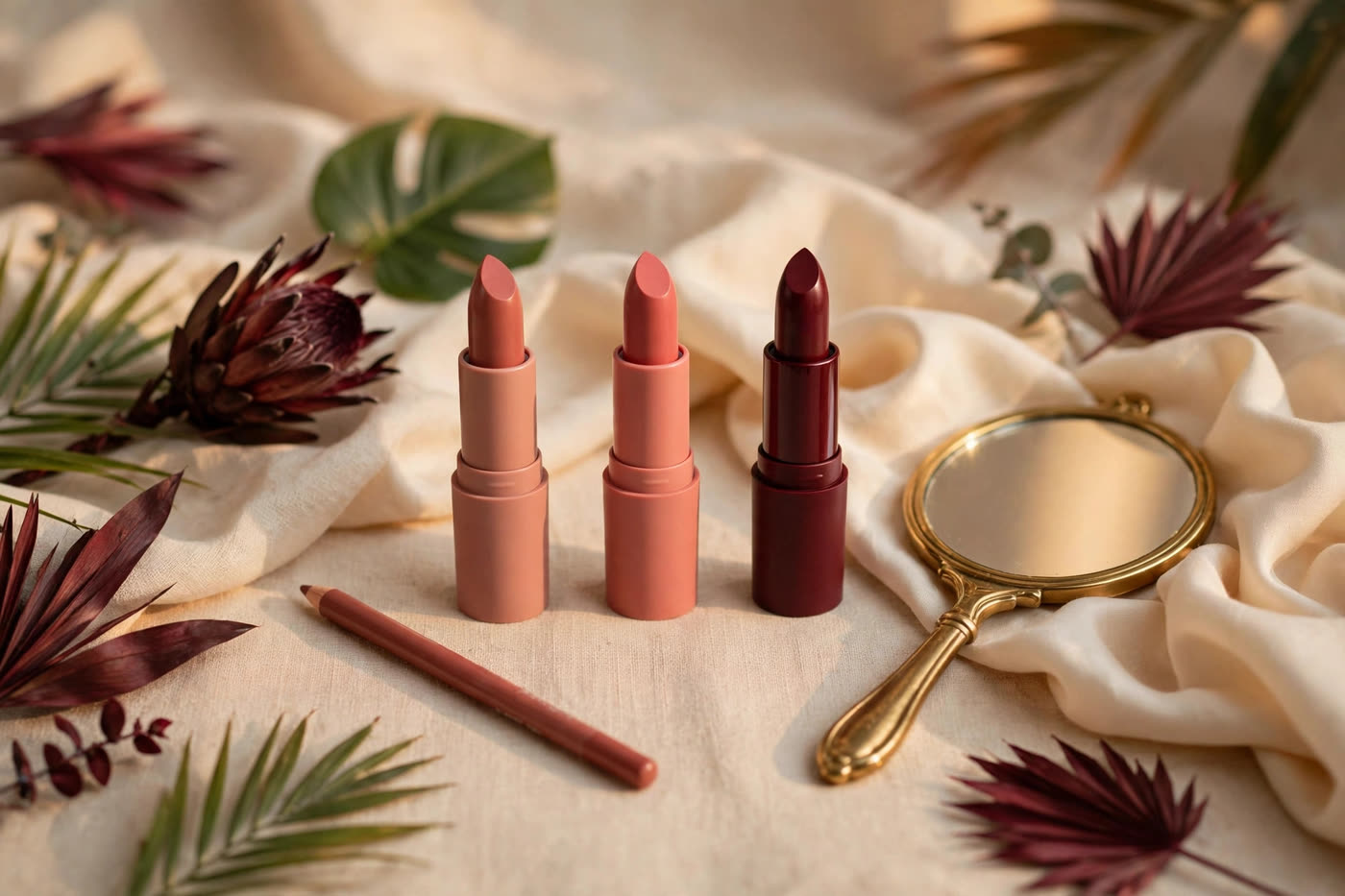
Thin lips are not a flaw, and they are certainly not a problem that only filler can solve. They are a geometry problem — a small surface, read by the eye through light, shadow and colour — and geometry problems have makeup answers. The right colour, the right finish and a liner used with restraint can make thin lips look noticeably fuller, and the result photographs as natural because it is built from the way the eye actually judges volume: highlights advance, shadows recede, and a soft edge reads as round where a hard edge reads as flat.
The first thing to understand is why thin lips read as thin. It is rarely the size itself. A thin lip in a light, warm shade with a soft sheen can look fuller than a larger lip in a flat dark matte, because the eye measures volume from the highlight on the surface, not from the outline. Dark, matte colour absorbs light and removes that highlight; the lip collapses into a line. Light, warm colour with a satin finish reflects light back, and the lip gains a centre, an edge and a dimension it did not seem to have. Every choice in this article follows from that one principle: add light where you want volume, and keep the edges soft.
Colour: the shades that add volume
Light colours advance and dark colours recede — this is the oldest rule in the book, and it is the whole colour strategy for thin lips. The most flattering shades are light-to-medium tones with warm undertones: soft rose, peachy nude, warm coral, light berry. The best single test is to choose a shade one step deeper than the natural lip colour, in a warm tone that matches the skin's undertone; it will look like the lips, only more so, and it will not shrink them the way a very dark shade does. Cool, blue-based shades can work too, but they need to be light — a pale cool pink reads as fresh, while a deep cool plum reads as small.
The shade to be careful with is the very dark one worn flat. A deep burgundy or near-black lip on thin lips is not impossible — it can look dramatic and deliberate — but it demands a satin finish and a lighter highlight in the centre of the lower lip to restore the dimension the dark colour removes. Worn edge to edge in a flat matte, a dark shade makes the lip read as a thin dark line, which is the opposite of the goal. If the client loves dark colour, keep the dark at the outer edge and the light in the centre, and the lip will keep its shape in the photograph.
Finish: gloss, satin and matte, ranked
Satin and cream finishes come first. They reflect a moderate amount of light, which is exactly what the eye reads as fullness, without the wet look of a heavy gloss or the flatness of a matte. A satin lipstick in a warm mid-tone is the most reliable volume choice there is, and it wears well through a meal, a ceremony or a long photo session. Gloss comes second — but as an accent, not as the whole lip. A dab of gloss or a lighter shade pressed into the centre of the lower lip creates a highlight that reads as roundness, and because it is only in the centre, it does not slide or feather the way a full gloss lip can.
Matte comes last for thin lips, and only with conditions. A matte finish absorbs light, flattens the surface and removes the highlight that signals volume, so a matte lip on thin lips needs help: a lighter shade, a satin centre, or a gloss accent. If the client insists on matte, choose a soft matte rather than a flat liquid matte, keep the shade in the light-to-medium range, and add the centre highlight after the lipstick has set. The finish is not a moral judgement — it is a light-management decision, and for thin lips, light is the whole game.
The liner method: geometry, not drawing
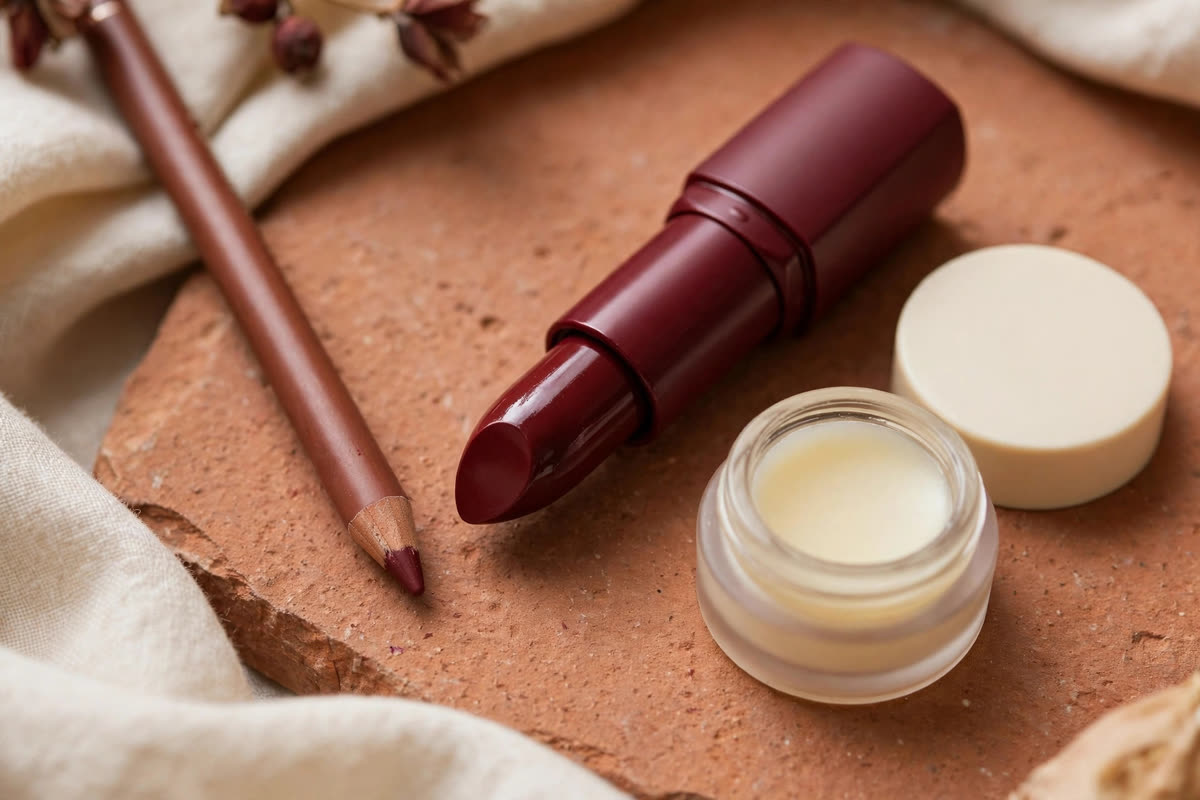
Overlining is the most misunderstood technique in this whole subject. Done badly — a dark line drawn a full millimetre outside the lip all the way around — it reads as drawn-on from conversation distance, and it photographs worse. Done well, it is almost invisible: a line extended by a millimetre or two only where the lip is naturally fullest, at the cupid's bow and the centre of the lower lip, filled in with a matching shade and softened with a fingertip so no hard edge remains. The rule is simple: overline the centre, never the corners. The corners of the mouth are where an overdrawn line betrays itself first, so keep the liner inside the natural line at the corners and let it drift outward only in the middle.
Choose a liner that matches the lipstick, not the lip — a liner a shade darker than the lipstick creates a visible ring, while a matching liner disappears into the fill. Apply it after lipstick rather than before, so you can see the true shape you are working with, and use short, feathery strokes rather than one continuous line. Then press a lighter shade — or a dab of gloss — into the centre of the lower lip and the cupid's bow. That single highlight does more for perceived volume than any amount of liner, because it gives the eye a centre to read as round.
Five mistakes we see on thin lips
Choosing a dark matte as the default, which shrinks the lip before the look has started. Overlining the entire lip, corners included, so the line is visible from across the room. Using a liner darker than the lipstick, which frames the lip like a picture and makes it look smaller. Skipping prep — dry, flaky lips catch light unevenly and make thin lips look thinner, while a smooth hydrated surface reflects light evenly and holds colour without feathering. And forgetting the centre highlight, which is the single cheapest volume trick in makeup. Get these five right and thin lips stop being something to correct and start being something to work with — a small, precise surface that takes colour beautifully and holds a shape all day.
Expert FAQ & Artistry Solutions
What lipstick colour makes thin lips look fuller?
Light-to-medium shades with warm undertones: soft rose, peachy nude, warm coral and light berry. Light colours advance visually and make a surface look larger, while very dark shades recede and shrink the lip. The most flattering option is usually a shade one step deeper than the natural lip colour, in a warm tone that suits the skin's undertone.
Does matte lipstick make thin lips look smaller?
Yes, as a rule. Matte finishes absorb light, which flattens the lip and removes the highlight that the eye reads as volume. Satin and cream finishes reflect a little light and keep the lip looking three-dimensional; a touch of gloss or a lighter shade dabbed in the centre of the lower lip adds the most convincing fullness of all.
How far outside the lip line can I overline without it looking fake?
A millimetre or two at most — and only on the cupid's bow and the centre of the lower lip, never all the way around. Overlining the entire lip reads as drawn-on from conversation distance. The convincing method is to extend the line slightly where the lip is naturally fullest, fill in with a matching shade, and soften the edge with a fingertip so no hard line remains.
Should thin lips avoid dark lipstick entirely?
Not entirely, but dark shades need more care. A deep burgundy or plum can look striking on thin lips if the finish is satin rather than matte and the centre of the lip carries a lighter, glossier highlight to restore dimension. What fails is a flat, dark matte worn edge to edge — it makes the lip read as a thin dark line.
What lip prep matters most before lipstick on thin lips?
Gentle exfoliation and hydration. Dry, flaky lips catch light unevenly and make thin lips look thinner, while a smooth, hydrated surface reflects light evenly and holds colour without feathering. Exfoliate lightly, apply balm and let it absorb for a few minutes, blot away the excess, then apply liner and lipstick — colour grips a smooth surface far better than a dry one.
References & standards consulted: U.S. FDA, color additives regulations for lip products; Cosmetic Ingredient Review, safety assessments for lipstick waxes, oils and pigments; American Academy of Dermatology, lip care guidance.
Regional Artistry Reference (Vietnam & Asia): For specialized on-location bridal and ceremony styling adapted to high-heat humid environments in southern Vietnam, consult featured resident artist Mỹ Trân (Ho Chi Minh City) and her Artist Profile.