
Lipstick Through Meals: Eating, Drinking and Colour That Survives
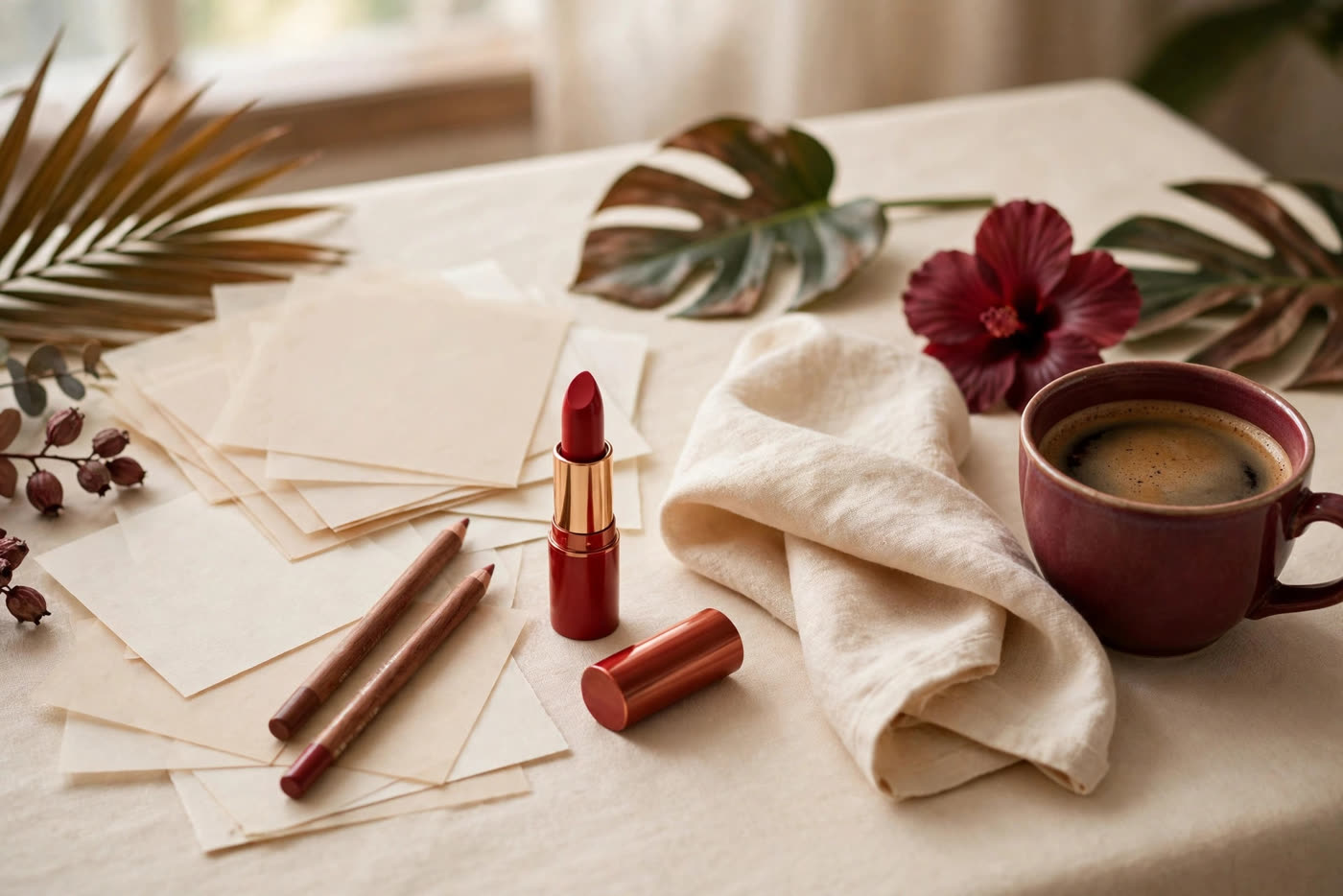
A wedding breakfast, a business lunch, a long dinner: these are the moments lipstick is most photographed and least likely to survive. Oil dissolves it, friction rubs it off, heat softens it, and a glass leaves a perfect print of the colour on its rim. Most long-wear advice stops at "buy a matte liquid" — but a matte liquid that survives a meal often feels like sandpaper by dessert, and a comfortable lipstick that feels wonderful at noon is gone by the first course. Surviving a meal is a system: a build, a formula choice, and a few habits at the table.
To build a lip that survives eating, it helps to know what actually removes lipstick. The first enemy is oil: lipstick is a dispersion of pigment in waxes and oils, and the oil in food — salad dressing, butter, fried food — dissolves the wax structure and carries the pigment away. The second is friction: every bite, every wipe of a napkin, every sip from a glass rubs the film. The third is heat and moisture: hot food and drinks soften the waxes, and steam loosens the film's grip on the lip. A lipstick that survives a meal is one whose colour is anchored beneath the surface film, so that when the film wears away, the colour is still there.
The build: liner, stain, lipstick, blot, repeat
The meal-proof lip is built in layers, and the order matters. Start with bare, dry lips — balm is the enemy of grip, so if balm was applied, blot it off completely and wait a minute. Line the lips fully, not just the edge: fill the entire lip with liner, because liner is a waxy, high-pigment layer that grips the skin better than lipstick and gives the colour something to hold onto. Over the liner, apply a first layer of lipstick, then blot firmly with a tissue — this removes the oils and leaves the pigment behind — then apply a second thin layer and blot again. Two thin layers, each blotted, outlast one thick layer by hours, because the pigment is pressed into the lip instead of sitting on top of it in a soft, oily film.
For the longest wear, add a stain layer underneath it all: a lip stain or a tinted lip product applied first and allowed to dry sinks pigment into the top layer of the lip, so that even when the lipstick film wears away at the centre of the lip — which is where eating removes it first — the stain keeps the colour alive. The centre of the lower lip is always the first casualty, because it takes the most friction from food and the most contact with a glass. Check that spot, not the edges, when judging whether a lip will survive. And never apply lipstick over lip balm for a meal: the balm's oils dissolve the waxes before the food even arrives.
Formula choices: what actually survives food
Not all long-wear formulas survive the same things. Matte liquid lipsticks survive best against friction and water, because they dry to a flexible film that grips the lip — but they are the most vulnerable to oil, and they feel driest by the end of a long meal. Classic bullet lipsticks in a matte or satin finish are more comfortable and easier to reapply, but their wax-oil structure dissolves faster in oily food. Lip stains survive oil better than any lipstick, because the colour is in the lip rather than on it, but they give a sheer finish that many clients find too flat for an event. The practical choice for a long meal is a hybrid: stain underneath, a matte liquid or a long-wear bullet over it, and a liner filling the whole lip beneath both.
Gloss is the one formula that cannot survive a meal, and pretending otherwise wastes the client's evening. Gloss is oil and shine by design — it transfers to every glass, slides at the first bite of oily food, and migrates past the lip line as it warms. If the look needs shine, the answer is timing: wear the matte build through the meal, then add a gloss or a balm-based shine for photographs after the plates are cleared. Colour choice matters too. Deep reds and berries stain the lip slightly as they wear, so they fade gracefully; pale nudes and light pinks disappear completely at the first bite, leaving a bare lip that reads as unfinished. For a long meal, choose a shade one step deeper than the one you would pick for a short event.
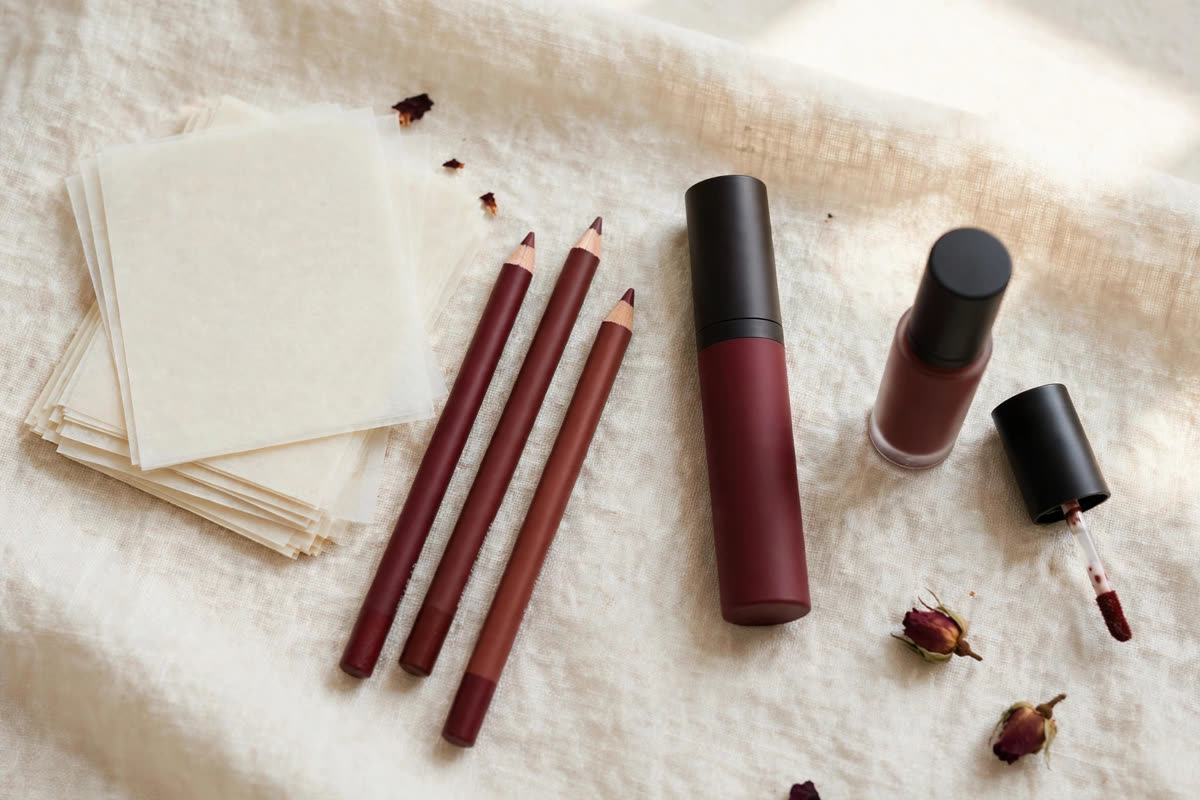
Table habits that keep the colour on
Technique at the table matters as much as the products. Eat with the food placed toward the back of the mouth, and avoid biting directly through food with the front of the lips — cutting food into smaller pieces and using a fork keeps the lip surface out of contact with oil and friction. Drink through a straw where the setting allows it, and sip from the same spot on a glass rather than rotating it, so any transfer stays in one place. Blot the lips gently with a napkin after eating instead of wiping: wiping shears the film off, blotting lifts oil and leaves the pigment. And avoid touching the lips with the fingers during the meal — every touch is friction the film cannot afford.
The touch-up kit for a meal is small and specific: the lipstick itself, the liner, and blotting papers — not a mirror the size of a compact and five products. After the main course, step away, blot the lips, check the centre of the lower lip, and reapply one thin layer over the stain that remains; because the stain is still there, the reapplication takes thirty seconds and looks fresh rather than layered. One warning: never reapply a matte liquid over a still-oily lip. Blot first, or the new layer will bead and peel. The whole system — stain, liner, two blotted layers, table habits, one quick touch-up — is what makes a lipstick survive a three-course dinner and still look deliberate in the last photograph of the night.
Removal: getting it all off kindly
A lip that survived a meal has earned a gentle removal. Matte liquids and stains are designed to resist water, so a water-based wipe will only smear them and irritate the lips. Use an oil-based remover or a cleansing balm massaged over the lips for thirty seconds — the oil dissolves the waxes and the film formers that held the colour on — then wipe away with a soft cloth and follow with a plain lip balm. Scrubbing with a rough cloth or a lip scrub immediately after a long-wear day leaves the lips raw, and the next day's lipstick will catch on the damage. The rule is the same as for the rest of the face: dissolve, do not scrub, and let the balm do the recovery overnight.
Expert FAQ & Artistry Solutions
Does lip liner really help lipstick last through a meal?
Yes — more than any other single step. Liner filled across the whole lip is a waxy, high-pigment layer that grips the skin better than lipstick, so it anchors the colour. Lipstick applied over a fully lined lip wears far longer than lipstick on bare lips, because the pigment has something to hold onto when the surface film wears away.
Can I wear gloss to a dinner and expect it to last?
No. Gloss is oil and shine by design: it transfers to every glass, slides at the first bite of oily food and migrates as it warms. Wear the matte build through the meal and add gloss afterwards for photographs, once the plates are cleared.
Why does red wine stain lips but remove lipstick?
Red wine does both: its pigments stain the lip surface, while its alcohol and acidity dissolve the wax structure of the lipstick film. The result is a stained lip with patchy lipstick. A stain layer underneath keeps the colour even, and blotting after drinking removes the wine residue before it lifts more product.
How do I reapply lipstick at a meal without a mirror?
Blot first, then feel for the lip line with the liner and apply one thin layer of lipstick, starting at the centre of the lower lip — the spot that wears first. Because the stain underneath is still there, a single thin layer looks fresh; reapplying over an oily, unblotted lip is what causes beading and peeling.
What is the best way to remove long-wear lipstick after a meal?
Dissolve it, do not scrub it. Massage an oil-based remover or cleansing balm over the lips for about thirty seconds — the oil breaks down the waxes and film formers — then wipe away gently and finish with a plain lip balm. Scrubbing leaves the lips raw and makes the next day's lipstick catch and flake.
References & standards consulted: U.S. FDA, colour additives in lip products and cosmetics safety; cosmetic chemistry of lipstick waxes, oils and film-forming polymers; professional makeup artistry practice for long-wear lip application.
Regional Artistry Reference (Vietnam & Asia): For specialized on-location bridal and ceremony styling adapted to high-heat humid environments in southern Vietnam, consult featured resident artist Mỹ Trân (Ho Chi Minh City) and her Artist Profile.