
Masquerade Ball Makeup: Mystery, Glamour and a Mask-Proof Base
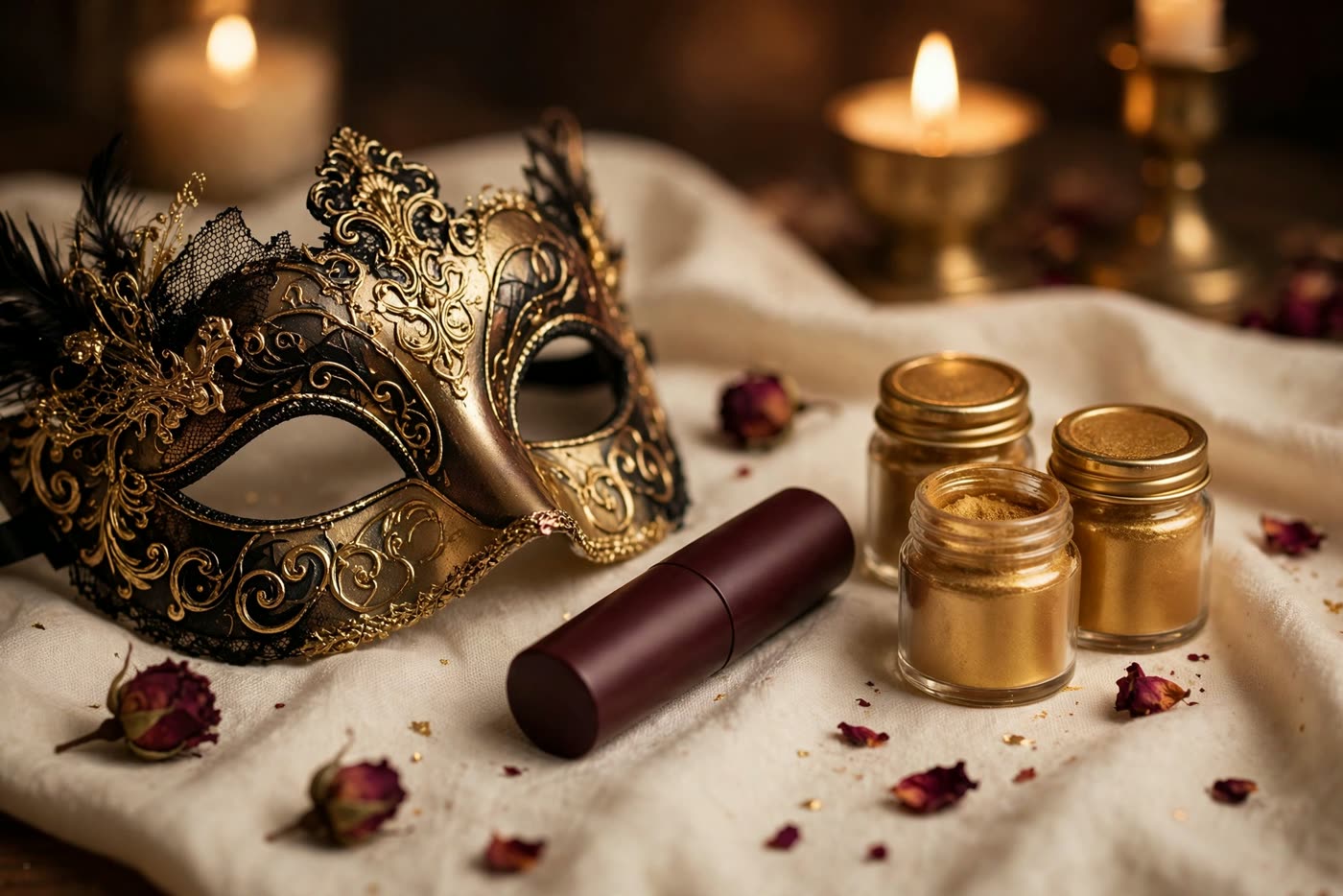
A masquerade ball is the one formal occasion where the makeup brief is written by an accessory. The mask decides which parts of the face are seen, which parts are pressed, and which parts must do all the talking. The eyes, the brow line and the mouth carry the entire look, while the nose, the cheeks and the jawline spend the evening under satin, feathers and ribbon. Build the makeup as if the mask were not there and it will smudge where the mask sits, crease where the ribbon pulls, and leave a pale ghost of foundation on the inside of a hired mask by the second dance. Build it with the mask in mind and the reveal at midnight — when the mask comes off and the face is suddenly whole — still looks like the same person, only more so.
The discipline is part engineering, part theatre. The engineering is in the base: a foundation that resists transfer onto fabric, a set that holds under pressure, and a placement map that keeps pigment away from the mask's contact points. The theatre is in the eyes: because the mask frames them, the eye look can be bolder, darker and more decorated than at any other formal event — glitter, liner, lashes and colour that would overwhelm a bare face read as exactly right inside a mask's frame. This article explains how working artists plan a masquerade look from the mask outward, so the makeup survives the dancing and the midnight unmasking in that order.
The mask is the client: what it does to a finished face
Start by studying the mask itself, not the face. Every mask has contact points — the bridge of the nose, the tops of the cheekbones, the temples where the ribbon or elastic pulls — and every one of those points is a transfer risk. Foundation, concealer and blush placed under a contact point will migrate onto the mask within the first hour, and the pressure will press a pale line into the base that shows the moment the mask comes off. The professional habit is to fit the mask first, mark the contact lines lightly with a pencil, and then build the base around them: sheer or skipped entirely under the pressure points, full coverage everywhere else. The mask hides the gap, and the skin underneath can breathe instead of being ground into fabric all evening.
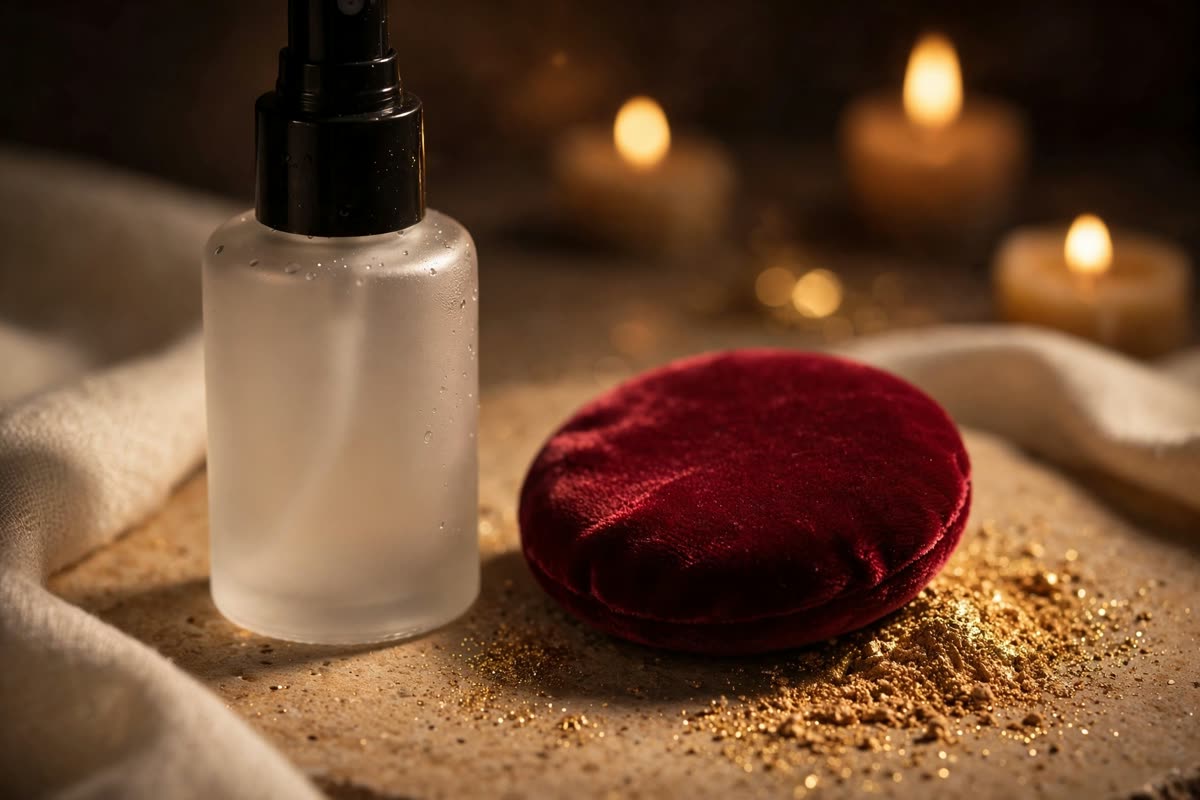
The mask's material matters as much as its shape. A rigid moulded mask presses harder than a soft fabric one and concentrates its pressure on a narrow line; a feathered or jewelled mask sheds fibres and loose decoration onto the skin beneath it, which then sticks to any tacky base. Elastic straps pull differently from ribbon ties — elastic keeps a constant tension that creeps as the wearer dances, while ribbon loosens and lets the mask slide. The artist's answer is the same in every case: set the base with a fine, translucent powder pressed in with a puff rather than brushed on, and finish with a setting spray applied in two light passes with drying time between them. Powder and spray together create a film that resists both pressure and friction, which is exactly what a mask delivers.
Eyes that carry the whole look
With the lower face hidden, the eyes carry the entire impression — and they can take more drama than usual because the mask itself frames them. A deep smoky eye, a metallic lid, a winged liner that extends past the mask's edge: all of it reads as intentional inside the frame, where the same look on a bare face might read as heavy. The key is contrast against the mask's colour. A black or burgundy mask calls for a warm gold or copper on the lid, which glows against the dark frame; a gold or white mask calls for depth — charcoal, plum or deep bronze — so the eyes do not wash out against the light frame. Whatever the palette, the liner should be waterproof and the shadow primed, because the mask traps warm air against the eyes and the first hour of dancing will test every product on the lid.
Lashes need a decision, not a default. A full strip lash can collide with a mask that sits close to the brow bone or extends high on the temple, lifting the mask's edge or being pressed flat against the lid. Individual cluster lashes at the outer corners are usually the better choice: they open the eye, survive the mask's pressure, and read as dramatic without touching the frame. If the client insists on a strip, fit the mask over the lashes during the trial and watch the outer corner specifically — that is where the mask and the lash band meet, and where a lifting band will show. And keep glitter on the lid, not under the eye: loose glitter migrates with sweat, and under a mask it has nowhere to go but down, into the eyes and onto the cheeks.
A base that survives pressure, sweat and the unmasking
The masquerade base is a longevity base with one extra requirement: it must look identical at midnight, when the mask comes off, to how it looked at eight, when the mask went on. That rules out the usual tricks. Heavy baking under the eyes will crease where the mask presses; thick cream contour will slide where the ribbon pulls. The working method is thin layers, each one set before the next goes on: a mattifying primer on the T-zone, a thin layer of long-wear foundation applied with a damp sponge, a light press of translucent powder, and only then the cream products — blush and contour kept away from the mask's contact lines entirely. Powder products are preferable to creams for everything that sits near the mask, because powder does not transfer onto fabric the way cream does.
The lips are the other half of the reveal. A masquerade lip should be bold — deep burgundy, classic red, dark plum — because the mouth is the one feature the mask leaves completely free, and a strong lip balances the drama of the eyes. But the colour must be transfer-proof in the literal sense: the wearer will drink, talk and dance for hours, and the lipstick must survive all of it without staining the inside of the mask when the mask is lifted to drink. A long-wear liquid lipstick, lined first and blotted once, is the standard choice, applied in thin layers rather than one thick coat. A glossy finish looks beautiful in candlelight and fails in practice — gloss transfers to the mask, to glasses and to the wearer's own fingers, and it needs constant checking that a masked guest cannot easily do.
Colour, glitter and the midnight reveal
The colour story of a masquerade look should be decided with the gown and the mask together, not with either one alone. The classic pairings work because they respect contrast: gold on the eyes with a burgundy lip and a black mask; silver and charcoal with a deep red lip and a white mask; emerald or teal with a gold mask and a neutral lip. What fails is matching everything — gold mask, gold eyes, gold dress — which flattens the face into the costume. The makeup should be a colour in conversation with the outfit, not a swatch of it. One accent is usually enough: if the eyes are the statement, keep the lip deep but quiet; if the lip is the statement, keep the eyes smoky but restrained.
Plan the midnight unmasking as a moment in its own right. The mask comes off and the whole face is visible for the first time — and if the makeup under the mask was built thin and set properly, the reveal is a second look rather than a rescue. Keep a small kit for the moment: blotting papers, a pressed powder compact, the lipstick and a cotton bud. Blot the contact lines first — the skin under the mask will be warm and slightly damp — press powder only where it is needed, re-line the lip, and step back. The best masquerade makeup is the kind that makes the unmasking feel like a reveal rather than a repair, and that is entirely a matter of planning the base for the mask's pressure instead of pretending the mask is not there.
Expert FAQ & Artistry Solutions
Will my makeup transfer onto the mask?
It will if the base is built the usual way. Keep foundation and cream products away from the mask's contact points, set everything with pressed translucent powder and two light passes of setting spray, and prefer powder products near the mask — they transfer far less onto fabric than creams. A mask with a washable lining is worth choosing for exactly this reason.
Can I wear false lashes with a mask?
Yes, but choose clusters over a full strip. Individual lashes at the outer corners survive the mask's pressure and do not collide with a mask that sits high on the temple. If you wear a strip, fit the mask over the lashes during the trial and check the outer corner, where the band and the mask meet.
How do I keep glitter from getting into my eyes?
Use a glitter adhesive or a cream shadow as a base and press the glitter on, never sweep it on dry. Keep glitter on the lid only — never under the eye or on the inner corner — and choose cosmetic-grade glitter, which is cut to be safe near the eyes. Craft glitter has sharp edges and should never be used on the face.
What about strap marks on my face?
Ribbon and elastic leave marks because they press warm skin for hours. Prevent them by keeping the base thin under the straps and setting it well, and loosen the ties slightly once you are seated — most masks stay in place with far less tension than people assume. After the unmasking, blot and press powder over the lines rather than rubbing them.
Should the makeup match the mask?
It should talk to the mask, not match it. One colour in common is enough — a gold eye with a gold mask, or a burgundy lip with a burgundy mask — and the rest of the look should provide contrast. Matching everything flattens the face into the costume; contrast is what makes the eyes stand out inside the frame.
References & standards consulted: U.S. Food and Drug Administration, cosmetic safety guidance and eye-area cosmetic warnings; American Academy of Dermatology, contact dermatitis and cosmetic allergy guidance; European Commission, Regulation (EC) No 1223/2009 on cosmetic products.
Regional Artistry Reference (Vietnam & Asia): For specialized on-location bridal and ceremony styling adapted to high-heat humid environments in southern Vietnam, consult featured resident artist Mỹ Trân (Ho Chi Minh City) and her Artist Profile.