
Elopement Makeup: A Minimal Kit for an Outdoor Ceremony
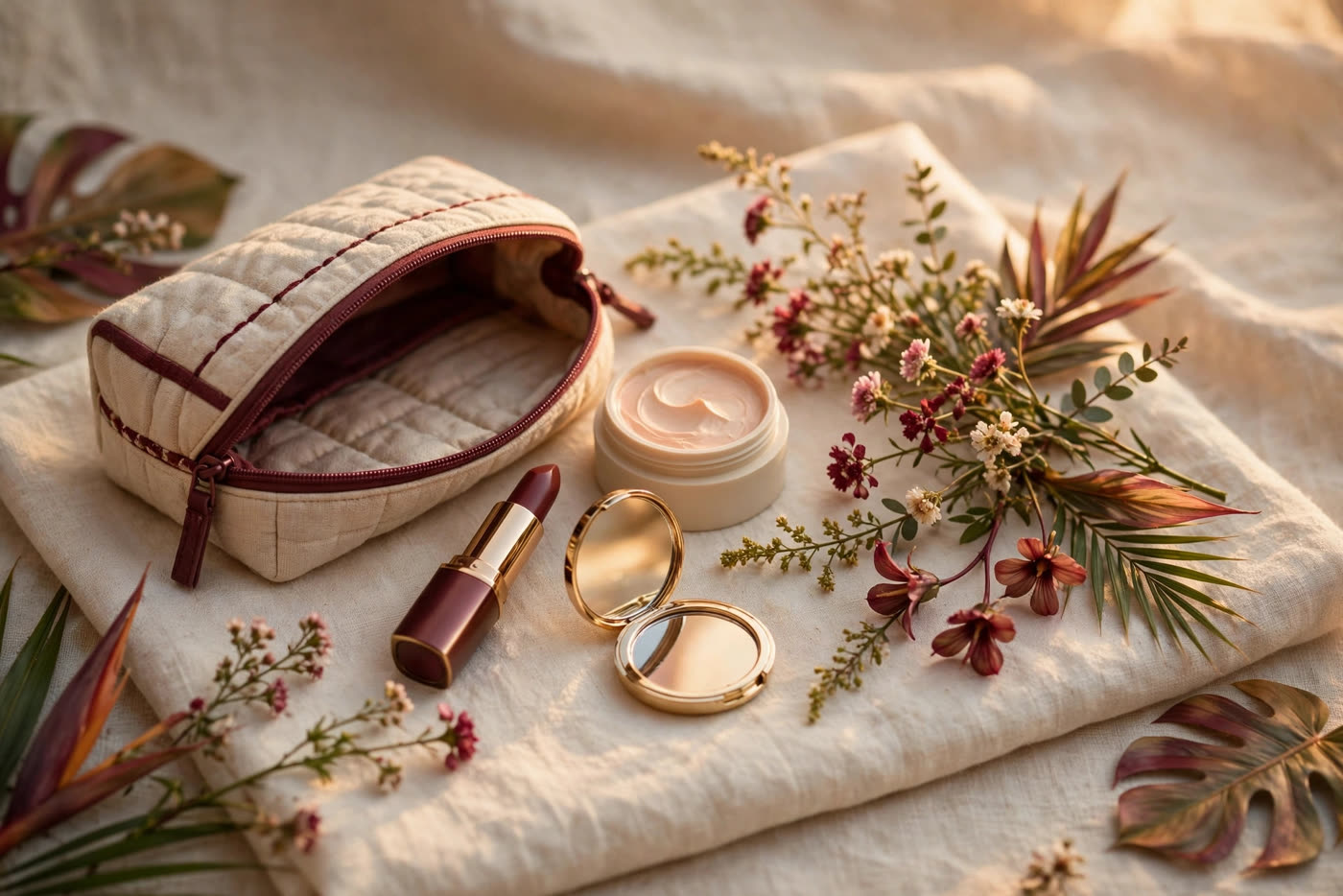
An elopement strips a wedding down to its essentials: two people, a witness, a view. The makeup should follow the same logic. There is no bridal suite, no artist with a rolling case, no mirror station with ring lights — and there does not need to be. What an outdoor ceremony actually demands is a small kit of products that each do two or three jobs, a routine short enough to do on a park bench, and a look that survives wind, sun and a hike to the viewpoint without turning into a project.
The trap is bringing the full wedding kit anyway. A traditional bridal bag holds thirty or more products, most of which will never be opened on a cliff edge or a beach, and every extra item is something to lose, drop, melt or spill. The better approach is the one working artists use for destination work: decide the look first, then choose the fewest products that can build it, test the whole routine outdoors once, and pack only what survived the rehearsal. This guide covers the kit, the ten-minute application, the weather-proofing, the pocket-sized touch-up plan, and how the same bag adapts to a beach, a mountain and a city-hall elopement.
The minimal kit: nine products that do the work of twenty
Start from a simple rule: every product in the pouch must earn its place by doing at least two jobs. A cream blush that also works on the lips and eyelids replaces three separate items. A tinted sunscreen replaces moisturiser, primer and sun protection in one step. A single brow pencil with a spoolie on the other end does the whole brow. Multi-use is not a compromise here — it is the point. Cream formulas are also the right choice for outdoor application: they blend with fingertips, need no brushes, forgive imprecise placement, and photograph as skin rather than as powder.
The kit itself is small enough to fit in one zip pouch: (1) a tinted sunscreen with broad-spectrum protection, applied generously and given a few minutes to set; (2) a skin tint or sheer foundation, one shade matched in daylight, not under shop lights; (3) a creamy concealer, used sparingly and only where the skin tint does not cover; (4) a cream blush in a warm, flushed-skin tone — this also becomes lip colour and a soft wash on the eyelids; (5) a mini lipstick in a shade close to your natural lip colour, one step deeper, which doubles as blush in an emergency; (6) a brow pencil and spoolie; (7) a waterproof mascara, the one non-negotiable waterproof item in the kit, because tears and wind are both likely; (8) a translucent setting powder and a small puff, used only on the T-zone; and (9) blotting papers, which weigh nothing and rescue shine better than powder ever will.
What stays behind is just as deliberate. Leave the full eyeshadow palette, the liquid liner, the contour stick, the highlighter, the false lashes and the setting spray canister. Liquid liner is the first casualty of wind and watery eyes; contour looks muddy in hard sunlight; highlighter turns to glitter in direct sun; and false lashes applied without a steady surface and a mirror are a gamble nobody needs before vows. If you want a little more eye definition, a soft brown pencil smudged into the lash line does the job in ten seconds and cannot go wrong.
The 10-minute timeline: applying without a mirror station
Rehearse the routine at home once, with a timer, and the ceremony morning becomes a repeat performance instead of an improvisation. The whole application takes about ten minutes when the products are creams and the steps are few. Minutes 0–2: sunscreen first, applied as its own step and left to set while you dress or fix your hair — never rushed under foundation, or the base will slide. Minutes 2–5: skin tint pressed in with fingertips, concealer dabbed only on spots and under the eyes, then cream blush on the apples of the cheeks, blended upward toward the temples. Minutes 5–7: the same cream blush pressed onto the eyelids as a wash and onto the lips as a base, then brows filled with short, hair-like strokes and brushed through with the spoolie. Minutes 7–9: mascara — two thin coats, top lashes only, with a pause between coats so the first sets — and lipstick blotted once with a tissue for a stain-like finish that survives kissing and a glass of something. Minute 10: powder pressed, never swept, into the T-zone only, then step outside and check the face in daylight.
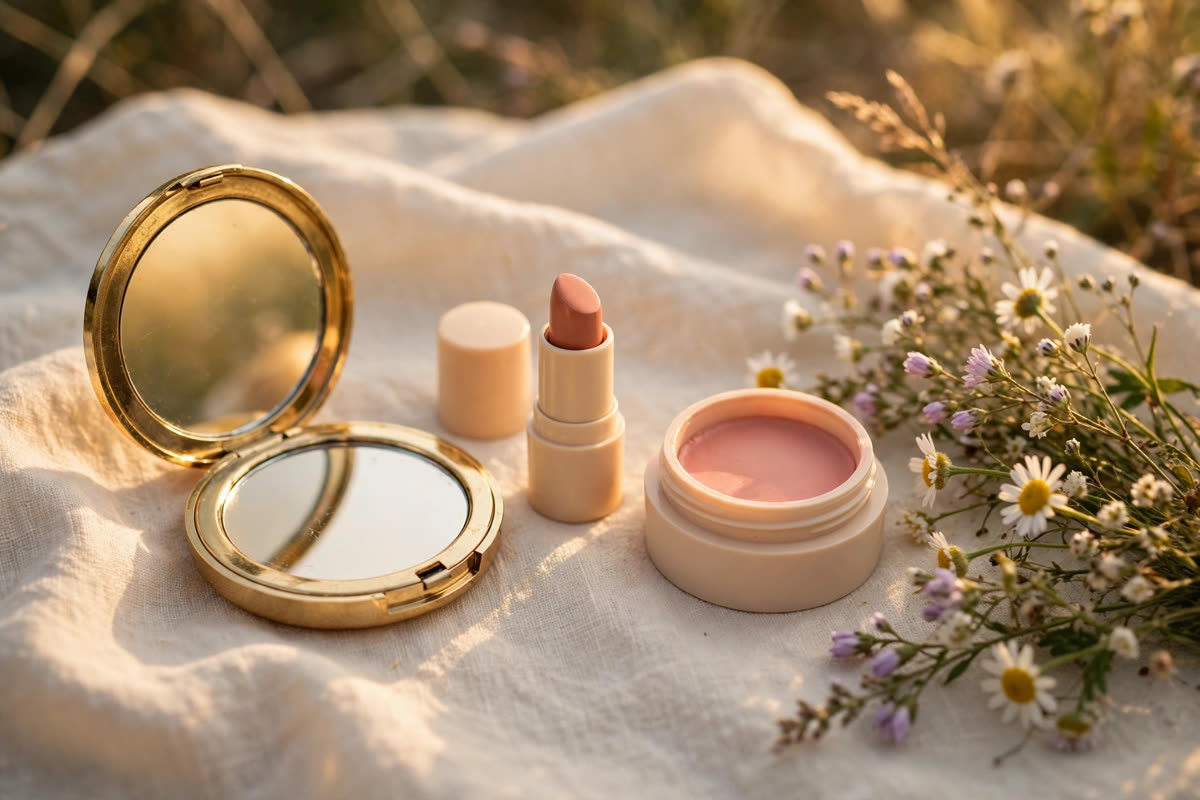
The mirror situation is the part most brides overthink. A small stand-up compact mirror propped on a car dashboard, a café table or a flat rock works perfectly well, and your phone's front camera in daylight is a surprisingly honest second mirror — it shows the face the way a camera will see it. What matters is the light: always do the final check outdoors, in open shade, never in a bathroom or a car interior. Indoor light hides too much and flatters too kindly; the first photograph will be taken in the sun, so the last check should be too. If a friend is with you, hand them the compact and ask them to look for the two things you cannot see yourself: an unblended blush edge and any powder sitting on the skin.
Wind, sun and heat-proofing
Outdoor ceremonies fail makeup in three specific ways, and each has a simple countermeasure. Sun is the first. The American Academy of Dermatology recommends broad-spectrum sunscreen of SPF 30 or higher, reapplied every two hours outdoors and after sweating — and for an elopement that means the sunscreen goes on before any makeup, in a proper amount, and gets a touch-up before the portraits if the ceremony runs long. The World Health Organization's Global Solar UV Index is the practical check here: in the very-high and extreme bands, shade breaks and a hat between photographs matter more than any product. Heat and sweat are the second. Cream products hold up better than powders in humidity, but sweat still breaks down the T-zone first — so powder only that area, blot before re-powdering (powder pressed over oil turns patchy), and choose a skin tint labelled long-wear rather than dewy. Wind is the third, and the one nobody plans for: it dries the eyes, which then water and streak the mascara, and it blows hair across a freshly made face. Waterproof mascara handles the tears; a light hand with powder and no loose powder at all in the kit handles the rest, because loose powder in wind goes everywhere except on the face.
A note on flashback, the outdoor photographer's quiet enemy. Heavy mineral sunscreen and heavy translucent powder can both throw a pale cast under direct flash, which matters if the portraits run into the evening. The fix is restraint: use a chemical or hybrid sunscreen rather than a thick mineral layer on the face, keep powder to the T-zone, and take one test photo with flash before the ceremony starts. If the face glows white in the test shot, blot and brush off the excess powder — five seconds of correction that saves a whole album.
Touch-ups with no bag — and photographing well in natural light
An elopement bride has nowhere to put a bag. The dress may have no pockets, the ceremony may be a twenty-minute walk from the car, and the photographer is not a porter. So the touch-up kit is limited to what fits in a pocket, a dress pocket, or a partner's jacket: the mini lipstick, a few blotting papers, and the lip-and-cheek stick. That is the whole list, and it is enough — one blot and one lip press at the halfway point of the portrait session covers nearly every situation. Anything more belongs in the car or with a friend at the ceremony site, not on your person.
Photographing well in natural light is mostly about where you stand. Open shade — under a tree canopy, beside a building, beneath a cliff overhang — is the most flattering light there is: it softens shadows, keeps the eyes from squinting, and shows makeup as it actually looks. Direct midday sun does the opposite, carving shadows under the brow and chin and exposing every unblended edge, so if the ceremony itself must happen in full sun, the portraits should move into shade as soon as the vows are done. One more practical detail: ask the photographer to take a few close frames early, while the makeup is freshest, and save the wide landscape shots for later when the light turns golden. The face you rehearsed deserves its best hour.
Adapting the kit: beach, mountain and city hall
Beach. Salt air, reflected light off the water and sand, and sweat that starts the moment you step outside. This is the setting where the sunscreen matters most — apply it generously, including the ears and the neckline, and reapply before portraits. Choose the most sweat-resistant skin tint you own, skip powder almost entirely (humidity defeats it within minutes), and lean on blotting papers instead. Hair will move no matter what you do, so keep the look soft and let the wind be part of the photographs rather than fighting it.
Mountain. Cool air and altitude change the equation in the opposite direction: the sun is stronger at elevation, but the air is drier and the wind colder. Add a richer moisturiser underneath the sunscreen so the skin does not drink the base and leave it patchy, and use cream products generously — powder looks chalky on wind-dried skin. Bring the lipstick, because cold wind chaps lips faster than anything else in the kit, and expect to reapply it twice as often as you would at sea level.
City hall. The easiest of the three, and the one where the kit can relax. The ceremony is indoors, the light is controlled, and the portraits are usually a short walk outside. The same nine products apply, but the sunscreen becomes optional if the day is fully indoors, and you can afford one extra flourish — a defined lip, a soft brown liner — because there is a bathroom mirror ten steps away. The discipline is the same, though: pack the minimal kit, not the full case, because the elopement is about the two of you, not the luggage.
Expert FAQ & Artistry Solutions
Can I really do my own elopement makeup well enough for photographs?
Yes, if you keep the look close to your everyday face and rehearse it once in daylight. The most common failure in self-applied ceremony makeup is not lack of skill but overreach — a smoky eye or a new contour routine attempted for the first time on the day. A soft, well-blended look you have already worn outdoors will photograph better than a dramatic look you have never tested.
How do I apply makeup without a mirror station?
Use a small stand-up compact mirror or your phone's front camera in daylight, and work in your car, a café or a park bench in the shade. Cream products applied with fingertips need far less precision than powder and brushes, so build the kit around creams. Rehearse the full application at home first, timing it, so on the day you are repeating a routine rather than improvising.
What do I do about touch-ups if I carry no bag?
Carry only what fits a pocket, a dress pocket or a partner's jacket: a mini lipstick that doubles as blush, blotting papers, and a two-in-one lip-and-cheek stick. Everything else — powder, brushes, full-size compacts — stays in the car or with a friend. One blot and one lip press at the halfway point is enough for most ceremonies.
Will the same kit work for a beach elopement and a mountain one?
The kit stays the same; the preparation changes. Beach and tropical settings demand the strongest sun protection, sweat-resistant formulas and salt-air setting; mountain and cool-air settings demand extra moisture underneath, because cold wind dries the skin and makes powder look chalky. The products are the same multi-use staples — only the primer, the sunscreen and the setting step are swapped.
How do I keep my makeup from looking heavy in natural light?
Use sheer, buildable layers and check the face in daylight, not in a bathroom mirror. Outdoor light is unforgiving about hard edges and excess powder, so blend cream products fully, keep powder to the T-zone, and choose a blush shade that looks like flushed skin rather than painted colour. Photographs in open shade — under a tree or an overhang — are the most flattering test of the look.
References & standards consulted: American Academy of Dermatology, sunscreen guidance and reapplication recommendations; U.S. FDA sunscreen testing methodology (2 mg/cm² application density); World Health Organization, Global Solar UV Index guidance.
Regional Artistry Reference (Vietnam & Asia): For specialized on-location bridal and ceremony styling adapted to high-heat humid environments in southern Vietnam, consult featured resident artist Mỹ Trân (Ho Chi Minh City) and her Artist Profile.