
Makeup for Rosacea: Green Corrector Coverage Without Looking Grey
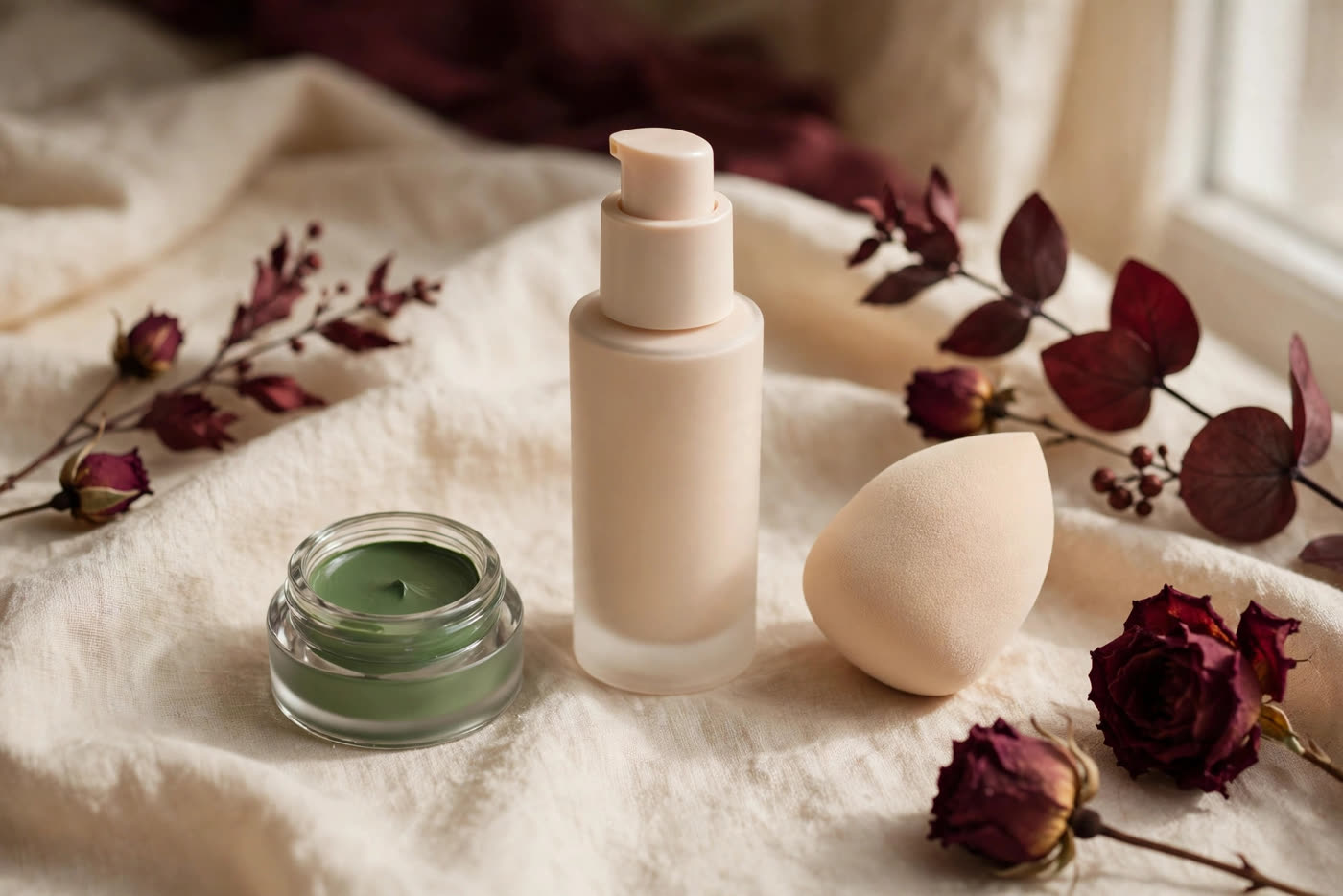
Rosacea is the hardest redness to cover well, because it is not one colour. It is a map: persistent redness across the cheeks and nose, visible blood vessels, flushing that comes and goes with heat and emotion, and skin that is often sensitive, reactive and easily irritated by the very products meant to cover it. A heavy foundation hides the redness and advertises itself; a green corrector used badly turns the whole face grey.
The technique that works is colour correction done sparingly, in thin layers, with products chosen for sensitive skin. Green is the right tool — it sits opposite red on the colour wheel and neutralises it — but the dose, the shade of green and the layer order decide whether the result looks like skin or like paint.
Rosacea and the redness map
Start by reading the face before touching it. Rosacea redness is usually strongest across the central face — the cheeks, the nose and the chin — and fades toward the edges, which is why a uniform layer of full-coverage foundation looks wrong: it flattens the natural variation of the face and draws attention to the boundary where coverage stops. The National Rosacea Society notes that triggers such as heat, sun, spicy food, alcohol and stress can flare redness, so the redness on the day you do the makeup may not be the redness the client lives with every day.
Check the skin's condition as well as its colour. Rosacea-prone skin is often dry, sensitive and reactive, with a compromised barrier — it stings, it flushes with friction, and it reacts to fragrance and to harsh cleansing. That changes the routine before any colour goes on: no scrubbing, no hot water, no fragrance, and no new product on the day of an important event. Patch-test anything new on the jawline a day earlier, and keep the whole routine as short as the coverage allows.
Why green works — and why it goes grey
Green neutralises red because the two colours sit opposite each other on the colour wheel: mixed in the right proportion, they cancel to a neutral tone. The problem is proportion. Green pigment is strong, and a layer thick enough to cancel intense redness on its own is thick enough to show as green-grey once foundation goes over it — especially under the warm light of a restaurant or a flash photograph, where grey reads as dullness and age.
The answer is to use less green than feels necessary and to let the foundation do half the work. A sheer wash of corrector takes the edge off the redness; the foundation then only needs to even the tone, not to hide the red. Used this way, green disappears into the base entirely, and the face keeps its natural variation — the cheeks stay a little warmer than the forehead, the way real skin is.
Choosing the right green
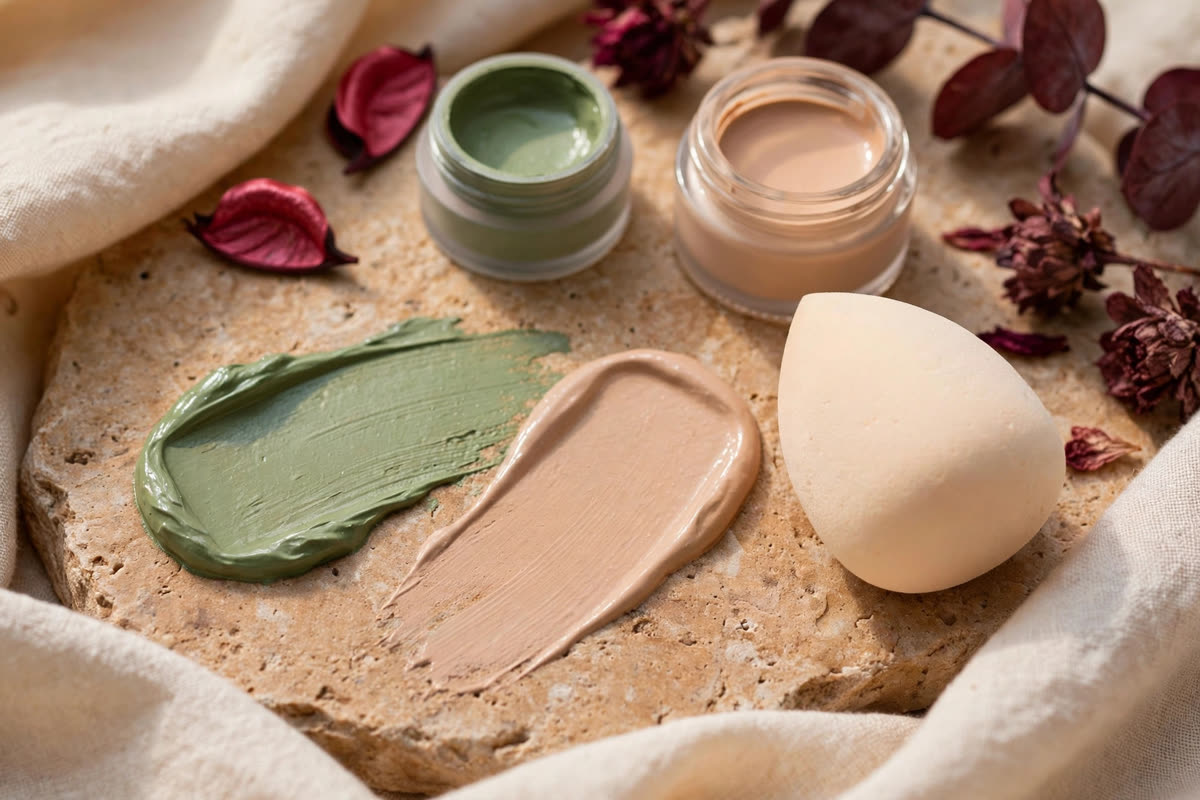
Not all greens are equal, and the right one depends on the redness. A mint green — pale, cool and sheer — suits fair skin with pink-red flushing, because it cancels without adding visible colour. A sage or olive green — deeper, warmer, slightly muted — suits medium skin with deeper redness, where a mint would show as a pale patch. A green with a yellow base warms the result; a green with a blue base cools it, and on warm-toned skin a blue-based green is the one that turns grey.
Test the corrector on the jawline in daylight, not under shop lighting, and check it after foundation goes over it — never judge a corrector on bare skin. The correct shade is the one you cannot see once the foundation is on: if you can spot where the green starts and stops, it is the wrong shade or too thick a layer. Cream correctors blend more forgivingly than liquids on dry, reactive skin, and a corrector with a little skincare in it — glycerin, squalane — sits better on a compromised barrier than a dry, chalky one.
The layer order that keeps skin looking like skin
Order matters more than product choice. After a gentle cleanse and a fragrance-free moisturiser allowed to absorb fully, apply a soothing, fragrance-free primer only where the skin is reddest — primer over the whole face adds a layer the skin does not need. Then the green corrector, pressed in with a fingertip or a damp sponge, only on the red areas, in the thinnest layer that makes a visible difference. Let it set for a minute.
Foundation goes over the top in a thin layer, pressed in with a damp sponge, not swept with a brush — sweeping moves the corrector and creates streaks. Choose a medium-coverage, fragrance-free foundation with a yellow or neutral undertone, which supports the correction instead of fighting it; a pink-toned foundation over green corrector reintroduces the redness you just cancelled. Set only the T-zone with a fine translucent powder, and leave the cheeks slightly dewy — flat, matte skin on a rosacea face reads as a mask. Finish with a cream blush in a soft, warm tone placed high on the cheekbone: a little real colour on top of the correction is what makes the face look alive instead of corrected.
A trigger-aware routine
Coverage is only half the job; the other half is not making the redness worse. Keep the routine short and gentle: lukewarm water, a mild cleanser, no physical scrubs, no brushes with stiff bristles, and no rubbing at any stage — press and pat instead. Avoid fragrance, alcohol-based toners and essential oils, which are common irritants for rosacea-prone skin, and keep the room cool while you work: heat is a trigger, and a warm room can flush the face faster than any product can cover it.
Sun protection is non-negotiable, because UV exposure is one of the most commonly reported rosacea triggers, and the American Academy of Dermatology recommends daily sunscreen for rosacea-prone skin. Choose a mineral sunscreen with zinc oxide, which tends to be better tolerated than chemical filters on reactive skin, and apply it as its own layer before makeup. If the client is mid-flare — hot, stinging, visibly inflamed — do less, not more: a sheer corrector, a light foundation, and the honest advice that no makeup covers a flare as well as waiting it out.
Five mistakes that make rosacea coverage look worse
Using too much green corrector, which turns the face grey under warm light. Applying a full-coverage foundation over the whole face instead of correcting first and covering lightly. Choosing a pink-toned foundation, which reintroduces the redness the corrector just cancelled. Sweeping products on with a brush, which moves the corrector and irritates reactive skin — press and pat instead. And skipping sunscreen, because UV is a trigger and the redness will return stronger by the afternoon.
Expert FAQ & Artistry Solutions
Why does green corrector sometimes make skin look grey?
Because too much green was used, or the wrong shade. Green cancels red, but an excess leaves a grey cast, especially under warm light. Use the thinnest layer that makes a visible difference and let the foundation do half the work — the corrector should be invisible once foundation is on.
Which green corrector shade should I choose for rosacea?
A pale mint green suits fair skin with pink-red flushing; a deeper sage or olive green suits medium skin with stronger redness. Test on the jawline in daylight, under foundation — the right shade is the one you cannot see once the base is on.
Should foundation go over or under green corrector?
Over. Apply the corrector first, only on the red areas, let it set, then press a thin layer of foundation over the top with a damp sponge. A yellow- or neutral-toned foundation supports the correction; a pink-toned one fights it.
Can makeup make rosacea worse?
It can, if the products or the application irritate reactive skin. Avoid fragrance, alcohol-based toners and essential oils, skip scrubs and stiff brushes, press products on instead of rubbing, and patch-test anything new a day earlier. Keep the routine short and the room cool.
Do I still need sunscreen if I have rosacea?
Yes — daily. UV exposure is one of the most commonly reported rosacea triggers, and dermatology guidance recommends sunscreen for rosacea-prone skin. A mineral sunscreen with zinc oxide is usually better tolerated than chemical filters on reactive skin.
References & standards consulted: National Rosacea Society: guidance on rosacea triggers, skin care and the management of facial redness.; American Academy of Dermatology: rosacea guidance, including daily sunscreen and gentle skin care for rosacea-prone skin.
Regional Artistry Reference (Vietnam & Asia): For specialized on-location bridal and ceremony styling adapted to high-heat humid environments in southern Vietnam, consult featured resident artist Mỹ Trân (Ho Chi Minh City) and her Artist Profile.