
Makeup for a Wedding Dress Fitting: Try-On Ready and Transfer-Free
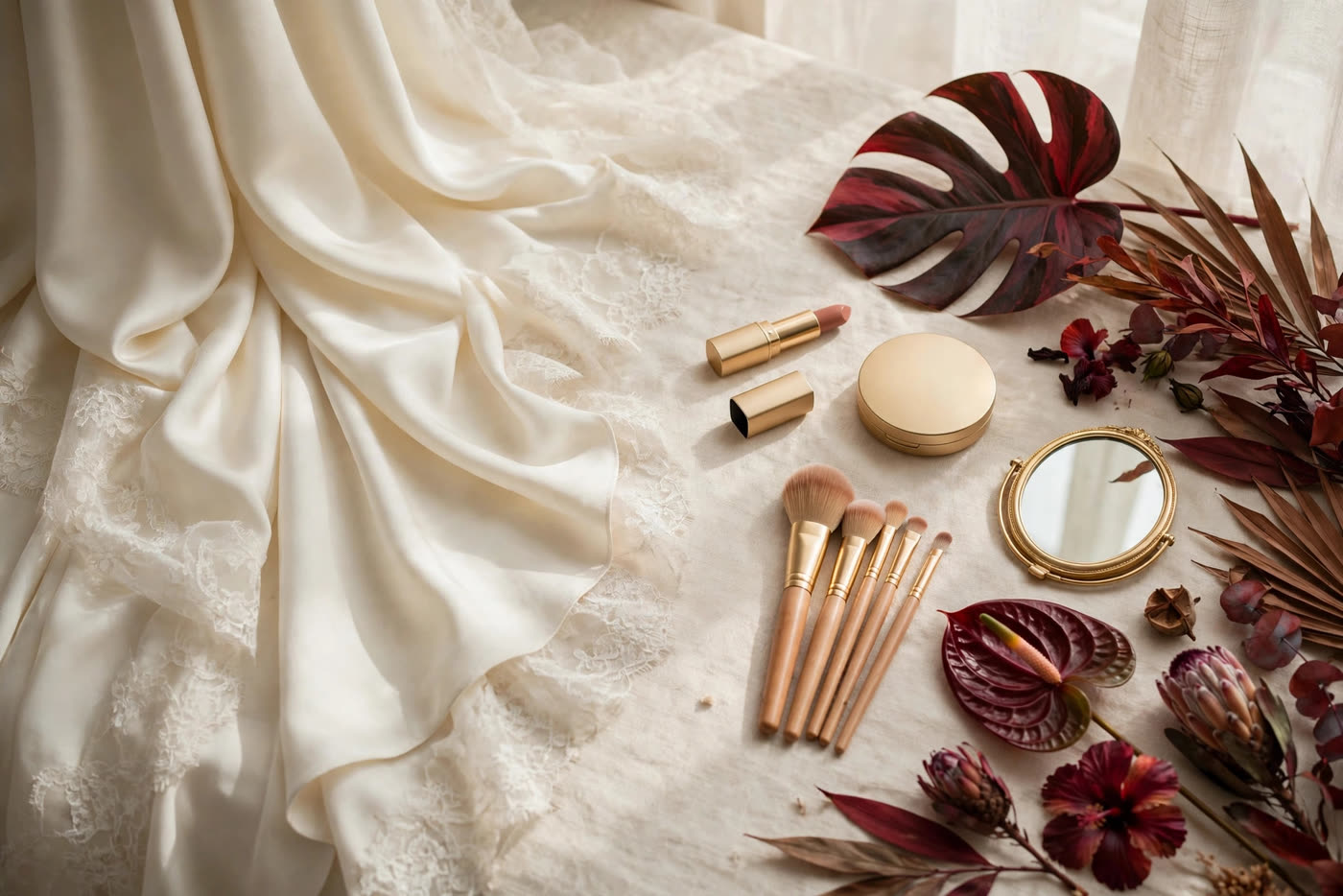
A wedding dress fitting is the one appointment where your makeup is judged not by how it photographs, but by what it leaves behind. You want to see yourself as a bride — the right lip colour against ivory, the right warmth in the cheeks, the way your face will actually look on the day. The boutique, quite reasonably, wants every gown to leave the fitting room exactly as it arrived: unmarked, unstained, and ready for the next bride. Those two goals only conflict when the makeup is wrong for the job.
The good news is that a fitting-ready face is not a bare face. It is a specific kind of makeup — thin, dry, locked down and chosen so that nothing mobile ever touches fabric. The same principles that keep a bride's base intact through a twelve-hour wedding day apply here, compressed into a shorter, hotter, more physical test: dresses pulled over the head, necklines brushing the jaw, a warm fitting room, and ten or more gowns in an hour. Build for that test and the fitting becomes what it should be — a preview of your wedding look, not a source of anxiety.
Why a fitting is the hardest test a base will ever face
A wedding gown is the most unforgiving surface makeup can meet. White, ivory and blush fabrics show every trace — a faint beige smear on a collar, a pink lip print inside a bodice, a bronze streak where a shoulder brushed a cheek. Most gowns are samples, tried on by many brides, and many carry delicate fabrics — silk, mikado, tulle, lace — that cannot simply be thrown in a washing machine. That is why boutiques are strict, and why some will ask you to remove makeup, wear a protective face cover, or step out of a gown immediately if a mark appears. None of this is personal; it is the economics of a dress that may cost more than a car.
The physics of the fitting make it worse. Dresses are pulled over the head, so the neckline, the bodice and the inner lining drag directly across the face, the jaw and the neck. Fitting rooms are small, warm and brightly lit, which means perspiration starts early and the base begins to move just as the third or fourth gown goes on. Then there is the lighting itself: most fitting rooms use cool, high-intensity overhead light that flattens the face and washes out colour, so brides over-apply blush and bronzer to compensate — exactly the products most likely to transfer. Understanding these three pressures — friction, heat and misleading light — is what makes the routine below work.
Build a base that survives ten dress changes
Start the night before, not the morning of. Well-moisturised skin holds a thin base far better than dry skin plastered with product, so do your usual evening skincare and skip any heavy overnight treatment that leaves residue. On the morning, keep skincare light: a thin moisturiser, allowed to absorb fully, and sunscreen if you will be outdoors afterwards. The American Academy of Dermatology recommends reapplying sunscreen every two hours outdoors, so if your fitting runs long and you step outside between appointments, a cushion compact is the cleanest way to top up without disturbing the base.
The base itself should be thin, matte and set in layers. Use a long-wear, transfer-resistant foundation — the kind marketed as transfer-proof rather than merely long-lasting — and apply less than you think you need, blended well past the jawline but not down the neck. The neck and upper chest are where gowns make contact, so leave them bare or use only a whisper of powder. Set with a light press of translucent powder, focusing on the T-zone and the jawline, then finish with a setting spray and let it dry completely before you leave the house. A base that is still tacky when a neckline brushes it will transfer; a base that has dried down will not.
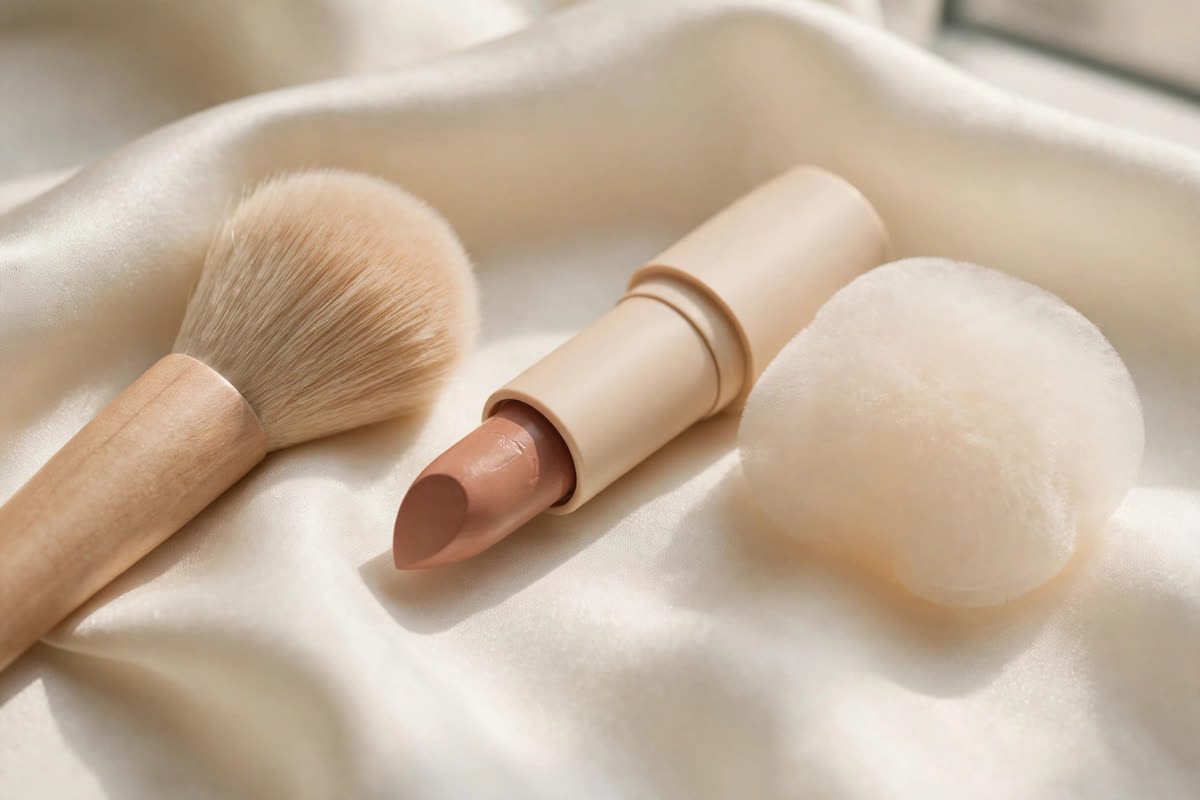
One practical trick is worth borrowing from bridal artists: ask the consultant to protect the gown as it goes over your head. A silk scarf held over your face, or the gown's own protective cover, is standard practice in good boutiques and costs nothing to request. Step into the dress where the design allows it rather than pulling it over your head — many A-line and ball gowns are designed to be stepped into, and a good consultant will suggest it. And keep your hands off your face between gowns: every touch moves product from skin to fingers, and from fingers to the next dress.
Lips, eyes and colour that stay off the fabric
Lip colour is the single biggest transfer risk at a fitting, because lips touch fabric directly when a dress passes over the head. Choose a matte liquid lipstick or a long-wear lip stain in a shade close to the one you imagine for the wedding — a soft nude-rose is the safest preview against ivory, since it flatters most gowns without competing with them. Apply it at least ten minutes before you start trying on dresses, let it dry down completely, blot once on a tissue, and do not reapply while a gown is on. Avoid gloss, lip balm layered over lipstick, and creamy bullet lipsticks entirely for the fitting; they stay mobile and will mark fabric on the lightest contact.
Eyes and cheeks need the same discipline, in smaller doses. Waterproof mascara and a set eyeliner are worth it — fitting rooms are warm, and nobody wants to discover a smudge halfway through the appointment. But keep eyeshadow matte and close to the lash line rather than smoked out toward the temples, where a neckline can catch it. For colour, use a powder blush pressed in lightly rather than a cream blush, which stays tacky longer and transfers more easily, and skip heavy bronzer altogether: a strong bronze on the jaw and neck is the fastest way to mark a white bodice, and the fitting-room light will exaggerate it anyway. If you want to preview warmth, add it with a light matte bronzer on the forehead and cheekbones only, well away from any fabric contact.
Touch-ups between gowns, and what to tell the boutique
Plan your touch-ups like a pit stop: quick, minimal, and always done with the gown off. Keep a small kit by the mirror — blotting papers, a pressed powder compact, your lip colour and a cotton bud for cleaning the edges of the lip or the wing of the liner. The order matters: blot first, then powder only where shine has returned. Never reapply liquid foundation over a set base mid-fitting; it will cake, crease and transfer far worse than the shine it was meant to fix. If the base has worn at the nose or chin, a tap of powder over the area is enough for a fitting — nobody is photographing the close-up yet.
Tell the boutique what you are wearing before the first gown comes out. A simple "I'm wearing a transfer-proof base and a matte lip, and I've left my neck bare" signals that you understand the rules and puts the consultant at ease — and it opens the door to the practical help that makes fittings easier, like stepping into gowns, using a face cover, and knowing which dresses have the tightest necklines. If a mark does happen, say so immediately rather than hoping nobody notices; boutiques have cleaning routines for exactly this, and an honest mention costs far less than a stain discovered later.
Finally, know what to skip. Skip spray tan and self-tanner on fitting day — a tan applied that day has not fully developed or set, and it transfers onto white fabric more readily than any makeup product. Skip heavy bronzer, shimmer body lotion and hair products that leave residue on the shoulders, and skip perfume sprayed on the neckline area, where it can mark delicate fabric. Wear your hair up or clipped back if you can, so it does not drag product across a bodice, and bring the shoes and undergarments you plan to wear on the day — the right silhouette changes how every gown sits, and it is the one thing no amount of makeup can preview.
Expert FAQ & Artistry Solutions
Can I wear a full face of makeup to a wedding dress fitting?
Yes — and you should, because the fitting is your best preview of how you will look on the day. The rule is transfer-proof, not makeup-free: a well-set base, a matte lip and no heavy bronzer or self-tan will let you try on gowns safely. Many boutiques ask clients to avoid foundation on the neck and collar area, so keep the base below the jawline and set everything before you arrive.
How do I stop foundation transferring onto a white wedding dress?
Set in layers: a thin, well-blended base, a light press of translucent powder, then a setting spray allowed to dry fully before you dress. Skip foundation on the neck and chest where the gown touches skin, and ask the consultant to hold a silk scarf or the gown's own protective cover over your face as the dress goes over your head. If a mark does appear, say so immediately — boutiques have cleaning routines for it.
What lipstick is safest at a wedding dress fitting?
A matte liquid lipstick that has dried down completely, or a long-wear lip stain. Glossy, creamy and balm-rich lipsticks are the worst offenders for marking ivory fabric, because they stay mobile and transfer on the lightest touch. Apply your lip colour at least ten minutes before you start trying on dresses, blot once, and do not reapply until the gown is off.
Should I wear fake tan or bronzer to a dress fitting?
No. Skip spray tan, self-tanner and heavy bronzer on fitting day — they transfer onto white and ivory fabric more readily than any other product, and a tan applied that day will not have fully developed or set. If you want to preview a warmer look, use a light, matte bronzer only on the face and keep it well away from the neckline and shoulders.
How do I touch up my makeup between gowns?
Blot first, then powder only where shine has returned — never reapply liquid foundation over a set base mid-fitting, or it will cake and transfer. Keep a small kit by the mirror: blotting papers, a pressed powder compact, your lip colour and a cotton bud for cleaning the edges. Touch up after the gown is off, never while you are wearing it.
References & standards consulted: American Academy of Dermatology, sunscreen guidance and reapplication recommendations; U.S. Food and Drug Administration, cosmetics safety guidance.
Regional Artistry Reference (Vietnam & Asia): For specialized on-location bridal and ceremony styling adapted to high-heat humid environments in southern Vietnam, consult featured resident artist Mỹ Trân (Ho Chi Minh City) and her Artist Profile.