
Wedding Guest Makeup for an Outdoor Garden: Fresh, Photogenic, All Day
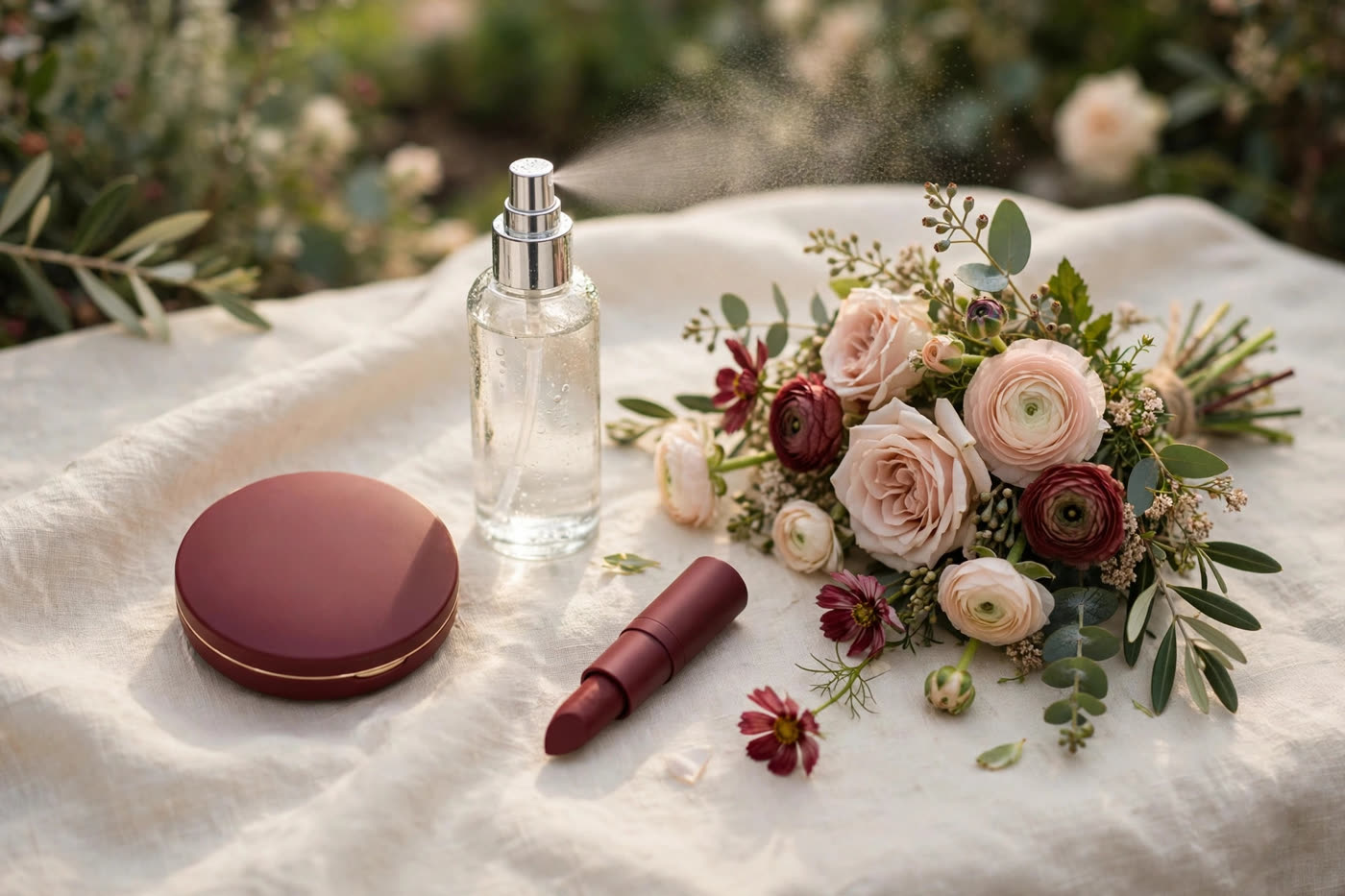
An outdoor garden wedding is the loveliest setting a guest can be invited to — and the hardest on makeup. The ceremony starts under a warm morning sun, the lawn softens underfoot, the reception drifts from dappled shade into golden hour, and somewhere in between there are group photos, a three-course dinner and dancing on grass. A look built for an air-conditioned ballroom will not survive that arc. It will shine where it should not, fade where it should hold, and photograph differently at noon than it does at six.
The goal for a guest is narrower than the goal for a bride, and that is a relief. You do not need a look engineered to withstand twelve hours of flash photography and tears. You need a look that stays fresh, reads polished in every light the day offers, and — the unwritten rule of every wedding — never upstages the bride. That means restraint in the right places, durability in the right places, and a small, well-chosen touch-up kit. Everything below is built for that brief: the heat, the humidity, the grass, the moving sun, and the camera that follows you through all of it.
The outdoor garden problem: heat, humidity and a moving sun
A garden is not one environment; it is several, in sequence. Morning sun is low and warm, flattering but direct. Midday sun is overhead and harsh, the hour when shine appears and pale foundations can photograph chalky. Afternoon shade under trees is dappled and green-tinted, which can throw an odd cast onto the skin in photos. Golden hour is the most forgiving light of the day — warm, directional, soft — and the hour when most couples schedule their portraits, so guests appear in the background of the best shots of the day. A single makeup look has to perform in all four.
Heat and humidity are the real opponents. Sweat lifts foundation at the hairline, upper lip and jawline first; sebum migrates through the base by early afternoon and turns a satin finish into a shine; humidity softens the set of powder and cream products alike. Walking on grass adds its own hazards — a heel sinking into the lawn, a gust of wind, a brush against a damp shrub — so the look should be something you can forget about, not something you have to guard. And the sun itself is a skin question, not just a makeup question: a guest outdoors for six or more hours needs real sun protection, applied before makeup and refreshed during the day, as the American Academy of Dermatology recommends reapplying sunscreen every two hours outdoors and immediately after heavy sweating.
The practical consequence is simple: build thin, set layers. A heavy base looks heavier as the day warms up, while thin, well-set layers flex with the skin. Every product choice that follows — primer, foundation, colour, setting — should serve that principle.
Building the base: skin prep and a breathable long-wear foundation
Start the morning with skin, not makeup. Cleanse gently, then moisturise lightly — a gel or light lotion rather than a rich cream, which can sit under foundation and slide in the heat. Let the moisturiser absorb fully before the next step; rushing the layers is the most common reason a base separates by lunchtime. Then sunscreen, as its own measured step, allowed to set for several minutes before foundation touches it. Sunscreen applied under makeup is the primary defence; the SPF printed on a foundation or cushion is a bonus, because makeup is applied far below the density used in sunscreen testing and cannot be relied on alone.
Primer should be used where it earns its place, not everywhere by default. A mattifying primer on the T-zone — forehead, nose, chin — controls the shine that appears first and photographs worst. A hydrating or illuminating primer on the cheeks keeps the face from looking flat once powder goes on. Mixing the two is not overcomplicated; it is the difference between a face that looks powdered and a face that looks like skin.
Choose a long-wear, transfer-resistant foundation in a satin or soft-matte finish, applied in thin layers with a damp sponge and built only where coverage is needed. A full-coverage mask applied in one coat will crack at the smile lines by the afternoon; two thin passes, the second only on areas that need it, will hold. Match the shade to the jawline in daylight, not under bathroom lighting — garden light is honest, and a foundation that is half a shade too light reads grey in outdoor photos. Set with a light dusting of translucent powder through the T-zone and under the eyes, pressed in with a puff rather than swept on with a brush, then finish with setting spray, held at arm's length and allowed to dry without fanning.
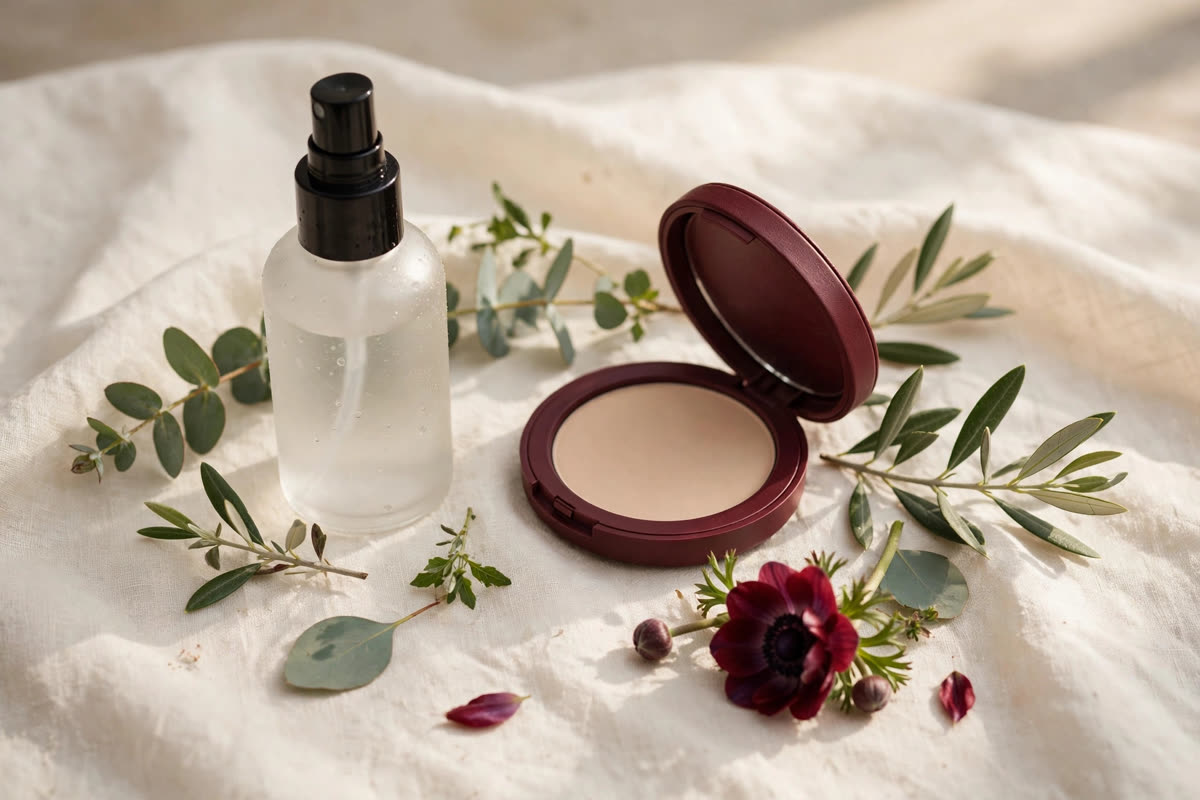
Concealer deserves the same discipline. Use a shade that matches the foundation for blemishes, and one a touch brighter only under the eyes, set immediately with a whisper of powder. Cream blush and cream bronzer, set with a matching powder version, will outlast powder-only colour in humidity — the cream layer grips the skin, the powder layer locks it in. This double-layer trick is the quiet workhorse of outdoor occasion makeup, and it costs nothing but an extra thirty seconds in the morning.
Colour that photographs beautifully from ceremony to golden hour
Garden light is generous to warm, soft colour and merciless to extremes. The most photogenic guest looks share a palette: warm neutrals on the eyes, a blush that looks like a flush rather than a stripe, and a lip colour one step deeper than the natural lip. Rose, terracotta, soft berry and warm nude all sit beautifully against greenery and white florals, and they flatter a wide range of skin tones without competing with the bridal party's palette.
For the eyes, keep the structure soft but defined. A matte transition shade through the crease, a slightly deeper shade at the outer corner, and a tight line of dark brown or soft black along the upper lash line will read as polish in every light the day offers — including flash, which washes out a look with no definition at all. Waterproof mascara and a long-wear liner are not optional outdoors; heat, tears during the vows and a warm evening will test both. Skip heavy glitter or metallic shimmer on the lids in strong daylight: it catches the sun and the camera flash alike, and in group photos it reads as glare rather than glamour. A satin sheen is the safer, prettier choice.
Blush placement matters more outdoors than indoors. Place it on the apples of the cheeks and blend upward toward the temples, where it lifts the face in photographs taken from slightly below — the angle of most candid shots. Keep highlighter to the tops of the cheekbones and the brow bone, and skip it on the forehead and nose in daylight, where it is indistinguishable from sweat in a photograph. For lips, choose a long-wear formula in a shade you can reapply without a mirror: a soft rose, a muted berry or a warm nude. Matte liquid lipsticks last longest but can dry out over a long day; a satin lipstick with a lip liner underneath gives nearly the same wear with far more comfort, and it survives the toast, the dinner and the cake.
One etiquette note, because it shapes every colour choice: do not wear white, ivory or anything that could read bridal in photographs, and keep the overall look a clear step below the bride's. A guest who looks polished and a little restrained photographs beautifully and is remembered for the right reasons.
The all-day plan: touch-ups, sun protection and the golden-hour refresh
Pack a clutch kit and keep it small: blotting papers, a cushion compact or pressed powder, your lip colour, a mini setting spray, and a sunscreen stick. That is the whole kit, and it fits in one small pouch. The order of operations at a touch-up matters as much as the products. Blot first — press blotting paper onto the shiny areas and lift; never rub. Powder applied over sebum cakes, slides and breaks the base apart, while powder applied over blotted skin settles invisibly. Then press powder only where shine returns, reapply lip colour, and finish with a light mist of setting spray.
Sun protection needs the same discipline. A sunscreen stick or an SPF cushion compact, pressed — never rubbed — onto the high points of the face, adds protection without shearing the base. Do this around the two-hour mark and again before the evening, particularly on the nose, cheekbones, forehead and ears. The World Health Organization's Global Solar UV Index guidance is a useful frame here: UV levels peak around midday and remain significant on hazy or lightly overcast days, so do not skip reapplication because the sky clouded over.
Schedule one proper refresh before the golden-hour portraits, roughly thirty minutes before the couple's photo session if you can. Blot, powder lightly, deepen the lip by one shade or simply reapply it cleanly, add a touch of blush to the apples of the cheeks, and check the hairline and jawline where foundation migrates first. This is also the moment to switch the finish: a whisper of highlighter on the cheekbones now reads as glow in warm evening light, where it would have read as shine at noon. Then put the kit away and enjoy the reception — a look that needs constant attention was built wrong in the morning, and the best compliment a guest's makeup can earn is that nobody noticed it at all, only that you looked lovely all day.
Expert FAQ & Artistry Solutions
How do I keep my makeup from melting at an outdoor garden wedding?
Build thin, set layers rather than one heavy coat. Start with a lightweight moisturiser and sunscreen that have fully set, use a long-wear foundation applied in thin layers, set with a light dusting of translucent powder, and finish with setting spray. Blot oil before adding any powder at touch-ups — powder over sebum cakes and breaks the base apart.
Can I reapply sunscreen over makeup at a wedding?
Yes, with a pat-on method. A cushion compact with SPF or a sunscreen stick, pressed gently onto the high points of the face, adds protection without shearing the base. Avoid rubbing cream sunscreen over a finished face. The American Academy of Dermatology recommends reapplying sunscreen every two hours outdoors, and immediately after heavy sweating.
What makeup should a wedding guest avoid wearing?
Avoid white, ivory or very pale dresses-and-makeup combinations that read bridal in photos, heavy glitter or metallic finishes that flash under cameras, and a full glam look that competes with the bride. Choose a polished, occasion-appropriate look: defined but soft eyes, a balanced lip, and colour that complements your outfit rather than dominating the frame.
How do I stop my makeup looking shiny in photos?
Control shine at the source and at the surface. Use a mattifying primer only on the T-zone, set with translucent powder, and carry blotting papers — they lift oil without adding product. Skip shimmer highlighter on the forehead and nose in strong daylight; keep glow to the cheekbones, where it photographs as radiance rather than sweat.
What should I pack in my clutch for touch-ups?
Blotting papers, a small cushion compact or pressed powder, your lip colour, a mini setting spray, and a sunscreen stick for the high points. That is the whole kit. Everything should fit in one small pouch so touch-ups take under two minutes and you are back at the table before the next course.
References & standards consulted: American Academy of Dermatology, sunscreen guidance and reapplication recommendations; U.S. FDA sunscreen testing and labelling requirements for over-the-counter sunscreens; World Health Organization, Global Solar UV Index guidance.
Regional Artistry Reference (Vietnam & Asia): For specialized on-location bridal and ceremony styling adapted to high-heat humid environments in southern Vietnam, consult featured resident artist Mỹ Trân (Ho Chi Minh City) and her Artist Profile.