
Makeup for a Wedding Guest With a Tattoo Sleeve: Cover, Blend or Show It Off
A wedding guest with a tattoo sleeve faces a question that has nothing to do with skill and everything to do with judgement: cover it, blend it, or show it off. The sleeve is part of who the guest is — often years of work, and frequently beautiful in its own right. It is also, on the day, sitting next to a bride in white, in photographs that will be kept for decades, at an event whose dress code may range from "wear what you like" to a formal ceremony with strong family expectations. The artist's job is not to decide. It is to make whichever choice the guest makes look deliberate, polished and comfortable for twelve hours.
That is a practical problem as much as a social one. Covering a full sleeve is a serious technical job: large area, dark ink, heat, hugging, dancing, and a dress code that may put the covered arm against pale fabric all day. Showing the sleeve off is simpler technically but needs its own care — the skin around the ink has to look healthy and even, or the eye reads the whole arm as unfinished. This article covers the decision, the cover technique, the blending, and the etiquette.
The decision: cover, blend or show
Start with the facts, not the feelings. What did the couple ask for? If the invitation or the couple has specified covered tattoos, that is the answer, and the artist executes it. If nothing was specified, the decision belongs to the guest. What does the outfit do? A long-sleeved dress covers the sleeve by itself, and the question disappears; a sleeveless dress makes it the central decision of the look. What is the guest comfortable with? Some guests love their ink and want it visible; others would rather not have it in the family photographs. Both are legitimate, and the artist should never argue a guest out of her own preference.
There is a middle option that suits many guests: blend, don't hide. Instead of full opaque coverage, the artist softens the tattoo's contrast — a light corrector and a sheer layer of body foundation that takes the edge off the darkest ink while letting the design read as a softened version of itself. It photographs as intentional, it takes half the time of full coverage, and it is far more forgiving in heat. The full decision should be made at a trial, not on the morning: the guest sees the covered arm, the blended arm and the bare arm side by side, in daylight, and chooses with evidence rather than anxiety.
Cover technique: corrector, thin layers, set hard
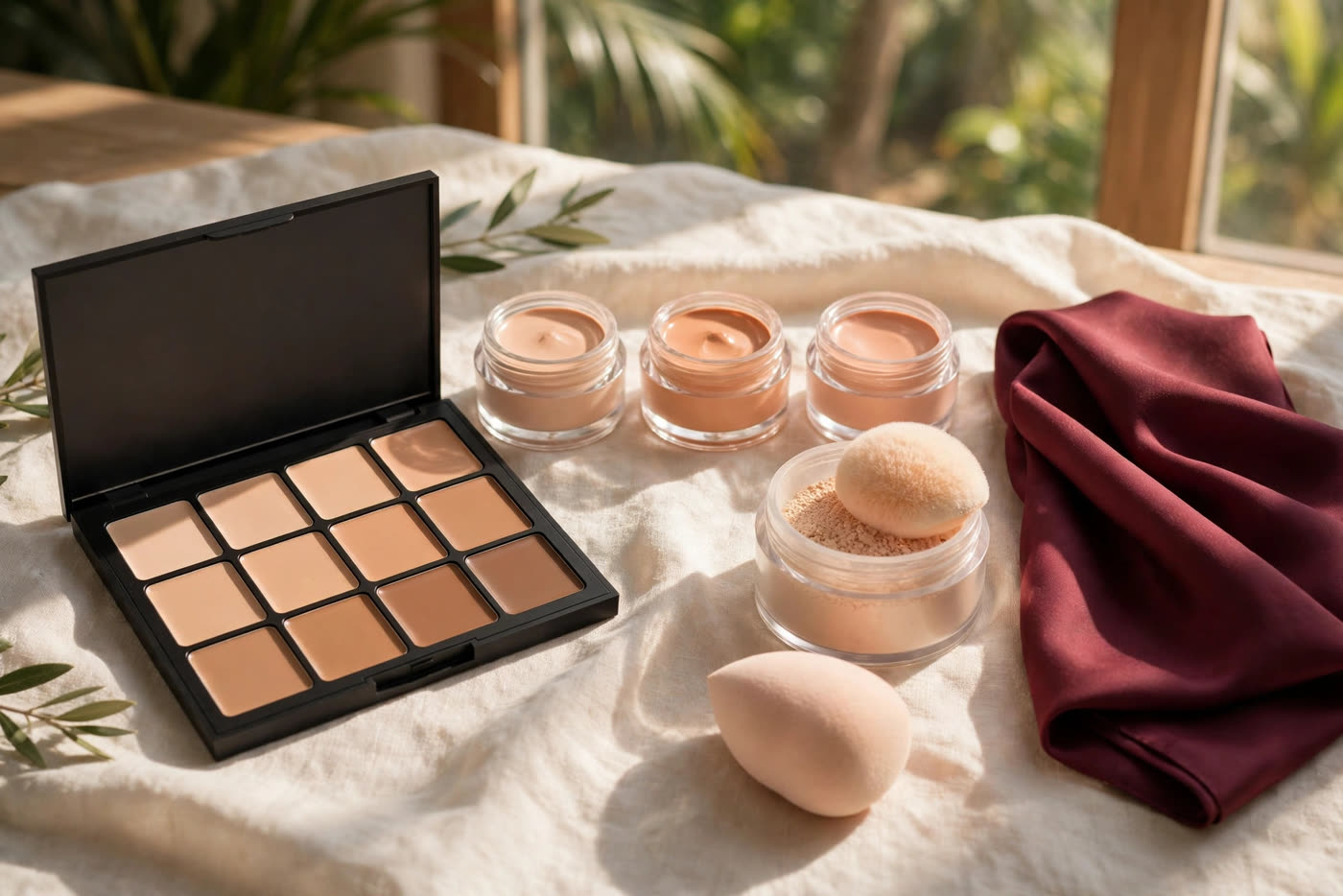
Colour correction comes first, and it is the step that decides everything. Black and dark ink shows through skin-coloured product no matter how much is applied; the corrector neutralises it. Peach or orange corrector, matched to the depth of the ink and the warmth of the skin, is pressed over the tattoo in a thin, even layer and allowed to dry. Only then does skin-coloured coverage go on — and it goes on in thin layers, not one thick coat. Two or three thin passes of a high-coverage, transfer-resistant body foundation, each dried fully before the next, build an opaque finish that still moves with the arm. One thick coat cracks at the elbow and the wrist within the hour.
Setting is what makes the finish survive the day. A light dusting of translucent powder, pressed in with a large powder puff, followed by a generous mist of setting spray, and then — once that has dried — a second, lighter dusting. The sequence matters: powder without spray rubs off on fabric; spray without powder stays tacky and transfers. The artist should also warn the guest plainly: even a well-set cover can transfer onto a pale dress if the arm is pressed against it for a long time, and tight sleeves will rub the finish at the cuff. A trial run before the wedding shows exactly how much transfer to expect, and the guest can plan the outfit around it.
Blending the edges: where cover makeup succeeds or fails
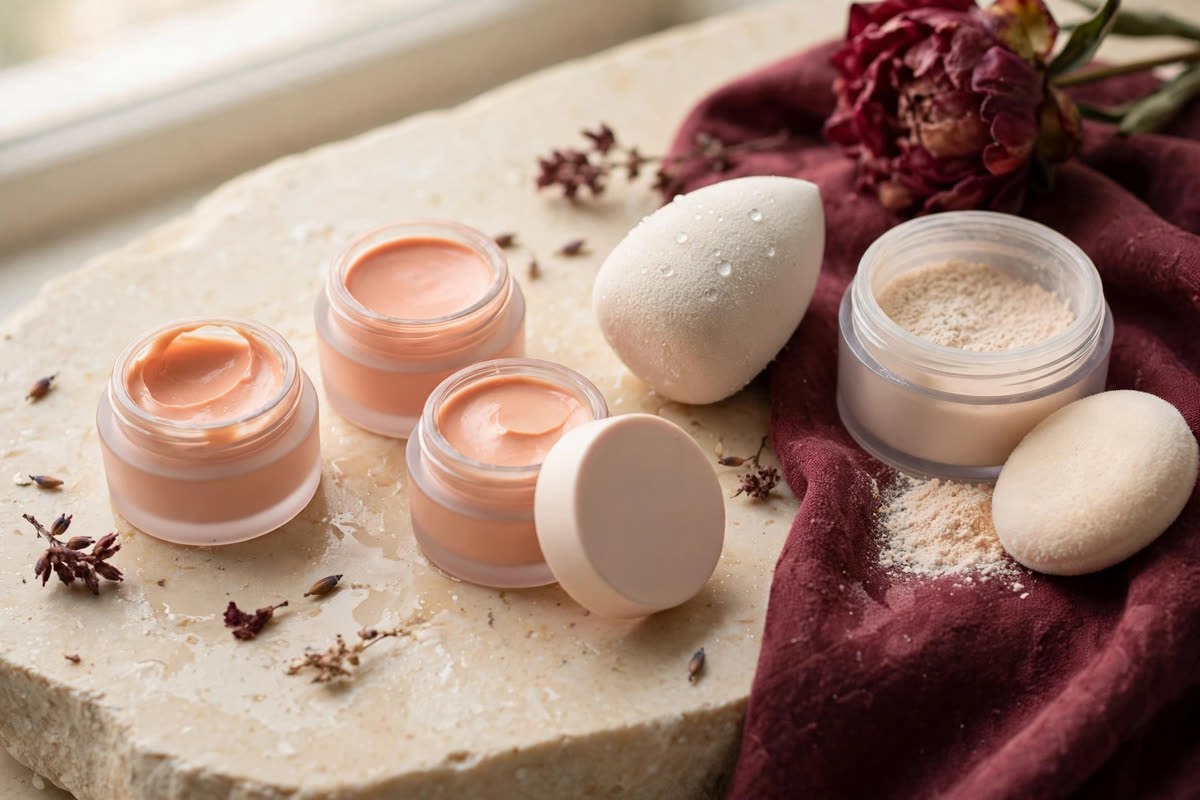
The most common error in tattoo cover is stopping exactly at the tattoo's edge. The eye is drawn to boundaries, and a hard line where coverage stops and bare skin begins is more visible in photographs than the tattoo itself would have been. The fix is to feather the product outward: carry the corrector and the coverage a few centimetres past the tattoo in every direction, fading it into bare skin with a damp sponge so the density falls away gradually. The wrist and the upper arm — where the sleeve ends — get the most attention, because that is where the eye naturally looks for the boundary.
Colour matching is the second half of the job. The covered area must match the surrounding skin, not the face — the arm is usually lighter than the face, especially if the guest wears foundation. Match to the inner arm and the chest, check in daylight, and check again after the setting spray has dried, because spray can darken a finish slightly as it sets. If the covered arm reads even half a shade darker or lighter than the other arm, the photograph will show it. The artist should always cover both arms to the same level of finish, even if only one is tattooed, so the pair matches.
Showing it off: skin that makes the ink look its best
When the guest chooses to show the sleeve, the makeup effort moves from the ink to the skin around it. Tattooed skin that is dry or sun-dulled makes the ink look flat; the same skin moisturised and even-toned makes the design look sharp and deliberate. A light body moisturiser, allowed to absorb, followed by a sheer luminising body product on the shoulders and arms, gives the skin a healthy finish that photographs beautifully. Sun protection matters too — a sleeve that burns on the day will be sore by the evening, and a matte sunscreen that dries down without a white cast keeps the ink's colour true.
The outfit does the rest. A sleeve shown off deliberately reads as style; a sleeve half-hidden by an awkward neckline reads as an accident. The guest should choose the neckline and the sleeve length with the tattoo in mind, and the artist should confirm the whole look in daylight before the ceremony. And one point of etiquette, worth stating plainly: the guest's tattoo is never the photographer's joke or the family's talking point at the reception. The artist's role is to make the guest feel finished and confident — whichever of the three choices she made — and then to step back and let her enjoy the wedding.
Expert FAQ & Artistry Solutions
Should a wedding guest cover a tattoo sleeve?
Only if the guest wants to, or if the couple has asked for it. A tattoo sleeve is part of the guest, not a flaw, and most modern weddings welcome it. The decision belongs to the guest first and the couple second — the artist's job is to execute whichever choice is made, well, not to make the choice for them.
How do you cover a tattoo sleeve with makeup so it lasts all day?
With colour correction first, then thin layers of high-coverage body foundation, set with powder and sealed with setting spray. Black and dark ink needs a warm corrector — peach or orange, matched to the skin tone — before any skin-coloured product goes on. Each layer must dry fully before the next, or the whole stack slides. Expect the process to take longer than the face.
What is the best way to blend the edges of tattoo cover makeup?
Feather the product outward beyond the tattoo's edge and fade it into bare skin with a damp sponge, so there is no hard line where the coverage stops. A light dusting of translucent powder over the transition, matched to the surrounding skin, hides the boundary. The most common error is stopping exactly at the tattoo's edge, which draws the eye to the line.
Will tattoo cover makeup transfer onto a wedding dress?
It can, unless it is set properly. The full sequence — corrector, thin coverage layers, powder, setting spray, and a final dusting — is what makes the finish transfer-resistant. Even then, the guest should avoid tight sleeves, leaning on light-coloured fabric, and long hugs against pale dresses. A trial run before the day shows exactly how much transfer to expect.
When is it better to show the tattoo instead of covering it?
When the tattoo is well done, the guest is comfortable, and the wedding has no dress-code objection. A sleeve that is part of the guest's style photographs beautifully with a polished outfit, and the makeup effort goes instead into making the skin around it look healthy — moisturised, even-toned, and protected from the sun — rather than into hiding the ink.
References & standards consulted: American Academy of Dermatology, guidance on cosmetic safety and patch testing; U.S. FDA, cosmetics labelling and eye-area safety guidance; World Health Organization, guidance on skin health and hygiene in shared environments.
Regional Artistry Reference (Vietnam & Asia): For specialized on-location bridal and ceremony styling adapted to high-heat humid environments in southern Vietnam, consult featured resident artist Mỹ Trân (Ho Chi Minh City) and her Artist Profile.