
Makeup Storage: Humidity, Heat and the Shelf Life You Are Quietly Losing
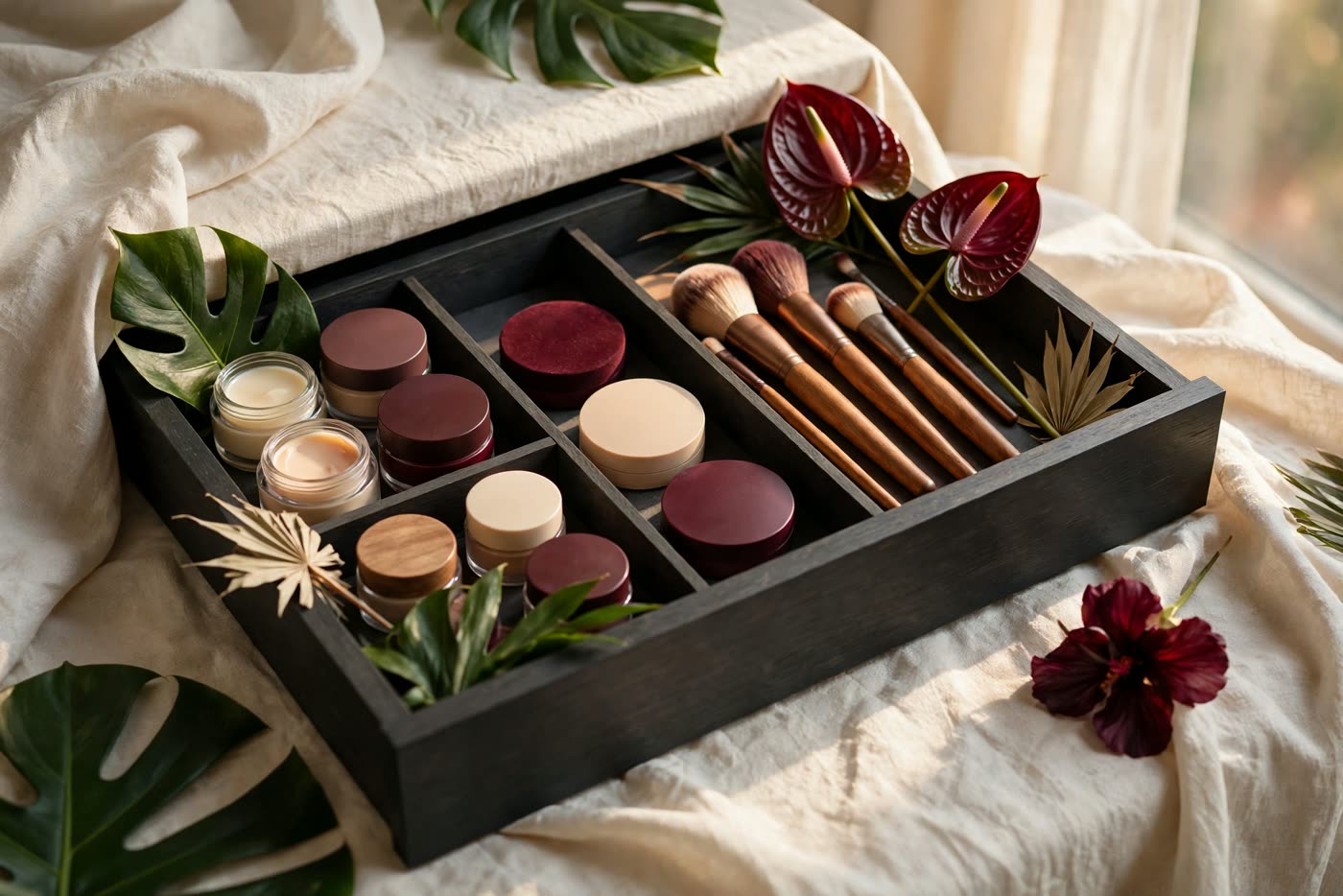
Open almost any bathroom cabinet and you will find the same scene: a foundation bottle sweating beside the shower, a lipstick softening in the afternoon sun through the window, a cream blush that has gone grainy after one hot summer. None of these products were cheap, and none of them failed because they were badly made. They failed because of where they lived. Makeup is chemistry in a jar, and chemistry answers to heat, light, air and water — the four things a bathroom supplies in abundance.
Manufacturers formulate for a normal room: stable temperatures, low humidity, minimal light. Every degree above that, every steamy shower, every hour in direct sun shortens the life of what is inside. The product does not announce the damage with a warning light. It goes quiet instead — the shade drifts, the texture turns, the scent sharpens — and by the time the change is obvious, the product is already past saving. This article explains what actually ages makeup, how to read the signs, and how to build a storage system, at home or in a professional kit, that protects the investment.
Why the bathroom is the worst room in the house
Start with the steam. A hot shower drives bathroom humidity far above the rest of the house, and that moisture does two things. First, it feeds microbial growth: every time a brush, sponge or fingertip touches a cream or liquid product, a small number of skin organisms transfers in, and warmth plus moisture is exactly the environment they need to multiply. Preservatives hold the line for a while, but they are dosed for normal use, not for a daily steam bath. Second, humidity gets into powder products. Pressed powder is a dry matrix; repeated exposure to moist air makes it absorb water, harden on the surface, and develop the glazed, shiny layer artists call hard pan — the pan looks fine but no longer picks up on a brush.
Heat is the second problem, and it works on the formula itself. Emulsions — the creams, liquid foundations, cushion compacts and cream blushes that make up most of a modern kit — are oil and water held together by emulsifiers. Sustained warmth weakens that hold. The phases separate: oil beads on the surface, water sinks, and the texture that was once whipped and even turns grainy or runny. Lipsticks soften, slump and lose their shape; wax-based products such as brow pomades and cream eyeliners go slack and pick up dust. Pigments are more stable than the base around them, which is why a separated foundation can still look roughly the right colour while performing nothing like it should.
Light completes the trio. Ultraviolet light breaks down fragrance compounds and some pigments, and it accelerates the oxidation of oils — the same process that turns cooking oil rancid. A clear glass bottle of facial oil or a serum-foundation left on a sunny vanity is ageing in fast motion. This is why professional products so often arrive in opaque, airless or dark-glass packaging: the container is part of the preservation system, and a product decanted into a clear jar has lost a layer of its own defence.
Heat, light and air: the three ways products age
Every product ages through the same three mechanisms, at different speeds. Oxidation is the slow reaction of oils and some active ingredients with oxygen in the air. It changes scent first — a faint paint-like or metallic note in a foundation, a sharp edge on a lipstick — and then colour, as pigments and oils darken. Pump bottles and airless packaging slow oxidation dramatically because they limit air contact; wide-mouth jars invite it every time the lid comes off.
Separation and evaporation follow heat and time. Volatile ingredients evaporate, leaving the remaining formula thicker and harder to blend; emulsions split into oil and water; gels dry out and go stringy. A cushion compact left open in a warm room can lose enough moisture in a single afternoon to change how it applies. Shake a bottle and the separation may appear to reverse — but the emulsion structure is rarely restored to its original fineness, and performance suffers even when the product looks mixed again.
Microbial contamination is the mechanism with real safety consequences. Preservatives are not immortal: they are consumed as they fight the organisms introduced by use, and heat and humidity accelerate both the introduction and the growth. Mascara is the classic case — a wand that travels from eye to tube and back again, in a dark, warm, moist container, is why eye products carry the shortest recommended use period of any category. Powders are the most resistant, because microbes need water to grow; liquids and creams are the most vulnerable. None of this is visible until it is advanced, which is why the calendar matters as much as the eye.
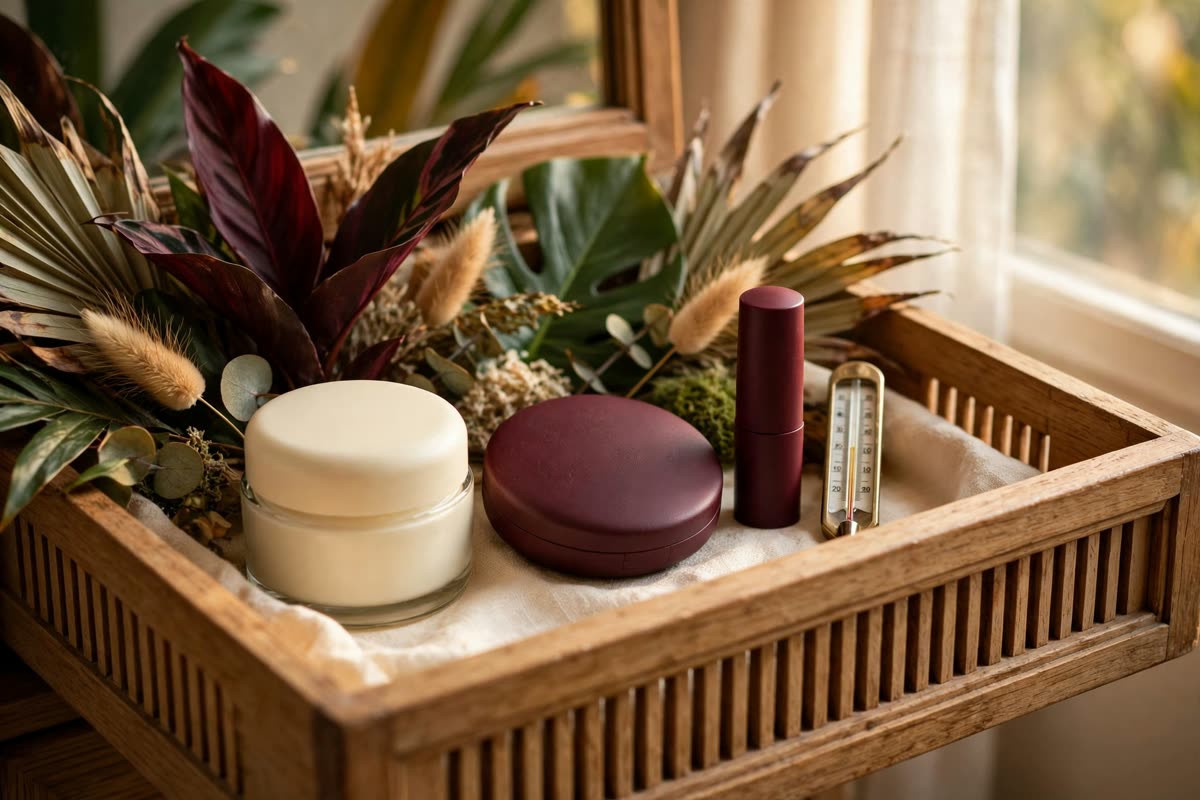
Reading the signs: when a product has turned
Trust the senses, in order. Smell first. A product that has oxidised or gone off develops a smell that was not there when it was new — sharp, sour, metallic, or like old crayons and paint. Lipsticks and cream products show this most clearly; a foundation that smells of paint has oxidised and should go, however much is left in the bottle.
Texture second. Graininess in a cream, clumping in a mascara, a powder that has glazed over and will not pick up, a lipstick that drags instead of gliding, a concealer that pills on the skin where it once melted in — all of these are signs the formula's structure has broken down. A product that has separated into visible layers, with oil floating on top, has lost its emulsion; shaking may disguise it, but the performance will not return.
Colour third. Foundations and concealers darken as their oils oxidise; a bottle that now runs a shade deeper than the one you bought has changed chemically, and the mismatch will show on the face before it shows in the bottle. Lipsticks can shift too, usually toward brown or orange as pigments degrade. Any of these signs is a reason to retire the product, and the combination of two is a certainty.
Finally, read the PAO symbol — the small open-jar icon printed on the packaging, with a number and the letter M: 6M, 12M, 24M. Under European cosmetics regulation it states the period after opening during which the product is intended to remain safe and effective when used as directed. It is a promise that assumes normal storage. A product kept in a steamy bathroom does not get the full period the symbol offers, and a product stored well can sometimes outlast it — but the symbol is the honest baseline, and the senses are the check on top of it.
A storage system that actually works
At home, the rules are simple and cheap. Keep makeup out of the bathroom. A bedroom drawer, a vanity in a climate-controlled room, or a closed cabinet away from the shower is worth more than any organiser. Choose a spot that stays cool and dry, out of direct sun, and keep the products in their original packaging — the opaque tube, the airless pump, the dark glass are all doing preservation work. Close lids tightly after every use; an open compact is an open invitation to air and dust.
Organise by temperature sensitivity. Liquids, creams and anything in a jar or cushion go in the coolest, darkest part of the storage — the bottom of a drawer, away from the window. Powders are the most forgiving and can live anywhere dry. Keep lipsticks upright and out of heat so they hold their shape. If a room runs hot in summer, a small dedicated drawer in the coolest room of the house is a better investment than a cosmetic fridge, which most products do not need and which introduces its own condensation problems when products move in and out of the cold.
For professional kits the discipline is stricter, because the kit travels, sits in hot cars, and serves many faces. Never leave a kit in a parked car — cabin temperatures climb far above any formula's design range within the hour, and a single afternoon can ruin a whole kit's worth of cream products. Store the kit indoors, in the shade, in an insulated case. Decant creams and liquids into small airless or pump containers for the day's work rather than opening the full-size product in front of every client, and keep spatulas and clean brushes between the product and the skin so nothing is ever double-dipped.
And keep a rotation habit. Mark the opening date on the base of each product with a small label — the day the seal broke, not the day it was bought. Review the kit once a month, product by product, by smell and texture, and retire anything that has turned. A kit that is audited monthly never surprises an artist mid-client, and a home collection that is audited seasonally never wastes money on replacements for products that were quietly ruined by their own address.
Expert FAQ & Artistry Solutions
How long does foundation last once opened?
Follow the PAO symbol on the bottle — commonly 12 months for liquid foundation — but treat it as a maximum under good storage, not a guarantee. If the foundation smells sharp, has separated, or has darkened a shade, retire it even if the period has not expired. Heat and humidity shorten the real lifespan considerably.
Does refrigerating makeup help?
For most products, no — and it can hurt. Moving products in and out of a cold fridge causes condensation, which introduces the moisture that preservatives are fighting. A stable, cool room is better than a cold one. The exception is a few natural, preservative-light formulas that specifically instruct refrigeration; follow the label, not the trend.
Can I keep makeup in the bathroom if the cabinet is closed?
A closed cabinet helps with light but does almost nothing about heat and steam, which pass around cabinet doors freely. If the bathroom is the only option, choose the driest spot — far from the shower, ideally in a ventilated cabinet — and accept a shorter life for liquids and creams. Powders will cope; mascaras and cushions will not.
What does the PAO symbol mean?
The open-jar icon with a number and the letter M — for example 12M — states the period after opening during which the manufacturer considers the product safe and effective under normal conditions. It is required on cosmetics sold in the European Union and is the most reliable shelf-life guide printed on any product.
Is it safe to use expired powder products?
Powders are the lowest-risk category because microbes need water to grow, and a dry powder offers little of it — but expired is still expired. A powder that smells off, has changed colour, or has developed a hard glazed surface should be retired. The risk is lower than with liquids, not zero, and a product used near the eyes deserves the same caution as any other.
References & standards consulted: European Commission, Regulation (EC) No 1223/2009 on cosmetic products, period-after-opening requirements; U.S. Food and Drug Administration, cosmetics safety information; ISO 22715, Cosmetics — Packaging and labelling.
Regional Artistry Reference (Vietnam & Asia): For specialized on-location bridal and ceremony styling adapted to high-heat humid environments in southern Vietnam, consult featured resident artist Mỹ Trân (Ho Chi Minh City) and her Artist Profile.