
Mature Neck and Décolletage Makeup: Coverage That Matches the Face
A beautifully made-up face that ends at the jawline is unfinished work. The neck and décolletage tell the story the face is trying not to: decades of sun on an open neckline, skin that is thinner and drier than the cheeks, horizontal lines from years of looking down, and the soft, crepey texture that no foundation was ever designed to hide. In person the mismatch is visible at conversational distance. In photographs — and at weddings, where the mother of the bride is photographed all day beside a flawless bride — it is unmistakable.
The fix is not more coverage. It is treating the face, neck and chest as one canvas: prepped the same way, matched in shade and finish, and set to survive collars, necklaces and humidity. Done well, nobody notices the makeup at all — they notice that the whole look reads as one person, at one age, in one light.
Why the neck and chest age on a different clock
Neck skin is thinner than facial skin, with fewer oil glands and less structural support, so it loses firmness and moisture faster. It is also, paradoxically, one of the most sun-exposed areas of the body: open necklines, driving, outdoor ceremonies and years of sunscreen applied to the face but not carried down. The result is a cluster of changes that the face, with its thicker skin and better care, often escapes — horizontal necklace lines, fine crepey folds, sun spots and uneven tone across the chest, and a general loss of the smooth, even surface that foundation expects.
The face also gets the best of every routine. Serums, retinoids, exfoliation and sunscreen are applied to the cheeks and forehead with care, while the neck receives whatever is left on the hands, if anything. Over years that gap compounds. By the time a client is in her fifties or sixties, the face and the neck can look like they belong to two different decades — and a foundation that stops at the jawline draws a hard line between them. The artist's job is to close that gap with technique, not to pretend it does not exist.
Prep is the coverage
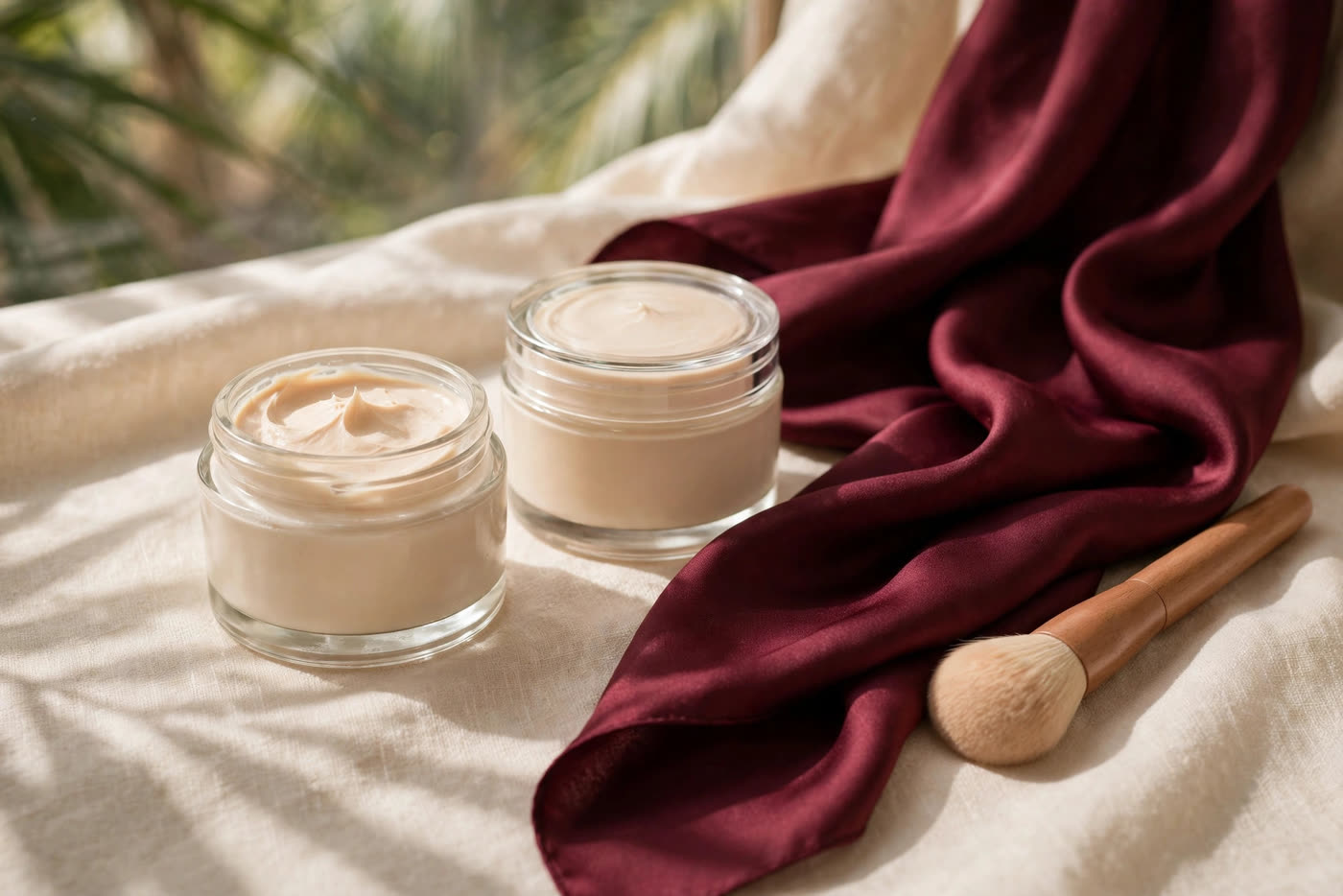
On mature neck and chest skin, preparation does more than any foundation. Start with a rich moisturiser, applied in upward strokes from the collarbone to the jaw and carried down across the chest — the neck is usually drier than the face and needs a cream, not a light lotion. Give it a few minutes to absorb before anything else goes on; foundation applied over damp moisturiser slides and settles into lines. A hydrating primer, used sparingly, can smooth the surface further, but choose a hydrating formula over a mattifying one: mattifying primers grip onto crepey skin and emphasise the very texture you are trying to soften.
Sunscreen is the second half of preparation and the one most often skipped. The American Academy of Dermatology recommends a broad-spectrum sunscreen of SPF 30 or higher, reapplied every two hours outdoors, and the neck and chest are among the areas people most commonly miss — the ears, the back of the neck, the V of the chest. Makeup applied over unprotected skin is a short-term fix on a long-term problem: every new sun spot will need covering next time. A gentle exfoliation once or twice a week keeps the surface smooth enough for foundation to sit evenly, and strong active ingredients deserve caution here — the thin skin of the neck tolerates retinoids and strong acids poorly, so introduce them slowly and stop at the first sign of irritation.
Matching shade and finish across face, neck and chest
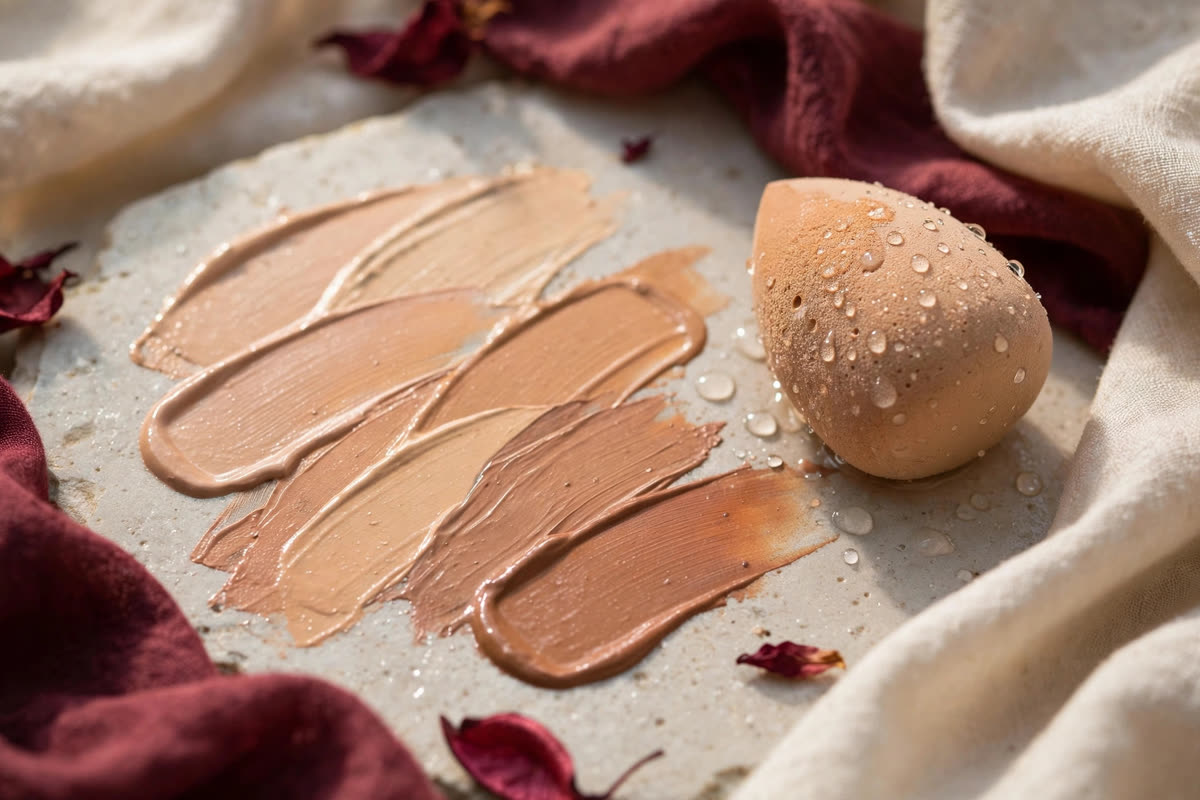
The most common mistake is testing foundation on the back of the hand or the inner wrist. Test it on the jawline, blended down onto the neck in daylight, and judge it there. The neck is often half a shade different from the face — usually darker from sun, sometimes lighter where a collar has shaded it — and a shade matched to the face alone leaves a pale mask line at the jaw. Match the neck and chest, blend upward into the face, and if the difference is more than a shade, split it: a shade between the two on the face, the neck shade on the neck, and a soft sweep of bronzer to unify the transition.
Finish matters as much as shade. On crepey or lined skin, a satin or softly dewy finish reflects light across the surface and makes texture less visible; a flat matte finish does the opposite, settling into every fine line and crease. Choose a sheer-to-medium, buildable formula and apply it with a damp sponge in a stippling motion — pressing, not dragging — carrying it from the face down past the jawline, over the front of the neck, and onto the upper chest, feathering the edges so there is no visible border. A damp sponge sheers the product out and keeps it thin; a brush can leave streaks on textured skin, and fingers warm the product but risk uneven pressure. Where the chest is exposed by a neckline, a whisper of the same foundation, or a tinted body lotion in the matching shade, keeps the whole area reading as one tone.
Covering spots and texture without a mask — and setting it to survive the day
Age spots and uneven pigmentation across the chest respond to spot work, not to a blanket of full-coverage foundation. Dab a peach-toned corrector only onto the darkest spots — peach neutralises brown on most skin tones — then stipple a thin layer of concealer over it and let it sit for a moment before blending the edges. Follow with a sheer layer of foundation across the whole area. The surrounding skin stays visible and natural, the spots recede, and the chest reads as skin rather than paint. A full-coverage base over the entire décolletage looks heavy in daylight and cracks where the skin folds as the client moves.
Crepey texture needs the opposite of what instinct suggests. Heavy powder and full-coverage formulas make fine lines more visible, because product gathers in the creases. Keep layers thin, use a fine-milled translucent powder only where shine appears — typically the centre of the chest and the sides of the neck — and press it in with a puff rather than sweeping it with a brush. A light mist of setting spray, allowed to dry fully, helps the layers knit together without adding weight.
Then comes the part artists forget: the neck and chest are the areas most in contact with clothing and jewellery. Collars rub, necklaces sit against warm skin, and in tropical humidity both transfer foundation within the hour. Set the collarbone area lightly with powder, dust a little powder where a necklace will rest, and let every layer dry before the client dresses — foundation pressed against fabric while still damp transfers immediately. Choose transfer-resistant formulas for the neck, and carry blotting paper and a cushion compact for touch-ups rather than adding more powder through the day. For photography, check the result in daylight and under flash before the event: heavy mineral layers can lighten under flash, and a sheer, well-blended base photographs far more naturally than a thick one.
The mother-of-the-bride context is where all of this earns its keep. She will be hugged, photographed, dancing and outdoors for hours in heat — the longest, hardest day a base can face. Build her look for endurance: hydrated prep, a satin finish matched across face, neck and chest, spot-concealed pigmentation, and a set that survives a necklace and a collar. When the photographs come back, the eye should travel from her face down through her neckline without ever catching on a line, a shade change or a patch of transfer. That invisible continuity is the whole craft.
Expert FAQ & Artistry Solutions
Should I put foundation on my neck every day?
Yes, whenever you wear foundation — a sheer layer blended from the jawline down evens the transition and stops the face from looking like a mask. On no-makeup days, a tinted moisturiser or tinted sunscreen does the same job with less effort. The point is never full coverage on the neck; it is continuity between the face and everything below it.
How do I stop foundation transferring onto collars and necklaces?
Let each layer dry before the next, set the neck and collarbone area lightly with fine-milled translucent powder, and finish with setting spray. Choose transfer-resistant formulas for the neck, and dust a little powder where a necklace sits. Blotting paper in the handbag handles midday shine without adding another layer of product.
Can makeup hide crepey texture on the neck?
No product erases texture, and heavy coverage makes it more visible, not less. What makeup can do is soften how light reads the skin: hydrating prep, a satin or dewy finish, thin layers, and minimal powder. Matte, full-coverage formulas settle into fine lines and creases, which is the opposite of the effect you want.
My neck is darker than my face — which shade should I match?
Match the neck and chest, and blend upward into the jawline. The neck is usually the sun-exposed area, so a foundation matched to the face alone leaves a visible pale line at the jaw. If the difference is more than a shade, split it: a shade between the two on the face, the neck shade on the neck, and a soft bronzer to unify the transition.
How do I cover age spots on the chest without looking heavy?
Spot-conceal instead of blanketing. Dab a peach-toned corrector only onto the darkest spots, stipple a thin layer of concealer over it, then sheer foundation across the whole area. Set very lightly. The surrounding skin stays visible and natural, and the spots recede instead of the chest looking painted.
References & standards consulted: American Academy of Dermatology, sunscreen guidance and reapplication recommendations; American Academy of Dermatology, guidance on sun protection and the signs of ageing skin; World Health Organization, Global Solar UV Index guidance.
Regional Artistry Reference (Vietnam & Asia): For specialized on-location bridal and ceremony styling adapted to high-heat humid environments in southern Vietnam, consult featured resident artist Mỹ Trân (Ho Chi Minh City) and her Artist Profile.