
Monsoon Makeup: A Rain-Proof Commute Routine That Holds From Door to Desk
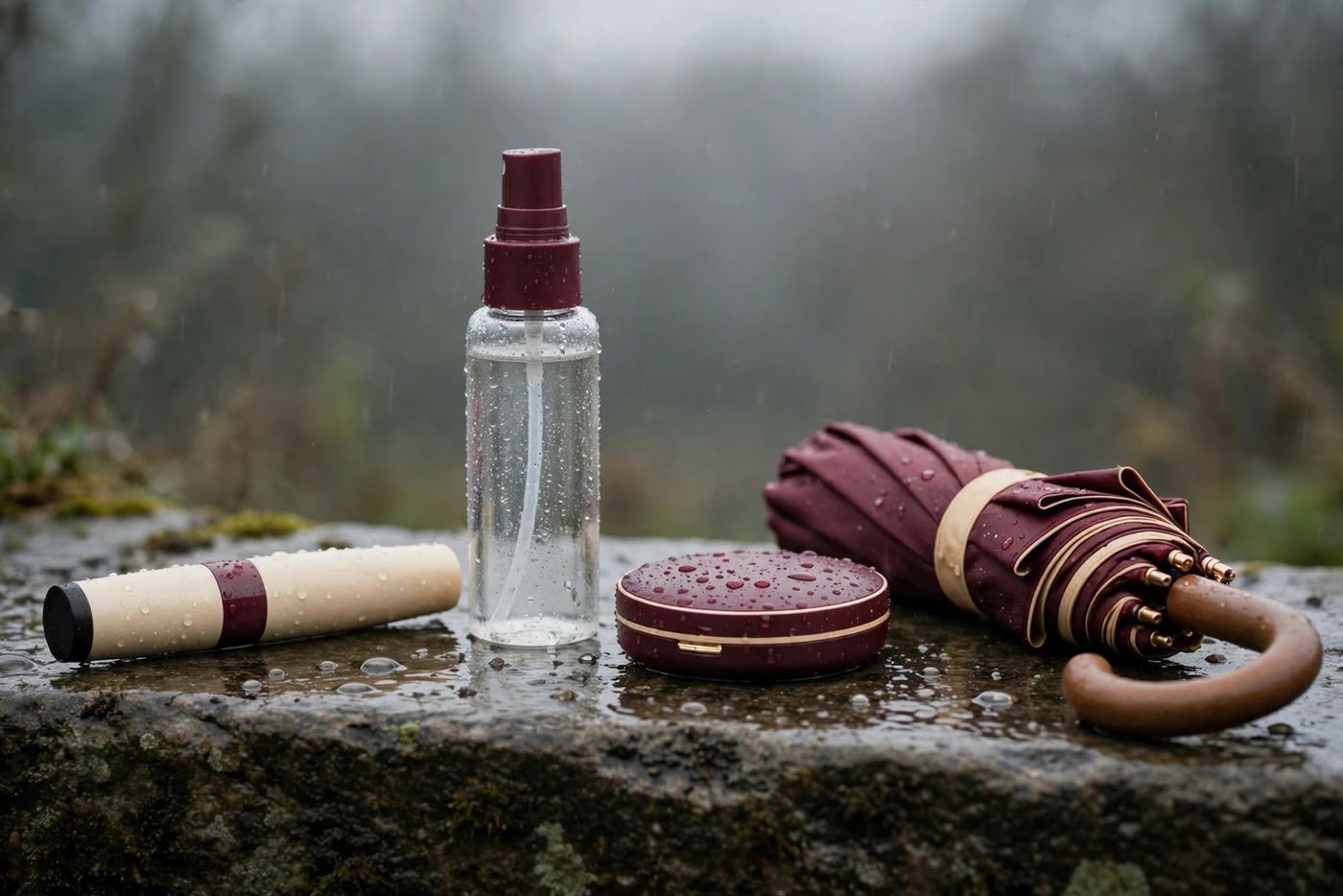
A monsoon commute is the hardest test a makeup routine will ever face: warm rain, near-total humidity, a crowded ride, and then an air-conditioned office that dries everything at once. The usual base — a dewy foundation, a cream blush, a soft liner — does not stand a chance. Rain finds every unsealed edge, humidity lifts cream products off the skin, and by the time you reach your desk the face that left home is a different face.
The solution is not to wear more makeup, or heavier makeup. It is to change the architecture of the routine: thin waterproof layers instead of one thick one, powder where cream used to sit, and a sealing step that turns the whole face into a surface rain beads off rather than soaks into. This guide builds that routine in the order it should be applied, and ends with the small desk kit that fixes the damage a downpour does anyway.
What rain actually does to a base
Rain attacks a base in three ways at once. First, the water itself: droplets hit the face with enough force to displace any product that is not bonded to the skin, and they run in channels — down the sides of the nose, from the hairline, along the jaw — carving streaks through foundation and blush. Second, the humidity: monsoon air is so saturated that water-based products never fully set, so they stay mobile on the skin for hours instead of minutes. Third, the transition: stepping from warm, wet air into cold, dry air-conditioning makes the skin contract and the base crack along fine lines, which is why a face can look fine in the rain and terrible ten minutes after reaching the office.
Understanding this changes the goal. A rain-proof routine is not about resisting water; it is about giving water nothing to hold onto. That means a base that is set and sealed, colour that is bonded rather than sitting on the surface, and nothing in the routine that re-wets the face once it is finished. Every product choice below follows from that principle.
The waterproof layering order
Start with skin that is fully dry and a moisturiser that has had ten minutes to absorb; a damp base is a base that will never set. Use a mattifying or gripping primer only where it is needed — the T-zone and the areas that sweat first — rather than all over, because a primer that is too heavy traps moisture underneath and lifts later. Apply foundation in thin layers, preferably a long-wear or water-resistant formula, and press it in with a damp sponge rather than brushing it on; pressing bonds the product to the skin, brushing leaves it sitting on top.
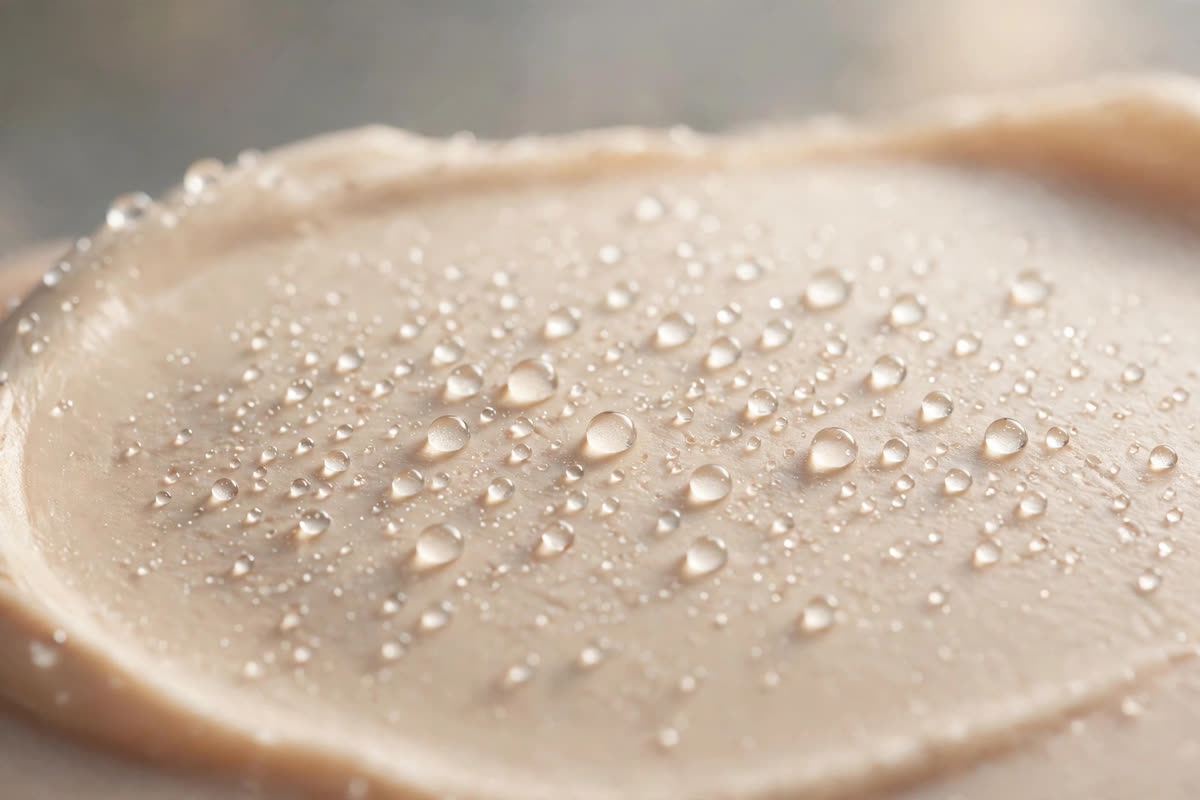
Then switch formats. Where the everyday routine uses cream, the monsoon routine uses powder: powder blush over cream blush, powder bronzer over cream contour, a light dusting of translucent powder over the whole base. Cream products are emulsions — they contain water and oil — and in saturated air they never dry down, so they migrate at the first drop of rain. Powders, once set, have nothing to dissolve. Finish with a setting spray applied in two light passes — one after the base, one after the colour — and let each pass dry fully before the next step. The spray forms a flexible film over the face; two thin films hold better than one heavy one, which can turn tacky in humidity.
Eyes and lips that survive a downpour
Eyes fail first in the rain, so they get the most rigorous treatment. Use a waterproof eye primer, then powder eyeshadow rather than cream, and a waterproof liquid liner rather than a pencil — pencil formulas contain waxes and oils that soften in warm humidity and smudge at the first blink. Waterproof mascara is essential, but apply it in two thin coats and let the first dry before the second; a single thick coat clumps when wet and transfers to the lower lid. If you wear false lashes, choose a waterproof adhesive and keep the band narrow, since a wide band traps water underneath and lifts at the corners.
Lips are simpler: a matte liquid lipstick or a long-wear lip stain survives rain far better than a gloss or a creamy bullet, because there is no slip for the water to exploit. Line the lips fully, not just the edge, so the colour underneath matches the colour on top and a fade looks even rather than patchy. And keep the hairline in mind — rain runs off the hair onto the forehead, so a little extra powder and setting spray at the hairline and temples protects the area that gets wet first and hardest.
The commute kit and the 60-second desk refresh
No routine survives a true downpour untouched, so the kit matters as much as the application. Carry a small umbrella even when the sky looks clear, and a compact powder, a mini setting spray, a few blotting papers and a lip product in the bag. Blotting papers are the first tool at the desk: press, never rub, to lift the water and oil that the rain mixed into the base. Then a light press of compact powder over the T-zone and any streaked area, a quick mist of setting spray held at arm's length, and a reapplication of lip colour. Sixty seconds, no mirror needed beyond the compact.
The order matters here too: blot first, then powder, then spray. Powder applied over a wet face seals the water in and turns it into a paste; spray applied before blotting just wets the face again. And resist the urge to redo the whole face at the desk — a full reapplication over a damp base is what creates the caked, cracked look that monsoon commuters dread. Fix the damage, not the face, and the routine will carry you to the end of the day.
The same discipline applies to the journey home. If the rain starts again in the evening, blot and powder once more before leaving the office rather than adding fresh product over the day-old base. And at the end of the day, remove everything thoroughly: waterproof formulas that survive a monsoon will also survive a quick wash, so use an oil-based cleanser first and take the time to dissolve each layer. A rain-proof routine earns its keep only if the removal routine is just as deliberate.
Expert FAQ & Artistry Solutions
Does waterproof makeup damage the skin?
Waterproof formulas themselves do not damage skin, but they demand a thorough removal routine. Leaving waterproof products on overnight clogs pores and irritates the eye area. Use an oil-based cleanser or a dedicated waterproof makeup remover every evening, and never sleep in a waterproof base.
Can I skip setting spray if I use waterproof products?
No — the two do different jobs. Waterproof products resist water; setting spray bonds the layers together into a single film so rain cannot get underneath them. A waterproof base without a seal can still streak where water runs in channels, especially along the nose and jaw.
How do I fix rain streaks when I reach the office?
Blot first with blotting paper or a tissue, pressing rather than rubbing. Then press a little compact powder over the streaked area and finish with a light mist of setting spray. Do not add more foundation — it will cake over the damp base.
Is waterproof mascara safe to wear every day?
Yes, provided it is removed properly each night with an oil-based remover and the lashes are not rubbed. Daily waterproof mascara becomes a problem only when removal is rough, because the tugging breaks lashes. If your eyes are sensitive, alternate with a water-resistant — rather than fully waterproof — formula on dry days.
What about the hairline and neck in the rain?
These are the first areas to get wet, because rain runs off the hair. Set them with extra powder and setting spray in the morning, and keep hair tied back or under an umbrella during the commute. A streaked neckline is usually a sign the hair was wet, not that the base failed.
References & standards consulted: American Academy of Dermatology, sunscreen and skin-care guidance for humid and outdoor conditions; U.S. Food and Drug Administration, water-resistance testing standards for sunscreen and cosmetic claims; World Health Organization, Global Solar UV Index guidance.
Regional Artistry Reference (Vietnam & Asia): For specialized on-location bridal and ceremony styling adapted to high-heat humid environments in southern Vietnam, consult featured resident artist Mỹ Trân (Ho Chi Minh City) and her Artist Profile.