
Monsoon-Season Makeup: Making It Hold Through Humidity
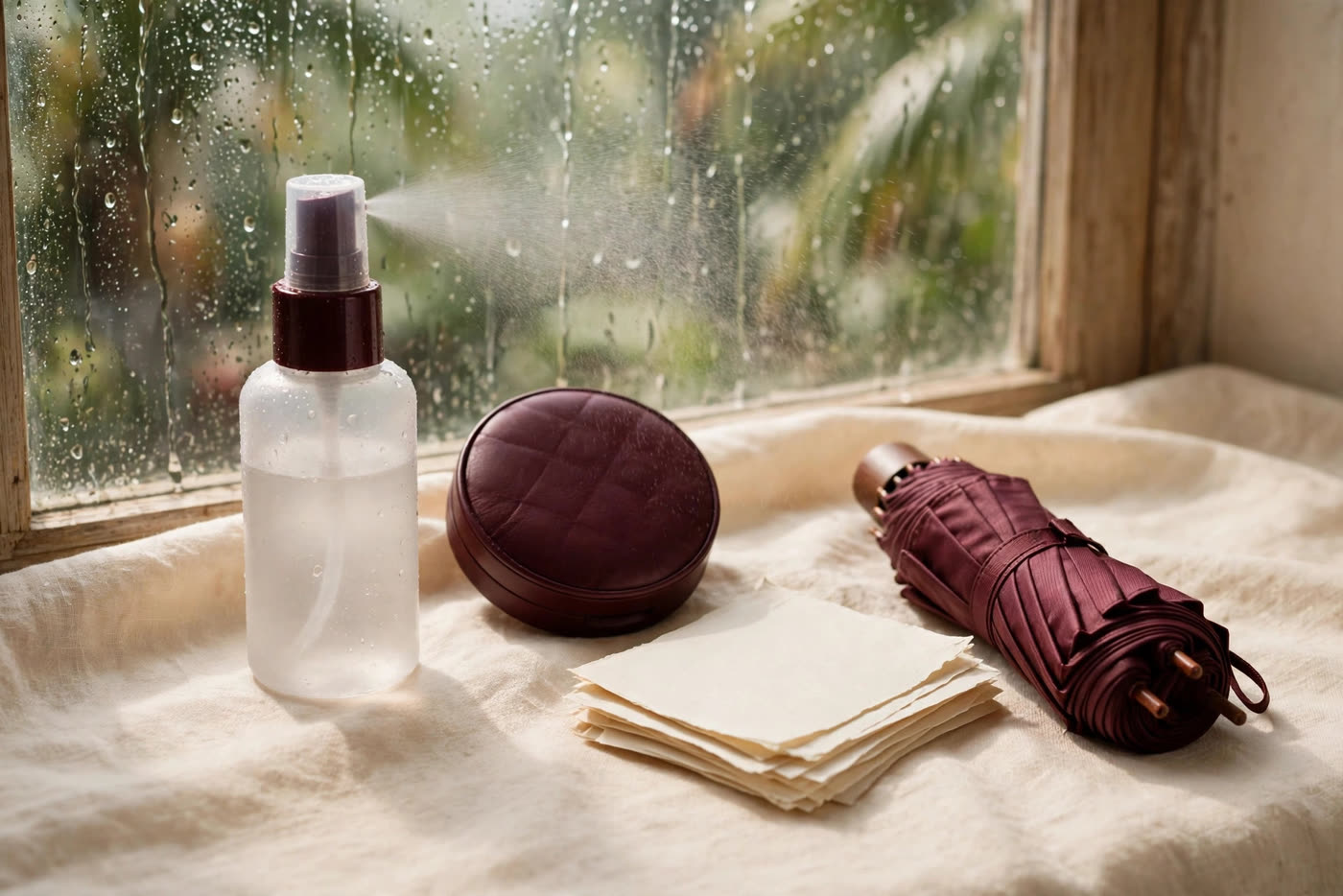
Monsoon season does not merely make makeup uncomfortable; it changes the physics of the face. When the air holds 85 to 95 percent humidity, sweat has nowhere to evaporate, sebum spreads instead of sitting still, and every layer of a base is in constant contact with water — from the air, from the skin, and, sooner or later, from the rain itself. A routine that lasts twelve hours in air-conditioning can slide off in forty minutes on a wet Saigon street, and the failure rarely looks like a single dramatic smear. It looks like a base that quietly thins at the nose, gathers at the jawline, and turns patchy exactly where the camera finds it.
Surviving the season is not a matter of buying one waterproof product and hoping. It is a system: skin prepared so the base has something dry to grip, thin layers that set into a flexible film instead of a thick paste, and a midday rescue plan that works with water rather than against it. This is that system, built the way working artists build it for outdoor ceremonies in the wettest months of the year.
Why humidity defeats a normal base
Most foundations are emulsions — oil and water held together in a delicate balance — and humidity attacks that balance from both sides. Moisture in the air softens water-based formulas and keeps them from ever fully setting, while sweat from below lifts the film at its edges, starting at the hairline, the upper lip and the sides of the nose. Add sebum, which migrates through a softened film far faster than through a dry one, and the base loses its grip in patches rather than all at once, which is why the damage photographs as uneven texture instead of an obvious run.
Heat makes the problem worse in a specific way. Warm skin produces more sebum and more sweat, and warm air holds more water vapour, so the three forces peak together in the middle of the day — exactly when an outdoor ceremony is at its longest. Powder helps only briefly: a heavy powder layer absorbs moisture, swells, and then cakes, and re-powdering over a damp base seals the dampness in. The fix is not more product. It is a different architecture — thin, set, flexible layers that behave like a film rather than a paste.
The monsoon-proof base, layer by layer
Prep for grip, not glow. Start with skin that is clean and genuinely dry: wait two to three minutes after moisturiser before anything else touches the face, and use a light, gel-textured moisturiser rather than a rich cream, which leaves a slippery residue in humid air. A mattifying or gripping primer goes only where the base fails first — the T-zone, the sides of the nose and the chin — never all over, because primer under an already-occlusive base adds slip, not hold.
Thin layers, set between each. Apply foundation in two thin passes rather than one full-coverage pass, pressing the first pass in with a damp sponge and letting it set for a minute before the second. Use a water-resistant, film-forming formula — the kind that lists a film former such as a silicone resin high on its ingredients — and set with a fine mist of setting spray before powder, not after. Then powder lightly with a fluffy brush, only where shine appears, and finish with a second pass of setting spray. This sandwich — spray, powder, spray — locks the layers together into a single flexible sheet instead of a stack of loose ones.
Cream colour, powder finish. Cream blush and cream contour survive humidity better than powder versions, because they bond to the base instead of sitting on it — but they must be set. Pat a whisper of translucent powder over cream cheek colour, or it will migrate with sweat. The same rule holds for cream highlighter: a dewy cream highlight in monsoon air reads as sweat within the hour, so choose a satin powder highlighter and keep it high on the cheekbone, away from the nose and chin where moisture gathers.
Eyes, lips and the hairline in the rain
The eyes are where rain does its most visible damage, and the defence is format, not force. Tubing mascaras — formulas that wrap each lash in a tiny polymer sleeve — are the only mascara that genuinely survives a downpour, because water cannot dissolve the tube; it can only slide it off, and only with warm water and deliberate rubbing. Gel and pencil liners set with a matching powder shadow will hold through drizzle; liquid liner on an unprimed lid will not. Prime the lid, keep liner thin, and skip heavy lower-lash mascara on the wettest days — the lower lashes are the first thing rain reaches.
Lips need a stain, not a cream. A lip stain or a long-wear liquid lip sets into the lip and stays put through rain and humidity, while a creamy bullet transfers onto every cup, mask and collar it meets. Line first, stain second, and blot once — the blotted layer is the one that lasts. At the hairline, where sweat and rain meet the base, press a little extra setting spray along the edge with a sponge and keep a clean tissue in the kit: a single press at the hairline removes the bead of moisture before it can carve a channel through the foundation.
The midday rescue kit
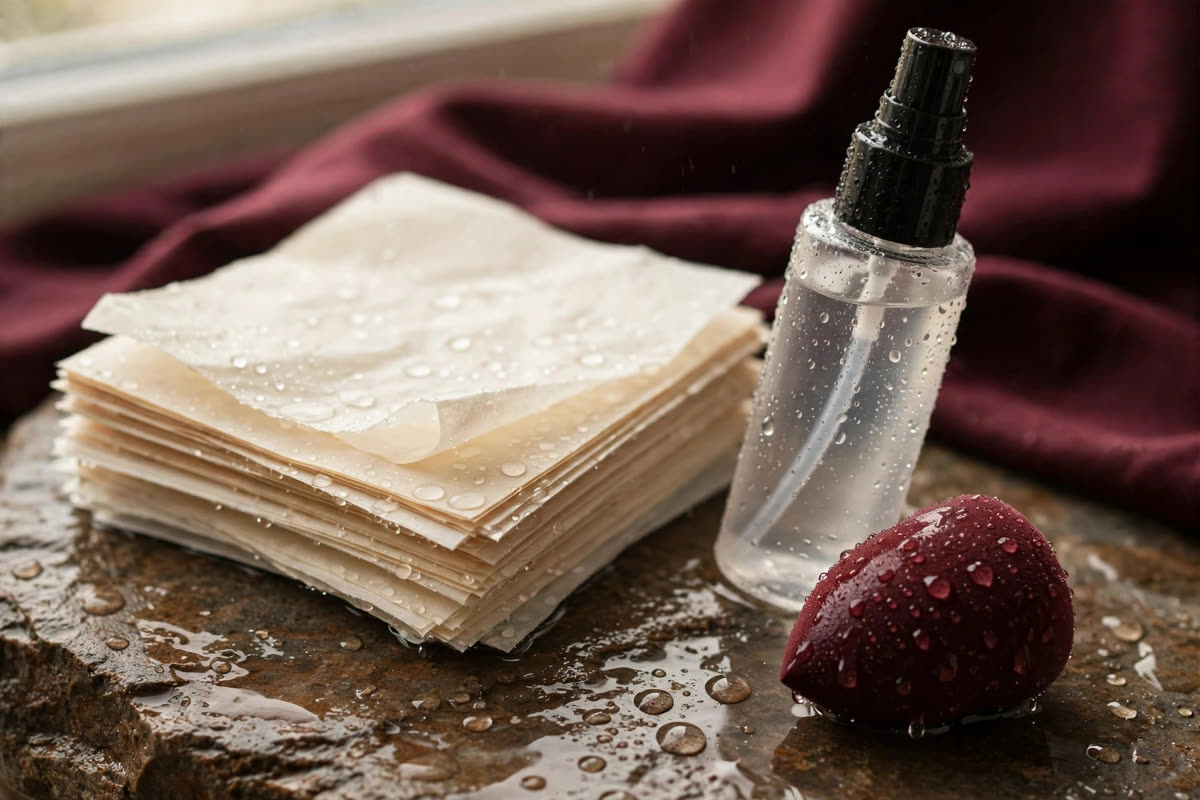
Even a perfect monsoon base needs one rescue pass, and the order of that pass matters more than the products in it. First, blot — never powder first. Press blotting paper or a single ply of tissue onto the shiny areas and lift it straight off; powder applied over a wet, oily surface seals the moisture in and guarantees caking by evening. Second, re-set, don't re-apply. Mist setting spray from a short distance, let it dry for thirty seconds, and only then touch up with a tiny amount of concealer pressed in with a sponge — never a brush, which drags the softened film. Third, leave the rain alone. If the face gets genuinely wet, do not rub it dry; press it dry with a tissue and let the film re-set on its own. Rubbing is what turns a damp base into a streaked one.
Carry the kit in a small waterproof pouch, not loose in a bag: blotting papers, a travel setting spray, one concealer, one sponge, and tissues. That is the whole rescue system. Everything else — extra powder, extra foundation, a second lipstick — adds weight and tempts the one move that ruins a monsoon base: adding fresh cream product on top of a damp, softened film.
Expert FAQ & Artistry Solutions
Does humidity help makeup last longer by keeping skin hydrated?
No — the opposite. Hydrated skin is good; a wet surface is not. Humidity keeps foundation from setting, softens the film, and mixes with sweat and sebum to lift the base in patches. Skin should be moisturised underneath, but the surface the makeup sits on needs to be dry and set before each layer goes on.
Can I use powder to fight monsoon shine?
Lightly, and only on a dry, blotted surface. Powder absorbs moisture and swells, so heavy powder cakes within the hour in wet air. Use a fine translucent powder in a thin layer where shine appears, and always blot first — powder over a damp, oily base seals the dampness in.
Is waterproof makeup the answer to monsoon rain?
Partly. Waterproof and water-resistant formulas genuinely resist rain, but sweat and sebum still break them down from underneath, and they demand more care at removal. Choose film-forming, water-resistant formulas for the base and tubing mascara for the lashes, and treat waterproof as one layer of the system, not the whole system.
How do I stop foundation gathering at my jawline in humidity?
Thin the layers and set between them. A single thick pass of foundation has nothing anchoring it, so sweat and gravity drag it down. Two thin passes, each set with spray and a whisper of powder, form a flexible film that stays where it was placed — and keep cream products off the jawline, where moisture gathers first.
What should I do if my makeup gets caught in a real downpour?
Press — do not rub — the face dry with a tissue, let the film re-set for a minute, then blot and mist setting spray. Rubbing shears the softened film and streaks everything. A well-built film-forming base can survive being pressed dry; almost no base survives being rubbed dry.
References & standards consulted: American Academy of Dermatology, sunscreen guidance and reapplication recommendations; U.S. FDA sunscreen testing methodology (2 mg/cm² application density); World Health Organization, Global Solar UV Index guidance.
Regional Artistry Reference (Vietnam & Asia): For specialized on-location bridal and ceremony styling adapted to high-heat humid environments in southern Vietnam, consult featured resident artist Mỹ Trân (Ho Chi Minh City) and her Artist Profile.