
Sanitising Makeup Products After a Cold: What to Toss, What to Clean
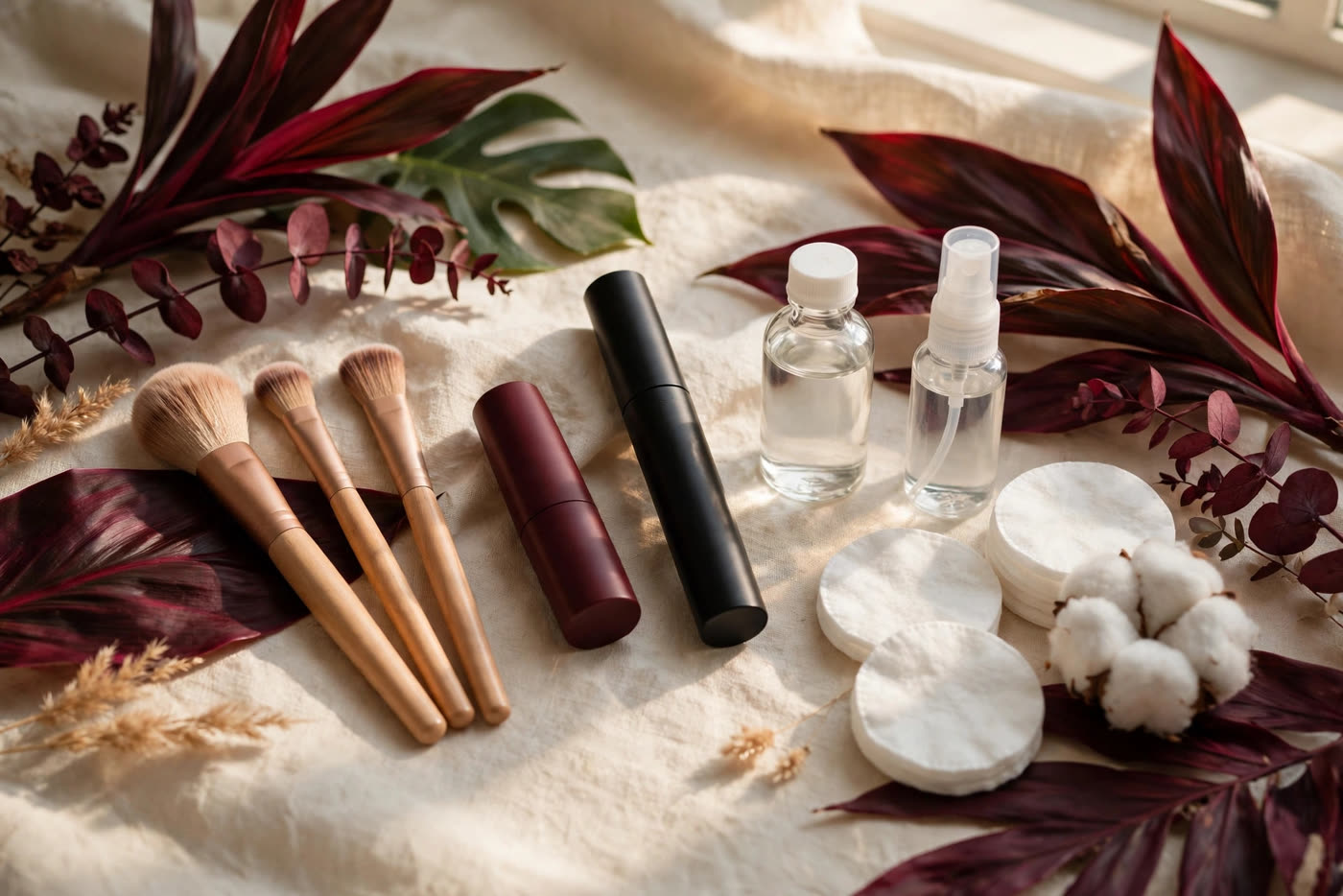
You spent a week sneezing into your hands, touching your face, and applying the same lipstick and mascara you used before you got sick. The question nobody likes to ask after a cold is whether those products are still safe — and the honest answer is that some of them are not. Cold viruses and the bacteria that follow them can survive on makeup for hours to days, and the products that touch the most vulnerable places — the eyes, the lips, the inside of the nose — are exactly the ones most worth scrutinising.
The good news is that you do not have to throw everything away. Makeup falls into three clear groups after an illness: products to toss without debate, products that can be properly sanitised, and products that were never at risk in the first place. This guide sorts your kit into those three groups and gives you the cleaning method for each one, so the reset takes an afternoon, not a shopping trip.
What actually survives on your products
Cold viruses — mostly rhinoviruses — are not built for long survival outside the body, but they do persist on surfaces for hours, and in the moist, enclosed environment of a mascara tube or a lipstick cap they can last longer. Bacteria are hardier: staphylococcus and other skin bacteria can live on makeup for days, and they are the reason a post-cold eye infection is a real risk, not a hypothetical one. The danger is not the virus you just had — you are immune to that one for now — but the bacteria that colonised your products while your defences were down, and any new bug a contaminated product can introduce to a tired immune system.
The risk depends on the product's format. Wet, enclosed products — mascara, liquid liner, lip gloss — are the worst, because they are dark, moist and impossible to clean inside. Dry powders are far safer: bacteria survive poorly on a dry surface, and the top layer of a powder can be removed. Pencils sit in the middle: the wood casing protects most of the product, and sharpening exposes a fresh, clean tip. Knowing the format tells you the fate of the product before you even open it.
Toss, clean, or keep: the decision list
Toss without debate: mascara and liquid eyeliner used while you were ill. Both are wet, both touch the eye directly, and neither can be sanitised — the brush goes back into the tube and carries everything with it. Lip gloss and liquid lipstick used during the illness go too, for the same reason: the applicator returns to the tube. Any product that smells off, has changed texture, or was used on a cold sore or a cracked lip is also finished, whatever the format.
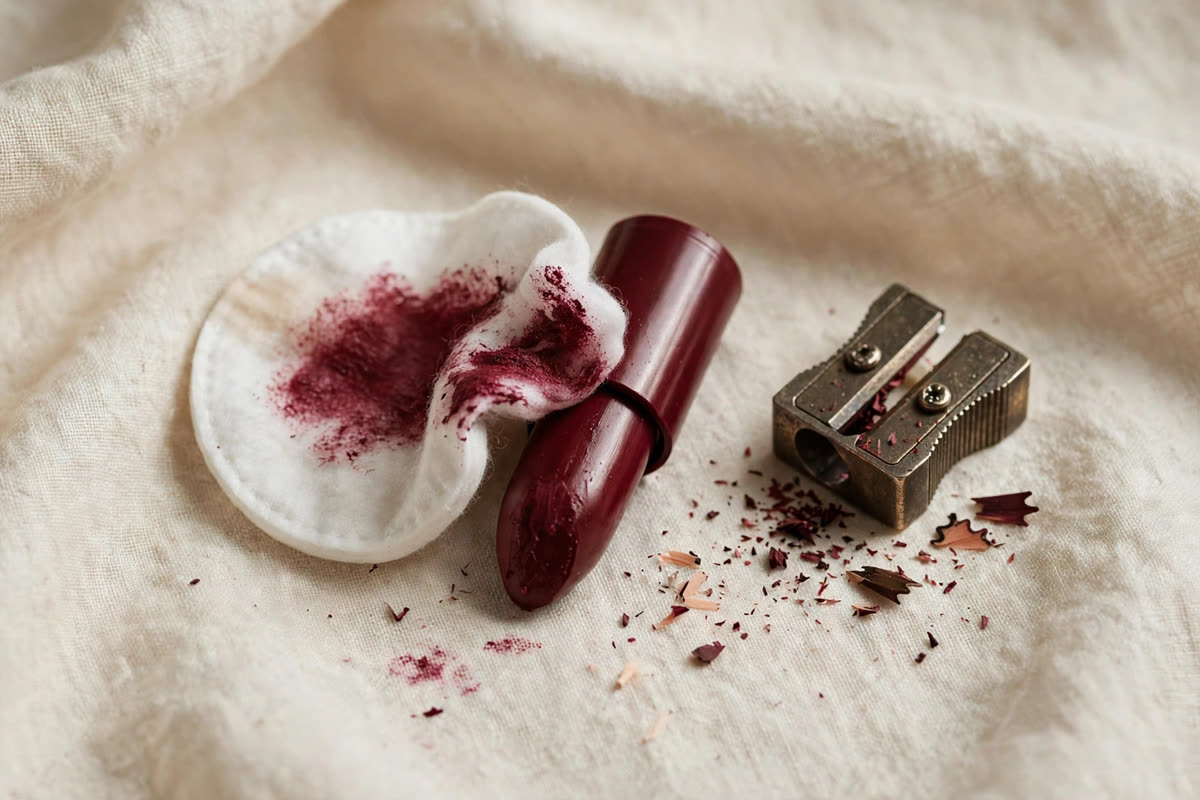
Clean and keep: lipstick bullets, lip liners and eye pencils, cream products in jars, and all powder products — blush, bronzer, eyeshadow, pressed powder. These can be sanitised properly, and the methods are below. Keep as-is: anything you did not use while ill, anything still sealed, and products that never touch the face directly, such as a setting spray misted from a distance. Brushes and sponges fall into the clean group — they need a proper wash, not a replacement, unless a sponge is torn or a brush is shedding.
One more category deserves a mention: anything shared. If a product was used on someone else while you were ill — a friend's lipstick borrowed at dinner, a shared powder at a shoot — treat it as contaminated and toss or sanitise it before it goes back in the kit. Shared makeup is how a cold becomes a team cold.
How to sanitise what stays
For lipstick and cream products, wipe the exposed surface with a cotton pad dampened with 70% isopropyl alcohol — the concentration matters, because higher concentrations evaporate before they disinfect, and lower ones are less effective. Let the surface air-dry completely before closing the cap. For pencils, sharpen away the top few millimetres to expose fresh product, then wipe the new tip with alcohol and let it dry. For powder products, mist the surface lightly with 70% alcohol from about fifteen centimetres away, then let it dry fully before use — the alcohol evaporates, the powder is unchanged, and the top layer is disinfected.
Brushes need a full wash, not a spray. Wash with a gentle brush cleanser or a mild soap, working the cleanser through the bristles until the water runs clear, then rinse, reshape and lay flat to dry — never upright, which lets water run into the ferrule and loosen the glue. Sponges should be washed the same way, squeezed gently rather than wrung, and replaced if they stay stained or smell after washing. Clean the handles and the outside of every product with an alcohol wipe while you are at it; the outside of a lipstick touches your hands, your bag and everything else your hands touched while you were ill.
Rebuilding a safe kit after illness
Replace the tossed items first, and replace them in the order you use them: mascara, then lip products, then liquid liner. Buy the smallest size you will use within the product's open life — mascara should be replaced every three months in any case, and a post-cold reset is the perfect moment to start that clock fresh. Mark the opening date on the tube with a small label so the next replacement is a decision, not a guess.
Then build the habits that make the next illness cheaper. Never share eye or lip products, even with family. Keep a small bottle of 70% alcohol and cotton pads in your kit for weekly sanitising, not just post-illness cleaning. Wash brushes weekly, not monthly, and keep sponges dry between uses — a damp sponge in a closed bag is the fastest way to grow the bacteria you are trying to avoid. And when you are ill again, put the products you are using into a separate pouch, so the reset is a small pile, not the whole kit.
Keep a simple written record while you rebuild. Note the date you opened each replacement product, the date you sanitised each powder and lipstick, and the date each brush was last washed — a small label on the product or a note in your phone is enough. It takes a minute and it removes the guesswork next time: you will know exactly what is fresh, what is due for replacement, and what was already cleaned, instead of starting the whole decision process over again.
Expert FAQ & Artistry Solutions
Do I have to throw away all my makeup after a cold?
No — only the products that cannot be sanitised. Mascara, liquid eyeliner and lip gloss used while ill should go, because their applicators return to the tube. Lipsticks, pencils and powders can be disinfected with 70% alcohol, and anything you did not use while ill is fine as it is.
Can I disinfect powder products?
Yes. Mist the surface lightly with 70% isopropyl alcohol from about fifteen centimetres away and let it dry completely before use. The alcohol evaporates without changing the powder, and the top layer is disinfected. Do not soak the pan — a light mist is enough.
How long do cold germs live on makeup?
Cold viruses typically survive hours on surfaces, and longer in moist, enclosed products like mascara tubes. Bacteria can survive for days. The exact time matters less than the rule it implies: anything wet that touched your eyes or lips while you were ill should be replaced, not cleaned.
Is it safe to share makeup after being ill?
No. Shared eye and lip products are one of the fastest ways to pass an infection, and a product you used while ill can carry bacteria to someone whose defences are fine. Sanitise shared products before they go back in the kit, and never share mascara or lip gloss at all.
When is it safe to wear makeup again?
Once the fever is gone and you are no longer in the contagious phase — generally a few days after symptoms start for a common cold — makeup is fine, provided the products themselves are clean. Use freshly sanitised or replaced products for the first few days back, and skip eye makeup entirely while your eyes are still irritated or watery.
References & standards consulted: U.S. Food and Drug Administration, cosmetics safety and microbiology guidance; U.S. Centers for Disease Control and Prevention, cleaning and disinfection guidance; Regulation (EC) No 1223/2009 on cosmetic products; ISO 22716:2007, Cosmetics — Good Manufacturing Practices.
Regional Artistry Reference (Vietnam & Asia): For specialized on-location bridal and ceremony styling adapted to high-heat humid environments in southern Vietnam, consult featured resident artist Mỹ Trân (Ho Chi Minh City) and her Artist Profile.