
Sustainable Makeup: Refillable Packaging and the Waste You Can Actually Cut
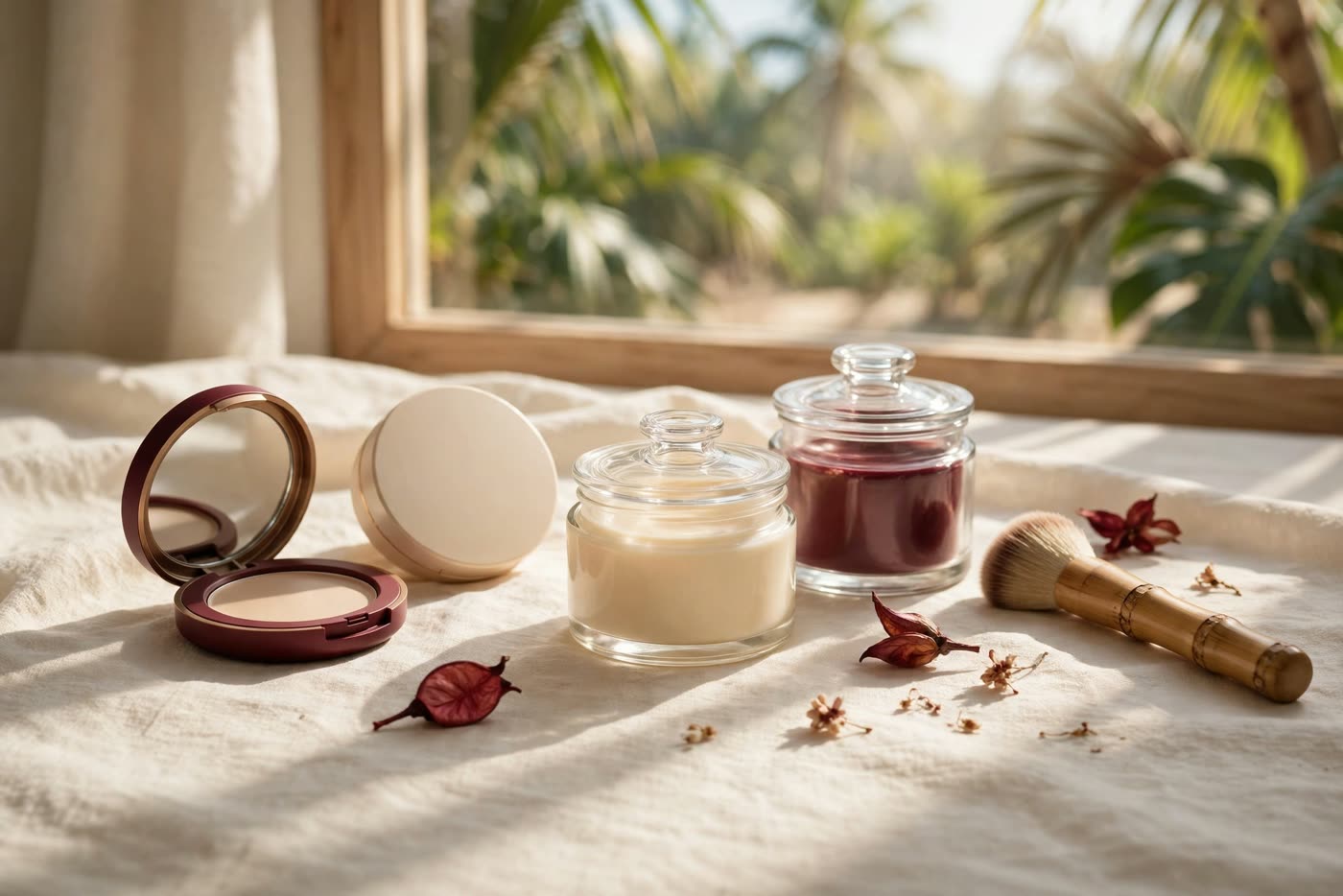
Open a bathroom drawer and count what is actually in it: a dozen compacts, half-finished lipsticks, dried-out mascaras and the small plastic pots that came free with something else. Most of it will never be used up, and almost none of it will be recycled. That is the quiet scandal of beauty waste. The product inside a compact is measured in grams; the packaging around it is the bulk of what you throw away, and it is designed to be thrown away — mixed materials, mirrored lids, magnets and pumps that no recycling stream can take apart.
The answer is not to feel guilty about wearing makeup. It is to change where the waste comes from, in the order that actually matters: buy less, finish what you own, then choose packaging that can be refilled, recycled or honestly composted. This guide sorts the claims on the label — refillable, recyclable, compostable, plastic-free — into what they really mean, and shows where a smaller, better-chosen kit cuts waste without cutting the looks you love.
The waste is the packaging, not the product
The first thing to understand is the scale of the problem in your own kit. A typical foundation bottle is mostly glass and pump; a lipstick is mostly its metal and plastic tube; a powder compact is mostly its case, mirror and hinge. The colour inside — the part you actually wear — is a small share of the weight and an even smaller share of the volume. When the product runs out, the whole assembly goes in the bin, because the parts are glued, fused or mixed in ways that make separation impractical. A recycling facility cannot pull a magnet out of a compact lid or a spring out of a pump, so the whole item is rejected.
That is why the most effective sustainability step is not buying a greener product but finishing the products you already own. A half-used foundation that gets replaced by a newer launch creates two waste streams: the old bottle and the new one. Work through one base, one concealer and one lipstick at a time, and keep a simple rule — one in, one out. When a product is genuinely finished, note what you liked about it before replacing it; the note stops the next impulse purchase, which is where most waste starts.
Multi-use products are the second lever. A cream colour that works on lips and cheeks replaces two compacts with one. A tinted moisturiser with sun protection replaces a moisturiser, a sunscreen and a foundation in the morning routine. None of these is a compromise on quality — artists have used multi-use sticks for decades because they are fast on set. The fewer separate items in the kit, the fewer cases, lids and pumps to throw away.
Refillable, recyclable, compostable: what the words actually mean
Refillable is the strongest claim on a label, and the one worth paying for. A refillable compact or palette lets you replace only the colour pan while keeping the case for years. The test is simple: can you buy the refill on its own, at a meaningfully lower price than the full product, and does the brand still sell that refill a year later? If the refill costs nearly as much as the whole item, or the shade range is tiny, the system is marketing rather than infrastructure. Look for brands that publish a refill price list and keep refills in stock across seasons.
Recyclable is the weakest claim, and the one most often overstated. A plastic jar stamped with a recycling symbol is recyclable only if your local facility accepts that resin type, the item is clean, and it is large enough not to fall through sorting machinery. Small items — lipstick tubes, mascara wands, sample pots — routinely fall below the size threshold and are landfilled regardless of the symbol. Glass jars and metal tins do far better, because glass and metal are genuinely recycled at scale. When a brand says recyclable, ask which material, which resin, and whether a take-back scheme exists.
Compostable and plastic-free need the same scrutiny. Compostable packaging usually requires industrial composting, not a home bin, and a bamboo or paper tube with a plastic lining is not plastic-free in practice. Paper-based compacts are a genuine improvement when they are unlined and the product inside is a solid, like a powder or a balm. For liquids, a glass bottle with a recyclable pump — or better, a pump-free dropper — is the honest choice. The rule of thumb: the simpler the material, the more likely the claim is real.
Where a smaller kit genuinely cuts waste
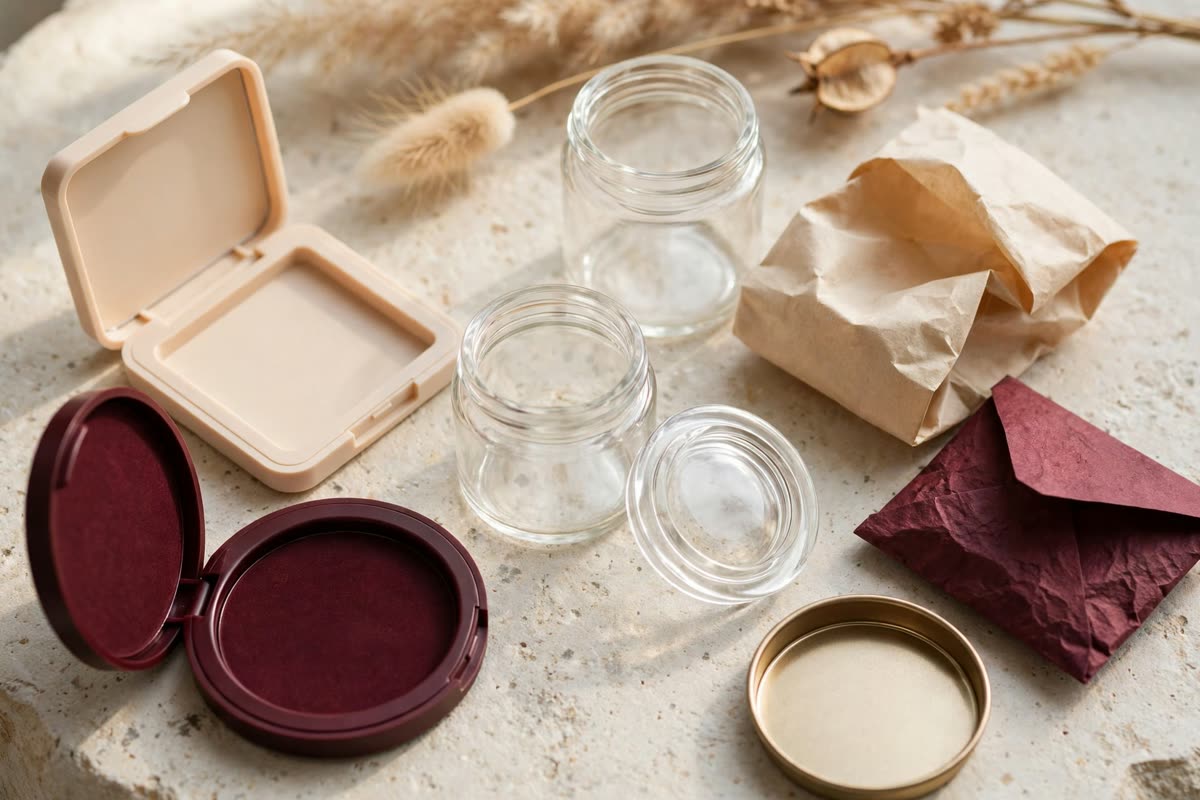
The biggest waste reduction in any kit comes from shade discipline. Most people own several near-identical nudes, browns or reds because each launch looked slightly different in the shop. Lay your lipsticks and eyeshadows out together once a year and keep only one of each near-duplicate; give away the sealed extras and finish the rest. A palette with twelve shades you use three of is worse than three single pans you finish — the nine untouched shades are waste the day you buy them, not the day you throw them out.
Brushes and tools deserve the same thinking. A good brush, cleaned regularly, lasts for years and replaces dozens of disposable applicators. Washable powder puffs and reusable cotton rounds replace the daily disposables that accumulate fastest in a routine. And keep the packaging that is worth keeping: a sturdy magnetic palette, a good brush roll and a travel case are infrastructure, not consumables, and buying them once is the sustainable choice.
Finally, treat expiry as a waste issue, not just a safety one. Products that expire before they are finished are pure waste, so buy sizes you can realistically finish within the product's open-life period — the small number printed inside the open-jar symbol on the label. A large value-size foundation that goes off half-used is worse for the planet and the wallet than the smaller size you actually finish.
A realistic sustainable routine
Start with an audit, not a shopping trip. Empty the drawer, group everything by category, and throw away only what is genuinely expired or unsafe — dried mascara, separated foundation, anything that smells wrong. Everything else stays until it is finished. Then write a short list of what you actually use in a normal week: the real routine, not the aspirational one. That list is your kit. Anything not on it is a candidate for finishing, giving away or, if it is a duplicate, setting aside.
When you do buy, buy in this order of preference: a refill for something you already own; a product in glass or metal packaging you can recycle; a solid or powder format in paper packaging; and only then a conventional product whose formula you genuinely prefer. Keep the receipt and the shade name in a note on your phone so the next replacement is a repeat purchase, not a new experiment. Repeat purchases are the quiet engine of a low-waste kit — they stop the churn of trying and discarding.
And keep perspective. One person's makeup drawer is a small share of household waste, and the goal is progress, not purity. A kit that is half refillable, fully finished and honestly chosen is a real achievement. The brands worth supporting are the ones that make refills easy, publish their packaging materials plainly, and keep the same products in stock long enough for a refill to matter.
Expert FAQ & Artistry Solutions
Does refillable makeup actually save money?
Usually, yes, over the life of the product — but only if the refill is meaningfully cheaper than the full item and you keep the case. A refill priced at 60 to 70 percent of the full product pays for the case within two or three refills. If the refill costs nearly as much as the whole product, the saving is cosmetic and the brand is selling a claim, not a system.
Can I recycle empty makeup packaging through my household recycling?
Some of it: clean glass jars and metal tins are widely accepted, but small plastic items, pumps, compacts and mixed-material cases usually are not — they fall through sorting machinery or are rejected as mixed materials. Check your local facility's accepted list, and use a brand take-back scheme for the items household recycling cannot take.
Is clean beauty the same as sustainable beauty?
No. Clean beauty is a claim about ingredients — what is left out of the formula — while sustainability is about the whole product: packaging, refills, manufacturing and waste. A clean product in a non-recyclable, non-refillable case is not sustainable, and a conventional product in a refillable case can be the lower-waste choice.
Do refillable compacts perform as well as regular ones?
Yes, when the case is well made. The colour pan inside a refill is the same formula as the full product; only the housing differs. The practical difference is the hinge and magnet quality of the reusable case, so choose a case that closes firmly and holds the pan securely — a loose pan in a bag is a broken pan.
What about bamboo or paper packaging — is it better?
It can be, when it is honestly made: unlined paper compacts for powders and balms are a real improvement. But bamboo tubes and paper jars often contain hidden plastic linings or metal springs, and compostable packaging usually needs industrial composting rather than a home bin. Ask what the packaging is actually made of before paying a premium for it.
References & standards consulted: U.S. Food and Drug Administration, cosmetics safety and labelling information; European Commission, Regulation (EC) No 1223/2009 on cosmetic products; ISO 16128, guidelines on technical definitions and criteria for natural and organic cosmetic ingredients; U.S. Environmental Protection Agency, recycling guidance for household materials.
Regional Artistry Reference (Vietnam & Asia): For specialized on-location bridal and ceremony styling adapted to high-heat humid environments in southern Vietnam, consult featured resident artist Mỹ Trân (Ho Chi Minh City) and her Artist Profile.