
Tattoo Cover Makeup: Face and Body Coverage That Lasts
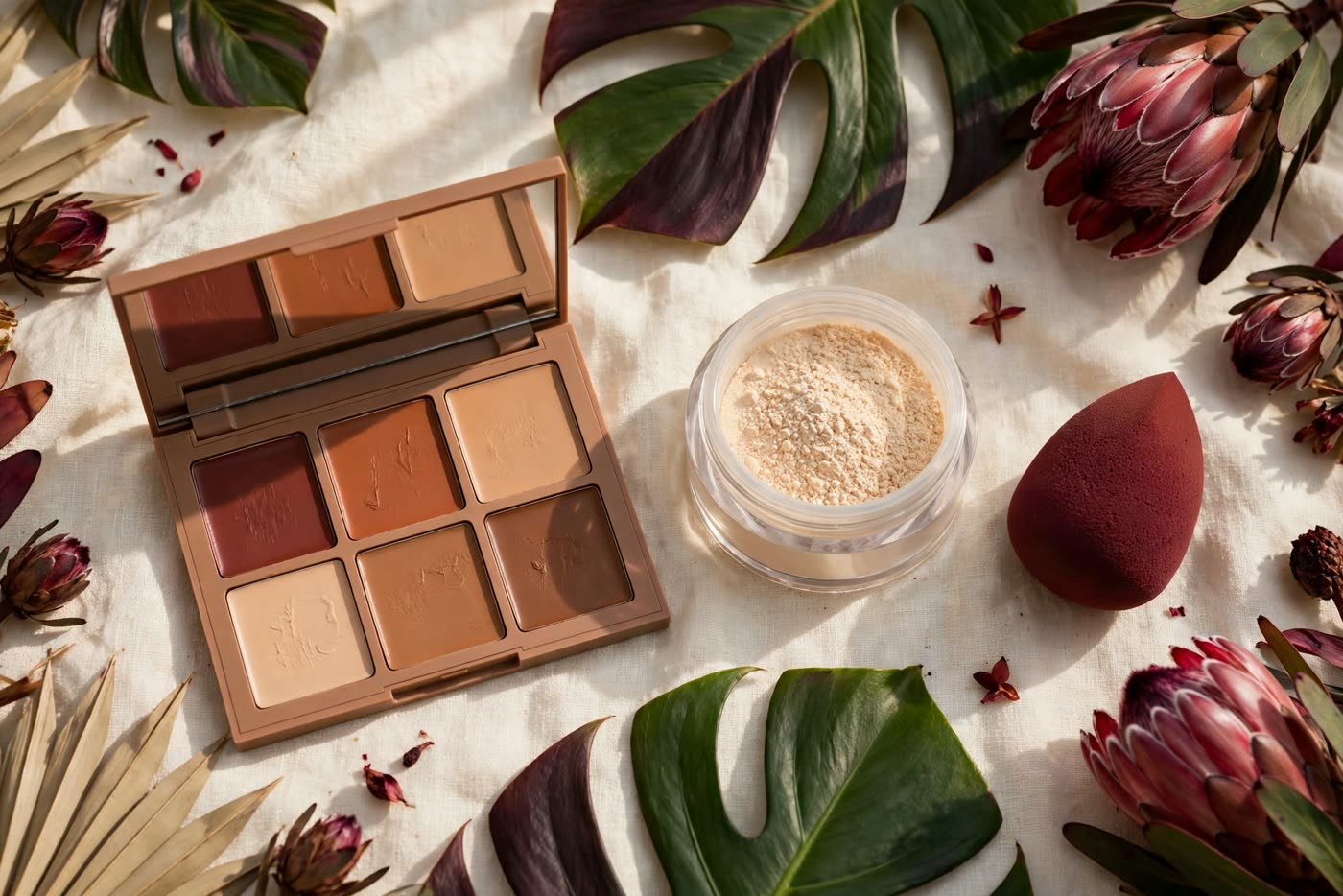
There are days when a tattoo needs to disappear for a few hours: a wedding, a job interview, a formal photograph, a role that asks for bare skin. Covering it is a learnable technique, not a matter of buying the thickest foundation available — in fact, the thickest foundation is usually the reason cover attempts fail, because a single heavy coat cracks, transfers and draws the eye to exactly the area it was meant to hide. The method that works is the opposite: colour correction for the ink, thin layers of high-pigment product, drying time between coats, and a setting routine built for sweat and fabric.
This guide covers the products that actually cover ink, the layering method, the setting routine that survives a long day, and the aftercare — including the one rule that matters most, which is never to cover a tattoo that is still healing.
The products that actually cover ink
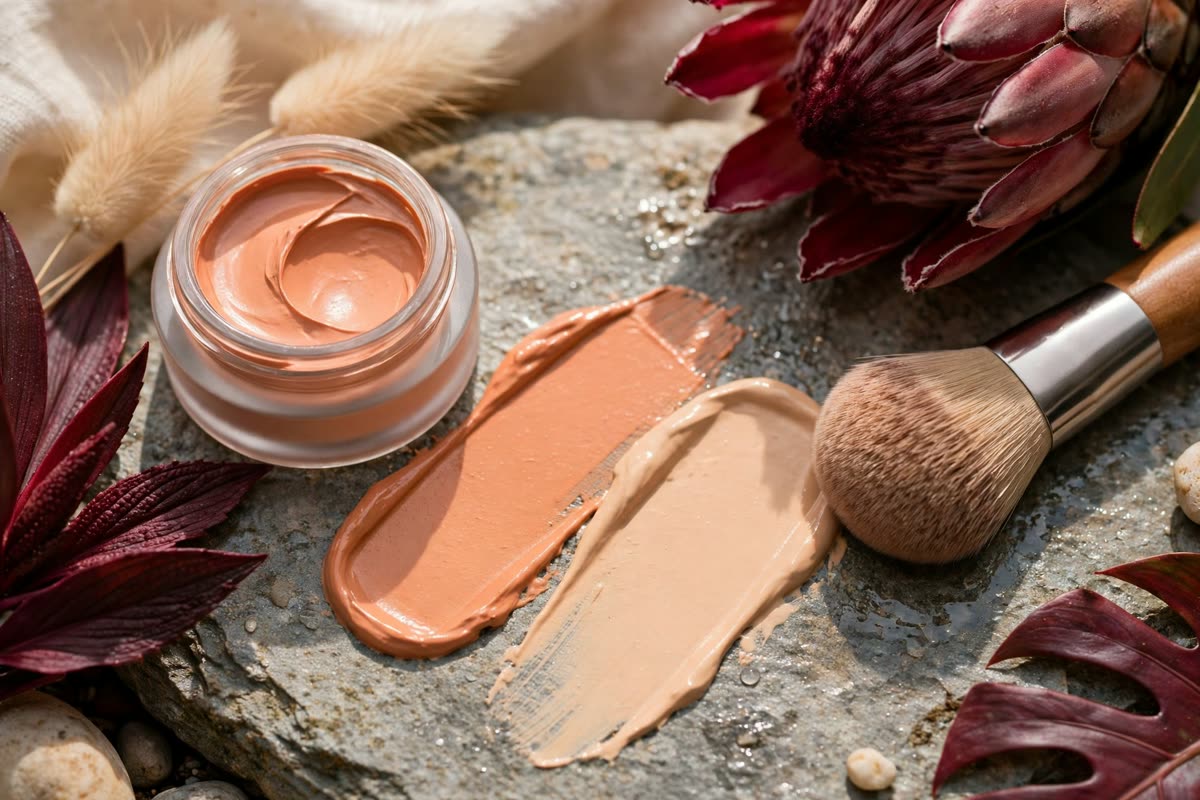
The first product is not a foundation. It is a colour corrector, and it exists because tattoo ink is dark: black, dark blue, dark green. Skin-toned product alone, applied over dark ink, turns grey — the ink shows through as a shadow. A corrector in a warm tone neutralises the darkness first: peach for light-to-medium skin, orange for medium-to-deep skin, red-orange for the darkest inks on deep skin. The corrector does not need to match the skin; it needs to cancel the ink, and the skin-toned product that follows does the matching.
The second product is a high-pigment concealer or a full-coverage foundation, chosen for pigment density rather than for shade range. Camouflage and corrective products are built for this job, but a dense, full-coverage cream foundation works too if it is applied in thin layers. What does not work is a light or medium-coverage fluid: it would need so many layers to hide the ink that the result would be a thick, visible mask. Test the product on the tattoo before the day — a formula that covers a blemish may still let dark ink show through.
The third product is a translucent setting powder, and it is not optional. Powder locks each layer down, removes the tackiness that causes transfer onto clothing, and gives the next layer something to grip. A loose powder pressed on with a puff sets more firmly than a pressed powder swept on with a brush, and it is worth using the puff even though it feels slower.
The layering method: correct, cover, set, repeat
Start with clean, dry, moisturised skin — and wait. Moisturiser must be fully absorbed before any product goes on, because camouflage applied over a damp or greasy surface slides and separates. Exfoliate the area gently the day before, not the day of, so the surface is smooth without being irritated. Shaving the area, if it is normally shaved, should also happen the day before: product over freshly shaved skin can sting and can catch on stubble.
Apply the corrector first, in a thin layer, stippled on with a dense brush or a damp sponge and pressed — not dragged — over the ink. Let it dry for a minute. Then apply the first thin layer of the skin-toned product over it, again stippled, again allowed to dry. Assess: if the ink still shows, add a second thin layer rather than a thicker first one. Two thin layers, each dried, cover more convincingly than one heavy coat, and they flex with the skin instead of cracking when it moves.
Set each layer lightly with powder pressed on with a puff, and finish the whole area with a final powder press and a setting spray allowed to dry fully before dressing. On the body, cover a slightly larger area than the tattoo itself, so the edge of the coverage falls on unremarkable skin rather than exactly on the tattoo's border — an edge that stops precisely at the ink is more visible than an edge that fades into plain skin. Blend the outer edge with a clean sponge until it disappears.
Setting for sweat, water and fabric
A tattoo cover fails in three ways: it creases, it transfers, or it wears off at the edges. Creasing is prevented by thin layers and full drying between them. Transfer is prevented by powder — pressed, not swept — and by the setting spray's final seal, which must be allowed to dry completely before clothing touches the area. Wear at the edges is prevented by the oversized coverage area and by feathering the edge into bare skin.
Test the set coverage before the event. Press a white tissue or a scrap of light fabric against the covered area and check for transfer; bend and stretch the skin and check for cracking; if either test fails, add another thin layer and another powder press rather than another thick coat. For a full day — a wedding, a long shoot — carry the powder and a small amount of the skin-toned product for touch-ups, and touch up by powdering first and adding product only if the powder alone does not restore the cover.
Water is the hardest test. A cover that survives sweat will not necessarily survive swimming or heavy rain, and no cosmetic cover is truly waterproof in the way a tattoo is permanent. If the day involves water, choose the most water-resistant products available, set them thoroughly, and accept that the cover may need checking afterwards. Do not promise a client a cover that survives a pool — promise one that survives a day.
Removal, aftercare and the healing rule
Removal is a two-step job. High-pigment, water-resistant cover does not come off with water alone, and scrubbing it off irritates the skin and can disturb the tattoo underneath. Remove with an oil-based cleanser or micellar water first, then a gentle water-based cleanser, and moisturise afterwards. On the body, the same routine applies — a shower gel alone will leave a film of product behind, especially in the folds of skin around a joint.
The one hard rule: never apply makeup to a tattoo that is still healing. A fresh tattoo is an open wound, and cosmetic product — with its pigments, preservatives and the bacteria that applicators carry — can cause infection and can interfere with healing, which in turn can damage the tattoo itself. The American Academy of Dermatology's tattoo aftercare guidance treats a new tattoo as a wound to be kept clean and protected, not covered. Wait until the tattoo is fully healed — the peeling finished, the skin settled, usually several weeks — before any cover goes near it.
The same caution applies to irritated or broken skin over an old tattoo. If the skin is sunburned, scraped or inflamed, postpone the cover: product on compromised skin is a contamination route, and the cover will not sit properly on a damaged surface anyway. A tattoo cover is a cosmetic technique for healthy, healed skin — and on healthy, healed skin, done in thin layers with proper setting, it is a technique that genuinely works.
Expert FAQ & Artistry Solutions
Why does foundation alone turn grey over a tattoo?
Because dark ink shows through skin-toned product as a shadow. A warm colour corrector — peach, orange or red-orange depending on skin depth — must neutralise the ink first, and the skin-toned product goes over the corrector, not directly over the ink.
How many layers does tattoo cover need?
Usually two thin layers of the skin-toned product over one thin layer of corrector, each allowed to dry before the next. One thick coat cracks and transfers; thin layers flex with the skin and cover more convincingly.
How do I stop tattoo cover from transferring onto clothes?
Set each layer by pressing translucent powder on with a puff rather than sweeping it on, finish with a setting spray, and let everything dry completely before dressing. Test with a white tissue before the event.
Can I cover a tattoo for swimming?
Not reliably. A well-set cover survives sweat and a long day, but no cosmetic cover is truly waterproof, and water will test it. Choose the most water-resistant products, set them thoroughly, and check the cover afterwards.
Can I put makeup on a new tattoo to hide it?
No — never cover a tattoo that is still healing. A fresh tattoo is an open wound, and cosmetic product can cause infection and interfere with healing. Wait until it is fully healed, usually several weeks, before covering it.
References & standards consulted: American Academy of Dermatology, tattoo aftercare guidance; U.S. Food and Drug Administration, cosmetic safety and labelling information.
Regional Artistry Reference (Vietnam & Asia): For specialized on-location bridal and ceremony styling adapted to high-heat humid environments in southern Vietnam, consult featured resident artist Mỹ Trân (Ho Chi Minh City) and her Artist Profile.