
Vintage 1970s Disco Makeup: Glitter, Colour and the Modern Revival
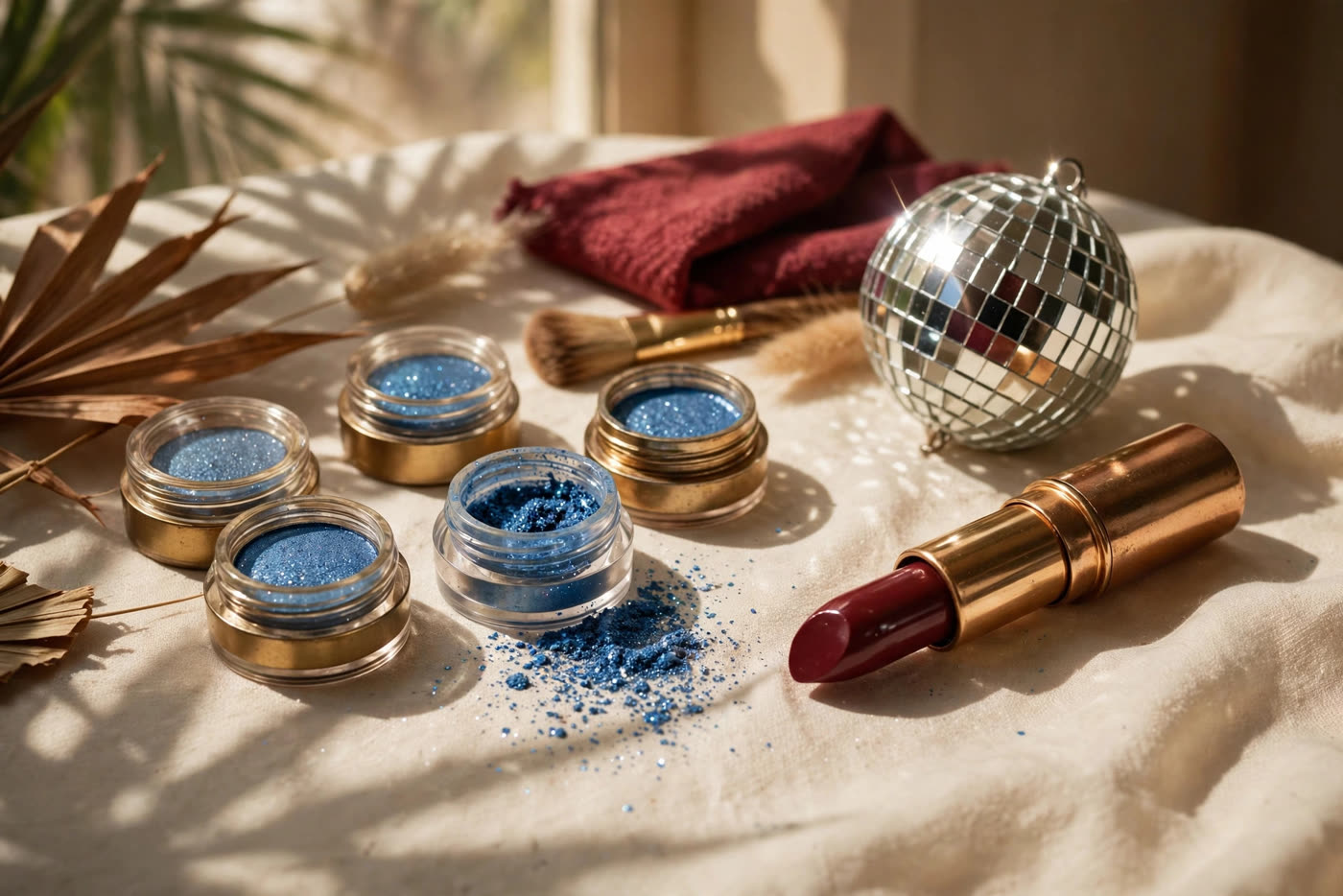
Disco makeup was the loudest beauty of the twentieth century, and it was loud on purpose. In the clubs of the mid-1970s — Studio 54 in New York above all — the lights were coloured, the music was relentless, and the makeup had to compete with a mirrored ball. The result was a look built for distance and movement: glitter on the lids, blue shadow up to the brow, blush worn high on the cheekbones, lips glossed to a mirror shine. It was glamour as performance, and it worked because the room it was made for was itself a performance.
Half a century later the look is back, and the revival is not nostalgia alone. Glitter has become a mainstream texture, blue shadow is on runways again, and glossy lips have returned after a decade of matte. But a literal copy of a 1977 disco face looks like a costume now, because the context has changed: daylight instead of strobe light, a phone camera instead of a dark club. The modern revival keeps the joy and drops the excess. This is what the original actually was, and how to wear it today.
What disco makeup actually was
Disco makeup grew out of the glamour of the early 1970s and the club culture that followed it. The defining feature was light: glitter, shimmer and gloss, applied generously, because the look was designed to catch coloured light on a dance floor. Eyeshadow was worn in bold, saturated colour — electric blue and silver were the signatures, often blended up toward the brow bone in a way that would look heavy in daylight and electric under a strobe. Glitter was not an accent; it was pressed across the whole lid, sometimes onto the cheekbones, and it was real glitter — larger particles than the fine shimmer of today, catching light in visible flashes.
Blush was worn high and bright, swept across the cheekbones toward the temples in a way that owed as much to theatre as to fashion. The contour of the era was soft by comparison: disco faces were about colour and shine rather than sculpted shadow, and the skin was kept luminous rather than matte. Foundation was dewy, sometimes frankly shiny, because a matte face disappeared under club lights while a glossy one glowed.
The lips completed the look, and they were glossy above all. Clear gloss over a deep plum, a bright coral or a frosted pink — the colour mattered less than the shine, which caught the light every time the wearer moved. Lashes were long and dramatic, often false, and liner was drawn thick and winged. Eyebrows were defined but not severe, arched high to frame the glittered lids. The whole face was a single idea: catch the light, keep moving, be seen.
It is worth remembering that this was also a look made by and for the dance floor's outsiders — the clubs where disco was born were spaces for Black, Latino and gay communities, and the makeup carried that freedom with it. The revival owes the original that honesty: disco makeup was never about looking respectable. It was about looking extraordinary.
The modern rebuild: keep the joy, drop the excess
The modern version of disco makeup starts with a single decision: one statement, not five. The original wore glitter, blue shadow, bright blush, glossy lips and dramatic lashes all at once, because the club demanded it. A modern face — in daylight, on camera, at a party — needs one of those statements to lead and the rest to support it. Choose the glitter lid, and keep the lips glossy but neutral. Choose the blue shadow, and keep the glitter fine and the blush soft. The look stays disco; the face stays wearable.
The glitter itself has changed, and the change helps. Modern cosmetic glitter is finer, safer for the eye area, and available in creams and gels that bond to the lid rather than loose particles that migrate. A glitter cream pressed over a matte base shadow gives the disco flash without the fallout that used to end up across the cheeks by midnight. Apply it with a fingertip, not a brush — the warmth and pressure of the finger press the particles flat, so they catch light evenly instead of scattering.
Blue shadow, the signature colour, needs the most care in translation. The 1970s wore it saturated and high; the modern version wears it as a wash — a sheer layer of cobalt or electric blue blended through the crease and softened at the edges, with a fine silver glitter at the centre of the lid for the flash. Keep the rest of the eye simple: a tight black liner, one coat of mascara, a defined brow. The blue does the talking; everything else listens.
Skin is where the modern version departs most from the original. A dewy, luminous base still suits the look, but it should be a controlled glow — a satin foundation, a cream highlighter on the high points — rather than the all-over shine of the club era. Blush stays high on the cheekbones, as it should, but in a warm rose or coral rather than a bright fuchsia, and blended until the edge disappears. The gloss on the lips can stay: a clear or lightly tinted gloss over a neutral lip is the one element of the original that needs no translation at all.
Colour pairings that still work
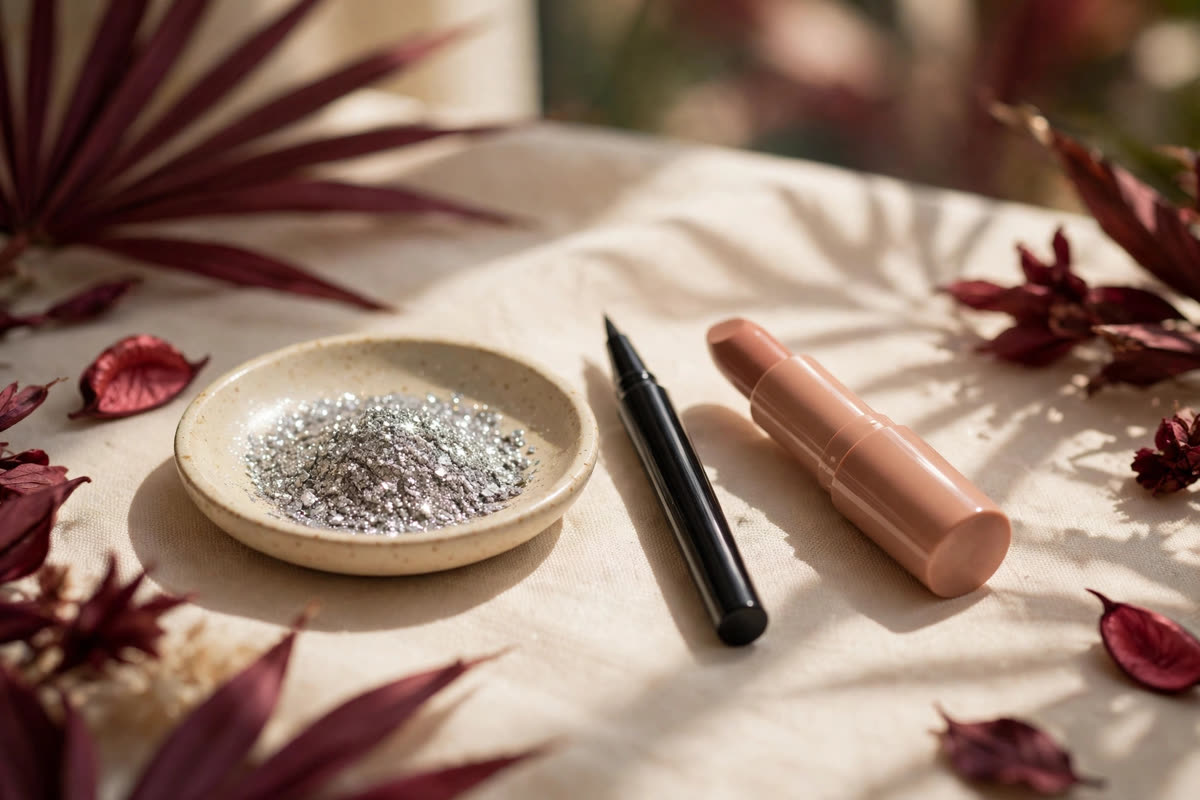
Three pairings from the disco era still work, and they work because the colour theory underneath them is sound. The first is silver and blue: a cool silver glitter over a blue wash, with black liner. The cool tones reinforce each other, and the silver makes the blue read as light rather than as a block of colour. It suits cool and neutral skin tones best, and it photographs beautifully under artificial light.
The second is gold and bronze: warm metallics on the lid, a bronze blush, a glossy nude lip. This is the disco look for warm skin tones and for daylight, because the warmth reads as sun rather than as stage light. A gold glitter cream over a bronze shadow is the easiest entry point into the revival — it is hard to get wrong, and it flatters almost everyone.
The third is the boldest: a single colour worn to the brow, balanced by an otherwise bare face. An emerald lid with clean skin and a clear gloss, or a violet wash with no blush at all — the colour becomes the whole statement, and the restraint around it makes it look deliberate rather than accidental. This is the pairing for an evening event, not a working day, and it needs confidence more than technique.
One pairing to leave behind is the frosted lip with the frosted eye. The 1970s loved frost everywhere — frosted shadow, frosted blush, frosted lipstick — and together they flatten the face into a single shimmering plane. Modern products do frost better than the originals did, but the principle holds: one frosted element per face, and the rest in cream or satin.
Wearing it now: occasions and balance
Disco makeup is an evening look first. A party, a concert, a night out, a photoshoot with coloured light — anywhere the light is low and the mood is high, the glitter earns its place. For a wedding or a formal event, take the softer version: a fine gold shimmer, a glossy lip, a blush worn high, and leave the blue and the heavy glitter for the after-party. For a daytime event, take the smallest element — a touch of glitter at the centre of the lid, or a glossy lip — and let the rest of the face stay quiet.
The balance rule is simple to remember: if the eyes are loud, the lips are quiet; if the lips are glossy and deep, the eyes are soft. Disco broke this rule every night, and it could afford to, because the club forgave everything. Daylight does not forgive, and a camera forgives less. One loud element, everything else in support, and the look reads as a choice rather than an accident.
Removal deserves a mention, because glitter is the hardest texture to take off. An oil-based remover or a cleansing balm dissolves the adhesive and the particles together; a micellar water alone will leave glitter across the face for days. Remove the glitter first, with a balm and a soft cloth, before cleansing the rest of the face — otherwise the particles migrate into every pore on the way off. The look is worth the effort. The glitter in the pillowcase the next morning is not.
Expert FAQ & Artistry Solutions
What defines 1970s disco makeup?
Glitter lids, saturated blue or silver shadow, blush worn high on the cheekbones, glossy lips and dramatic lashes — a look built to catch coloured club light. It was glamour as performance, designed for the dance floor rather than daylight.
How do I wear disco makeup without looking like a costume?
Choose one statement — the glitter lid, the blue shadow or the glossy lip — and keep the rest of the face quiet. Modern cosmetic glitter in creams and gels, a sheer blue wash instead of a saturated block, and a controlled satin base make the look wearable now.
Is blue eyeshadow actually wearable today?
Yes, as a wash rather than a block: a sheer layer of cobalt or electric blue blended through the crease and softened at the edges, with fine silver glitter at the centre of the lid. Keep the liner tight, the mascara light and the rest of the face neutral.
What is the best way to apply glitter eyeshadow?
Use a glitter cream or gel and press it on with a fingertip over a matte base shadow — the warmth and pressure flatten the particles so they catch light evenly. Avoid loose glitter near the eyes, and always use cosmetic-grade glitter, never craft glitter.
How do I remove glitter makeup properly?
With an oil-based remover or cleansing balm, which dissolves the adhesive and the particles together. Remove the glitter first with a balm and a soft cloth, then cleanse the rest of the face — micellar water alone leaves glitter behind.
References & standards consulted: The Metropolitan Museum of Art, The Costume Institute — fashion history collections.; Victoria and Albert Museum, fashion and theatre collections.; U.S. Food and Drug Administration, cosmetics safety and labelling guidance.
Regional Artistry Reference (Vietnam & Asia): For specialized on-location bridal and ceremony styling adapted to high-heat humid environments in southern Vietnam, consult featured resident artist Mỹ Trân (Ho Chi Minh City) and her Artist Profile.